Cite this as: Keeble, H. 2025 How to Get Ahead in Archaeology: Using the Book Review System as a Strategy for 19th-Century Archaeologists, with a Case Study on Charles Roach Smith (1806–1890), Internet Archaeology 69. https://doi.org/10.11141/ia.69.5
From the 1830s, the existing antiquarian community in Britain was joined by a new wave of learned societies, fuelled by the Victorians' desire to use their leisure time productively (Wetherall 1998, 21). Antiquarianism, which had once been the preserve of gentleman, was attracting more professionals such as the clergy and non-university educated businessmen (Speight 2011; Wetherall 1998), and a calendar of meetings and social engagements created friendships and shared purpose (Moshenska 2017). The formation of not one, but two, national bodies – the British Archaeological Association (BAA) in 1843 and the Archaeological Institute (AI) in 1845 – was indicative, however, of latent tensions about who should be accepted into the community and reflected differing approaches to studying the past. Antiquarians were known for utilising a wide range of historical sources, but by the 1840s a group emerged who were willing to try new techniques and wanted to focus on material evidence (Hoselitz 2007, 28). Their aim was for 'archaeology' to be acknowledged as a valid, scientific subject and they endeavoured to distance themselves from antiquarians and the ridicule that often went with them (Levine 1986, 17; Scott 2017, 40). Archaeology did not become an academic subject until the 20th century (Levine 1986, 142) leaving individuals throughout the 1800s to build a community of like-minded scholars, set priorities and deal with the conundrum of how to gain recognition and credibility. Without qualifications or institutional structure, who were the experts? They also had to figure out how to secure funding for their work. There was no help from the government and the British Museum was more interested in overseas projects. British archaeologists, therefore, had to be enterprising, to rally support and raise subscriptions for their projects.
The first decades of the 19th century also saw technological advances in paper making, binding and printing, which reduced production costs and made print more accessible (Knight 2002, 75). An improvement in literacy rates created new markets (Weedon 2003, 51, table 2.8; Flint 2012, 15) and publishers were swift to take advantage of this, with 125,000 new periodical and newspaper titles being published (Shuttleworth and Cantor 2004, 1). Books, which had once been hand-made luxury items, became a more affordable commodity and new book titles rose from about 800 a year in 1800 to 6000 by the end of the century (St Clair 2004, 457; Tucker and Unwin 2024). Changing print culture presented an opportunity to raise the profile of archaeology and its practitioners, by providing a means to reach and influence the growing reading public.
Faced with this proliferation of print, the review was a method of managing the mass of literature and review journals became a major and influential sector of the print market (Miller 2016, 627). Across the 19th century, book reviews changed in form and structure to meet the demands of new readerships. The early decades were dominated by the quarterlies, such as the Edinburgh Review, which were aimed at the well-educated reader. They gathered titles on a single topic and summarised the current state of knowledge on the subject. The extended critical essay could run to a substantial thirty pages, in a period where length equated to gravitas (Brake 1986, 101). During the 1830s and 1840s these 'high-culture' publications were the most influential source of commentary on literature (Robinson 2013, 130). There was also a market for specialist reviews directed at particular groups defined by profession, gender and leisure pursuit. Scott (2013) has identified 316 archaeological titles published between 1816 and 1851 and as the rate of publication accelerated, it became clear that antiquarians required their own reviews. The Society of Antiquaries (SoA) did not include book reviews in its journal Archaeologia and The Gentleman's Magazine covered more than just antiquarian matters and so had to be selective. In an attempt to fill the void, J.O. Halliwell (1820–1889) and his university friend Thomas Wright (1810–1877), launched The Archaeologist and Journal of Antiquarian Science in 1841. It aimed to review new publications, highlight local antiquarian discoveries and bring together the proceedings of antiquarian societies (Wetherall 1998, 23). Although the publication folded the following year, its ideas were adopted by the new national societies. The journals of the BAA and the AI became important for sharing research among peers and they also offered lists of new books and reviews for a captive audience. By the 1850s, further improvements in literacy and cheaper publications encouraged monthly and then weekly journals to include review features, to keep up with the public's demand for information. Their articles were shorter and more succinct than the quarterlies, but they gained influence through their large circulations. As the role of the public became increasingly important for archaeology, these popularist publications offered the possibility of communicating with a wider audience than ever before.
This research includes all of these types of review, but focuses on books covering Romano-British archaeology published between 1840 and 1860. This was the first time that archaeologists had their own reviews in national society journals, and it coincided with a surge of interest in Roman Britain. The construction of new houses, the sewerage system and the expanding railway network saw the first large-scale disturbance of the ground below, and much of what came to light was Roman. These accidental discoveries, together with the exploration of Roman roads, villas and Hadrian's Wall, inspired authors to write about their local finds and many of these publications were reviewed.
| Author/Editor | Reviews | Publications |
|---|---|---|
| Charles Roach Smith | 51 | 7 |
| Rev. John Collingwood Bruce | 14 | 3 |
| Thomas Wright | 13 | 4 |
| John Yonge Akerman | 12 | 4 |
| John Edward Lee | 10 | 4 |
| Prof. James Buckman | 6 | 1 |
| Charles Henry Newmarch | 6 | 1 |
| Robert Stuart | 6 | 1 |
| Rev. Henry Jenkins | 5 | 2 |
| Rev. Charles Merivale | 5 | 1 |
| Henry Ecroyd Smith | 5 | 4 |
| James Elliott jun. | 4 | 1 |
| Bryan Faussett | 4 | 1 |
| Walter Bernan | 3 | 1 |
| Rev. John Allen Giles | 3 | 1 |
| Richard Grove Lowe | 3 | 1 |
| Hon. Richard Cornwallis Neville | 3 | 2 |
| William Smith | 3 | 1 |
| William Tite | 3 | 1 |
| Rev. Charles Wellbeloved | 3 | 1 |
| Rev. Edward Lewes Cutts | 2 | 1 |
| Rev. John Kenrick | 2 | 1 |
| Thomas Lewin | 2 | 1 |
| Rev. Samuel Lysons | 2 | 1 |
| Rev. John MacEnery | 2 | 1 |
| Henry Maclauchlan | 2 | 2 |
| Malachi Mouldy | 2 | 1 |
| Prof. William Ramsay | 2 | 2 |
| William Taylor Peter Shortt | 2 | 2 |
| Capt./Rear Ad. William Henry Smyth | 2 | 2 |
| David Thomson | 2 | 1 |
| Edward Vivian | 2 | 1 |
| Richard Abbatt | 1 | 1 |
| Jabez Allies | 1 | 1 |
| Dr. James Black | 1 | 1 |
| William Bowman | 1 | 1 |
| Hudson Gurney | 1 | 1 |
| Rev. John Stevens Henslow | 1 | 1 |
| Francis Hobler | 1 | 1 |
| Rev. Robert Hussey | 1 | 1 |
| Martha Macdonald Lamont | 1 | 1 |
| Dr John Mereweather | 1 | 1 |
| David Macbeth Moir | 1 | 1 |
| Rev. Beale Post | 1 | 1 |
| Henry Glasford Potter | 1 | 1 |
| William Devonshire Saull | 1 | 1 |
| Rev. Thomas Surridge | 1 | 1 |
| Peter Whelan | 1 | 1 |
| Archdeacon John Williams | 1 | 1 |
| Yorkshire Philosophical Society | 1 | 1 |
Book reviews were not a static feature, frequently changing their position and heading within a publication. Consequently, a range of search strategies were required to locate the reviews, from keyword searching to using indexes and systematic browsing. In total 184 Romano-British reviews, covering 70 titles, were published between 1840 and 1860 (see Data). A preliminary glance at the findings shows that they represent fifty authors, including prominent antiquarians of their day, such as John Yonge Akerman (1806–1873), John Collingwood Bruce (1805–92) and Thomas Wright (Table 1). The standout author, however, is Charles Roach Smith with 51 reviews, amounting to 28% of all Romano-British book reviews. It is clear that he dominates this literary form, and this article looks at how and why there is such a discrepancy between him and all the other authors.
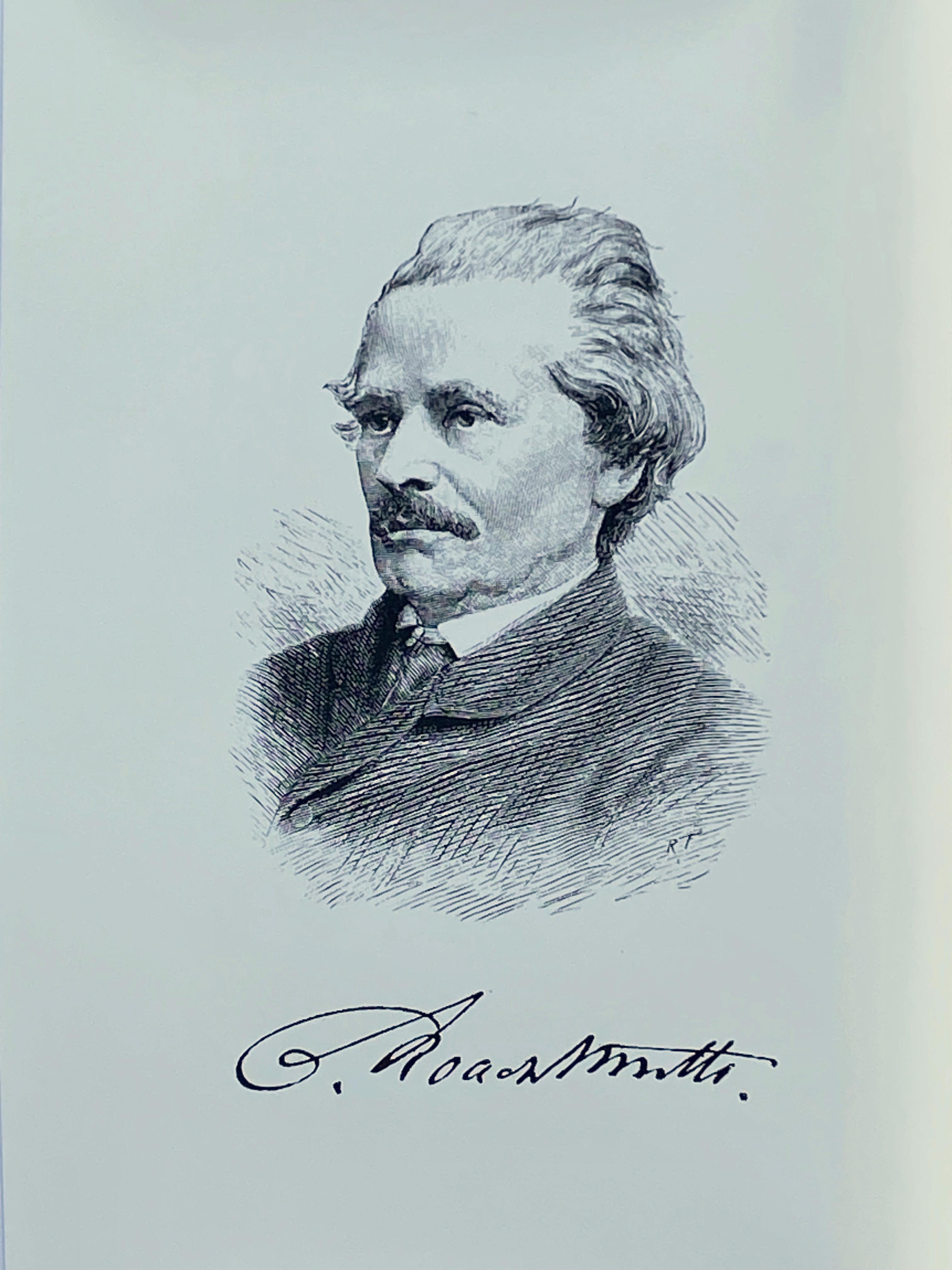
Smith (Fig. 1) apprenticed as a chemist before buying his own pharmaceutical business in Lothbury, London, in 1834. His interest in archaeology was sparked by excavations at the Bank of England near his new premises and from that point he assiduously observed, recorded and collected finds from this and other sites, as London expanded and underwent improvements. Many of the discoveries were Roman and Smith was unusual in that he was interested in all remains, not just the obviously valuable. He gradually built a picture of domestic life in Roman Britain when many other archaeologists were focused on a military interpretation (Sweet 2004, 155–87; Hingley 2008, 307–11). In the midst of so much urban development, Hobley has described him as a 'pioneer rescue archaeologist' (1975, 328). Smith ventured into antiquarian circles after being invited to exhibit some of his collection to the SoA in 1836, becoming a fellow at the end of that year. By the 1840s he was a central figure in British archaeology.
Smith's achievements were impressive. Although antiquarianism was widening its appeal among the professional middle classes, Smith believed in inclusivity, in gender and class (see Scott 2017), and in response to the perceived apathy of the elitist SoA, established the BAA in 1843 with his friend Thomas Wright. Smith stated a desire to 'render the association as extended and comprehensive as possible' (Dunkin 1845, 26) and so the BAA encouraged local participation as well as raising public awareness of archaeological remains. While the government and British Museum were investing in overseas archaeology (Thornton 2013, 2), Smith's rigorous approach to excavation, recording and publication played a key role in establishing the importance of national archaeology. His interests included minor antiquities, and through excursions to France and Germany he inaugurated comparison studies between Britain and the continent (Rhodes 1992, 2). Smith aimed to raise standards in archaeology, often railing against the lack of expertise held by ruling councils of the discipline and repeatedly challenging their priorities (Scott 2017, 7). His London collection, amassed at the back of his shop, was eventually acquired by the British Museum, which marked a turning point in persuading the trustees that national archaeology was worthy of inclusion (Kidd 1977). Smith's efforts changed the organisational structure of British archaeology, its methodology and its priorities. Just days before Smith died, John Evans, President of the SoA and The Numismatic Society, presented him with a medal to commemorate his 'lifelong services to archaeology' (Morgan 1890, 243). The Builder felt his death was 'a national loss' and called him 'the greatest modern authority on Roman antiquities in Britain' (Obituary 1890, 112). How did a humble chemist manage to get ahead and become an influential and celebrated archaeologist? This article will build on existing research on Smith's life and work (Hobley 1975; Kidd 1977; Rhodes 1992; Scott 2017), to focus on one, previously unexplored aspect; his use of book reviewing.
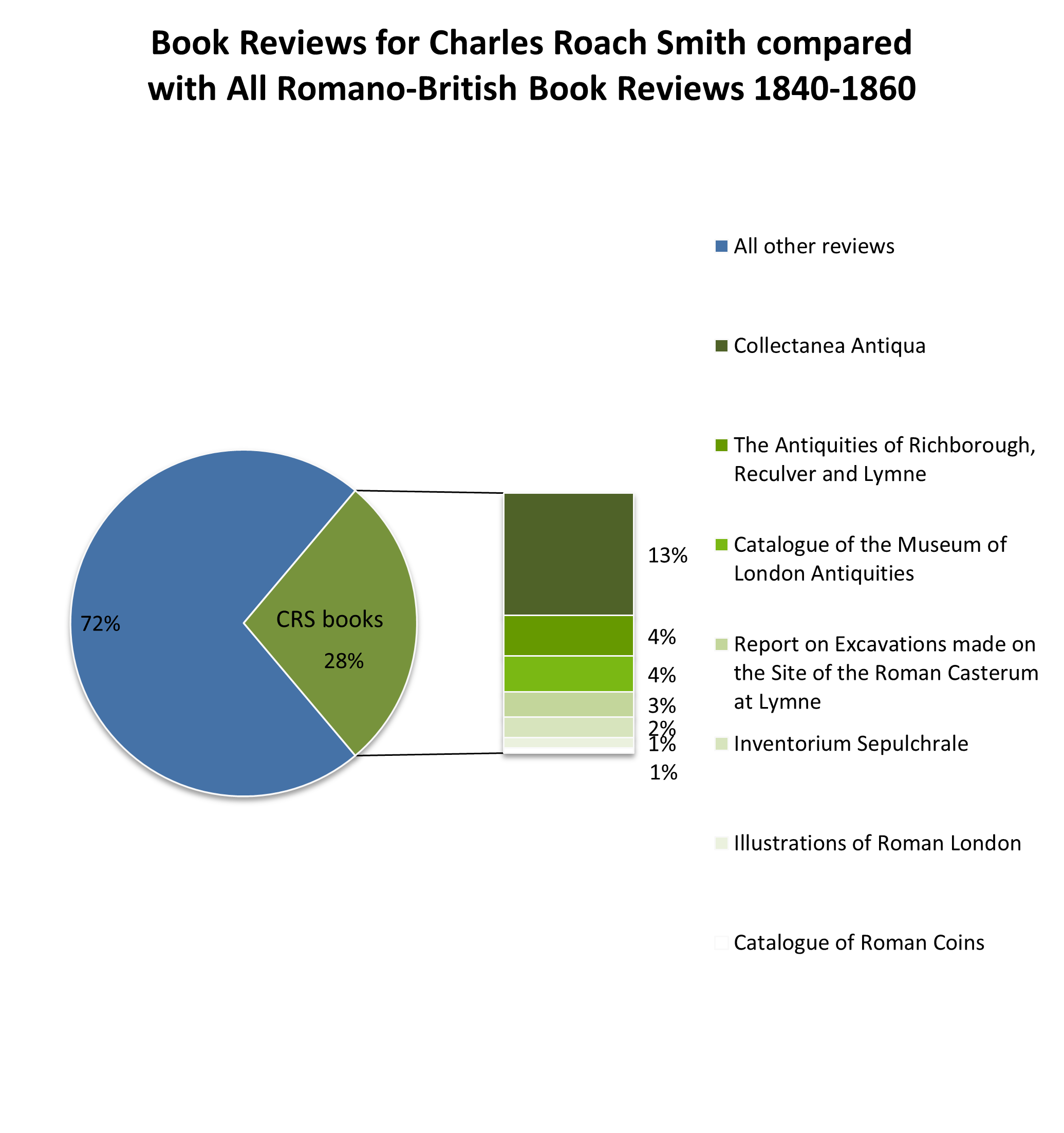
Smith was a prolific writer, regularly contributing letters and papers to Archaeologia as well as the Journal of the BAA (JBAA), the Numismatic Chronicle and many local journals (Rhodes 1992). Between 1840 and 1860 he also produced seven volumes: on four occasions as a single author; twice working in collaboration and also as editor of Inventorium Sepulchrale (Faussett 1856). Table 1 shows that he published more books than any other author in this period, but this alone does not account for his large share of the reviews. Smith's Collectanea Antiqua was the most reviewed title with 24 reviews – 13% (Fig. 2). First appearing in 1843, Collectanea was the result of Smith's excursions in the United Kingdom and France, where he visited many private collections and realised how much knowledge was held by local antiquarians. It focused on minor antiquities, but also had accounts of excavations and structural remains. The publication received international attention and acclaim with one reviewer stating: 'This Collectanea will become a standard work of reference' (Collectanea Antiqua 1849, 77). By 1860 four volumes had appeared (out of an eventual seven), published sporadically, in parts, as material became available. Each volume could be reviewed separately, which helps to explain the large number of reviews received overall. Smith's other books, however, also attracted attention. While it was commonplace for volumes to receive one or two reviews, Smith's Antiquities of Richborough, Reculver and Lymne, for example, had eight reviews and the Catalogue of the Museum of London Antiquities had seven. This suggests there were other factors affecting his books.
One point to consider in explaining Smith's popularity with reviewers is where his reviews were published. Figure 3 shows that the Literary Gazette contained the most reviews of his work. This mainstream publication featured the first popular, weekly review of books and, as such, turned its editor and proprietor William Jerdan (1782–1869) into a literary authority with the power to 'make or break a novel's fortunes' (Brake and Demoor 2009, 366). Smith first made the acquaintance of Jerdan in 1836 when they were invited as guests to a meeting of the Noviomagian Society (a small circle of members from the SoA, with a keen sense of humour, who met to have dinner). Both men subsequently became members of the SoA (Smith 1883, vol. 1, 116). Jerdan also joined Smith's new venture, the BAA, and in the first journal issue wrote a paper about how the society could expand (Jerdan 1844). His suggestions included voluntary subscriptions, opening archaeology up to a wider membership, which chimed completely with Smith's own ideas. It is likely, therefore, that a personal connection encouraged the Literary Gazette to include so many reviews for Smith. What they wrote was certainly complimentary. Smith's Catalogue of the Museum of London Antiquities was, for example, proof of 'the writing zeal of Mr. Smith's labours, and of the depth of his archaeological acumen' (Catalogue of the Museum 1855a, 116).
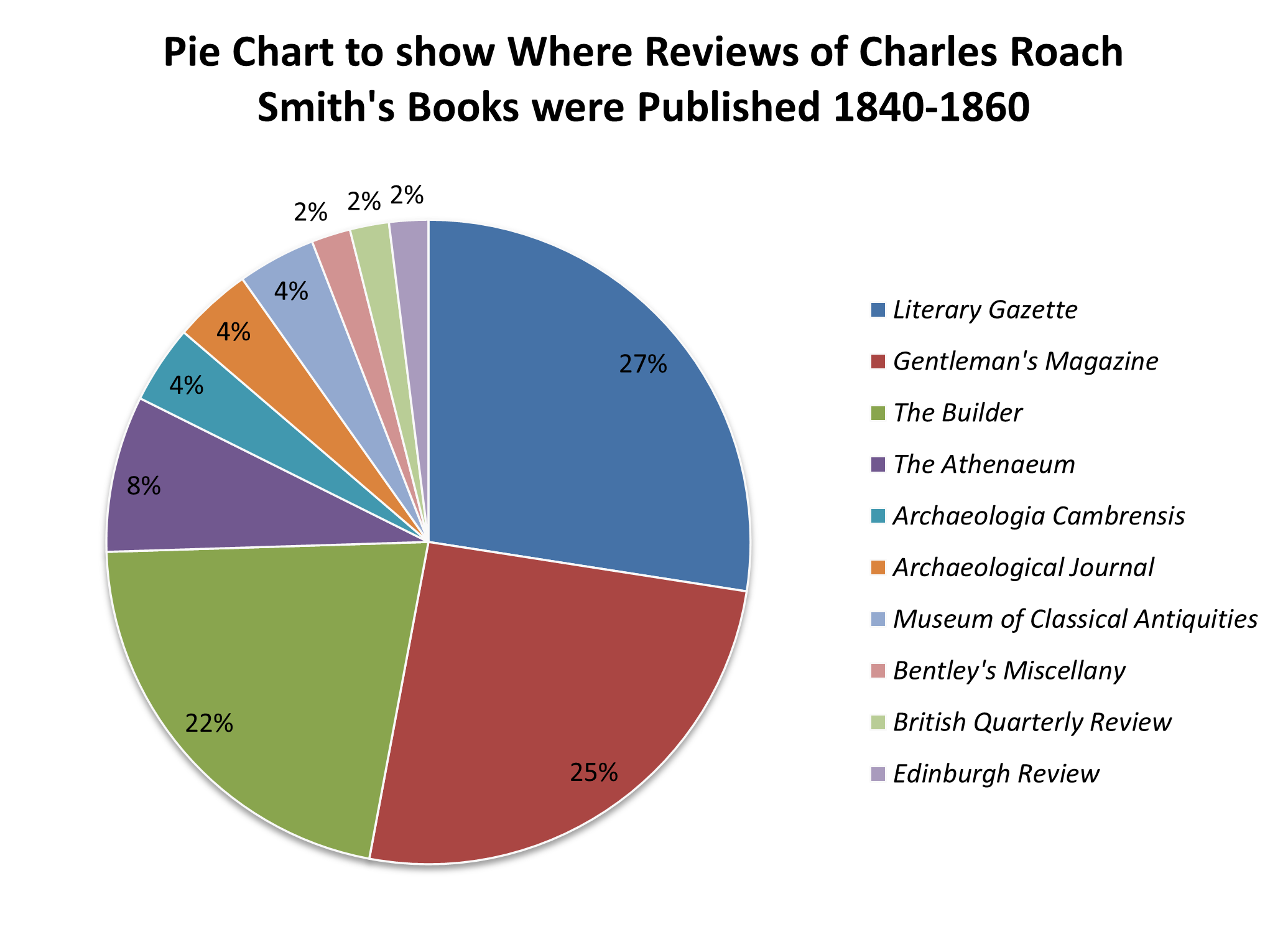
This relationship between author and publication was not unique. The monthly Gentleman's Magazine had John Gough Nichols (1806–1873) as assistant editor 1828–1851, then editor 1851–1856. Smith was introduced to Nichols in 1836 while meeting members of the SoA, prior to his election for fellowship (Rhodes 1992, 92). Apart from sharing a fascination with antiquities, both went on continental tours in the 1840s and Nichols was an original member of the BAA (Tedder 1895). He later asked Smith to write a regular contribution to the Gentleman's Magazine (Smith 1883, vol. 2, 112–14). It is not surprising that Smith featured regularly in this publication and reviews of his work were full of praise: 'Mr. Smith's two volumes contain more valuable and useful materials than any other work yet published in this country…Mr. Roach Smith's labours are so well known and appreciated, both in his native country and on the continent, that we hardly need add a word in commendation of them' (Collectanea Antiqua 1852, 69).
Smith also had connections with The Builder, which ran 11 reviews of his books. This weekly architectural periodical covered related arts and sciences, including archaeology. The editor between 1844 and 1883 was George Godwin (1813–1888), a fellow member of the SoA who shared Smith's love of antiquities and the theatre and his interest in the condition of working people (Smith 1883, vol. 2, 93–7). The Builder was very supportive of Smith's excavations at Lymne and his subscription appeal to the public: 'The subscribers must feel that their money has been satisfactorily expended. The volume will hand down with credit the names of all who gave their aid to a worthy investigation' (Report on Excavations 1852a, 506). The Builder was also a keen ally during Smith's dealings with the London Corporation, which may explain his high regard for the publication. He later wrote in his memoirs Retrospections: 'A paper ever independent, just, and feeling, and a credit to the British Press' (Smith 1883, vol. 1, 132). At least three-quarters of the reviews of Smith's books between 1840 and 1860 were in publications belonging to associates, demonstrating the need to consider the connections behind the scenes. It might not have been a grand plan for Smith to befriend editors and proprietors, but it created a personal element to these reviews. Their effusive comments suggest, however, that these were people who genuinely respected Smith's opinion and valued his work.
It was in Smith's best interests to be reviewed because, like many authors at the time, he was publishing without institutional support. He had become increasingly dissatisfied with Archaeologia, often waiting months for a paper to be published and then finding drawings and maps submitted for publication were left out (Collectanea Antiqua 1854, 468). Collectanea was, therefore, a private venture. Volumes I and II were partly sold through the bookseller J.R. Smith and partly by subscription, but he lost money on both (Rhodes 1992, 175), so by volume III he decided to print solely by subscription. This gave him the editorial control he desired but without ready access to a distribution network that a commercial publisher would provide (Topham 2000, 582). Smith was assiduous in his correspondence, sending circulars and organising advertising, which must have affected the number of reviews he received. He thrived on good feedback and praise. A letter from his friend Elisa Meteyard commiserates with Smith at not being reviewed by the press, revealing his disappointment (26 Oct 1874, quoted in Rhodes 1992, 78). At the very least, positive book reviews encouraged more people to subscribe (see Scott 2017 for lists of subscribers for each of his volumes). At some point, however, he must have realised that the book review system could offer a lot more than simply increased book sales.
One of the initial concerns for an individual with an interest in antiquarianism was how to be accepted into the community. Existing friendships and social standing would have proved important. Smith's background meant he was starting at a disadvantage and his early encounters with the SoA were to have a long-lasting impact on his career. Having submitted a successful paper on his London antiquities in 1836, Smith was encouraged to become a candidate for Fellowship. He believed it would be a promising, speedy result but then discovered 'There was an enemy; and he had written a letter which Sir Henry Ellis, the acting secretary, deemed worth consideration. The writer had stated, not that I was not a fit and proper person to be elected; but that I was in business!' (Smith 1883, vol. 1, 115–16). After canvassing friends, he was subsequently elected with one of the largest majorities ever known in a Society ballot (Hobley 1975, 329), but this experience embittered Smith on the issues of social prejudice and his ability to be seen on an equal footing with other antiquarians. It was, therefore, crucial for him to build his reputation.
A good starting point was to behave in an appropriate, gentlemanly manner and book reviews highlighted the characteristics that were expected in members of the scholarly community (Keeble 2025). Of the utmost importance was having antiquarian spirit. This meant that challenges had to be faced with enthusiasm and commitment, especially as individuals were often left to plan, execute, publish (and often finance) research. Such work required determination and reviewers encapsulated this with the word 'zeal'. It was remarked that Mr Neville (1820–1861) had been 'plying the spade and mattock with most laudable zeal and good success' (Antiqua Explorata 1848, 235). Similarly, the publication of mosaics found at Aldborough was only possible because of 'the zeal and enthusiasm of Mr. H. Ecroyd Smith' (Reliquiae Isurianae 1852, 280). Reviewers noticed Smith's fervency and frequently praised his approach. The Gentleman's Magazine talked of 'his usual zeal and perseverance' (Collectanea Antiqua No. 1 1843, 176) and the Literary Gazette noted the 'untiring zeal of Mr. Smith's labours' (Catalogue of the Museum 1855a, 116). Possessing the right traits and qualities was one sign that authors belonged in the community.
Further proof of being suitable was provided by following reviewers' recommendations on how to undertake research. During the 18th century, antiquarian investigations involved trying to fit new discoveries into the known historical narrative (Article II 1847, 318). By the mid-19th century, however, reviewers were soliciting new ideas from authors who were willing to challenge past theories, and it was believed that visiting sites and seeing artefacts first hand was the best way of achieving this. It was noted that Bruce's research contained 'A mass of original and personal observations' (The Roman Wall 1851a, 105) and Charles Merivale's (1808–93) writing stemmed from 'actual archaeological and topographical observation' (A History of the Romans 1858, 649). Smith was able to produce original work because he was directly involved with excavation, either as a sole investigator (e.g. at Bighton Roman villa, Hampshire, 1844) or in collaboration with others (such as W.H. Rolfe at Richborough from 1843 and M.A. Lower at Pevensey, 1850–52). Reviewers came to recognise him as a seasoned excavator. His uncovering of a Roman villa in Hartlip, Kent, was 'in the hands of one of the ablest, most cautious, and most experienced living authorities upon investigations of this kind' (Collectanea Antiqua Vol. II, 1849, 656). Smith believed, and reviewers agreed, that excavation results should be made accessible using print (Kidd 1977, 121) and produced promptly after fieldwork (The Roman Wall 1851c, 147). Smith ensured that his publications were timely and his editing was swift, for which he was praised: 'This important work has been executed with as little delay as possible' (Inventorium Sepulchrale 1856b, 581).
In addition to excavation, originality was also possible by re-examining known sites and artefacts. Smith's travels around England allowed him to gather information and hearsay, to scour newspapers and meet fellow antiquarians. By the early 1840s he had probably seen more small British antiquities than anyone else (Wright 2015, 219). The Literary Gazette labelled him 'the ardent explorer' (Antiquities of Richborough 1850a, 518) and acknowledged his expertise in such finds: 'The accounts of the mortaria, amphorae, and other vessels, of the glass of several kinds, and the personal ornaments and domestic utensils found at Richborough, are valuable in themselves, but made more so from Mr. Smith's extensive experience' (Antiquities of Richborough 1850a, 519).Visits to France and Germany also enabled Smith to draw continental parallels with local antiquities, as he recognised the potential of such material (Kidd 1977, 124). Much of what he saw was reproduced in Collectanea, and among the many accolades for this work the Gentleman's Magazine was prompted to write 'Mr. C. Roach Smith has added such an intelligent spirit of analysis, comparison and arrangement that he has contributed as much as any of our living antiquaries to raise the pursuit of archaeology into a science' (Catalogue of the Museum 1854b, 615). The latter comment must have been satisfying for Smith as this was exactly what he was trying to achieve. Private endeavour, approached with the prerequisite antiquarian zeal, enabled Smith to produce original research and that was something reviewers wanted to write about. From Smith's perspective, every positive comment from reviewers, whether it was in a specialist society journal or a more general publication, reminded readers that he deserved to be in the community.
During the 19th century, without qualifications, official employment or institutional structure, there was no designated path to becoming an expert in archaeology. One strategy was to seek acknowledgement and praise before the community by sending in a book for review. Antiquarian publications were based on a wide variety of sources, from heraldic material to standing architecture (Levine 1986, 71) and were often presented in a prose style. Antiquarians were also known for their fertile imaginations, leading to wild speculation. By the 1840s, however, reviewers were looking for a change and began calling for discrimination in an author's choice of facts (The Celt, the Roman, and the Saxon 1852c , 589), delivered with 'dispassionate judgement' (Eburacum 1845, 415). Robert Stuart (1812–48), for example, was praised because his 'assumptions are advanced with propriety and sober reason' (Caledonia Romana 1845, 229) and Neville was noted for his 'careful tone' (Antiqua Explorata 1848, 235). At a point when reviewers were demanding something new, Smith proved to be an exemplary writer (Hobley 1975, 332). He admired the 18th-century antiquarian James Douglas (1753–1819) who was one of the first to move away from the traditional style of writing with its vague generalities and theories, in favour of clear descriptions (Smith 1852, 156). Indeed, Smith's first paper to the SoA was a simple account 'without theorising or wandering from a statement of facts' (Smith 1838, 140) and this carried through his subsequent work. The Literary Gazette highlighted that 'The same zeal, discrimination and appreciation of his subject, are manifested by the author in almost every page' (Collectanea Antiqua 1853, 38).Through book reviews, Smith's publications became synonymous with the appropriate tone, style and content for the new subject of 'archaeology'.
Smith wanted to prove that archaeology was a credible subject and producing academically rigorous work was one aspect of this. His books were an attractive prospect for review because they contained the features that reviewers were seeking in order to move the subject forward. Writing conventions, which are standard today, were deemed worthy of comment for a non-academic subject in the 19th century. For example, authors were expected to have consulted the existing literature. Wright was praised for his 'extensive reading' (The Celt, the Roman, and the Saxon 1852b, 231) while Smith's Richborough volume demonstrated 'as it should, an intimate acquaintance with classical literature' (Antiquities of Richborough 1851a, 87). Publications had to include references, with reviewers criticising those authors who were not thorough enough (Wright in The Celt, the Roman and the Saxon 1852a, 772; Bruce in The Roman Wall 1851b, 241). Smith's works were always fully referenced with a bibliography, but he was also conscious of providing further information that readers might find useful. In the appendix of Inventorium Sepulchrale, Smith included all the correspondence surrounding the discoveries of Dr Faussett as well as a comprehensive list of the artefacts arranged by site and type of find. This attention to detail was applauded by the reviewer: 'Mr. Roach Smith has taken upon himself a labour of love in the Appendix to this volume' (Kemble 1856, 302).
The feature that received the most attention from reviewers was the illustrations (Keeble 2025). Before the use of photography, hand-drawn illustrations were required to record excavations, new discoveries and collections (Brusius 2016). Maps and vistas set the scene, while faithful representations of objects enabled readers to carefully scrutinise artefacts that they may not have seen firsthand. Smith was quick to recognise the importance of illustrations and although they were an expensive outlay for an author, he believed that 'It is better that engravings be given, even rudely, and in the slightest outline, if supplied liberally, than that they should be limited in number for the sake of elaborate execution' (Smith 1848c, vi). Much of Collectanea's success was due to the numerous illustrations, where Smith avoided expensive plates in favour of simpler and cheaper etchings (Rhodes 1992, 174). Even with such measures, however, he relied on the generosity of friends who were thanked in the prefaces to the volumes for their woodcuts and etchings. On a number of occasions Smith worked with another friend, Frederick William Fairholt FSA (1813–66), who, as a skilled draughtsman, was the most renowned archaeological artist of the day. His collaboration with Smith on The Antiquities of Richborough, Reculver, and Lymne was highly praised by reviewers: 'The public should feel much indebted to Mr. Smith…in printing and properly illustrating the results of his successful researches' (Report on Excavations 1853, 160). The inclusion of so many illustrations was seen as 'of infinite value to the archaeological student' (Collectanea Antiqua 1853, 38). Continued praise from reviewers had the effect of raising an author's status and profile within the community. Smith was producing research with features that reviewers wanted to see in every archaeological book and his volumes came to represent an example of good scholarship. He was helping to improve the overall standard of archaeological publishing and reviewers were helping to establish Smith as an expert. This was made clear in a comment, that would have been read by his scholarly peers, in the specialist Archaeological Journal: 'It is hardly necessary to say that Mr. C. R. Smith's part of the work is also done extremely well, and with much judgement' (Kemble 1856, 302).
Beyond building a reputation, book reviews could be used in a number of ways to further personal aims and objectives. This was particularly true for Smith who, as an agenda setter with ideas on how archaeology should progress, was frequently at the centre of controversy. Without a reliable social standing, writing took on extra importance as he believed it was the only way of persuading people and achieving his goals (Rhodes 1992, 80). It was commonplace for writers to use paratextual matter such as dedications and prologues to present their argument (Gavin 2012, 26). Smith chose to highlight issues and express his opinions within the prefaces and appendices of his own volumes. One of his main concerns was the apathy of the government and societies towards national antiquities (Scott 2017, 13). In the first volume of Collectanea Smith claimed 'Unhappily, the Government has not yet been awakened to a sense of the importance of our national antiquities. It neither originates any scheme for their preservation, nor encourages the exertions of societies or individuals' (Smith 1848c, vii). These words caught the attention of reviewers, with The Builder reprinting a large section, claiming that Smith's remarks were 'pertinent' (The Preservation 1848, 533). The Literary Gazette also showed their support by commenting that 'The preface contains an animated address on the preservation of national antiquities, for the neglect of which this country is unfortunately notorious, and which has long been a grievance much deplored by every archaeologist' (Collectanea Antiqua 1849, 77). This relationship between author and reviewer worked well for both parties. Reviewers were provided with provocative material that they were keen to write about and in doing so, they perpetuated Smith's ideas.
Book reviews that featured in non-specialist publications (Fig. 3) offered a channel of communication to reach a wider audience than merely antiquarians. Smith took this opportunity to get his message across. One line of argument that he used to stir the authorities was that the British government fell short of the support it offered archaeology compared with other countries. The idea of 'the nation' had been growing in continental Europe for several decades and archaeology was helping to provide a past and an identity for many states, but Britain's long-standing political stability diluted such nationalism (MacGregor 1998, 125). During his travels Smith witnessed the French system of dealing with monuments and excavations and saw it as a model for British archaeology, but it required governmental support (Rhodes 1992, 165–70). On the one hand Smith could write commentary in his own publications: 'The government of Great Britain, with resources beyond those of any other state in Europe, is behind all in the appreciation of its valuable national monuments' (Smith 1848c, vii). However, a further channel of communication opened when Smith became a reviewer, which allowed him to remark on an author's work while inserting his own agenda into the piece: 'To take every occasion which may present itself to solicit the attention of the government to the conservation of our national monuments, is one of the chief objects of this Association [the BAA]' (Smith 1849, 187). Smith was not alone in this practice. Despeaux and Rice (2016) have noted that mathematical reviewers promoted their own ideas and communicated them to the public through their reviews.
One aspect of Smith's frustration was the lack of financial support for excavation. In 1847 he persuaded both the BAA and the AI to donate £5 towards the excavations of Verulamium, but when the funds ran out, the remains of the unique Roman theatre were destroyed. With this in mind and wanting to excavate the Roman castrum at Lymne, in 1850 Smith made an application to the government for a grant of money (Smith 1852, vi). When the Treasury declined, Smith managed to raise a small sum from immediate friends but then made a wider appeal. Lymne was the first excavation to be paid for entirely through subscription and must be seen as a turning point because it demonstrated the power of the general public. Once again, Smith's position roused the reviewers. In their coverage of The Antiquities of Richborough, Reculver and Lymne, in Kent (1850) all the reviewers discussed the financial situation and, crucially for Smith, supported his exertions (e.g. Antiquities of Richborough 1850c, 362; Antiquities of Richborough 1851b, 96; Report on Excavations 1852a, 506). The weight of the quarterly Edinburgh Review, looking at several recent excavation reports, came to the same conclusion as Smith: 'It is clear that subscriptions by private individuals will never suffice for the numerous demands which the lately awakened spirit of national research is making upon us…We cannot help thinking that the English government might lay aside from the public money a small sum yearly for purposes of this kind' (Article VII 1851, 195). In his volumes Smith opened the dialogue on issues, but he was only going to reach the limited audience of his subscribers. Being reviewed by publications with much larger circulations afforded Smith the exposure he was looking for. Gaining a wider readership was important, especially if he was going to turn to the public for support in the future. In return, reviewers were able to comment on the latest news or controversy within archaeology, which made their articles relevant.
Being publicly praised in a book review brought validation for an author. Smith's bold stance on archaeological issues and his forthright manner meant he inevitably faced opposition and, therefore, support from reviewers was particularly important to him. His attempts to rescue Roman London from developments brought him up against the City Corporation. They showed little regard for archaeology and hence began a 27-year struggle to get the Corporation to recognise their responsibilities towards antiquities discovered in the course of these improvements (Hobley 1975, 329). Smith found ongoing support from journal editors (e.g. The Royal Institute 1845, 558; Do the citizens regard their antiquities? 1845, 582–3; Mr. Tite vs Mr. Roach Smith 1845a, 612; 1845b, 621) and in the press (e.g. The Times 1849, 8). The excavations at the new Royal Exchange proved particularly contentious and personal. Almost from the start, Smith found himself barred from entering and workmen were prohibited from selling items to him (Rhodes 1992, 105). When a catalogue of finds was published (Tite 1848), reviewers used the opportunity, not to praise the author, but to support Smith: 'We…are compelled to admit a strong impression that the corporation, as a body, have done grievously little towards the preservation and collection of their antiquities, whatever they may be disposed to do now' (Saturday 26 May 1849, 241). The Gentleman's Magazine sounded equally unconvinced when they claimed: 'Mr. Tite, in the preface, as well as in other ways, has done his best to remove some of the obloquy which has been attached to the Corporation of London' [my italics] (A Descriptive Catalogue 1850, 637). The overall feeling from reviewers was that one publication did not make amends for the general neglect of antiquities by the Corporation.
After years of recording and collecting, Smith's efforts culminated in the publication of his Catalogue of the Museum of London Antiquities (1854a; 1854b) and it was the subsequent book reviews that summed up his struggles and reminded readers of what he had achieved: 'The citizens are deeply indebted to Mr. Smith for his strenuous exertions and endeavours to make up for the shortcomings of those who ought to have left literally nothing in this direction for him to perform' (Catalogue of the Museum 1854a, 311). The Gentleman's Magazine shared similar sentiments: 'Through many years has Mr. Smith laboured zealously, and painfully, and patiently…None but friends…know the labour and expense which it has cost him, and the difficulties with which he has had to contend, not only arising from accidental circumstances, but often from obstacles designedly thrown his way…' (Mr. Roach Smith's Museum 1854, 116). For Smith, there could be no better endorsement of his actions. He was portrayed as an individual standing up to authority, persevering through adversity and demonstrating the best of antiquarian qualities. Smith's years in London had been a battle, but it was clear to the readers that reviewers believed his efforts were worthwhile.
Smith's belief in the importance of national antiquities meant that he called into question the actions of the British Museum. During the first half of the 19th century the Museum amassed an unrivalled collection of ancient sculpture, although much of this was acquired through political events and enterprising individuals rather than as a considered policy (Hoock 2010). The all-powerful trustees equated 'antiquity' with the Mediterranean world (Wilson 1997, 1), upholding classical Greece as the highest form of art (Jenkins 1992, 63–5). National antiquities did not feature in this narrow viewpoint, but as interest in British archaeology grew, so did the call for the Museum to make provision for a national collection.
The complacency of the trustees became apparent when they were offered the unique collection of the Reverend Bryan Faussett (1720–76), which consisted of Kentish finds, mostly from Anglo-Saxon cemeteries, but also Celtic, Roman and Romano-British antiquities. Smith was instrumental in this offer being made. During one of his explorations, he called unannounced upon the grandson of Bryan, Dr Godfrey Faussett (Smith 1883, vol. 1, 67–8). No one except family and a few friends had seen the collection in forty years, but Smith not only arranged a viewing for himself, but he also persuaded Godfrey to allow delegates at the forthcoming BAA Canterbury conference to visit. When Godfrey died in 1853, the executors turned to Smith for advice, and he suggested the British Museum should have first consideration. The collection, valued at £665, was turned down by the Museum on the grounds of insufficient funds, but as Wright states 'The problem was not money; it was complete disinterest' (2015, 230). Smith used his Collectanea Antiqua to repeatedly show his scorn for the 'Anti-British Museum' (Smith 1854, 269) and the trustees' attitude. The collection was eventually bought by another of Smith's friends, businessman Joseph Meyer (1803–66) at £700, for public display in his Liverpool Museum. It was Meyer who asked Smith to edit the accompanying notebooks, which became the Inventorium Sepulchrale (1856).
Book reviews for this publication validated Smith's belief that the collection should have been purchased by the British Museum. The Archaeological Journal review stated that 'The opinion of all archaeologists throughout Europe has declared against them [the trustees]' (Kemble 1856, 298). Similarly, The Builder believed 'The conduct of the trustees of the British Museum in neglecting to secure the Faussett collection of Anglo-Saxon and Roman antiquities - so suitable, nay, indispensable as such British antiquities must be to a British museum, - was quite inexcusable' (Inventorium Sepulchrale 1856a, 491). Smith was not alone in his opinion of the British Museum, but the reviews set him up as a figurehead of the campaign for a national collection: '…Mr. Smith, who took so much interest in the unavailing endeavour to open the eyes of the Museum trustees to their manifest duty as the collectors and preservers - beyond all else - of our national antiquities' (Inventorium Sepulchrale 1856a, 491.).
This was not Smith's last dealings with the British Museum. By 1854 he was ready to retire, leave London and sell his own collection. He had amassed 5000 carefully documented objects and his overriding desire was that the collection be kept together, rather than facing the auction room and unavoidable dispersion. It was valued at £3000 and Lord Londesborough immediately sent a cheque, but he could not guarantee that the collection would remain intact (Smith 1883, vol. 1, 167). Smith, therefore, offered it to the Corporation in 1855, but they refused, so he turned to the British Museum. After months of uncertainty, pressure from the national archaeological societies, the press and a petition to Parliament and the Lords of the Treasury eventually induced the trustees to offer £2000, which Smith accepted. In a review for Collectanea, the Literary Gazette reminded readers of the sacrifice that Smith was prepared to make: 'Though a higher estimate had been placed upon it by competent judges, Mr. Roach Smith acceded to the proposed sum with a readiness highly creditable to his antiquarian zeal and public spirit' (Collectanea Antiqua 1857, 850). Smith was presented as someone who had acted for the greater good and indeed, his collection formed the basis of a whole new department of British and Medieval Antiquities and Ethnography (MacGregor 1998, 135).This acquisition would eventually lead to permanent changes in the structure of the British Museum and in its collecting policies (Kidd 1977, 108).
It has already been noted that as a reviewer, Smith used the platform to promote his own agenda. However, he also exploited the reviewing system in other ways, including the use of signature. One of the purposes of reviews, apart from critiquing an author, was to sell books, but this meant the process was ripe for corruption (Moore 2012, 60). In the 18th century this took the form of commendatory pieces or 'puffs' being written by friends and family, but by the 19th century publishers and book sellers had become more devious (Mason 2005, 13). Perhaps the most unscrupulous publisher was Henry Colburn (1784–1855) who purchased shares in five periodicals to ensure favourable reviews of his books and used his staff to write positive reviews that he paid to be inserted in other journals (Brake 2017, 8). With such underhand methods being deployed, one of the key debates was whether the identity of reviewers should be revealed. It was argued that anonymity gave reviewers the freedom to be open and truthful (Mason 2005, 29), but critics believed that a signature produced a more honest piece because personal responsibility lay with the reviewer (Maurer 1948, 19).
| Year | Romano-British Reviews | Other Reviews |
|---|---|---|
| 1844 | C.R. Smith | T. Wright; W. Bromet; F.B & C.W.; Albert Way; I.H.P; Anon (1) |
| 1845 | Anon (3) | D.; M.; W. Bromet; Anon (8) |
| 1846 | _ | Anon (12) |
| 1847 | _ | Anon (11) |
| 1848 | Anon (2) | Anon (24) |
| 1849 | _ | Anon (13) |
| 1850 | Anon (2) | Anon (14) |
| 1851 | Anon (2) | Anon (5) |
| 1852 | _ | Anon (8) |
| 1853 | _ | Anon (5) |
| 1854 | _ | Anon (9) |
| 1855 | _ | Anon (6) |
| 1856 | J.M.K. | Anon (6); Thomas Bateman |
| 1857 | _ | Anon (5) |
| 1858 | _ | Anon (4) |
| 1859 | _ | Anon (1) |
| 1860 | _ | Anon (4); E. Charlton |
The vast majority of reviews in the early 19th century were anonymous and this also applied to 95% of Romano-British reviews. The remaining 5% that were signed, all featured in the JBAA or the Archaeological Journal. One key thing that stands out from the tables listing signed reviews (Tables 2 and 3) is that, with the exception of the initials 'J.M.K.' in 1856, the only name associated with Romano-British reviews is Charles Roach Smith, signing 'C.R.S' or 'C.R. Smith'. At a time when reviews were overwhelmingly anonymous, why did Smith go against convention and openly reveal his identity? Smith was an enthusiastic member of the SoA, being elected to the council in 1840 and contributing 49 articles and letters to Archaeologia over the next decade (Scott 2017, 12). He further delved into the antiquarian world by becoming a Fellow of the Numismatic Society in 1837 and then Honorary Secretary in 1840. He also visited Northern France in 1839, 1842 and 1843, meeting with antiquarians and viewing their collections (Rhodes 1992, 148–51). By the time he began writing book reviews, from 1844 onwards, he was ready to declare that he was the expert on Londinium, if not Roman Britain. He was openly passing judgement on the work of other antiquarians and he did not mind who knew it.
| Year | Romano-British Reviews | Other Reviews |
|---|---|---|
| 1846 | C.R.S. (2) | T.W; C.R.S.; S.I; A.H.B.; F.W.F.; J.G.W.; H.C.; A. |
| 1847 | _ | M.A.L.; A.A.; T.C.C.; C.B.; J.G.W.; C.R.S.; T.W.; C.S.; E.B. |
| 1848 | C.R.S. (2) | T.W.; C.R.S.; F.W.; E.B.; C.; ; F.W.F.; J.W.A. |
| 1849 | C.R.S. | E.L.C.; T.W.; J.W.A.; J.S.; D.W.; C.R.S. |
| 1850 | C.R.S. (2) | F.W.F.; W.C.; C.R.S.; C.J.; ; J.W.L.; D.; E.B. |
| 1851 | C.R.S. | A.A.; T.J. |
| 1852 | _ | T.J.; |
| 1853 | _ | _ |
| 1854 | _ | _ |
| 1855 | _ | _ |
| 1856 | _ | Anon (20) |
| 1857 | _ | Anon (4) |
| 1858 | _ | Anon (1) |
| 1859 | _ | _ |
| 1860 | _ | _ |
The 'signature versus anonymity' debate rumbled on until March 1865 when the Fortnightly Review announced that all of its reviews would be signed (Maurer 1948, 4). Other journals gradually followed as the public demanded to know who they were reading and relying upon. Nash states, however, that scholars have too readily accepted that practice shifted from anonymity to signature (2010, 59). Indeed, this study reveals that archaeological book reviews between 1840 and 1860 did not simply follow this narrative. Those that appeared in general publications were anonymous throughout, but reviews from the society journals reversed the trend by starting out signed and then moving to anonymity. The dates of Smith's membership suggest he may have been the central figure influencing these decisions. While he was a member of the original BAA, the Archaeological Journal carried signed reviews, but following the split in 1845 when this journal was adopted by the new AI, its reviews became mostly anonymous. Smith stayed with the BAA, which established the new JBAA, and it immediately had signed reviews. On his departure from this society in 1852, however, its reviews switched to anonymous. As secretary Smith would have handled contributions coming in for publication and his presence encouraged reviewers to sign their work. Without him, book reviews in the specialist journals defaulted to anonymous.
Smith's experiences with the SoA made him realise that he needed an alternative way of 'getting ahead' that was not based on social standing and privilege. His establishment of the BAA with Thomas Wright was a way for archaeology to be more inclusive, but the split just two years later demonstrated that old prejudices were not easily overcome. Hoselitz has described how a group of like-minded outsiders emerged, including Smith, Fairholt, William Rolfe (1779–1859) (a retired farmer) and Joseph Meyer, who did not fit easily into the organised bodies and were disillusioned by the rivalries (2007, 70–1). They formed an informal network of support and book reviews can be seen as one element of this.
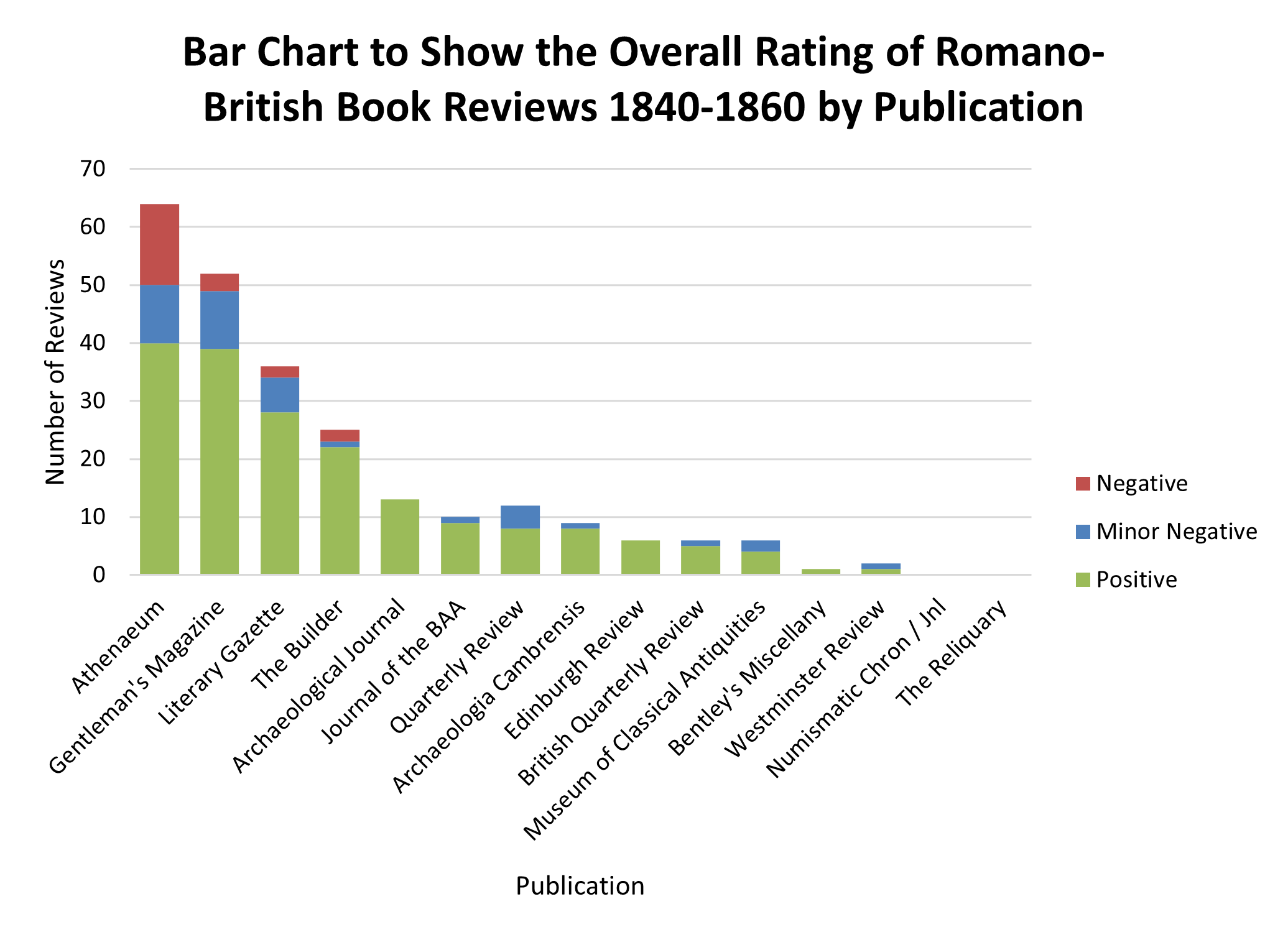
One of the key roles played by reviews was to maintain the scholarly community (Keeble 2025). This was partly achieved by encouraging authors, recommending their books and praising the features that moved the subject forward. Figure 4 shows that most archaeological reviews (69%) were positive, with a further 20% including a negative comment but within a complimentary article. Engberts has noted how reviewers employed 'politeness strategies', allowing a review to be critical, but without upsetting the author and still managing to demonstrate how they belonged to the wider community (2021, 656). As a reviewer Smith worked hard to fulfil this role, but more specifically he was building personal friendships. All of the authors that Smith reviewed between 1840 and 1860 (Table 4) were included as significant encounters in his memoirs, Retrospections (1883). His reviews were overwhelmingly positive, offering encouragement and support to every author. Mr Neville had, for example 'shewn equal liberality, zeal, and judgement' (Smith 1848a, 174) and he noted that 'to the pavements, so often left to the mercy of ignorance and vulgar curiosity, Mr. Smith has done justice' (Smith 1850, 401). He also made it clear that their research was worthwhile: 'The public should feel much indebted to Mr. Lowe' (Smith 1849, 187). Through his reviews Smith was helping to maintain the general community, but he realised that individual relationships were also key. There would certainly be times when he needed the support of friends and colleagues.
| Publication | Year | Book | Author |
|---|---|---|---|
| Archaeol. J. | 1844 | Coins of the Roman Relative to Britain, Described and Illustrated, 2nd ed. | Akerman, John Yonge |
| JBAA | 1846 | Delineations of Roman Antiquities found at Caerleon (the ancient Isca Silurum) and the Neighbourhood | Lee Esq., John Edward |
| JBAA | 1846 | The Archaeological Album; or museum of national antiquities | Wright, Thomas |
| JBAA | 1848 | Antiqua Explorata: being the result of excavations made by the Hon. R.C. Neville, during the winters of 1845 and 1846, and the spring of 1847, in and about the Roman station at Chesterford, and other spots in the vicinity of Audley End. | Neville, Hon. R.C. |
| JBAA | 1848 | An Archaeological Index to Remains of Antiquity of the Celtic, Romano-British, and Anglo-Saxon Periods | Akerman, John Yonge |
| JBAA | 1849 | A Description of the Roman Theatre of Verulum | Lowe Esq., R.Grove |
| JBAA | 1850 | Lithograph of Romano-British Tesselated Pavements | Smith, H.E. |
| JBAA | 1850 | Letter to Dawson Turner, Esq., on Norwich, and the Venta Icenorum | Gurney Esq., Hudson |
| JBAA | 1851 | Lithographic-coloured prints of Romano-British Tesselated Pavements | Smith, H. Ecroyd |
Thomas Wright was another figure among Hoselitz's outsiders. His background undoubtedly affected his reception by the SoA, as Smith remembered: 'He was never encouraged; and his contributions were accepted more as favours conferred on him than as a credit and honour to the Society' (Smith 1883, vol. 1, 81). The Athenaeum had an equally low opinion of Wright. Their review of his Archaeological Album (1845) was damning: 'Probably no other antiquarian volume of equal extent – certainly not of equal price –, contains so little to interest or to instruct' (The Archaeological Album 1845, 1195–96). The particularly bitter tone of this review was unusual and probably the result of The Album's controversial origins. When the BAA committee voted not to report on the society's first conference in Canterbury in 1844, Wright decided to publish his own account. This provided the catalyst for wider problems, which led to the breakup of the BAA the following year (Wetherall 1994, 14). The review likely stemmed from the personal feelings of editor Charles Wentworth Dilke (1789–1864) who as a member of the new AI, opposed Wright and his BAA. By contrast, Smith wrote a highly favourable review of The Album: 'The aim of the writer seems to have been to divest archaeology of the dry and repulsive form in which it is too often presented…[and] by a liberal supply of cuts, has given vitality to dry and dull dissertations' (Smith 1846, 271). In a reciprocal move Wright stated, 'The best collection of antiquarian materials we possess at present is the Collectanea Antiqua by Mr. Roach Smith' (Wright 1852, ix).
A further example of Smith's positivity can be seen in the disparate reviews of John Yonge Akerman's Archaeological Index (1847). The Athenaeum was blunt in their criticism: 'The portion which is put together with the least care is, perhaps that which relates to Romano-British inscriptions…' (An Archaeological Index 1847, 955). Smith had known Akerman since his early years in London. They shared a passion for coins with Smith joining Akerman's new venture, the Numismatic Society of London, and he was a regular contributor to its journal, the Numismatic Journal (later Numismatic Chronicle) (Smith 1883, vol. 1, 276–7). Smith presented a very different opinion of the Index: 'No one in our country has laboured so meritoriously in this department of antiquarian literature, with greater profit to the public, or with less advantage, we suspect, to himself' (Smith 1848b, 191).The review process could expose an author to humiliation and ridicule, but Smith used it in a positive manner, never openly criticising a fellow author. He praised the work he reviewed and validated the research, which helped to consolidate friendships and build strong, long-lasting networks.
Smith was not reviewing solely for his own interests; he genuinely wanted to enhance the quality of archaeological research. When Bruce received a poor review from The Athenaeum (The Roman Wall, 1851b) it was Smith who wrote with consolation (letter 9 Jan. 1851, quoted in Breeze 2017, 201). He was frank in asking why Bruce had not included certain material and references; he wanted Bruce's writing to improve. By the third edition of The Roman Wall Bruce acknowledged Smith's assistance in sharing his knowledge and helping him in 'correcting the press' (Bruce 1867, vii). Reviewing was a public act before the community, but in the background Smith was also acting as a mentor. He supported authors individually using his personal knowledge, advising on publishing and offering access to a network of like-minded individuals.
It would seem that book reviewing for Smith, both as an author and as a reviewer, was a positive experience, but this was marred by one publication, The Athenaeum, which did not hold such a good opinion of him. Figure 4 shows that this was the most critical of the publications covering archaeology and Dilke (the editor) was noted for his efforts to print reviews that avoided 'puffery' (Brake 1986, 108). However, The Athenaeum was consistently negative about Smith's work. They admitted, for example, that his Antiquities of Richborough was 'useful and intelligible' (The Antiquities of Richborough 1850b, 1016) and the author was 'competent' (1850b, 1017), but when Smith lamented the blocking up of the Pharos at Dover by the Ordnance Department the reviewer stated: 'We cannot help thinking that a proper representation from persons of known attainments in matters of archaeology would secure admission' [my italics] (1850b, 1016). This was an underhand gibe at Smith's reputation within the field. Of his Collectanea, The Athenaeum thought 'It does not present any very novel features' (Collectanea Antiqua, Etchings and Notices 1852, 746). His excavations at Lymne were seen as disappointing: 'As far as results have gone, its principal value seems to be, that of showing what was not, rather than what was, found and be added to our general stock of information' (Report on Excavations 1852b, 864). The Athenaeum was the only publication to disagree with Smith's proposals for funding excavations. The reviewer pointed out that the Treasury was unlikely to advance money to someone they did not know, bringing into question Smith's status and social standing. As he had managed to raise £138 through private subscriptions, they asked why the Treasury should spend public money, especially when excavations did not always bring the expected results, as these investigations had proved: 'The labours of Mr. Smith and Mr. Elliott have not produced anything from Lymne Castle that would have warranted a government in an expenditure of part of the national finances' (1852b, 864).
The Athenaeum was alone in not fully supporting Smith's stance against the Corporation, arguing that it could not possibly keep watch over every development and if they collected all finds this would interfere with 'private enterprise': 'The compiler of the Catalogue is rather hard on the Corporation of London…Suppose they had “seized upon” most of the other objects in Mr. Smith's Museum…what would he not have said of the greedy and monopolizing spirit of the corporation, who would not allow competitors to enter the field against them?' (Catalogue of the Museum 1855b, 345). The Athenaeum also accused Smith of aggrandising the finds 'We are not disposed to affix such objects the value he puts upon them' (1855b, 345). Their biggest criticism, however, seems to have been that Smith published by subscription. This was a popular method of publishing at the time, but since Smith advertised on his title page that he belonged to numerous associations, they believed he should have printed under the auspices of one of them: 'We think he would do better, and we are sure he would do more, if he divided his toils and troubles with others' (Collectanea Antiqua, Etchings and Notices 1852, 745). By publishing alone, they claimed he had accomplished nothing beyond 'some trifling personal distinction' (1852, 745). These negative reviews seem at odds with the glowing accolades Smith received from other journals and raise the question why did The Athenaeum take such exception to him?
Smith knew the editor Dilke, both being members of the BAA, but Kidd comments that from 1844 onwards Dilke 'opposed him personally' (1977, 132). By this point the Association was showing signs of discord and Smith was already a target in The Athenaeum's 'Weekly Gossip' column. A friend suggested that they only wrote such things because their rival publication, the Literary Gazette, was so complimentary towards him (letter from W. Masters 4 October 1844, printed in Rhodes 1992, 189). This may have been true to some extent, but more likely was The Athenaeum's animosity towards the 'newcomers' in archaeology. This was made clear when discussing their hopes for a new archaeological society: 'It was high time for the 'better spirits' of the council [of the BAA] to look ahead, and see that they did not lend their names a second time to the traders associated with them…Our own mind is pretty well made up. The traders must go' (Our Weekly Gossip 1845, 221). Smith was obviously included in this group of 'working' members, but he was targeted more specifically when they included a description of the ideal secretary for the new society: 'The secretaries must be disinterested men, of name and standing, willing and able to work - not zealous for the exaltation of themselves or their own special pursuits' (1845, 221). The Athenaeum was clearly expressing its disapproval of Smith, as the current post holder.
Further opposition came from the staff writer Peter Cunningham (1816–69). His reporting of the BAA Canterbury Conference in 1844 was derisory, stemming from his belief that anything in the 'Primeval Section' was not worth studying: 'The bulk of the members surely did not wend thither to hear papers read…on bits of broken pottery from this place, a Roman tile from that, and on coins of Antonine and Trajan from another' (1844a, 853). Cunningham singled out Smith as 'the father of these broken pottery displays' (1844a, 853). The following week he added 'We regret that Mr. Roach Smith…should have been annoyed…but surely this is a little thin-skinned. Mr. Smith was one of the Secretaries of the Association, and as he would have carried off a lion's share of the honours, had they been deserved, he must be content to take upon himself a lion's share of the laughter' (1844b, 886). Antiquities from Roman Britain still had to prove their worth and Smith, as a central figure promoting them, was consequently open to criticism.
By the time the reviews of Smith's own books appeared in The Athenaeum Dilke was no longer editor, although he still contributed articles (see Garrett 1981 for those attributed to him). There were at least two writers for this publication, therefore, who had taken a personal dislike to Smith. His first opportunity to reply to some of their negative reviews came in the third volume of Collectanea. He believed that The Athenaeum was speaking as the organ of the Council of the SoA (Smith 1854, vii) and this is why they took such exception to him printing by subscription, rather than through the Society. Smith, however, wanted to guarantee that his publications were timely and fully illustrated; conditions that the Society seemed unable to promise. To prove his case, the first paper in the third Collectanea had been offered to Archaeologia if the Society would cover the artists' expenses (at less than £10) but they had refused. He felt let down by the Society: 'In no way have I deserted the Society; the Society has simply been unable to assist and keep pace with me' (Smith 1854). The book review system could be used to help forge a reputation in archaeology, but as The Athenaeum's reviews of Smith's work demonstrate, this was not guaranteed. A history of personal enmity affected the tone and content of their reviews.
It was often stated by the national societies that the collection and organisation of facts, provided through many small contributions, would eventually present an accurate account of the past (Van Riper 1993, 35). Publication was increasingly seen as important, to disseminate research and add to the body of archaeological knowledge. Because of this, book reviews were central to antiquarian activity and could form part of an individual's strategy to get ahead in archaeology.
Reviewers shone a spotlight on an author's research, knowledge and abilities and so what they wrote mattered. Receiving a good review confirmed that an author belonged in the scholarly community. Smith's background in trade meant he was particularly concerned about gaining his credentials. His disproportionate share of the reviews was partly owing to the periodic nature of Collectanea but was also a reflection of his own efforts in efficiently organising the advertising, sales and distribution of his volumes. However, Smith was also popular because reviewers wanted to write about his books. At a point when reviewers were attempting to advance the subject from its antiquarian traditions, Smith produced books containing the elements they were looking for. His publications were of the highest archaeological quality and signalled that the subject was becoming more scientific and rigorous: 'When we look at the antiquarian publications which are now issuing from the press on every side, we cannot but feel satisfied of the great advance which this class of literature has made within a few years…Among the foremost of these stands Mr. Roach Smith' (The Antiquities of Richborough 1850c, 356). Smith demonstrated the standard that reviewers wanted other authors to emulate.
Being reviewed could certainly raise an author's profile and continued, positive praise was instrumental in establishing the experts in the field. Smith had a personal connection with the editors of some publications, which must have influenced the nature of their reviews, but he received attention from other journals in this study that was equally complimentary. To the Museum of Classical Antiquities he was an 'indefatigable antiquary' (Collectanea Antiqua 1851, 96). The Edinburgh Review proclaimed him as 'the soundest scholar of the day in the Roman antiquities of Britain' (Article VII 1851, 181). The overall picture given by reviewers was of a man who worked tirelessly for archaeology, who conducted valuable research and produced books that were worth reading. Smith would go on to attract supporters from a wide range of backgrounds including fellow antiquarians and members of the nobility (Scott 2017, 42). By taking a step further to become a reviewer himself, Smith consolidated his status. Openly making judgements on other people's publications, was one way to demonstrate that he was the expert on Roman archaeology, which may explain why he was so in favour of signed reviews. He certainly seems to have been the central figure in the 'signed versus anonymous' debate within the society publications.
Reviews provided an opportunity for any author wanting to further their aims and objectives, but Smith seemed particularly adept at using the system. It was one means of reaching an audience, either as a reviewer or indirectly as an author, being commented upon by a reviewer. Smith took advantage of both these scenarios. Many of his campaigns started in the paratextual matter of his books, which gave him access to his subscribers, but by being reviewed, Smith's agenda was opened up to the larger circulation of the review publication. As there were more reviews in the weekly and monthly publications than the specialist journals (Fig. 3), this meant he had a chance to influence a much wider audience. The role of the public was increasingly important, as had been demonstrated at the excavations at Lymne. Smith needed the public onside to raise the profile of archaeology and to guarantee support for future projects. His use of newspapers, which would have had an even broader readership, is an area that requires further investigation (see Keeble 2019 for archaeology in the news).
Smith was controversial, standing at the hub of the subject and often battling against authority. This made him an attractive prospect for review and he was able to use his popularity to keep issues current in the readers' minds. In his long-term struggles against organisations and government Smith received on-going support from the media, but reviewers also played a particular role. Often these confrontations ended in a publication that enabled reviewers to reflect on Smith's journey and remind readers of what he had achieved. They validated his actions and presented Smith as someone who had acted for the greater public good. The British Quarterly Review, for example, felt he was 'one of the most intelligent and industrious of our London antiquaries' (Illustrations of Roman London 1860, 271) and offered their thanks 'for the good service he has done in the cause' (1860 274).
Being successful in 19th century archaeology was largely about who you knew and who supported your work. Antiquarians were known for their shared outlook, but without access to the old society links, Smith had to create his own, alternate, network. He used reviewing as one method of maintaining this network. By writing positive, encouraging reviews he created allies and consolidated friendships. He was just as supportive to individuals in the background, offering help and advice. Smith's network of friends and acquaintances is an area that merits further research, as it was not only a means for disseminating knowledge but it underpinned developments in archaeology over the second half of the 19th century (Scott 2017, 44–45). Understanding how such networks were established and maintained is key to a more inclusive history of archaeology.
Reviews were a form of judgement before the antiquarian community and frequently the wider public. The majority of publications were supportive, but the reviewing system was also open to those with a grievance to publicly embarrass and discredit. The Athenaeum seemed particularly stirred by those who it saw as 'newcomers', with Thomas Wright and Smith facing the brunt of their enmity as figureheads of the challenge to the status quo. The Athenaeum played on Smith's insecurities. They suggested that the Treasury did not give him funds because they did not know who he was. Similarly, despite his requests, they claimed the Ordnance Department carried on with their work at Dover because they had not heard of Smith's archaeological achievements. The Athenaeum saw Smith as too self-absorbed, seeking personal glory rather than working for the good of the subject. Printing by subscription, instead of through a society, was a prime example of this behaviour (despite the fact that many archaeology books were funded this way). Their reviews of Smith's work are so at odds with other publications, however, that they cannot be taken at face value. They are a reminder that reviews need to be considered within their wider context because this reveals the personal connections, the networks, allies and adversaries that were operating behind the scenes. Examining alternative sources of information, including archival information and book data, highlights the roles of individuals and has the potential to change our understanding of how archaeology developed.
I would like to thank Professor Sarah Scott FSA SFHEA for her advice and ongoing support in conducting this research.
All data are included within the manuscript.
For the purpose of open access, the author has applied a Creative Commons Attribution (CC BY) licence to the Author Accepted Manuscript version arising from this submission.
Internet Archaeology is an open access journal based in the Department of Archaeology, University of York. Except where otherwise noted, content from this work may be used under the terms of the Creative Commons Attribution 3.0 (CC BY) Unported licence, which permits unrestricted use, distribution, and reproduction in any medium, provided that attribution to the author(s), the title of the work, the Internet Archaeology journal and the relevant URL/DOI are given.
Terms and Conditions | Legal Statements | Privacy Policy | Cookies Policy | Citing Internet Archaeology
Internet Archaeology content is preserved for the long term with the Archaeology Data Service (ROR). Help sustain and support open access publication by donating to our Open Access Archaeology Fund.
 Home
Home