Cite this as: Laužikas, R., Jovaišaitė-Blaževičienė, I., Kelpšienė, I. and Šuminas, A. 2026 Digital Archaeological Data in the Creative Industries: access, barriers, and the potential for inspiration, Internet Archaeology 71. https://doi.org/10.11141/ia.71.2
In recent decades, research on archaeological data management has focused on improving interoperability, the integration and discoverability of digital data, and innovative combinations of datasets. In order to disseminate archaeological data and to maximise the reuse of archaeological data in a factually correct and efficient way, a key research challenge is to increase knowledge on how to facilitate reuse by different interest groups and to understand the ways in which these groups, influenced by different search motives, can easily find information. In this respect, a key research challenge is to have a deep understanding of the current environment, of existing best practices and of the barriers that hinder the effective use and re-use of data by audiences that do not have prior knowledge or professional training. Previous research contributes to the development of this knowledge (see, for example, Huggett 2018; Kansa et al. 2014; Sobotkova 2018; Borgman et al. 2019; Neller et al. 2024; Seaton et al. 2023).
However, the proliferation of digital information technologies (IT) has caused significant changes in how society functions. This transformative shift is illuminated by concepts such as the 'network society', put forth by scholars like Manuel Castells and Jan van Dijk (Castells 1997; van Dijk 2005). In this context, heritage, traditionally associated with the past and representing historical culture and knowledge, now assumes a dynamic presence in the present, serving as a versatile instrument for contemporary culture, education, the entertainment industry, social identity construction, political communication, and personal inspiration, among its multifaceted roles. These developments create a fundamental tension between the need to preserve cultural resources and the dynamic opportunities to reuse them in democratic, equitable, and compelling ways, while taking into account the diverse needs of modern society's target audiences.
In the context of this research, these individuals are referred to as non-archaeology professionals, who regularly or occasionally organise or engage in archaeology-related activities, but (contrary to professional archaeologists) without having acquired an academic education, training, or formal certification in archaeology, and whose day job is not in professional archaeology. However, these people are professionals in other fields (e.g. creative industries, tourism, crafts, or non-formal education). Moreover, they regularly or occasionally organise and engage in archaeology-related activities or express diverse public interests in archaeology (e.g. immovable objects, artefacts and ecofacts, data, information, knowledge, archaeology-connected traditions, practices, and other possible intangible objects or things). Some people are affected by archaeology in different ways (e.g. landowners with archaeological sites on their property), as well as those whose contemporary identity and life are entwined with the meaning of archaeological entities (e.g. members of indigenous and descendant communities). These individuals are united by their need to reuse archaeological data, information and knowledge in various contexts and for diverse purposes. Usually, they are members of different communities. The term 'communities' encompasses both institutionalised and non-institutionalised, virtual or physical, and all other groups of people with a common relationship to archaeology. These individuals and communities may not describe themselves as 'intentionally interested' in archaeology, as they do not see archaeological materials and heritage primarily from an archaeological disciplinary perspective.
Such new audiences of non-archaeology professionals are growing their interest in archaeology (Laužikas et al. 2018). It is also essential that these target audiences of users of archaeological data (especially creative professionals), through their movies, television programs, social media posts, novels, or computer games, shape the public perception of archaeology. The social impact of non-archaeology professionals in these processes is much higher than that of professional archaeologists. For these reasons, it is particularly important to understand the complexity of the barriers when analysing archaeology data, information, and knowledge reuse by members of non-archaeology professional communities, in terms of the needs of these groups and specific information behaviour.
It was in the context of these challenges that the project Transforming data reuse in ARCHaeology (TETRARCHs) was developed. This article is the result of the TETRARCHs project work package 7 (WP7). The work package team focused on developing and implementing a methodology for assessing the reusability of archaeological data archives for both professional archaeologists and non-archaeology professionals. During the research, various target audiences of archaeological data and archives were identified and analysed. However, this article focuses on one of them — creative professionals, who seek the archaeological data for inspiration. Their information behaviour and the intensity and precision of their archaeological data searches most closely align with the general public's needs and differing maximally in terms of search intensity from that of the professional archaeologists. The data accuracy requirements among other groups of non-archaeology professional data reusers are different. At one end of the spectrum, reconstruction-oriented reuse prioritises high technological and aesthetic accuracy, closely aligning with professional archaeological standards. At the other end, inspiration-driven reuse treats archaeological data primarily as thematic or conceptual stimuli, with creative outcomes no longer maintaining a direct correspondence with specific archaeological objects, resulting in substantially lower accuracy requirements. Between these extremes lies interpretative reuse, where accuracy is balanced against practical constraints. Within this framework, inspiration-driven reuse represents the form of archaeological data reuse that is furthest removed from professional accuracy requirements, which explains why the information-seeking behaviour of this group most closely resembles that of the general public and is central to discussions of accessibility and reuse. Thus, focusing on these creative professionals may help develop recommendations to improve the dissemination of archaeological research data and results to diverse communities of society.
The study of non-archaeology professionals, but archaeology-interested communities, is a rapidly developing area of research, represented by studies on various topics:
This research aims to create and verify a methodology to evaluate the re-usability of (i) archaeological data and (ii) digital archaeological archives by non-archaeological professionals (creative professionals). In broader terms, that means understanding behavioural (cf. information behaviour) patterns of different archaeology data user groups in the data search for data for reuse. This research is not an evaluation of a particular archive, but rather an evaluation of the user experience (a good or bad experience does not necessarily mean the archive is good or bad), which can enhance the relationship between the archaeology data archive and the members of a specific community (the target audience). The theoretical framework enables us to formulate three hypotheses for this research:
Ethical considerations related to the research and data management were addressed in accordance with the TETRARCHs project's documents and requirements.
The analysis of the reusability of archaeological data by non-archaeological professionals is based on Juri Lotman's cultural semiotic assumption concerning the relationship between culture as a structure of the semiosphere and its representational texts, as well as the social and communicative functions of these texts. Lotman defines the semiosphere as a spatial mechanism, the primary functions of which are used to communicate existing information, generate new information, and preserve information. In this sense, the semiosphere can be conceived as a global semiotic system that integrates all possible signs, texts, interpretations, symbols, information, knowledge, representations, and their relationships, including their interactions with non-semiotic elements outside the semiosphere, and functions thus as an open system (Lotman 2001). In Lotman's semiotic theory, the interaction between two semiosphere structures occurs through texts, where a text is understood as any ordered system of signs for communication, whose clear distinction from other systems can be recorded. The individual heritage objects (archaeological finds, artefacts, ecofacts, data) that comprise these texts can be interpreted as signs, which are constructed into the text by applying semiotic rules called codes. Codes are related to the semiospheric structures and are understandable for members of a particular semiosphere (in our case, the target audiences of archaeology professionals and non-archaeological professionals).
Belonging to different communities creates a specific context that determines the use and reuse of archaeological data. In this light, we can conceive contemporary archaeological professional activity as a semiosphere structure (academy, scholarly research community) situated within the context of a specific contemporary culture, as open and constantly changing, yet also as coherent and systematic. This semiosphere structure is represented by particular texts (e.g. scholarly articles, conference papers, or data archives), intended to communicate data, information, and knowledge to a professional audience (i.e. other archaeology professionals).
The presence of archaeological heritage, data, information and scholarly knowledge acts as a catalyst for knowledge work – the creation of new knowledge and texts intended for non-archaeological professional communities. Technically, this is a process of knowledge translation, where academic archaeological knowledge is adapted and transformed for use within non-academic or non-scholarly contexts. In this process, archaeological expertise—formed within the disciplinary 'archaeological semiosphere' is translated into community knowledge, or the practical understanding used by members of various non-professional communities or alternative semiospheres. This translation can be explored through various theoretical lenses. However, in this research – focused on archaeological data and data archives—the concept of information behaviour is key. Defined by Wilson (2000, 49) as 'the totality of human behaviour in relation to sources and channels of information, including both active and passive information seeking, and information use', information behaviour helps explain how different user communities interact with and understand archaeological data and data archives. In particular, it reveals why data archives created by professional archaeologists may be difficult for non-archaeological professionals to use, not because the content itself is overly complex, but because the structure, logic, and search functionalities of these archives are shaped by academic assumptions that may not align with the expectations or practices of other user groups.
Early experimentation and testing by members of COST Action CA-18128 SEADDA have demonstrated that the Quality in Use (ISO/IEC 25022:2016) conceptual approach is suitable for evaluating the reuse of archaeological data archives (Seaton et al. 2023). This approach enables qualitative and quantitative assessment of the degree to which a particular target community member can reuse a digital resource to achieve specific goals with effectiveness, efficiency and satisfaction. The Quality in Use research methodology is based on a user-oriented quality approach to measuring product quality. This recognises that the values placed on product characteristics will vary between users (Garvin 1984). In response to this approach, two existing ISO standards were adopted for the methodology of this research. The SQuaRE (System and Software Quality Requirements and Evaluation) model, represented in the ISO/IEC 25000 standards series, is a tool for evaluating software quality (ISO 2019), while ISO/IEC 25022:2016 provides a set of standardised measurement functions that measure software performance from the user's perspective (ISO 2016).
The pilot study conducted as part of the COST Action CA-18128 SEADDA enabled the creation and verification of a methodological model aimed at analysing how professional archaeologists reuse archaeological data. The model was built around five key dimensions: effectiveness, efficiency, satisfaction, context coverage, and usability, operationalised through 14 specific measures. These include task completeness, achievement of objectives, task duration, cost-effectiveness, overall satisfaction, satisfaction with features, user trust in the system and data, user enjoyment, physical comfort, context completeness, flexibility of use, and the completeness of user guidance. In researching the target audiences of non-archaeological professionals, the SEADDA's Quality in Use methodological model was adapted to study these diverse communities as a three-stage methodology: (i) the interview, (ii) the eye-tracking experiment and (iii) the post-eye-tracking questionnaire.
The survey's sampling strategy was based on the 'Audience map' prepared by the researchers of TETRARCH's WP2 (D2.2). The 'Audience map' is a classification of the archaeology-related target audiences and their needs, drawing on existing datasets (including demographic, attitudinal, skills-based and digital exclusion-oriented data), and supplemented by online interviews and groups to elicit preliminary user requirements and outcomes. Our study focused on non-archaeology professional individuals with a demonstrated interest in archaeological material who engaged in different and identifiable forms of archaeological data reuse, such as interpretation, creative production, dissemination, or other practices involving the reinterpretation or recontextualization of archaeological data (known as Class 'B. Creative practitioners' in the Audience map; TETRARCHs 2023). Potential participants were idenified, their connection to archaeology and their history of archaeological data re-use were evaluated through systematic online exploration of publicly available content, thematic platforms, and community spaces. After this, they were contacted directly to enquire about their willingness to participate in the study.
The interviews were aimed at understanding the specific context of archaeology data needs and usage by exploring who uses the data, what types of data are needed, for what purposes, how the data is utilised, and the outcomes of its use; to describe various use cases, and to prepare for the subsequent eye-tracking analysis. The selection of target communities for archaeology-related non-professionals was based on the audience mapping work done by other TETRARCHs WG2 members and the research group's experience in mapping archaeology-related target audiences (Laužikas et al. 2018). This assessment utilised existing datasets, which included demographic, attitudinal, skills-based, and digital exclusion data from the UK, Belgium, Sweden, Slovenia, and Lithuania. This was further supplemented by online interviews and focus groups to elicit preliminary user requirements and outcomes. The list of target audiences for interviews was finalised through an online exploratory workshop involving archaeologists and individuals from non-archaeology professional communities. After this, the individual interview candidates were selected. The selected individuals had to meet specific criteria related to their experiences and practices in the field of archaeology, particularly regarding data reuse within targeted audiences. The selection criteria included: (i) the candidate must be an active member of the community, meaning they should have regularly engaged in activities relevant to that community (e.g. a journalist writing for newspapers) during the current or previous year; (ii) a portion of the candidate's activities within their community must also be connected to archaeology (e.g. a journalist writing about archaeology-related topics). A total of 15 individuals were selected for interviews. These included two filmmakers, one marketing professional, two journalists, four craft reconstructors, one independent educator, one entertainer, three jewellers, and one novelist. All were invited to participate, and 10 accepted the invitation for interviews. The interviews were conducted online (using Microsoft Teams) in the native language of the target community members. All interviews were recorded, and an automatic transcription of the interviews was prepared.
The description of the eye-tracking analysis was prepared based on the interview data. In general, eye-tracking is ''…a quantitative method for recording a participant's eye movements as they observe a visual stimulus…' (Cullipher et al. 2018) and is used in many different fields of study (Duchowski 2017). In our research, the eye-tracking method provides valuable insights into users' visual attention and information behaviour, however it does not on its own allow for comprehensive conclusions about information interpretation in a broader semiotic sense. Our intention was to investigate how users visually engage with specific interface elements, and identify the main behavioural patterns and obstacles faced by the particular users. While using eye-tracking equipment, we asked the user to search and retrieve the necessary archaeological data from three different archaeological data archives:
In addition (as a marker of some kind of information behaviour), we also asked particpants to search for information on Google. The data collected during the use case was analysed, and the results with different users were compared to identify the main behavioural patterns and obstacles faced by the user. Any predefined time limitations did not restrict the search time allocated to respondents across all platforms. This design choice allowed participants to explore the platforms freely and conduct their searches at their own pace, ensuring that their behaviour was not influenced or constrained by external temporal pressures. By removing time constraints, the study aimed to capture more authentic and comprehensive search behaviours, reflecting how respondents would engage with the platforms in real-world conditions.
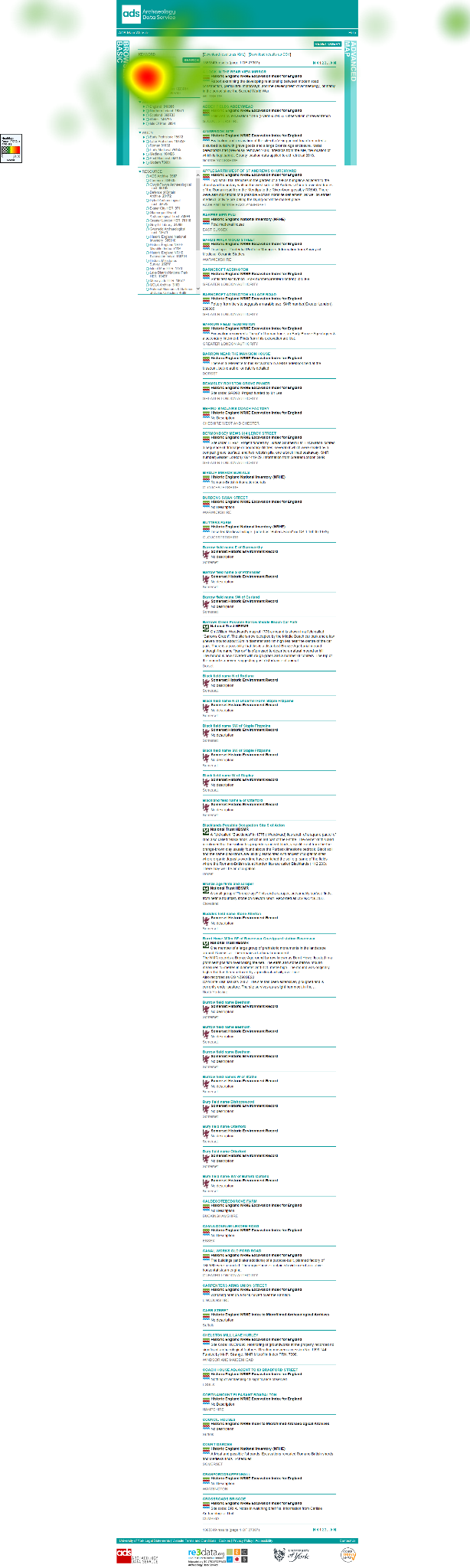
We used a mobile eye-tracking laboratory set up in a dedicated room. The respondents were seated in front of a laptop equipped with an eye-tracking device (Tobii X2-30 Eye Tracker) and eye-tracking software (Tobii Studio 3.2) installed. A second monitor was connected and used for a live preview of the respondent's actions. An I-VT fixation filter with a velocity threshold of 20 ms was used. The minimum fixation duration was set to 60 ms, and adjacent fixations were merged if they did not exceed 75 ms and an angle of 0.5 degrees between fixations. In the eye-tracking experiment, five respondents, guided by their specific informational needs, conducted searches across three archaeology data archives. Heat maps generated with the assistance of eye-tracking equipment provided valuable data and a detailed visualisation of respondents' interactions with the platforms. These heat maps enabled researchers to precisely identify problem areas and specific points of difficulty encountered by respondents during their information searches.
The third research stage involved an open-ended questionnaire that sought user feedback on the effectiveness, efficiency, and satisfaction with each archaeology data archive.
The analysis of interview data allowed us to identify three distinct groups of non-archaeology professionals interested in archaeology, based on their varying needs for data accuracy and engagement levels. These categories reflect a spectrum from abstract inspiration to detailed reconstruction (Table 1).
| User groups | ||||
|---|---|---|---|---|
| Inspiration | Improvisation | Reconstruction | ||
| Criteria | Activities |
Browsing visual sources to trigger creative thoughts or discover new artistic directions Visiting museums primarily to "feel the spirit" of the past |
Creating educational content, tours, and visual storytelling
Translating archaeological data for general audiences Scriptwriting and animating/visualizing the past Developing games and interactive content based on archaeological findings |
Precise reconstruction of past artefacts, environments, and lifestyles
Thorough analysis and verification of archaeological data Collaboration with archaeologists and museums, use of digital archives Building personal datasets for future reference |
| Usage of archaeological data |
Casual and intuitive exploration
Superficia focusin on visual impressions, creative potential and emotional connection Little concern for scientific accuracy unless they transition to a more detailed project Random search patterns, driven by visual appeal Rely on quick-access sources, e. g. Google image search, museum displays, illustrated books |
More systematic gathering of supplementary information
Moderate depth: seek accuracy but accept generalisations. Aim for balance between correctness and accessibility Combine visual and textual data to build narratives Depend on expert filtering and interpretation Using established museum displays as foundations |
Data-centric, accuracy and authenticity are paramount
Highly targeted and detailed searches Sophisticated search skills focused on specific fields of interest Build personal data repositories, preserve digital copies |
|
| Data needs |
Emotional or visual trigger for creativity
Generalised information, no deep verification Limited technical or contextual detail requirements Often unaware of the availability or relevance of deeper archaeological sources Occasionally consult professionals when precision is needed |
Combination of textual and visual sources
Practical, reliable information that can be turned into engaging stories Prefer secondary sources for ease of understanding Expert consultations for data accuracy |
Exact, verified data for physical or journalistic reconstruction.
Prefer primary sources (excavation reports, original artefact studies) High level of detail and authenticity in descriptions and visuals Direct consultations with archaeological experts |
|
| Data types |
Primarily visual data (photos, sketches, reconstructions, artefact shapes)
General background information to contextualize visuals Surface-level texts (museum labels, simple summaries) Physical contact with real objects for emotional significance |
Online exhibits, books, articles, documentaries, photos, videos, drawings
Visual and written formats, but simplified and accessible Museum resources Summary information that can be easily understood by a non-archaeologist |
Excavation reports, museum records, specialist monographs, digital scans
Physical access to artefacts for measurements Digitised primary sources with metadata and high-resolution images |
|
For the Inspiration group, the archaeology involves triggering a creative thought, discovering a new artistic direction, or stimulating a new project. However, the archaeological objects or datasets themselves may not hold intrinsic significance beyond their initial inspirational impact. As noted, members of this group may occasionally seek more detailed archaeological data for specific projects, transitioning from inspiration to improvisation. Despite this potential shift, their primary engagement with archaeological data remains sporadic, often unintentional, and driven by the visual impressions or creative potential they perceive. Typical comments from this group include: "I visit museums for new ideas", "I want to feel the spirit of the past", or "Seeing an object sparks my imagination." Examples of representatives from this group include writers, architects, and painters.
Situated between inspiration and reconstruction, the Improvisation group selectively reuses archaeological data, striking a balance between authenticity and practical constraints (such as documentary movie, guided tour, educational activity). The main characteristics of this group's information behaviour involve efforts to gather additional information about objects of interest, supplement visual data with textual information, or consult specialists. Examples of their approach include: "We try to find period-specific objects, but it is not always successful", "It's sufficient if it looks right", "If I'm unsure of its authenticity, I consult archaeologists I know", and "It would be helpful to have generalisations about what is typical for the period." Thus, the information behaviour of this interpretation category is influenced by the availability and clarity of data. Challenges such as not knowing where or what to look for and difficulties in grasping the true meaning or significant connections once the data is found can limit their ability to rely on the most accurate archaeological information. The examples of representatives of this group include a tourist guide, a museum educator, a documentary filmmaker.
The Reconstruction group requires high levels of historical accuracy. Members of this group require valuable archaeological data to accurately depict the past for scientific communication or reconstruct artefacts and historical contexts, aiming for maximum factual accuracy, originality, and historical relevance. The primary characteristics of this group's information behaviour include a strong desire to collect data that is not only highly accurate but also pertinent to their specific field of interest, topic, or category of objects. Their data search is highly targeted and detailed, with sophisticated search skills. The information sought is specific and often intersects with the experiential aspects of archaeology. The data search process is characterised by statements such as: "I need to know the exact thickness", "I am looking for data on material composition", "I compare multiple sources", and "I build up my own dataset in case I find something relevant to my field of interest, even if I don't need it immediately." Examples of representatives from this group include an archaeology reconstructor and a journalist.
These categories illustrate the diverse ways non-archaeology professionals engage with archaeological data, shaped by the purpose and context of their projects. Even within the same community, data accuracy needs may shift depending on whether the goal is to inspire, communicate, or faithfully reconstruct. It is not so much belonging to a specific non-archaeological community that is the determining factor, but rather the specific project or intended goal that defines the required level of accuracy in archaeological data. Therefore, these three levels represent ideal or extreme positions on the spectrum of information-seeking behaviour: inspiration lies closest to the non-archaeology professional audience, reflecting a need for general information that is often observed among this audience, while reconstruction aligns more closely with the information practices of professional archaeologists.
The research interviews highlight a few types of archaeological data that creative users need. Three representative cases were analytically selected there because their practices most clearly corresponded to the category of inspiration-driven reuse, as defined in the TETRARCHs "Audience map" and data accuracy framework developed in the study. Specifically, their interview data provided the clearest and most articulated examples of archaeological data being used primarily for creative inspiration, rather than for reconstruction or interpretative purposes.
For example, regarding the choice of a Bronze Age pile dwelling settlement as inspiration, the architect mentions that
"…we wanted to find something unique, to stand on something real and have a unique idea of contemporary SPA […] and we find the information about this archaeological site […] after the discovery of an archaeological site, it was analysed what could be "extracted" from it, how to develop an architectural idea on this background…"
The development of architectural ideas began with the archaeological drawing of a detailed situation plan of the Bronze Age settlement's pillars. He started by searching for inspiring non-digital information in the local library (such as newspapers and books):
"…there may be some incorrect information on the internet, so I started with the library…"
After he searches for information on the internet:
"…I needed reconstructions of a Bronze Age pile dwelling settlement, and the one I was reading about had only been sketched once […] so I looked at examples of such reconstructed settlements in Europe […] in Germany, Italy, Macedonia […] the last one in Macedonia looks like more artistic, but not precious archaeological reconstruction. I had doubts about it…[…] In that retrospective, made up of examples from Europe, I chose common elements that are relevant to my contemporary SPA project: the general composition, the volumes of the buildings, and the individual elements…"
The information search on the internet was started from the standard search in Google by the query in English such as "pile dwelling settlements in Europe". He found some valuable information on the UNESCO website (the Prehistoric Pile Dwellings around the Alps are included in the UNESCO World Heritage List). Later, the architect visited the websites of musealised pile dwelling settlements:
"…I wanted to find out what's currently happening in these reconstructed settlements, what activities are made […] there, I also searched for photos or drawings on which basis these settlements were reconstructed…"
He did not use digital archaeological data archives. He took this archaeological information from scholarly publications of archaeologists. He also
"…not communicate directly with archaeologists and the people who made the reconstructions of pile dwelling settlements […] maybe with more time I would have collected more information…"
The primary important data and information for architectural inspiration are visual:
"…Of course, I'm most interested in visual information, because architecture is a visual thing. Textual descriptions, history - that's also necessary […] if the description mentions something very far away from what fits chronologically, then I'm more cautious… […] The descriptions were also useful as visual aids; for example, in one case, it was written that there were between 7 and 10 buildings in a Bronze Age pile dwelling settlement, and the dimensions (length and width) of these buildings were mentioned. This is very useful for the visual interpretation…".
The architect has evaluated the quality of archaeological data. The main criteria of the evaluation were institutional (he trusted the information on UNESCO or the museum's websites) and comparative (the information from different sources is repeatable / overlaps). In his opinion,
"…choosing archaeology as a source of inspiration has added value. It was a unique idea - creating a continuum from the past to the present…"
For the writer, archaeological material is the source of inspiration:
"…Although found objects are intriguing, their significance lies partly in professional analysis, which offers context, dating, and cultural placement - elements that make the past accessible and meaningful. Museums serve as a bridge to connect with the ancient world, offering more than just viewing objects; they provide an experience of the "spirit" of the past. Museums thus play a dual role: they educate and inspire, but their limitations in accessibility are a source of frustration for those seeking a tactile connection. While direct observation is essential, there is recognition that objects alone aren't enough. The writer acknowledges the value of expert analysis, which provides insights that make the object's story clearer, allowing for a deeper, informed interpretation in creative work…"
She then chooses museums and walks through the exhibitions, unsure of what to look for. But as she wanders, she looks at old archaeological finds and starts thinking about a possible plot, looking for shapes that will intrigue them and spark their imagination. One would have to rely on accurate archaeological data if the work were to be concerned with reconstructing the past. The archaeology is much more than what real archaeologists dig up:
"…For example, here in my village, the moles are digging and digging up all sorts of earthenware remains […] my understanding is that some of them are far from modern […] so is this archaeology or not? I was thinking of starting a novel, as if I hadn't already, but you know, this archaeology is my life, and it might be relevant. Because for me, archaeology is everything old and dug out of the ground, well, out of the water as well […] The desire to know what it was like there doesn't go away somehow, and it won't […] People will dig and dig and dig. It is important for people to understand who I am now, but it is also important for my identity. Because when you read that written history, it's still an interpretation of who understood, who didn't understand, and who deliberately lied. And when you dig the thing out, it doesn't lie. There's such a pure truth there, and it seems to me that that pure truth is very attractive in archaeology….".
The writer needs inspiration, so she needs not so much data, but an emotionally significant touch with authentic objects from the past:
"…now, I've started to mold clay for my own pleasure, so when you start, it's natural to wonder how they used to do it before, and what kind of ornaments to look for. I go to museums to look at them. The last time I was in Istanbul at the archaeological museum […], there I took pictures of all kinds of ornaments for myself. But what are the challenges, and what's the most frustrating for me? I want to look at something, but it's all in the archives. Maybe there's some kind of permission. I haven't tried to go in there like that, but you can't just look. You don't even know where to look on the internet. But then you still want to look at the actual thing. You can look on the internet, but it's not the same for me; I want to look at the real thing. But it's not that I go to a museum and write, it's that I need material that has been analysed by specialists, that has been found, and then I can understand and use it. Because if you just look at an object, you might have an idea, but then you write what comes to mind…"
The jeweller is also included in this group of inspiration, as there are projects that rely solely on old archaeological jewellery to generate ideas, unless it is a specific project where the client asks for a replica of an archaeological ring for example.
"…Very often in museums I pay attention to jewellery and I want to see how it was made, what the craftsmen were like, what the design solutions were, but I don't aim to replicate it exactly, especially if there is no such commission. On the other hand, the old ways are not always possible today, so I do it the way I can today. […] if there are catalogues, I also look at them, but only for the pictures. If they really like a particular object, they look to see where it came from and what period. Does not know archaeology, so that specific dating or regions are clear"
The interviews show that archaeological data for inspiration are based on visual appreciation and attractiveness, and that the search for them can be carried out randomly, without any special scrutiny. If inspiration is sought purposefully in archaeological material, a selection of Google search images becomes the first stage of the search, a physical visit to museum displays, but not to collections of artefacts held in funds.
The barriers to using and reusing archaeological data and archaeological data archives are classified and analysed according to FAIR principles (FAIR principles; ADS n.d.). A specific barrier related to the user's information behaviour is assigned to the following categories: findability, accessibility, interoperability, and reusability.
The Findability principle is defined as "…metadata and data should be easy to find for both humans and computers…" (FAIR Principles), and "…supporting the use of sustainable referencing of resources…" (ADS n.d.). In our case, the main barriers related to Findability are:
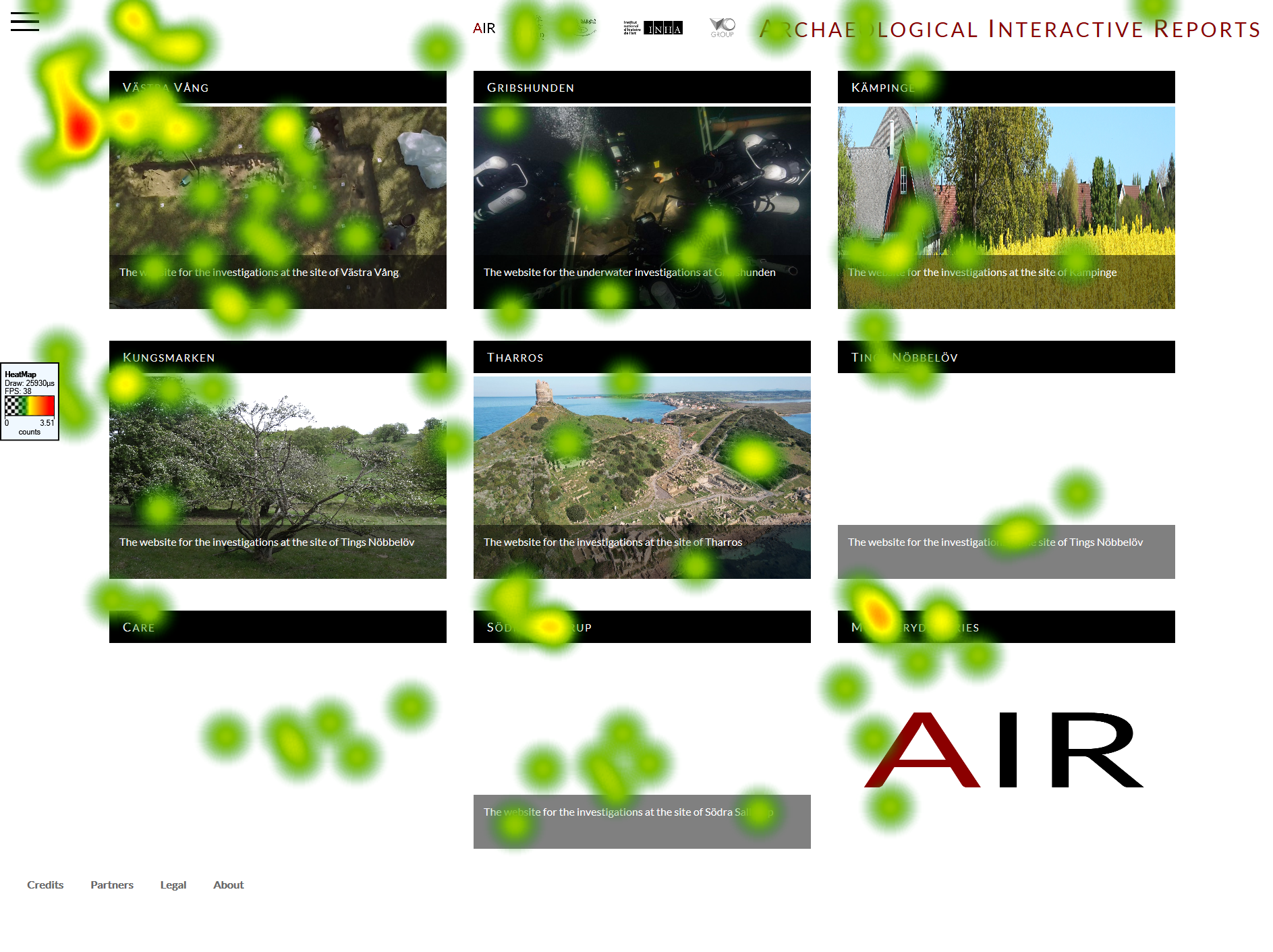
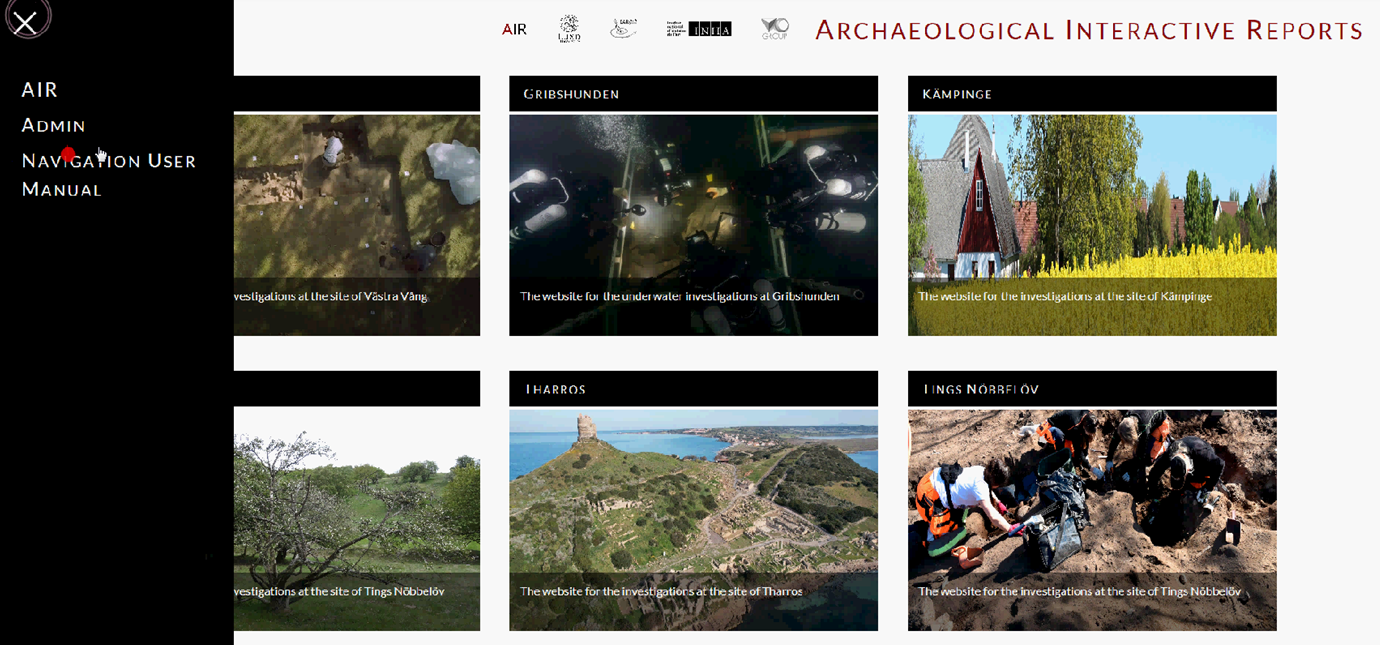
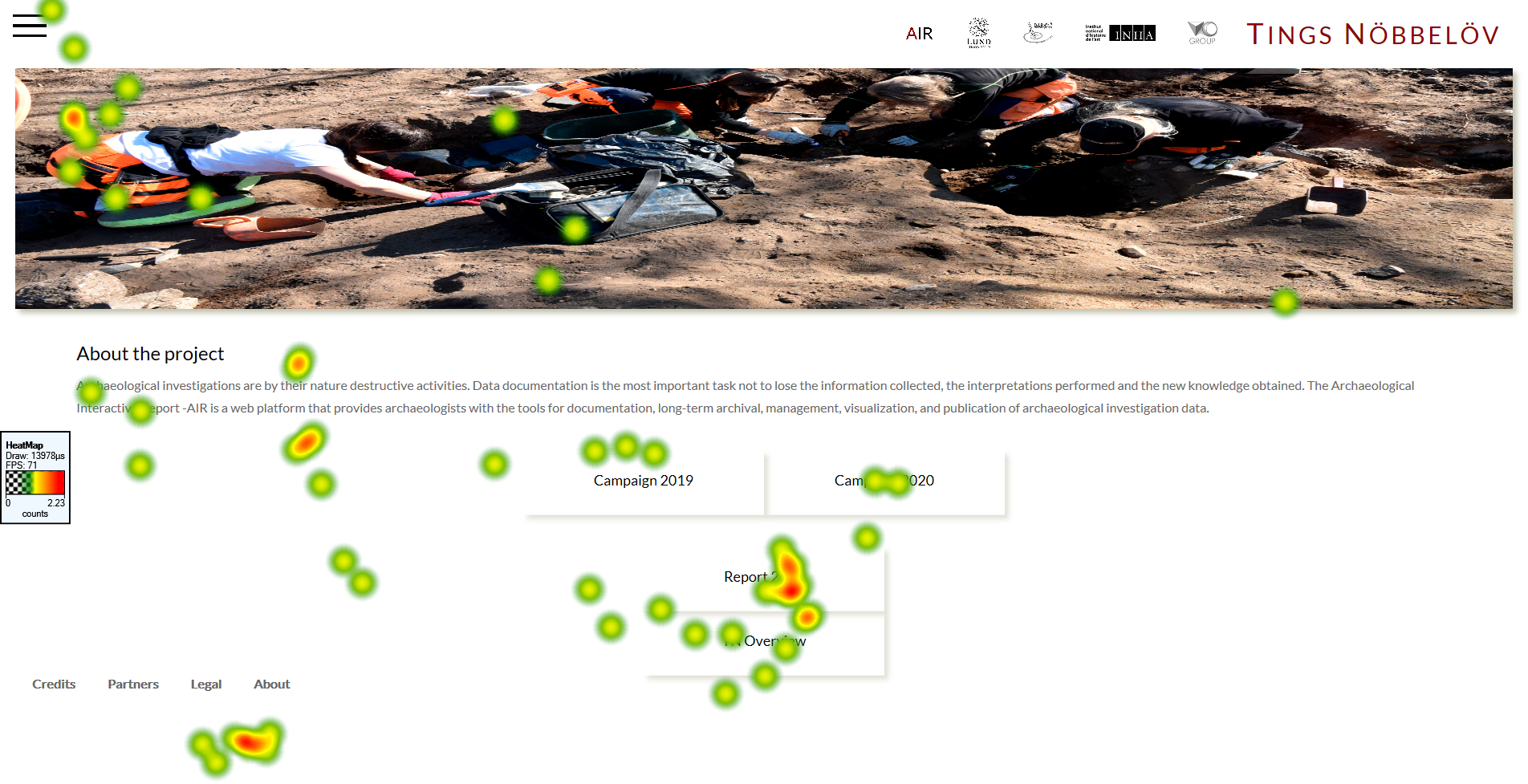
Information-seeking barrier i.e. the difficulties in finding relevant data due to difficult-to-understand search processes. The first difficulty related to this barrier can be described as a misunderstood interface. For example, all experiment participants had considerable difficulty understanding the search possibilities on the Archaeological Interactive Reports platform. The typical heat map (Figure 1) shows the experiment participant's confusion when viewing the AIR Home page. When the they managed to find the navigation menu in the top-left corner of the screen of the Home page, they were left confused without seeing the field for the word search option (Figure 2). This was repeated at the second level (archaeological site) page (Figure 3).
"…The big blocks are the archaeological reports, but how to find the concrete information needed for me inside these reports […] it's no search options there (maybe I can't find it), so I need to open every page one after another and read them…" Reaction from a member of the Inspiration group after the eye-tracking experiment questionnaire
The information behaviour of the people involved in the experiment can be explained by the fact that the AIR platform (in all the cases studied) is designed to be most closely aligned with the information logic of disciplinary and professional archaeology. In general, it repeats the information logic of the archaeological report - a specific, professional archaeology document that is not recognisable to people who are not professionals in archaeology. In contrast, the easiest search for the experiment participants was on the ARIADNE portal, with a clear single search window and the (few) additional filtering criteria of the time period, place, and title. The experiment participants need much less time on ARIADNE than at Google. This could be explained by ARIADNE's direct focus on archaeology meaining less unnecessary (ballast) information after the primary search, and the economy of time to find the information needed for the particular use case.
The second difficulty related to the information-seeking barrier is that users do not receive an intuitive recommendation of the search terms from the search engine. They must enter the search term strictly as required by the platform. The people from the Inspiration group showed evident confusion, as they first struggled to find the search box immediately and then failed to find any results, despite changing the search words and combinations several times. This means that the system does not help the user find and relate the search result to similar data available, making it even more difficult for a non-professional archaeologist to use these platforms. In this case, the Google search engine is not only familiar to the participants but also allows them to see suggestions and errors for search terms. It is then possible to see what is relevant to the search even more clearly. In these cases, users face difficulties not because the information is unavailable but because the search systems are not intuitive in facilitating the search process. The systems require users to know professional technical categorisations, institutional attributions, or specific terminology, which is often unrealistic for non-archaeology professionals. As a result, information-seeking and retrieval are slow and confusing.
The third observed difficulty is related to the dichotomy of (i) search by separate keywords and queries of keywords and logical operators (such as an asterisk (*), AND, OR) versus (ii) search by the sentences of natural language. The main internet search engines (e.g. Google Search) operate by both methods (searching by separate keywords/queries and searching by sentences of natural language). However, natural language is a preference for many users. In this way, the user's information behaviour is educated through natural language. This type of information-seeking behaviour is becoming increasingly dominant and growing with the introduction of AI into internet search engines.
These difficulties (the misunderstood interface, the lack of intuitive search, and the inability to search by formulating natural language questions) are typically not limited to archaeology data archives alone. The interviews show problems similar to those created by professionals on other platforms. Both the filmmaker and the journalist expressed confusion with search systems in digital archives, emphasising how these systems often fail to meet user needs. One of the central issues is that these search systems appear to be designed primarily for professional data managers rather than for general users, making it difficult to navigate and locate relevant information. This highlights a common experience where users encounter vast amounts of data, but inadequate search tools make it difficult to retrieve what they need. In some situations (with specific systems e.g. the central Lithuanian digital heritage platform ePaveldas), the additional barrier is the inability to apply logic operators (such as AND, OR, *) in the search query. The importance of logical operators depends on the specific language. For example, in Lithuanian, the word ending plays a significant role. Without the possibility of using the logical operator asterisk (*), it may take several dozen words (with different endings) to perform a simple search.
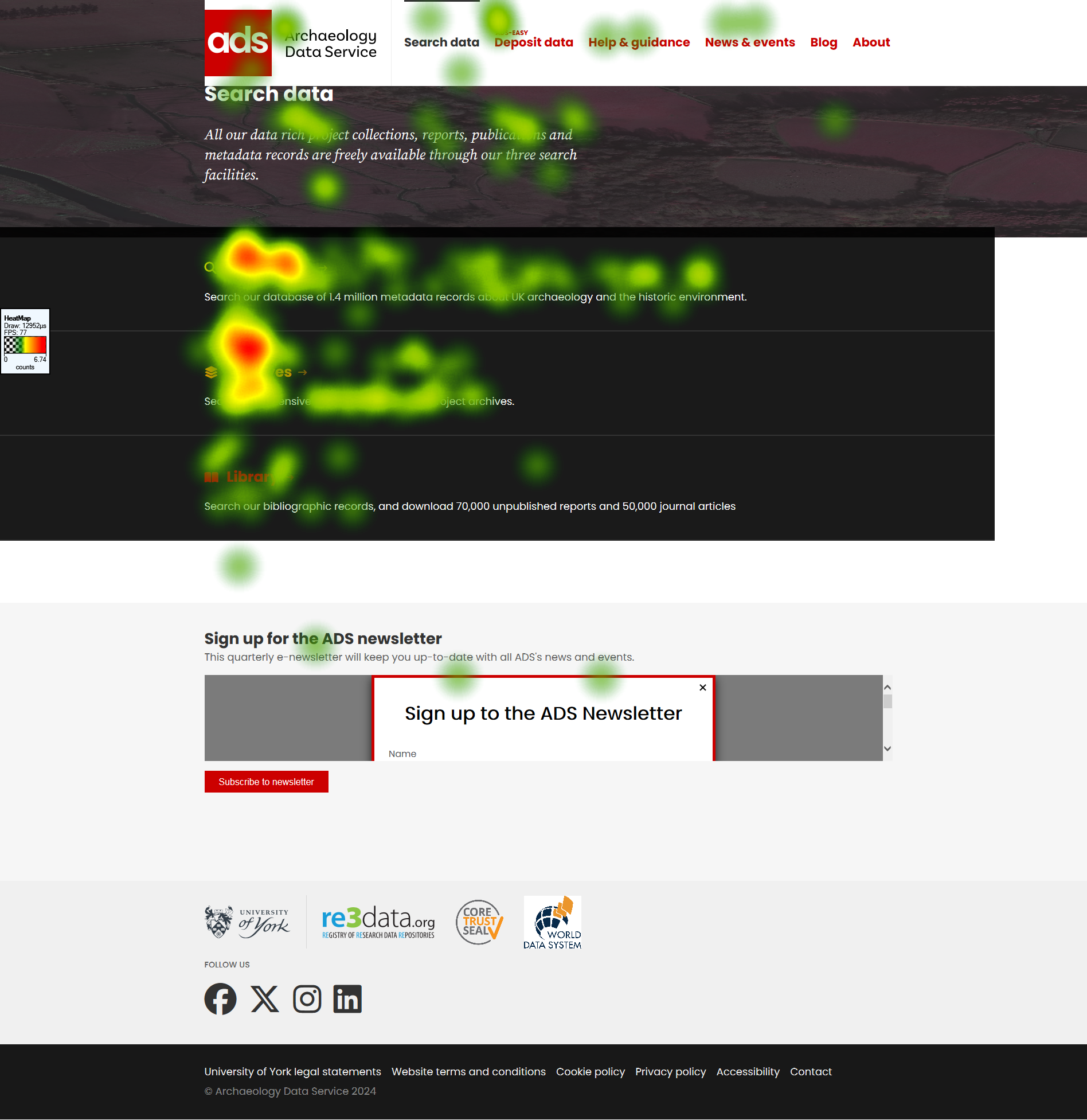
The terminology barrier i.e. the difficulties in finding relevant data due to search terminology that is difficult to understand. This barrier is naturally linked to the differences in the activities of those using the archaeological material. As these individuals have not received formal training in archaeology, specific terms, dating schemas (three-age systems), and attributions to particular cultures or regions are not readily at their disposal. This is most evident in the case of archaeology as inspiration. Since this group has expressed a preference for visual presentation over textual data, names, terms and other data elements defining objects are not the most important and can be a barrier to finding archaeological material. The most challenging aspect for the participants of an experiment (the terminology barrier) was the ADS platform. The typical heat map (Figure 4) illustrates the experiment participants' confusion between the choices of 'ArchSearch', 'Archives', and 'Library' when viewing the ADS Home page. After choosing ArchSearch, the next step, with a long list of terminological choices on the left side of the screen, was difficult for non-archaeology professionals to understand. Usually, they try to apply the field for the word search option without the application of further filtering criteria (Figure 5). This information behaviour of the non-archaeology professional people involved in the experiment can be explained by the fact that the ADS platform (out of all the cases studied) is strongly related to the specific terminological issues typical for professional archaeology.
The terminological barrier is also relevant for the interpretation of archaeological data, as participants evaluate the process of finding detailed material in terms of how easy it is to collect.
"…Opening the data sets, you find a lot of strange information; it is difficult to understand this…" Reaction from a member of the Inspiration group in the after-eye-tracking questionnaire regarding the ARIADNE platform
The need for a professional 'translator' (consultant) was raised in the filmmaker's interview. He mentioned that he would be happy to select historically accurate objects, but it all depends on the budget. If there is a consultant in the team who can provide material, then they focus more on that; if it is difficult to find, they rely on what is easiest to find, which is primarily a Google search. If the object is broadly in line with the semantics of antiquity, the accuracy of the archaeological data is no longer paramount. In this case, the accessibility of search engines and the classification of archaeology according to the needs of these groups (archaeology as inspiration and interpretation) would facilitate the accessibility of archaeological material for these two groups. In contrast, terminological barriers are less noticeable for the group focused on reconstructing archaeological data. The nature of their work fosters familiarity with essential terms and the broader context of the reconstructed objects. Their interaction with archaeological materials closely aligns with that of professional archaeologists in this specialised field. This familiarity also facilitates searches, as object names are based on established archaeological terminology, and the accumulated archive of knowledge and data reduces frustration during information retrieval.
The terminological barrier is typically not limited just to archaeology data archives. The interviews show problems similar to those created by professionals on other platforms. General users often lack the institutional, professional knowledge or specific terminology that archive creators and data managers assume they possess, leading to a disconnect between how data is categorised and how users search for it.
Incomplete Metadata i.e. lack of comprehensive metadata impedes the effective seeking and retrieval of data. This issue is particularly significant when searching for specific (non-textual) media types like photos or videos, as missing or incorrect metadata can render the material "invisible" or unsearchable in the system. This suggests that incomplete metadata not only hampers the ability to find existing resources but also forces users to fill in gaps by creating content themselves. Inadequate metadata becomes a barrier to access, reducing the effectiveness of digital archives and complicating the data retrieval process. Properly tagged and comprehensive metadata is crucial for ensuring that digital objects are easily discoverable by users who may not have specific technical knowledge or access to proprietary search terms. Participants also expressed concern about the data provided, which may not be of any obvious use to the non-archaeology professional, who needs more generalised information to understand the contextual value of the object e.g. rarity, typical for the region, one-of-a-kind, non-typical material, links to global material.
The Accessibility principle is defined as the user "…need to know how they can be accessed, possibly including authentication and authorisation…" (FAIR Principles) "…ensuring the sustainable availability of digital assets…" (ADS n.d.). In our case, the main barrier related to Accessibility is:
Platform upgrade issues i.e. the difficulties in data accessibility after installing a new, updated version of a platform. These difficulties are related to the suboptimal design and functionality of data interfaces, which affect user experience and accessibility. This underscores the importance of designing systems with the end-user in mind. In this case, the system changes not only hindered the usability but also created functional barriers that impacted how effectively users could access and utilise the digitised materials. This kind of degradation in usability turns what should be a streamlined, user-friendly experience into a cumbersome process, forcing users to resort to inefficient workarounds like making print screens instead of being able to download the content directly. For users who rely on these platforms, such obstacles significantly hinder their ability to access the data they need.
The Interoperability principle is defined as the data need "…to be integrated with other data […] to interoperate with applications or workflows for analysis, storage, and processing…" (FAIR Principles) "…providing both syntactically parseable and semantically understandable datasets and metadata, and facilitating data exchange and reuse…" (ADS n.d.). In our case, there are no barriers related to Interoperability. Non-archaeology professionals use and reuse archaeological data in physical space. Although the data are digital, interoperability is not a significant concern for this target audience.
The Reusability principle is defined as the "…metadata and data should be well-described so that they can be replicated and/or combined in different settings…" (FAIR Principles) "…sufficiently documenting and sharing data using the least restrictive licences possible, thereby facilitating data reuse and supporting the integration of other data sources…" (ADS n.d.). In our case, the main barriers related to Reusability are:
Reliability of Information: Issues with mistakes and inconsistencies in both digital and non-digital information. Errors can occur across all levels of information, including among professionals. This experience fostered a cautious attitude toward secondary data, such as monographs and articles, leading to a preference for original sources due to their perceived accuracy and reliability. An architect notes:
"…the biggest challenges were accuracy, trustworthiness of information, selection of information, trust in sources, and checking of sources and information quality…"
Open Access: Limited availability of data to the public, with not all data being accessible. Users' experiences highlight the differences in how open access impacts their work. The most significant challenges with open access are when valuable information is not publicly available. The study participants noted that while some restrictions are pragmatic, such as those related to private funding of archaeological research, other instances are more problematic. Moreover, the journalist mentioned that architectural-historical research often remains inaccessible to the public because it is purchased by clients, such as builders or developers:
"Another issue is architectural-historical research, which becomes inaccessible because it is bought by clients. This limits public access to important information."
The need for interpretative information is an important issue for non-archaeology professionals. This target audience is focused not on the separate tranches, artefacts or ecofacts with metadata, but on the holistic view of "how people live in the past". However, they (as non-archaeologists) lack the competencies and are afraid of making mistakes when interpreting archaeological data by themselves. An architect in interview mentioned that:
"…I really wanted drawings, building plans, facades, that would have been the most useful thing for me, but I didn't find that […] The "pure" archaeological metadata and data is a bit "dry" in my case, as I needed to use more visual data in my work…"
The writer in the after-eye-tracking interview noted concerning ARIADNE, that
, "…the textual information predominate and is need a lot of time to read this, if the images will be added to the text you can easily find did this part of text is useable for you or not…".
The Architect expressed the opinion about the need for a site [not artefact] oriented approach. In his opinion, an example of a very good website is the UNESCO website and that a lot of heritage objects on one website
"…is valuable when I find all information about the archaeological site in one place, when I do not need to collect this from different pages of a book or a lot of different websites on the internet…"
However, the need for interpretative information depends on the user case e.g. the reconstructor in the eye-tracking questionnaire mentions that an artefact-oriented approach with detailed descriptions and measures of artefacts is very useful for him.
Overload of specific scholarly information in some situations could be a barrier for non-archaeology professionals. A large amount of similar artefacts, ecofacts, and metadata creates a situation where it is difficult (for someone without professional archaeological training) to distinguish between them. For example, which artefacts are more important to a particular society in the past, and which are less important? Or, which items are more representative of a community of a particular period when compared to other items? Writer in after eye tracking questionnaire about ARIADNE and ADS mentions that: "…there is an overload of information after the first search and too few possibilities to filter this; needs a lot of time to check every set of information found…" However, it also depends on the user case. The Architect in the interview fixed that more information on one website or a book is better than less.
The existence of the above-mentioned barriers could be explained by analysing and comparing the information needs and information behaviours of the users of different communities. Archaeology data archives are usually created by professional archaeologists for archaeology professionals, who apply a scholarly-based understanding of archaeology data and scholars' information behaviour. However, this behaviour – in many cases – could be misunderstood by members of other communities (semiospheres).
The participants compared three archaeology data archives (ARIADNE, ADS, AIR) and Google. Based on their experiences in finding specific archaeological objects, evaluating accessibility, search tools, and ease of use, participants identified several good practices related to the particular use case, as well as data archives and search engines. For AIR, the writer noted that "…It is comfortable that on the first page the information is already divided into blocks, by location…". However, a Google search was better in (i) visuality of interface ("…possible to search the information visually, following the images…"); (ii) ease of copying and saving data; there are a lot of references to other data sources (books, museum collections, etc.).
Participants also expressed the opinion that these databases provide structured, detailed information, but often have limited geographic scope or content range. They require specific terminology for effective searches and lack certain user-friendly features, like broad keyword flexibility. These databases provide in-depth information but often lack visual content, making it harder for users to verify artefacts. They struggle with precise searches for unique or specific items and lack the flexibility to correct minor input errors or language variations. While rich in specialised content, these systems generally lack user-friendly, item-specific search functionalities, requiring clearer navigation paths and accessible search bars for specific artefact types. Their current structures favour in-depth archaeological projects over quick, item-specific searches. Google remains the most efficient system for initial artefact research, offering broader filtering, intuitive search tools, and a visually accessible interface. However, users need to be aware of specialised databases separately to leverage them effectively. Google's simplicity and user-friendliness make it suitable for quick, general enquiries, though its coverage is less exhaustive in niche fields. Google provides immediate and familiar access to general and detailed content, but may miss some niche data available in dedicated archaeological databases. Google's comprehensive reach and flexibility make it ideal for general and quick searches, though finding specialised academic content requires effective keyword use and filtration. As a general search engine, Google effectively provides both images and a wide variety of sources, but includes excessive commercial results. Its predictive search and filter options remain useful for finding targeted information, even when initial search terms are broad. Google may improve artefact-specific searches by including more links to specialised academic databases, promoting academic resources as part of its filtered search categories.
The presented results are collected qualitatively through a small-scale study. The observations of this study cannot be generalised to the entire population. However, the study's results are important in understanding the different behavioural (cf. information behaviour) patterns of different archaeology data user groups in the data use and re-use. The analysis presented in this report demonstrates that non-archaeology professionals use and reuse archaeological data in different ways, reflecting their distinct needs, competencies, and contexts. The formulated hypotheses, in general, are approved. The members of different archaeology-related communities have different needs and different information behaviours. That means that archaeology data and data archives, created by professional archaeologists for professional archaeologists, are based on specific information behaviour that is easily understandable for archaeology professionals, but is difficult for non-archaeological professionals to understand. These differences in information behaviour are the main explanation for the barriers that non-archaeology professionals face in using and reusing archaeology data.
Among non-archaeologists, three principal modes of engagement were identified: inspiration, improvisation, and reconstruction. These categories reveal how the level of demand for accuracy is directly tied to the purposes of engagement. Creative professionals, such as writers, architects, or jewellers, employ archaeological material primarily as a catalyst for imagination, often relying on visual impressions rather than precise contextual information.
The potential for archaeology data reuse by non-archaeologists is not only determined by the software solutions of the archive or database system, but also by the lack of systematic knowledge to effectively use the search systems. For non-archaeological communities, especially those that use archaeological data for inspiration, the value of the data is generally not in the original data, but in the data that has already been processed, structured, interpreted and partially prepared for science communication. The main barriers for non-archaeologists are related to the findability, accessibility, and reusability of archaeological data. Interfaces designed for professional archaeologists are often opaque to non-archaeologists, terminology is not easily understood, metadata is inconsistent or incomplete, and information overload hinders effective engagement. While archives contain vast and valuable resources, their usability for broader audiences remains limited. By contrast, general search engines like Google, although less precise, offer more intuitive and flexible access. Creative people have more 'whole view' (site-oriented approach) for inspiration, but reconstructors think like archaeologists and accept the detailed description of specific artefacts in a scholarly artefact-oriented approach. In terms of information behaviour, archaeology reconstructors are most similar to professional archaeologists and have fewer barriers in the use and reuse of archaeology data archives.
Good practices identified in the study suggest that solutions lie in improved metadata standards, user-centred interface design, clearer guidance on search and citation practices, and greater integration of visual and interpretative resources alongside raw data. The sustainability and openness of data are key to supporting long-term reuse.
The barriers related to the non-archaeology professional's (non-archaeologists) audiences could be partially solved by:
Overall, the findings underscore that archaeological data archives, although primarily conceived for scholarly use, can serve a much wider public if barriers are reduced and practices are aligned with diverse user needs. By doing so, these archives may contribute more effectively to the use and reuse of archaeological data and knowledge across disciplinary and societal boundaries. However, the study's results don't mean that every archaeological data archive must be rearranged to the needs of all possible target audiences. They are developed primarily for scholarly needs and must serve the needs of this target audience of archaeology professionals properly. Considering the diverse audiences is crucial for gathering arguments, conducting a cost-benefit analysis, and determining why a particular archaeology data archive needs to be adapted to meet the needs and information behaviour of the non-archaeologist community. When considering this issue, it is important to understand the social responsibility of scholars and the role of non-archaeologists (such as creative people) in promoting the understanding of archaeology among the general public and in the development of academic, professional archaeology in general.
This research was conducted as part of the TETRARCHs (Transforming Data Re-use in Archaeology) project.
The authors would like to thank their colleagues Holly Wright and Kristy-Lee Seaton, who worked on WP7, for their discussions, ideas, comments, and joint activities aimed at achieving the project's planned results.
Internet Archaeology is an open access journal based in the Department of Archaeology, University of York. Except where otherwise noted, content from this work may be used under the terms of the Creative Commons Attribution 3.0 (CC BY) Unported licence, which permits unrestricted use, distribution, and reproduction in any medium, provided that attribution to the author(s), the title of the work, the Internet Archaeology journal and the relevant URL/DOI are given.
Terms and Conditions | Legal Statements | Privacy Policy | Cookies Policy | Citing Internet Archaeology
Internet Archaeology content is preserved for the long term with the Archaeology Data Service (ROR). Help sustain and support open access publication by donating to our Open Access Archaeology Fund.
 Home
Home