Cite this as: Sloane, B. 2026 'Legacy and Springboard: The Untapped Potential of Archaeological Archives for Scientific Innovation', Internet Archaeology 72. https://doi.org/10.11141/ia.72.11
Successive international conventions (and numerous state laws and policies) clearly identify the importance of caring for our shared archaeological heritage. The Valletta Convention (Council of Europe 1992) makes specific reference to the importance of archaeological archives as the physical legacy of excavations that are by their nature destructive. This focus is based upon the value of these archives as: a powerful resource to test and re-test theories of original findings from archaeological investigations as knowledge and techniques develop; the raw material for further research into past civilisations and cultures; material and sources of knowledge for museum displays and teaching collections; the means to advance knowledge and to create opportunities for access for everyone (Brown 2011, 1; Oniszczuk et al. 2021).
A number of these benefits have been presented in Europae Archaeologiae Consilium (EAC)'s publication on public benefit of development-led archaeology (Sloane et al. 2024) and they make very clear the case for preserving the Valletta approach to archaeology.
But archives have another significant value. They present unique opportunities for advancing scientific innovation in domains other than archaeology and history. This potential arises from the incredible diversity of materials and samples gathered as part of investigations. Such archaeological materials cannot be synthesised in a laboratory or created in artificial conditions. They can only be sourced from investigations. These include (but are not limited to):
As well as providing rich environments for blue-skies research, exploitation of these materials has the genuine potential to address a number of significant research avenues in the following domains:
However, this potential is essentially untapped and, on the rare occasions when effective collaboration has occurred, has very often originated by chance, through individual contact between archaeologists and researchers in other domains. There is a real opportunity to create a pan-European step-change and to place that change in the context of the emerging European Infrastructure for Heritage Science (E-RIHS) and the Alliance for Research on Cultural Heritage in Europe (ARCHE), which may influence the next iteration of Horizon funding.
This article begins to explore how this step change might be brought about. It sets out to illustrate some of the exciting opportunities that exist through brief case studies where such research potential has been, is being, or could be, unlocked. It then sets out some thoughts about how archaeologists and others might work to increase effective collaboration, and in so doing provide tangible evidence of the value of archaeology to wider society and thus support both development-led archaeology and museums that curate this treasure-house of knowledge.
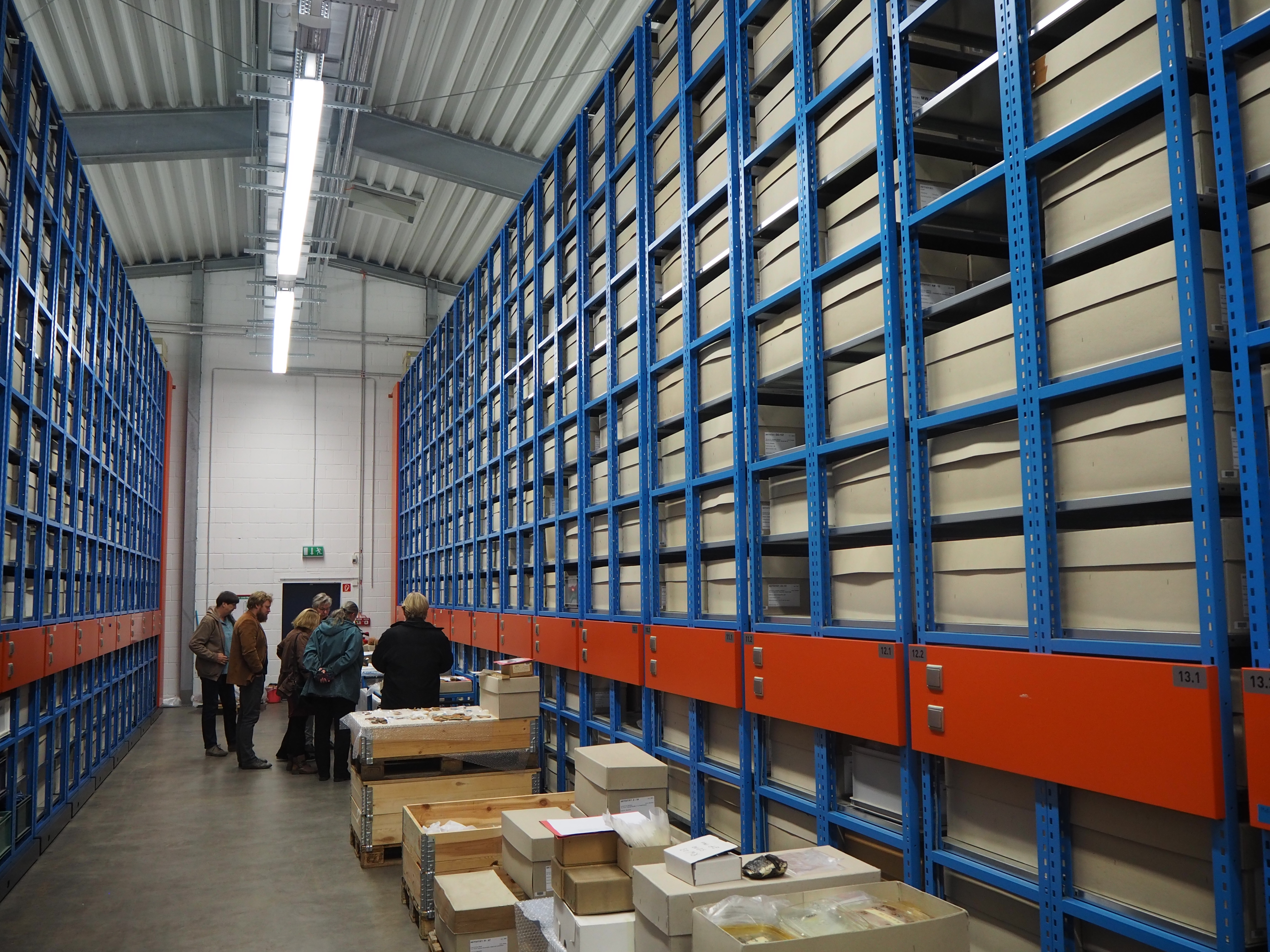
The following case studies are a mixture of what has been achieved already and what may be possible in the near future with the right collaborations. Many are focused on the study of ancient DNA extracted from organic material within archaeological collections. They draw heavily on previously published (referenced) work. My aim here is simply to summarise that work, and in doing so I have in places drawn wholesale on the original texts, to which the reader is directed in every case.
Ancient DNA (aDNA) research has developed at a remarkable pace over the last four decades, since the first human aDNA was extracted in 1984 from an Egyptian mummy (Pääbo 1985). Development of technologies for high-throughput genome sequencing and improvement of sample preparation techniques have made it possible to study aDNA from archaeological samples reaching back more than 1 million years (Zhur et al. 2021). Study of this resource has permitted new insights into the history of human migration, replacement of populations and interbreeding of early hominin species, and are now beginning to transform our understanding of recent positive selection in humans (Haber 2016). More than 6000 ancient genomes, most of them from northern Eurasia, have been reconstructed to date, and have helped disentangle evolutionary origins, migrations, interactions and disappearances of past human populations; but, as researchers in the field state 'we have only scratched the surface of human history' (Chen and Nedoluzhko 2023). Internationally there are positive signs of collaboration, and a number of initiatives have been developed to 'establish and strengthen the critical interdisciplinary dialogue by encouraging extensive symbiotic association between archaeologists and geneticists/anthropologists to elevate the domain knowledge forming the foundation for future reflective archaeogenetics' (Dalal et al. 2023), although this has not yet, to our knowledge, incorporated UK archaeological archives systematically.
This is not simply about understanding our past. It is about establishing the basis of our genetic heritage and beginning to unravel the introgression of DNA from different hominin species that gave rise to positive adaptation (e.g. for cold climes or high altitudes). The importance of understanding human evolution from the study of aDNA is underscored by the next case study.
Research into human aDNA has transformed our understanding of multiple sclerosis (MS). This autoimmune disease of the brain and spinal cord affects more than 2.5 million people worldwide, with wide prevalence variations across ethnic groups and geographical diversity. Northern Europeans are particularly susceptible to developing the disease. The origins of and reasons for this geographical variation are poorly understood but may hold important clues as to why the prevalence of MS has continued to rise during the past 50 years.
Using a large ancient genome dataset from the Mesolithic period to the Bronze Age, along with new medieval and post-medieval genomes, researchers have been able to show that the genetic risk for MS rose among pastoralists from the Pontic steppe (what is now an area of Bulgaria, Romania, Ukraine and southern Russia) and was brought into Europe by the Yamnaya-related migration approximately 5000 years ago. Furthermore, the research has revealed that these MS-associated immunogenetic variants underwent positive selection, probably driven by challenges from new pathogens linked to changes in diet, lifestyle and population density. As the researchers state 'This study highlights the critical importance of the Neolithic period and Bronze Age as determinants of modern immune responses and their subsequent effect on the risk of developing MS in a changing environment' (Barrie et al. 2024).
This is not simply an academic curiosity. The UK's MS society responded to this research in the following way: 'This is a new and novel way of understanding the genetics of MS. We don't know for sure why people develop the condition, but we know you can't directly inherit MS. It's likely down to a combination of genetics, and environmental and lifestyle factors ... More than 130,000 people live with MS in the UK, and these kinds of studies help us to understand more about who develops MS and why. Ultimately, research like this could lead to new ways to treat or even prevent MS' (Quick 2024).
The potential implications of pathogen exposure in shaping our past and future is the subject of the next case study.
Research into human skeletons excavated from the time of the Black Death pandemic (AD 1347–1353) and retained in archives has unlocked the genetic history of the plague bacillus (Yersinia pestis) and provided a potential basis for understanding varying lethality of biovars (where bacteria that have identical genetic but different biochemical or physiological characters). To date (2025), nearly 200 ancient Y. pestis genomes have been published, allowing the unprecedented ability to explore the origins of the pandemic, its progression, and potential factors underlying its cyclical disappearance and reappearance (Gaul and Spyrou 2025).
Recently it has been asserted that the mortality rate related to this pandemic (potentially as much as 50% of the population of Europe) had an impact on the modern gene pool (Klunk et al. 2022), and that changes in the plague's virulence and the duration of successive pandemics may have been dependent upon modifications to the genetic character of the bacillus over time (Sidhu et al. 2025). The implications for the study of modern human health and the value for addressing current plague outbreaks is clear.
Hansen's disease is known from archaeological samples from India and Chile extending back at least 4000 years (Aborghetti et al. 2025; Ramirez et al. 2025; Robbins et al. 2009). It is caused by the pathogens Mycobacterium lepromatosis and Mycobacterium leprae. Mycobacterium leprae has also been found to occur in animal species. Recent research has uncovered relationships between medieval strains isolated from archaeological human remains and modern animal hosts such as the red squirrel in England (Urban et al. 2024). Study of the disease in human and animal remains from archaeological sites has the potential to improve our understanding of the disease in the present day, while the role of animal hosts and interspecies transmission in the past remains largely unexplored. Research into both M. leprae's evolution and host adaptations to the bacterium, alongside historic and archaeological research, is uniquely suited to help unravel when and why the disease jumped between species, and to reconstruct, predict and prevent such events for public health interest. Techniques such as those that look at microscopic bone changes have the potential to provide information about how the disease progresses in people affected by leprosy in countries where it still occurs today, and about how leprosy is transmitted from infected animals to the human population. The role of this 'zoonotic' transmission of the disease in sustaining leprosy is significant where Hansen's disease remains a major public health problem in countries such as Brazil.
Climate change is presenting very significant challenges to global food supplies. About 90% of the world's calories come from about 20 species of plants, of which approaching 50% come from rice, maize and wheat alone. Extreme temperatures, shifting rain patterns and elevated carbon dioxide levels are pushing these crops to their limits. Agriculture in the hottest, driest, most arid and generally lower latitude places on Earth will be hit by the effects of climate change soonest (Chapman 2022). Archaeology can provide evidence of a wider variety of food crops that may exhibit greater resistance to pests, and, in many cases, are drought and heat tolerant. Some varieties of these cereals are still cultivated, but not as widely as wheat or rice.
This potential is being explored via a pioneering project exploring ancient environmental DNA (eDNA). The Ancient Environmental Genomics Initiative for Sustainability (AEGIS) project has been awarded $85 million over seven years by The Novo Nordisk Foundation and the Wellcome Trust. The project aims to sequence aDNA from plant samples all over the world and compare them to the DNA in modern reference genomes in order to better understand past genetic diversity and learn how ancient species adapted to their environments. Lead researcher Professor Eske Willerslev of the University of Copenhagen and University of Cambridge explains that 'By employing ecosystem modelling, we can pinpoint which combinations of species led to the most durable ecosystems in the past. This knowledge could serve as a blueprint for creating climate resilient food systems, enhancing both the crops we grow and the sustainability of the environments they grow in. (Watson 2024).
Fallow deer are an icon of the British landscape, and an important part of the island's bio-cultural heritage. They are native to the Mediterranean but, over the last 2000 years, have been repeatedly introduced to Britain. They are now more numerous than at any point in the past and are overgrazing landscapes and prohibiting woodland regeneration, to the detriment of their population's welfare and broader biodiversity (Sykes 2017).
Deer culling is currently the only viable population management strategy, but deer stalkers are in decline due to lack of training and because younger generations have a negative perception of deer culling. Fear of negative publicity is a concern for deer management organisations, further suppressing discourse on the subject. The cultural distaste for deer culling and venison consumption is exemplified by the National Food Strategy, which regards wild animals as outside of human consumption. For this reason, most wild venison is discarded or exported at a low price. In contrast, supermarket venison is expensive and generally sourced from deer farms located as far away as New Zealand.
Both the government-funded Deer Initiative (1995–2020) and the Department for Environment, Food and Rural Affairs (DEFRA)'s 2022 consultation on deer management stressed that wild venison is affordable, healthy, high-welfare, sustainable and a by-product of necessary deer culling. Yet this messaging has not connected with the general public. A research project funded by the UK's Arts and Humanities Research Council has aimed to overcome this by contextualising fallow deer management and presenting it in an engaging and palatable way. By careful analysis of archaeological collections from across the UK, it demonstrated that modern fallow deer descend from populations established c. AD 1000 as part of a medieval hunting culture. Associated historical research showed that the species was hunted primarily by women, and deer carcasses were ritually butchered, or 'unmade', and venison redistributed throughout society to facilitate community cohesion. Gradually, hunting and venison fell out of fashion and, in the absence of human management, their populations burgeoned. In essence, therefore, the modern fallow deer problem could be shown to be a legacy of the medieval period. The project developed its research outcomes into practical resuscitation of medieval-style approaches to fallow deer hunting, carcass processing and venison redistribution by:
Two rather different case studies suggest significant potential for the use of artefacts in museums in supporting people who are recovering from poor health or have mental health conditions.
'Heritage in Hospitals' was a pilot project run by researchers from University College London, where volunteer patients were given the opportunity to interact with a number of museum objects. The researchers concluded that handling museum objects can have a positive impact on patient wellbeing, as patients, on average, recorded higher scores on visual analogue scales measuring life satisfaction and health status afterwards. The results of this research have provided 'valuable information on the transitional and transformational role heritage could play in healthcare and wellbeing, affording an opportunity for closer engagement between the heritage and healthcare sectors'. A follow-up project produced guidance on how this approach should best be delivered (Chatterjee et al. 2015).
The 'Romans at Home' project undertaken by the University of York and York Archaeological Trust (YAT) also engaged with archaeological research into the phenomenology of archaeological sites and museum experiences. It explored the concept that tactile and sensory stimulation could have a positive effect on people living with dementia. For the project, scents inspired by archaeological data collected from sites around York were combined with tactile artefacts from YAT's archive and related replicas into a handling collection, designed to provoke sensory experiences. Successful pilot sessions with a York-based care home suggest that there is good potential for positive outcomes, and the future aim of the researchers is to develop a collection of artefacts to be loaned to people living with dementia and their carers, to be used alongside a synchronous virtual interpretation by YAT staff. The handling collection would be made available on request and promoted through community groups and partners such as York Dementia Action Alliance and Alzheimer's UK (Drew 2024).
This final example is less of a single case study and more of an example of how the past can contribute to a unifying approach to health, the environment, and the lessons that studying the past can provide. It advises us that, while specific and targeted approaches such as those set out above have huge potential in their own right, a broader use of the past as a resource — and thus the archaeological legacies in our archives — is of equal value.
The World Health Organization promotes an approach termed One Health. This is an integrated, unifying approach that aims to sustainably balance and optimise the health of people, animals and ecosystems. It recognises that the health of humans, domestic and wild animals, plants and the wider environment (including ecosystems) are closely linked and interdependent. This links to a number of the United Nations (UN) Sustainability Goals, especially Goal 3 (Ensure healthy lives and promote wellbeing for all at all ages).
Bendrey and Fournié (2023) note that, while One Health approaches, aimed at improving health understanding and outcomes, are interdisciplinary and multisectoral, 'It is the case, however, that they seldom effectively draw on evidence from disciplines that offer deeper time-depth perspectives, and when they do, this is generally restricted to evolutionary biology and the reconstruction of long-term infectious agent phylogeny based on available genetic sequence'. They propose that other disciplines, such as archaeology and history, can address, complement or contextualise the contemporary health challenges that face local and global communities. In essence, this is presenting the past conceived as a series of unique natural experiments that can help us better understand and prepare for future disease events in the face of a rapidly changing social, geopolitical and climatological world.
The case studies above are deliberately international in their scope. Firstly, this recognises the nature of the challenges, which impact on people regardless of state of origin. Secondly, it brings to the fore the need and opportunity to develop approaches collaboratively through, for example, the EAC.
It follows that the start of the search for solutions needs to consider principles that can transcend specific state approaches to heritage, and that can therefore be applied within different frameworks. There are very promising infrastructural initiatives in Europe that may lend themselves to exactly this pursuit.
The first is Alliance for Research on Cultural Heritage in Europe (ARCHE). The explicit purpose of ARCHE is to undertake a detailed assessment of research and innovation (R&I) gaps and needs for the next decade, from which will emerge a Strategic Research and Innovation Agenda (SRIA) for joint programming that might be anticipated to significantly influence the Horizon Europe funding programmes. A new purpose-built governance structure will involve existing networks and new partners from relevant scientific disciplines and industries.
Second is the European Research Infrastructure for Heritage Science (E-RIHS). This is an international research infrastructure that aims to link facilities and instruments, and skills and expertise, with research demand, to create a paradigm shift in collaboration. The core focus of E-RIHS is conservation of heritage, but its strategy is very relevant, including as it does the following objectives:
Again, early engagement by member states might help shape the research programmes supported by E-RIHS.
This advocacy can only be achieved through a shared and clear message that can be presented to key stakeholders. It is suggested here that the message should comprise three parts: (a) making the case for ensuring that archaeological archives are sustainably managed for the future; (b) clearly demonstrating the potential that these archives hold; and (c) explaining how that potential could be unlocked collaboratively.
Archaeological archives are a fragile resource, and there is mounting evidence that, across Europe, it is hard to secure the funding necessary to maintain them. In England, our Future for Archaeological Archives Programme is seeking to ensure that our repositories (mainly based within our local authority museums) have a sustainable future. This involves both being more selective about what we keep (we know we cannot keep everything forever) and providing a nationally integrated infrastructure to store what is kept. This is a pre-requisite across Europe if we are to realise the kinds of innovation benefits that the case studies above illustrate.
We need to understand what we hold in our public repositories. This requires national databases and catalogues that will at the least act as signposts to key assemblages and collections.
We need more clear evidence such as the case studies above, where we can demonstrate the tangible societal benefits to policymakers and funders. These should be developed at state level even if they are often international collaborations because their importance lies in how they demonstrate state involvement in international collaborations.
We need also to ensure that the documented proposals for investigations — project designs, written schemes of investigation — identify the potential and significance of the proposed investigation in terms that go beyond the likely contribution to understanding the past. Of course by no means every site will have the potential to contribute, but sites that may be waterlogged, palaeoenvironmentally rich, or might reveal human, faunal or plant remains in quantities, could be flagged, for example. This identification of significance would act as a further signpost to the likely value of the collections when they are formally deposited in the archive.
We need to ensure that communication frameworks exist that work for archaeologists, for the curators of archives especially, and for the wider science community who may currently be entirely unaware of the contents and their potential for research. This needs to be dynamic as new collections will be entering repositories on a frequent basis.
Forums for knowledge transfer are needed. These should be conferences, symposia, workshops and online collaborations that regularly bring together archaeologists, archive curators and scientists in different domains. Many such forums already exist (both archaeological and scientific) but might need to reshape their agendas to focus on the cross-disciplinary potential, presentation of emerging research, and to broaden their appeal to cross-domain boundaries. This is perhaps where E-RIHS and ARCHE could help. Archives and museums should be encouraged to join, or even lead, discovery events that are specifically focused on non-archaeological science institutions.
Publications can act as very effective signposts. Simple adjustments to scientific papers that include key words such as 'archaeological archives' will appear in citation indices, and real data about use can be compiled with increasing confidence. Archives and repositories that make material available could insist on this as a condition of access (if indeed they are not being cited as contributing authors).
As well as securing the future of archives and communicating their potential to contribute to non-heritage research, more focused frameworks for collaboration will be required to drive interdisciplinary research. One real possibility here is the development of research frameworks that straddle the disciplinary and domain boundaries of relevant sciences and archaeology. This is a process that is better known in the discipline of archaeology (eg Van de Jagt et al. 2024) but there is a great opportunity to extend the approach to other disciplines. A number of scientific papers related to the case studies presented above have identified key research questions for the future. At the same time research agendas for the archaeological value of collections are also being proposed (eg Brown et al. 2025) so it is by no means far-fetched that combined research frameworks could be developed that encompass both the archaeological character of the materials and the scientific lines of enquiry that they might support.
The last piece of the puzzle in activating the step-change in accessing and utilising archives in this way is the evaluation of the outcome of such research. To be persuasive to funders and policymakers, the evidence for support must be carefully gathered and kept current. Methodologies for evaluation and impact assessment should be considered, and means of disseminating regular impact reports devised to provide transparency on outcomes.
There is a genuine opportunity to reframe the value of archaeology and the archaeological process that has emerged since the issue of the Valletta Convention. Alongside the core function of archaeological investigation and research to unlock and share our common past, we are now more aware than ever of the potential archaeology brings to generate shared understanding, community pride and wellbeing. These benefits alone make the continued investment in development-led archaeology — whether publicly or privately funded — worthwhile. But the innovation dividend could be even greater. It provides us the evidence needed to reframe the net impact of archaeology not as a cost or a burden but as a gain.
Making such a step change will not be easy. There will be resistance from decision-makers who cannot see the long-term benefits within the context of shorter political or fiscal cycles. There is the problem of knowing what we already have, classifying it and publicising it. This would require infrastructure investment in databases and, potentially, improved storage facilities. There will be the need to explain and reshape the manner in which archaeology is managed and delivered. But these are not insuperable hurdles and may even be made easier by forging a strong link with science communities. They have much to gain institutionally and individually from this conceptual partnership, and scientific funding is available to them. At a national or state level, the values become those of 'soft power', including partnerships with international institutions, recognition and reputation on the world stage, and — the whole point of this — the harvesting of the outcomes in terms of health or resilience to climatic change. Surely that makes it a goal worth aiming for.
I would like to thank Professors Naomi Sykes (University of Exeter) and Rebecca Gowland (Durham University) for their help on some of the case studies.
Internet Archaeology is an open access journal based in the Department of Archaeology, University of York. Except where otherwise noted, content from this work may be used under the terms of the Creative Commons Attribution 3.0 (CC BY) Unported licence, which permits unrestricted use, distribution, and reproduction in any medium, provided that attribution to the author(s), the title of the work, the Internet Archaeology journal and the relevant URL/DOI are given.
Terms and Conditions | Legal Statements | Privacy Policy | Cookies Policy | Citing Internet Archaeology
Internet Archaeology content is preserved for the long term with the Archaeology Data Service (ROR). Help sustain and support open access publication by donating to our Open Access Archaeology Fund.
 Home
Home