Cite this as: Florjanowicz, P. 2026 'Looking Back to Move Forward – The Benefits of Researching Archaeological Archives for Policy Making Today', Internet Archaeology 72. https://doi.org/10.11141/ia.72.12
Archaeology, a discipline devoted to reconstructing the past through meticulous study of fragmented evidence, paradoxically often neglects its own history. The evolution of archaeology as a field remains largely overlooked, dismissed as unimportant or irrelevant. This attitude extends beyond academia into public policy, where previous policies and their original objectives are seldom examined. Instead, policies tend to evolve gradually, with minor amendments and adjustments, while their foundational goals fade into obscurity.
For archaeology, a discipline shaped by social and political contexts, this oversight is particularly problematic. Many of the challenges archaeologists face today were recognised over a century ago, yet they persist, largely because past experiences are ignored. In Poland, archaeological policies have been heavily influenced by shifting political landscapes, often in response to dramatic historical events. These influences have shaped not only the discipline itself but also public perceptions of archaeology, affecting its status and societal value. Understanding how these policies emerged, adapted, and sometimes lost their original intent, is crucial for making informed decisions about the future of archaeology.
By revisiting the history of archaeological policy, we can gain valuable insights into contemporary challenges and ensure that policymaking is based on knowledge rather than inertia. A critical assessment of archival records and past decisions can help refine current approaches, leading to a more sustainable and well-integrated role for archaeology in society. Recognising where we come from is essential to shaping where we go next.
Corresponding author: Paulina Florjanowicz
[email protected]
National Institute for Museums, Poland
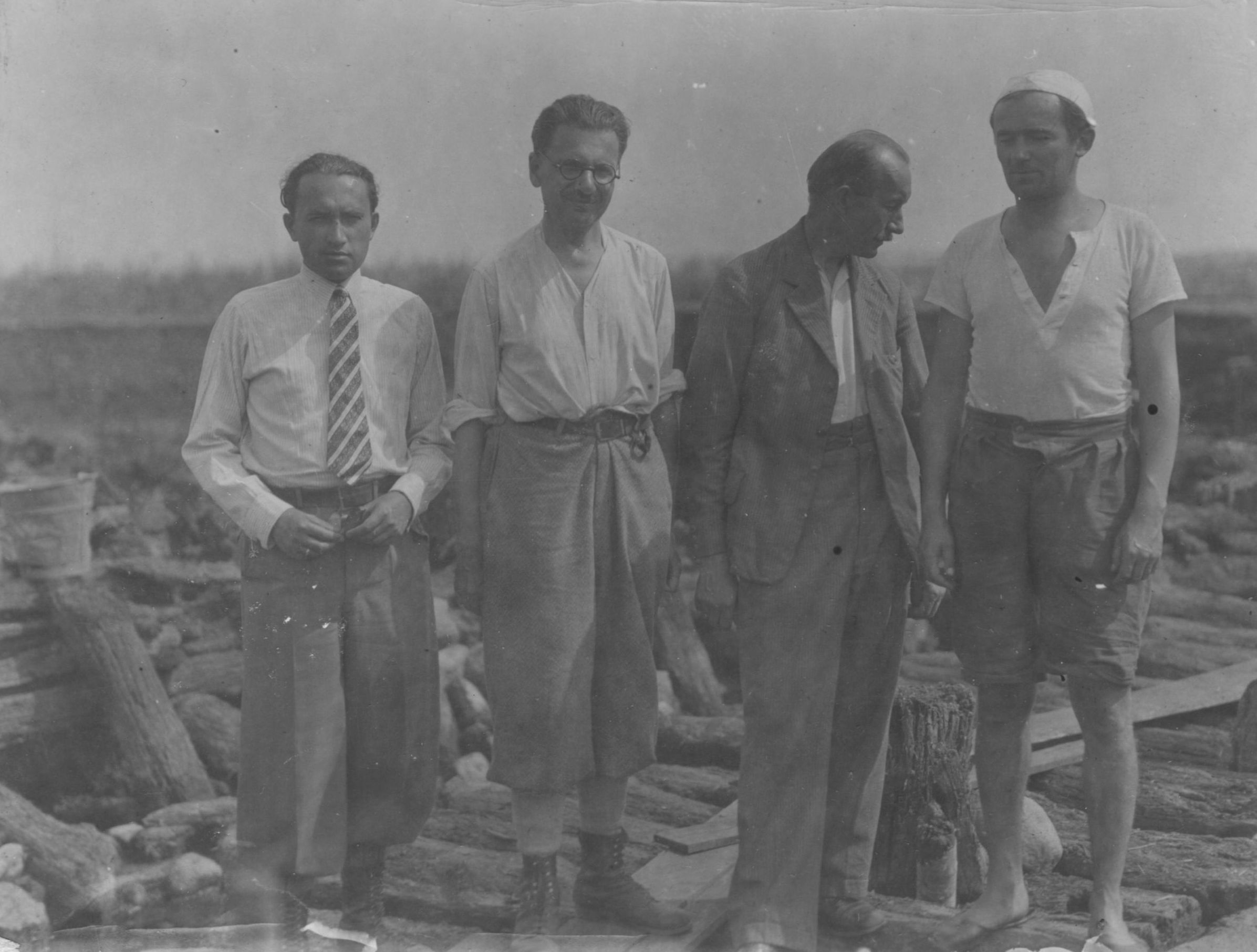
Figure 1: Professor Roman Jakimowicz and Professor Józef Kostrzewski (both in the middle) at the excavation site in Biskupin, late 1930s (archives of the Archaeological Museum in Poznan).
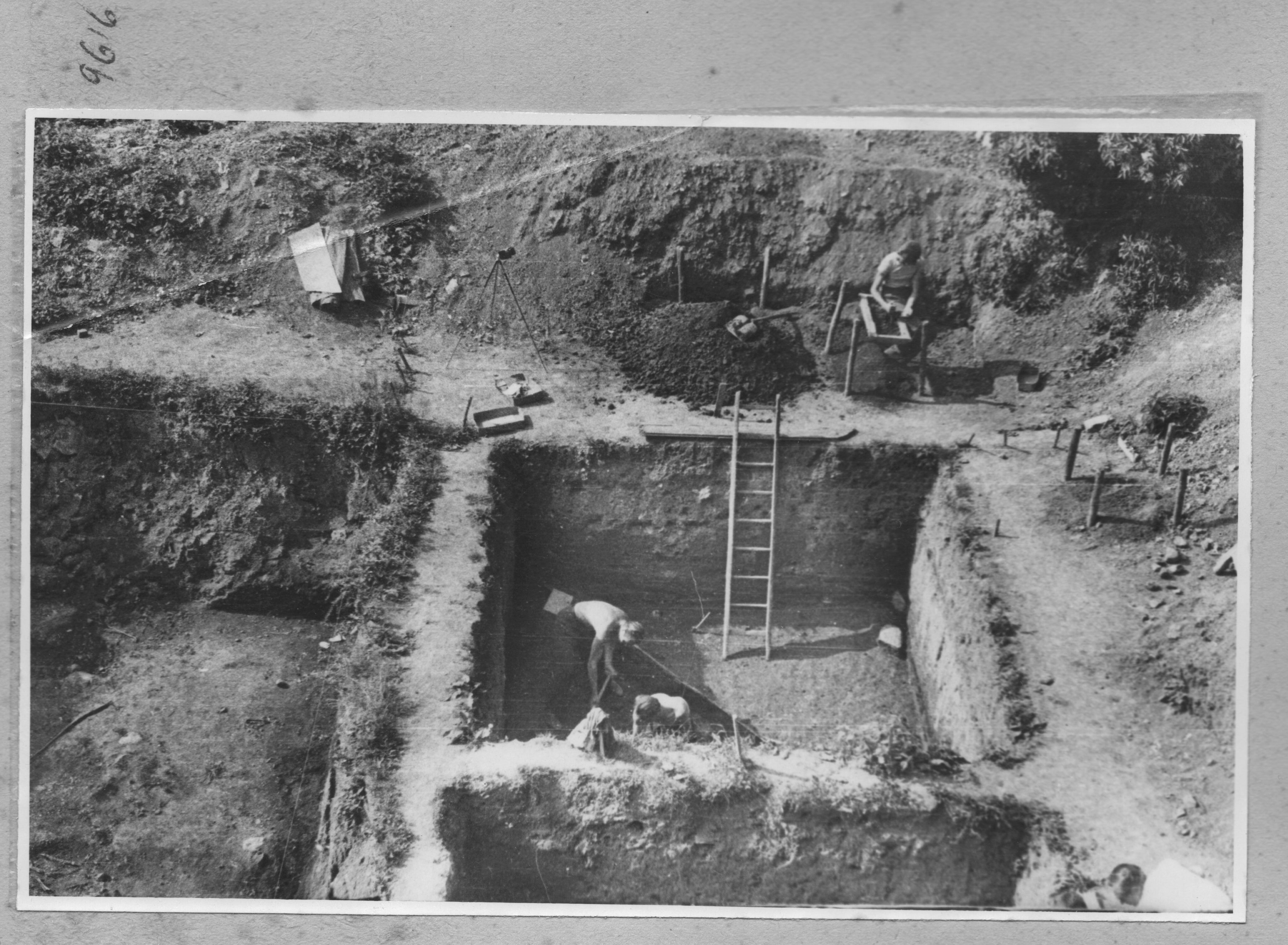
Figure 2: Excavations in Międzyrzecz, western Poland in the early post-war years. The town, of early mediaeval origin, had been part of Poland until 1793, and was again post-1945 (archives of the Archaeological Museum in Poznan).
Florjanowicz, P. 2023 Archeolodzy polscy wobec nazizmu i stalinizmu, Muzeologia 25, Warszawa.
Florjanowicz, P. 2024 'Polish archaeologists in the face of the totalitarian systems of the twentieth century: Nazism and Stalinism. Choices to make, lessons to learn',CAS Sofia Working Paper Series 14(5), 37–58 Sofia: Centre for Advanced Study (CAS). https://www.ceeol.com/search/article-detail?id=1289190 [Last accessed: 10 August 2025].
Jakimowicz, R. 1929 'Ochrona zabytków przedhistorycznych', Wiadomości Archeologiczne 10, 1–26.
Kostrzewski, J. 1970 Z mego życia, Pamiętnik, Wrocław–Warszawa–Kraków.
Kozłowski, L. 2001 Moje przeżycia w więzieniu sowieckim i na wolności w czasie wojny w Rosji sowieckiej, Warszawa.
Ministerstwo Sztuki i Kultury (ed) 1920 Opieka nad zabytkami i ich konserwacja, Warszawa.
Mężyński, A. 1994 'Letter of Wolfram Sievers, secretary general of Ahnenerbe to Heinrich Himmler, dated 10 September 1939' in A. Mężyński Kommando Paulsen październik - grudzień 1939 r., Straty Kultury Polskiej, Warszawa, GKBZpNP DC 938. 34–35.
Rajewski, Z. 1945 'Obecne zadania prehistorii polskiej', Przegląd Zachodni 6, 338–342.
Internet Archaeology is an open access journal based in the Department of Archaeology, University of York. Except where otherwise noted, content from this work may be used under the terms of the Creative Commons Attribution 3.0 (CC BY) Unported licence, which permits unrestricted use, distribution, and reproduction in any medium, provided that attribution to the author(s), the title of the work, the Internet Archaeology journal and the relevant URL/DOI are given.
Terms and Conditions | Legal Statements | Privacy Policy | Cookies Policy | Citing Internet Archaeology
Internet Archaeology content is preserved for the long term with the Archaeology Data Service (ROR). Help sustain and support open access publication by donating to our Open Access Archaeology Fund.
 Home
Home