Cite this as: Butterworth, J. 2026 The EAC at 25: Looking Forward, Internet Archaeology 72. https://doi.org/10.11141/ia.72.3
During the European Archaeological Council (EAC)'s 26th Annual Meeting in Gdańsk, Poland, in March 2025, workshops were held to explore four key heritage management priorities identified by members in a survey conducted in Brussels, Belgium, the previous year (EAC n.d.a), namely: the potential of citizen science; the challenge of heritage crime; the role of heritage and archaeology in landscape management processes; and the issues posed by climate change and the need for sector sustainability. The aim of the workshops was to consider how the EAC can help members respond to the challenges and opportunities facing archaeological heritage management in the coming years (Figure 1).
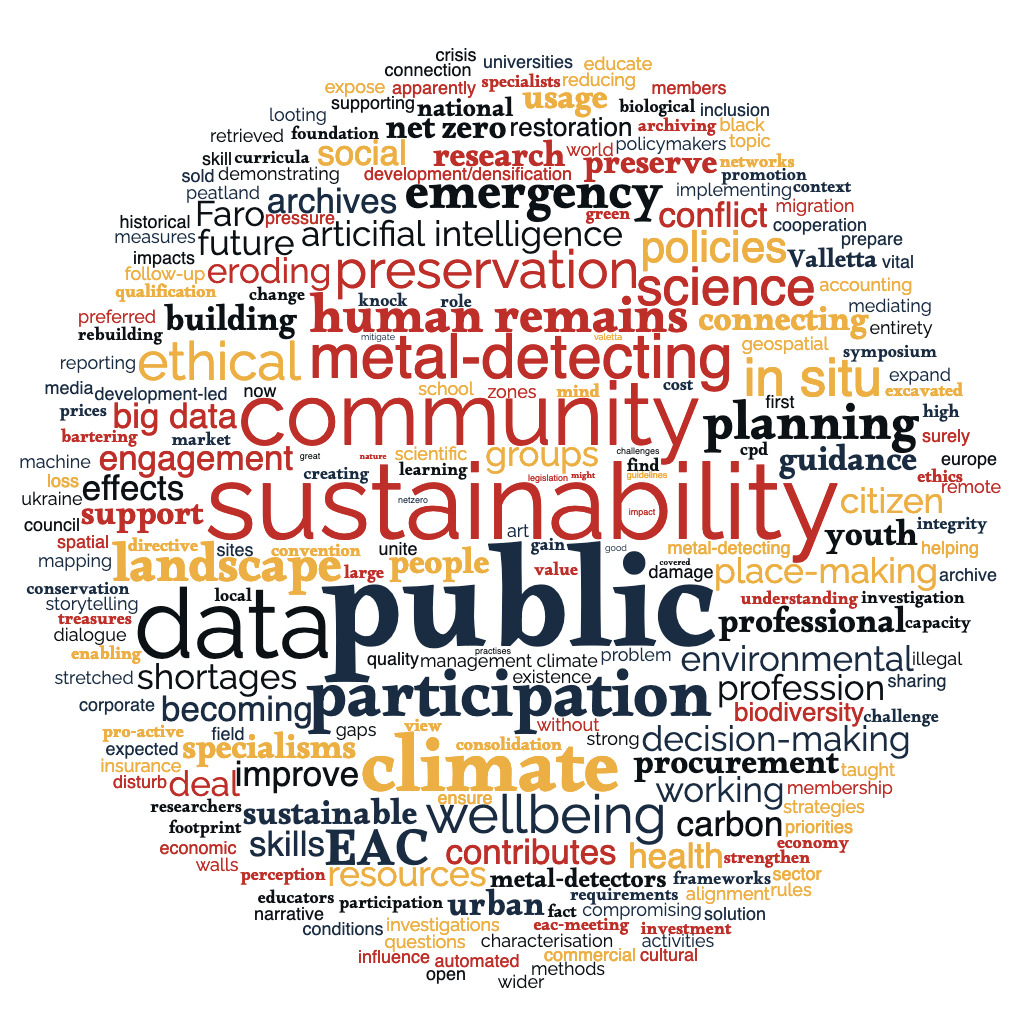
Around 100 EAC members and colleagues participated in the workshops. The four topics were discussed freely during each session, and the EAC offers its grateful thanks to all the facilitators and participants who made the workshops such a stimulating and interesting exchange. This report provides a summary account of the priorities and key points raised in the workshops, together with feedback provided by the Board at their June 2025 meeting regarding future actions. A fuller account of the workshops is also available (EAC 2025).
The Brussels survey showed that many EAC members are interested in developing methods for better enabling public participation in heritage management processes and promoting its benefits. The need to develop storytelling techniques, as well as dialogue with other professions, the wider public and local historical groups, to encourage community participation in archaeological decision-making was noted. Youth participation was raised as a specific need.
The particular topic of citizen science – the participation of the general public in archaeological investigation and other heritage management activities – was chosen for the workshops, to complement the guidance already published by the EAC on the broader issues (EAC 2024a, 2024b). The workshops considered what practical steps heritage managers could take to promote citizen science, especially to young people. They also asked how citizen science research models can be used to increase public involvement in decision-making.
The need to provide open and accessible data about archaeological research and decision-making was noted, in order to explain to the public what heritage managers do, and to ensure public understanding of how the process of managing change within the historic environment operates. Without this, the ability to engage the public with the potential of citizen science and engage young people's curiosity is limited. However, there are sector training and capacity gaps regarding engagement and outreach skills that are a barrier to increasing communication with the public.
For young people, greater understanding of what they value and want is needed to engage them more effectively. Embedding heritage and archaeology into school curricula and activities is a challenge, but piloting youth and citizen boards and assemblies to increase representation of young people in contexts of decision-making on heritage-related issues is a valuable option.
In addition, the potential of citizen science to contribute to heritage management needs to be promoted to professionals, to demonstrate its usefulness within authorised decision-making processes. A focus on the Faro Convention (Council of Europe 2005) is desirable, to enable heritage managers to work more closely with heritage communities, and demonstrate heritage as an economic, cultural and intangible community asset.
Questions and reflections for EAC:
Heritage crime is a common concern for EAC members, but there are sharp differences in the prevalence of different types of heritage crime (e.g. illicit trafficking of antiquities, vandalism of monuments, production of archaeological fakes, looting of sites) and thus concerns across Europe. This is partly due to varying legal frameworks and enforcement strategies. However, the rise of armed conflicts has had a significant impact on the incidence of heritage crime in some areas and the ability of national and international agencies to combat it, which presents specific risks.
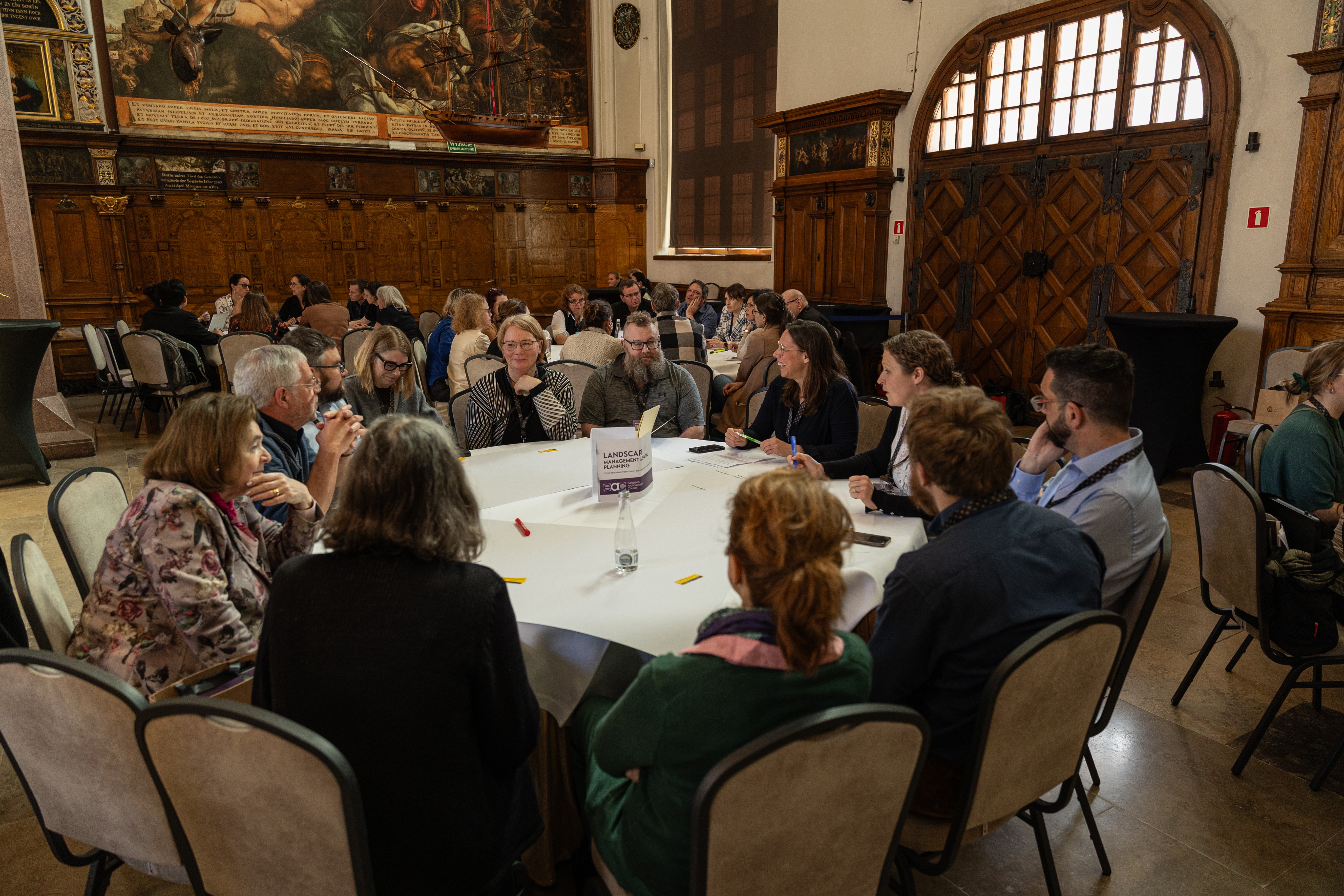
The workshops (Figure 2) noted that there is insufficient data to understand heritage crime rates fully, or rates of success in combating its specific forms. This makes it difficult to demonstrate the harm caused by heritage crime, or the value of combating it, to decision-makers. There are numerous barriers to effective enforcement and cross-agency, cross-border, collaboration, and it is often seen as low priority. Although a number of legislative tools are available (e.g. the Nicosia Convention (Council of Europe 2017), Valletta Convention (Council of Europe 1992) and various United Nations Educational, Scientific and Cultural Organization (UNESCO) conventions (e.g. UNESCO 1970)), understanding of their role is often low, and the legal tests for proving heritage crime are difficult to meet.
Looting and illicit trafficking are key concerns for some nations, but almost completely absent for others. There is not enough expertise regarding archaeology within, or coordination between, agencies for effective enforcement. Inability to identify objects or their provenance securely is a specific problem for combating archaeological crime.
Damage to monuments is a universal concern, whether arising from intentional targeting of heritage, or as a consequence of general vandalism. Participants noticed that unintentional damage, caused by lack of understanding of heritage vulnerability, particularly caused by tourism and online influences (e.g. the trend for attaching souvenirs to historic structures), is increasing.
Metal-detecting has varied legal status and reporting practice across Europe, and the occurrence of illegal detecting varies. Illegal detecting is linked to cross-border trafficking and the risks are increased by armed conflicts. However, legal metal-detecting can fall within citizen science: it is important to distinguish this and profile positive case studies. Used well, metal-detecting can fill gaps in regional data and improve heritage protection outcomes.
The ethical and legal issues related to past heritage crime and colonialisation, e.g. contested ownership of museum objects, was outside the scope of the workshop, but participants noted that EAC should possibly consider this as part of any future initiative on heritage crime, as it is an important issue.
Questions and reflections for EAC:
Many EAC members are concerned that archaeology increasingly finds itself as one of a number of competing priorities during broader decision-making processes. In particular, the relationships between heritage management and pressures driven by sustainability, protection of natural environments or development needs were noted: not just those pressures themselves, but also the rate at which priorities are changing and the speed at which decisions are being made. Green energy and housing were identified as particular challenges.
Heritage is sometimes considered a 'hindrance' but is mostly served adequately in the planning system. However, much landscape change, such as mining, forestry or peatland restoration, lies outside spatial planning processes or is not well integrated into them. There is little quantification of the ongoing impacts of agricultural activities on landscape and heritage, and few means to mitigate impacts.
The importance of securing archaeology as a priority in landscape characterisation and change processes was noted. Heritage is often excluded, or an afterthought, in decision-making regarding landscape, particularly in activities such as nature restoration, and there are risks from inconsistent practice and lack of oversight or integrated approaches to landscape.
The European Landscape Convention (Council of Europe 2000) could underpin the role of archaeology in landscape change, but interpretation and communication of heritage aspects is needed to ensure it is effective. Good communication about definitions of nature and heritage, data about landscape change, and positive, accessible messages about heritage significance, are needed. The absence of commonly understood standards (unlike in the natural environment sector) and good-quality data and supportive materials is a barrier to communicating effectively the public benefit of heritage landscapes (rather than sites).
Questions and reflections for EAC:
The Brussels survey showed that the concerns of EAC members fall into two related areas, and the workshops addressed these topics separately.
Initiatives to consider environmental sustainability in archaeological working practices were highlighted, from grassroot initiatives addressing behaviour change, recycling and reduction in paper, to changing fuel supplies for excavation machinery. Many were at an individual or organisational level, and are not consistent nor represent sector-wide initiatives across member states or Europe. Challenges fall into three groups:
Questions and reflections for EAC:
The biggest challenge, but with great potential for knowledge exchange, was considered to be building an evidence base for the impact of climate change, and climate change mitigation measures, on the archaeological record. Related to this, the potential for archaeological work to become part of climate change adaptation schemes presented new professional and knowledge gain opportunities.
The different legislative frameworks across Europe, with climate change adaptation being planned at national, regional and in some cases local levels – or not at all – produces inconsistencies in how the archaeological record is managed and impacted, particularly where climate change and the management of archaeological sites happen at different levels.
Another very important concern raised was the perception that archaeology is becoming less important to society in the context of the need to adapt to climate change, e.g. green energy infrastructure will provide more public benefit than that produced by archaeology. The impact of climate change means that more difficult choices are being made and archaeology is not well enough integrated with adaptation measures being implemented: ecology and the environment are seen as part of the solution (nature recovery), and there is concern that archaeology should also be.
Climate change is a global issue and Europe needs to learn from, and work together with, the global majority on how others are approaching historic environment/archaeology management in this context. Also, archaeology needs to work more closely and effectively with other sectors, e.g. ecology and natural environment organisations, to provide more holistic solutions.
Questions and reflections for EAC:
In 2015, the EAC published the Amersfoort Agenda (EAC 2015), which provided a strategic approach to meeting the challenges facing archaeological heritage management in Europe at that point. Based on consultations with its members, the Agenda aimed to support heritage management practice to move from the context of the Valletta Convention (Protection of the Archaeological Heritage of Europe, Council of Europe 1992) to that of the Faro Convention (Value of Heritage for Society, Council of Europe 2005). Three key themes, which have guided the work of EAC in the 10 years since, were identified:
It produced the Making Choices initiative (EAC 2018), which has delivered a suite of guidance, as well as informing the topics of the annual heritage symposia (EAC n.d.c).
The concerns raised by the Brussels survey in 2024 and explored in the Gdańsk workshops in 2025 show that, to some extent, the challenges facing archaeological heritage management in Europe remain broadly within the themes expressed in 2015. However, there have been some shifts in emphasis.
Within the 'Embedding archaeology in society' theme, an increased desire to further the potential of society to participate in, rather than simply engage with, heritage management builds on the earlier Making Choices initiative, and it is clear that the EAC has not finished its work on this developing topic. The primary needs are for (1) clear messages to show to decision-makers, and (2) practical guides and examples to help heritage managers improve practice. Further work is required to decide what the EAC's target outputs should be, and finding interested persons to explore this work will be the essential first step.
Heritage crime is an increasing problem facing members, one largely absent from the priorities expressed in 2015; this is in part is linked to broad-scale geopolitical and economic change. The 2026 EAC heritage symposium in Altamira, Spain, is going to explore the questions raised in more detail, to help establish where EAC activities might best be focused to address this complex issue.
Finally, the workshops on landscape management and spatial planning, and climate change and sustainability, show there is a large, interrelated area of potential work for EAC and its members on these topics. While climate change and increasing development priorities have created new pressures and an urgency to act, the themes remain similar to those expressed in the Amersfoort Agenda; the need for transparent decision-making, advocacy for archaeological heritage and standards to support good management, and accessibility of the valuable European heritage resource.
In 2025, the focus is on exploring these themes beyond site level: to broaden understanding about the scale of protection needed for archaeology and heritage at a landscape level. Two potential areas for EAC work are (1) advocacy concerning the headline message and (2) technical help with definitions and practice. Clearly, climate change and sustainability are pressing and related topics, which members have significant concerns about. However, further work is needed to define what effective EAC work can be done: many elements of concern relate to skills and broader issues that are not within the control or expertise of the heritage sector.
As EAC already has working groups on topics that relate to these very broad landscape management issues, the first task will be to consider the overall framework they work in and how their activities interact, to ensure there is no duplication of effort. From there, EAC will be able to define areas of action to support its members in tackling these significant challenges and opportunities.
This summary is based on reports produced by the chairs (Marta Arcos Garcia, Daniel Miles, Barney Sloane and Marjolein Verschuur) and rapporteurs (Rebecca Bennett, Jenni Butterworth, Agata Byszewska-Łasińska and Nina Glińska) of the workshops: the EAC extends grateful thanks for their work.
The data that support this report are openly available via Zenodo.
Internet Archaeology is an open access journal based in the Department of Archaeology, University of York. Except where otherwise noted, content from this work may be used under the terms of the Creative Commons Attribution 3.0 (CC BY) Unported licence, which permits unrestricted use, distribution, and reproduction in any medium, provided that attribution to the author(s), the title of the work, the Internet Archaeology journal and the relevant URL/DOI are given.
Terms and Conditions | Legal Statements | Privacy Policy | Cookies Policy | Citing Internet Archaeology
Internet Archaeology content is preserved for the long term with the Archaeology Data Service (ROR). Help sustain and support open access publication by donating to our Open Access Archaeology Fund.
 Home
Home