Cite this as: Hsu, Y-K. and Edmunds, R. 2026 'Persistent Identifiers: Towards the FAIRness of Archaeological Samples for Scientific Analysis', Internet Archaeology 72. https://doi.org/10.11141/ia.72.4
This paper explores how persistent identifiers (PIDs) and standardised metadata profiles can foster the FAIR (Findable, Accessible, Interoperable, and Reusable) management of archaeological samples and their associated analytical data. We begin by outlining the role of PIDs in ensuring the long-term findability of research outputs, with particular attention to the international generic sample number (IGSN ID) - a PID system specifically designed for material samples and well-suited to archaeological context. We then present the collective work of the IGSN-DataCite Archaeology and Cultural Heritage Community of Practice, which is developing an archaeology-specific metadata profile and a crosswalk recommendation to support the integration of IGSN IDs into existing research workflows. Finally, we illustrate these concepts through a case study at the Deutsches Bergbau-Museum Bochum (DBM), Germany, where PIDs and relevant metadata schemas have been embedded into the laboratory research infrastructure, including electronic laboratory notebooks, service catalogues and data repositories. Collectively, these efforts demonstrate how PID adoption not only strengthens the FAIRness and long-term sustainability of archaeological data but also more firmly positions archaeological research within the global Open Science landscape.
Corresponding author: Yiu-Kang Hsu
[email protected]
Deutsches Bergbau-Museum Bochum
Rorie Edmunds
DataCite
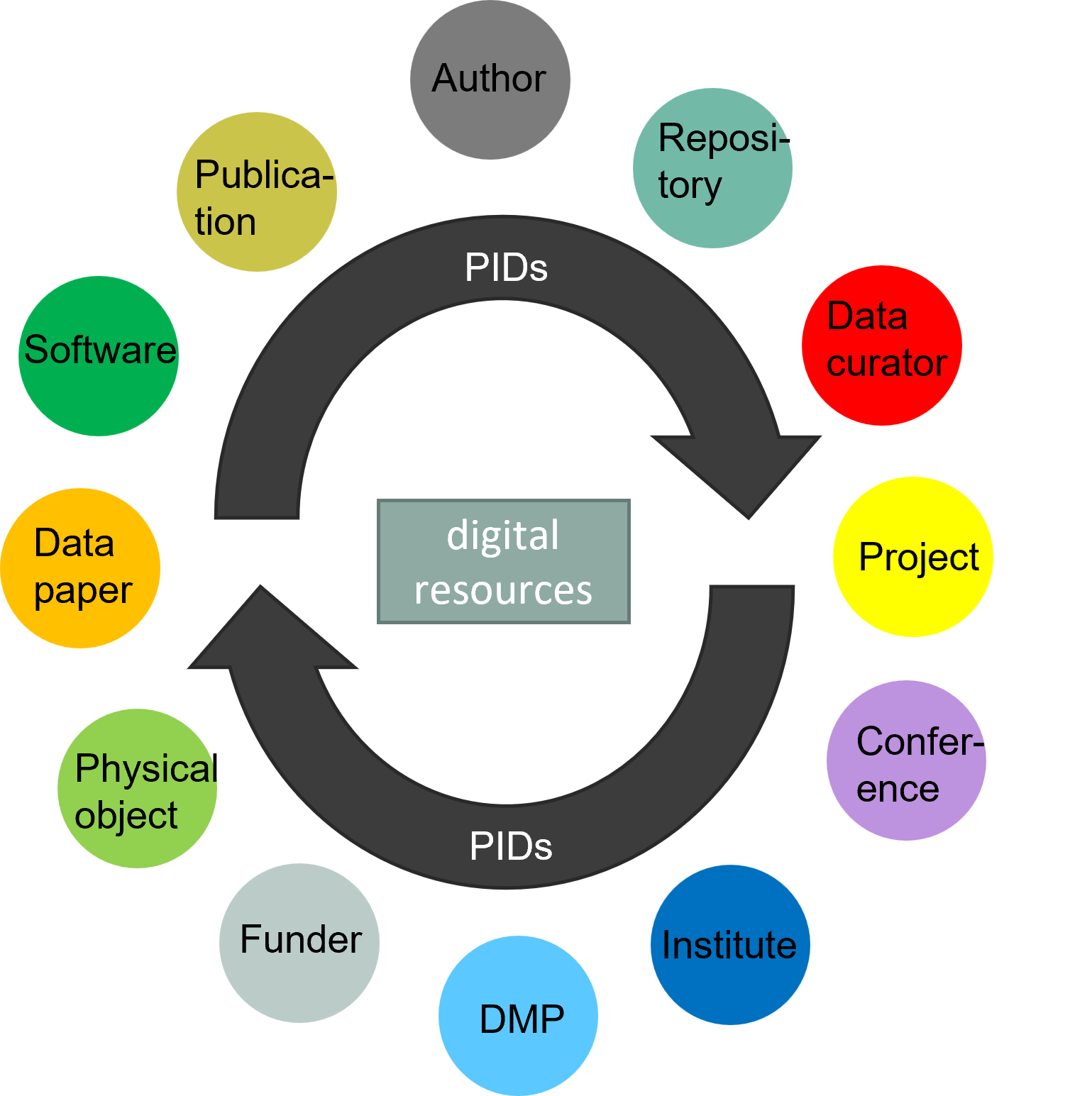
Figure 1: Digital academic resources that are commonly registered with persistent identifiers (PIDs) (image created by Yiu-Kang Hsu, licensed under CC0).
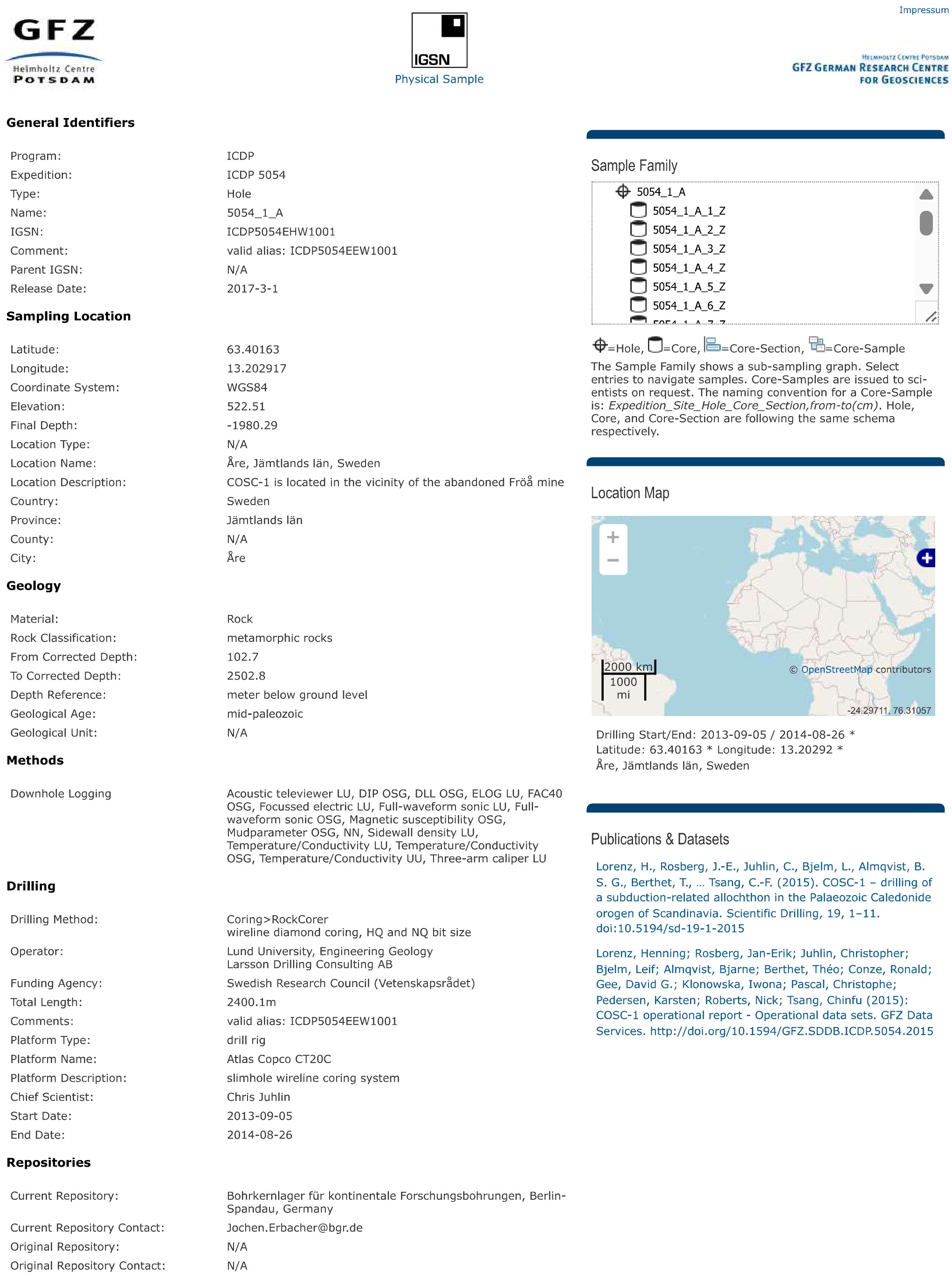
Figure 2: A landing page for a geosciences sample (IGSN: ICDP5054EHW1001: https://doi.org/10.60510/icdp5054ehw1001) published by the GFZ Helmholtz Centre for Geosciences. Notice that the 'sample family’ is incorporated top-right of the landing pages.
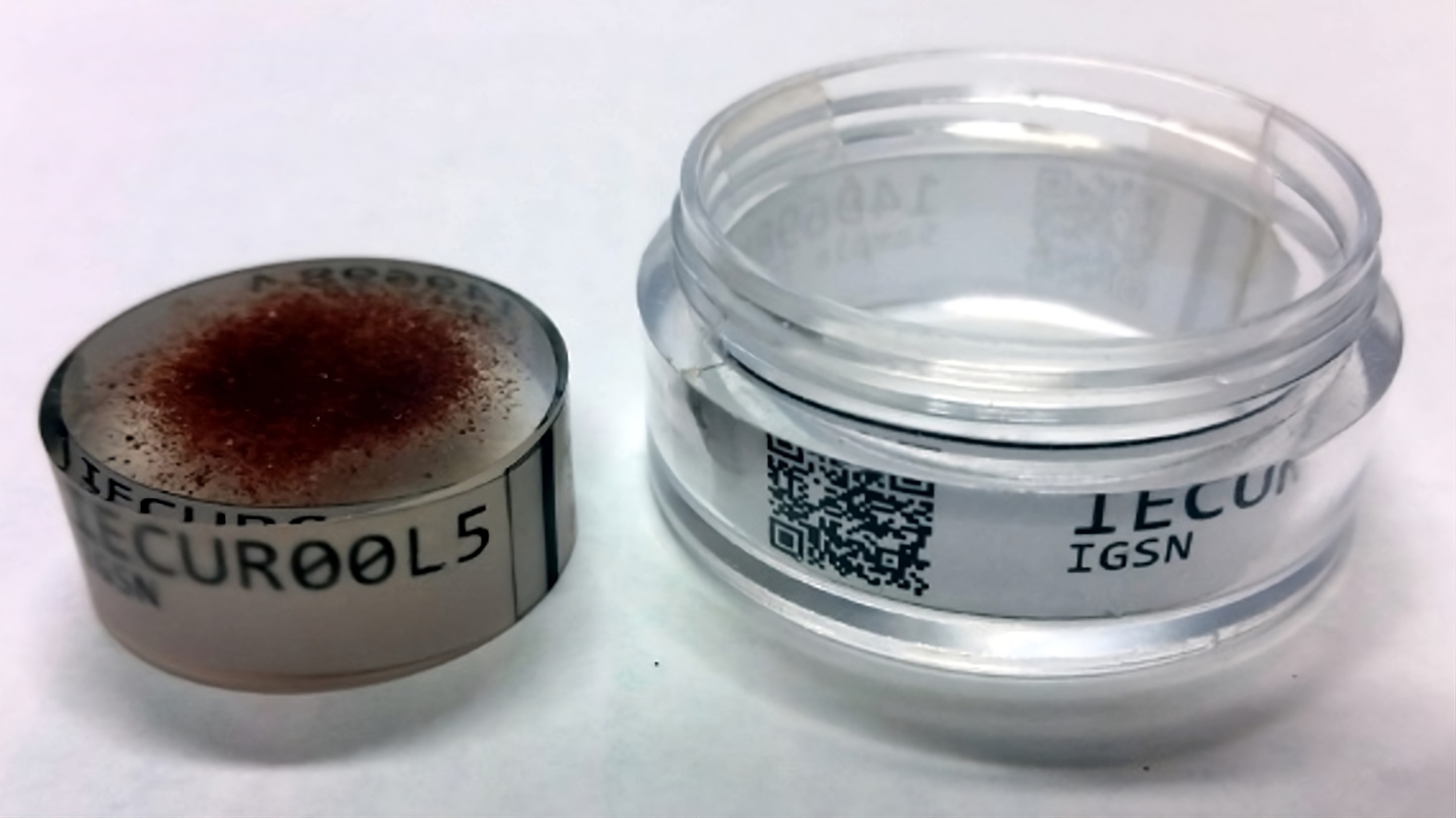
Figure 3: An international generic sample number (IGSN ID) can be encoded as a QR code and affixed as a label to a sample housing. The label should also include human-readable information (image taken by Jens Klump, licensed under CC0).
Figure 4: An IGSN ID name is made up of a prefix beginning with '10.' and a suffix, separated by a forward slash. The prefix ensures that the IGSN ID is globally unique. The suffix can be customised to incorporate local identifiers (image created by Rorie Edmunds, licensed under CC0).
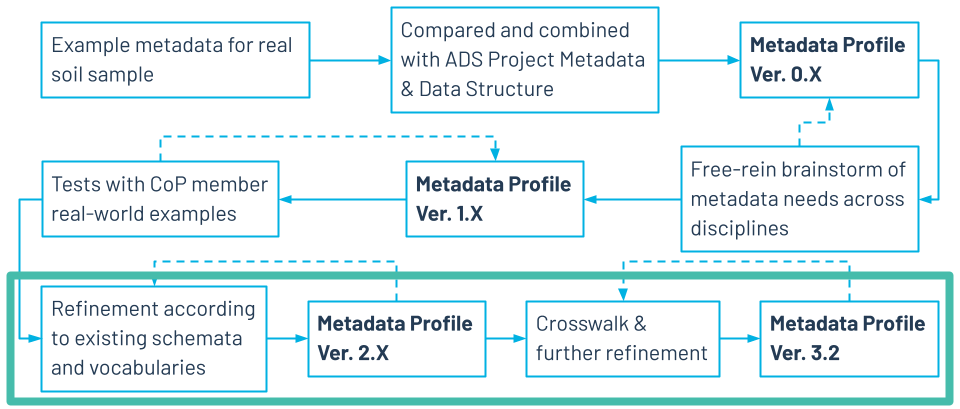
Figure 5: Process undertaken by the IGSN-DataCite Archaeology CoP to develop the Archaeological Metadata Profile and Crosswalk Recommendation. In the latter stages (green box), the CoP was careful to not 'reinvent the wheel’ (image created by Rorie Edmunds, licensed under CC0).
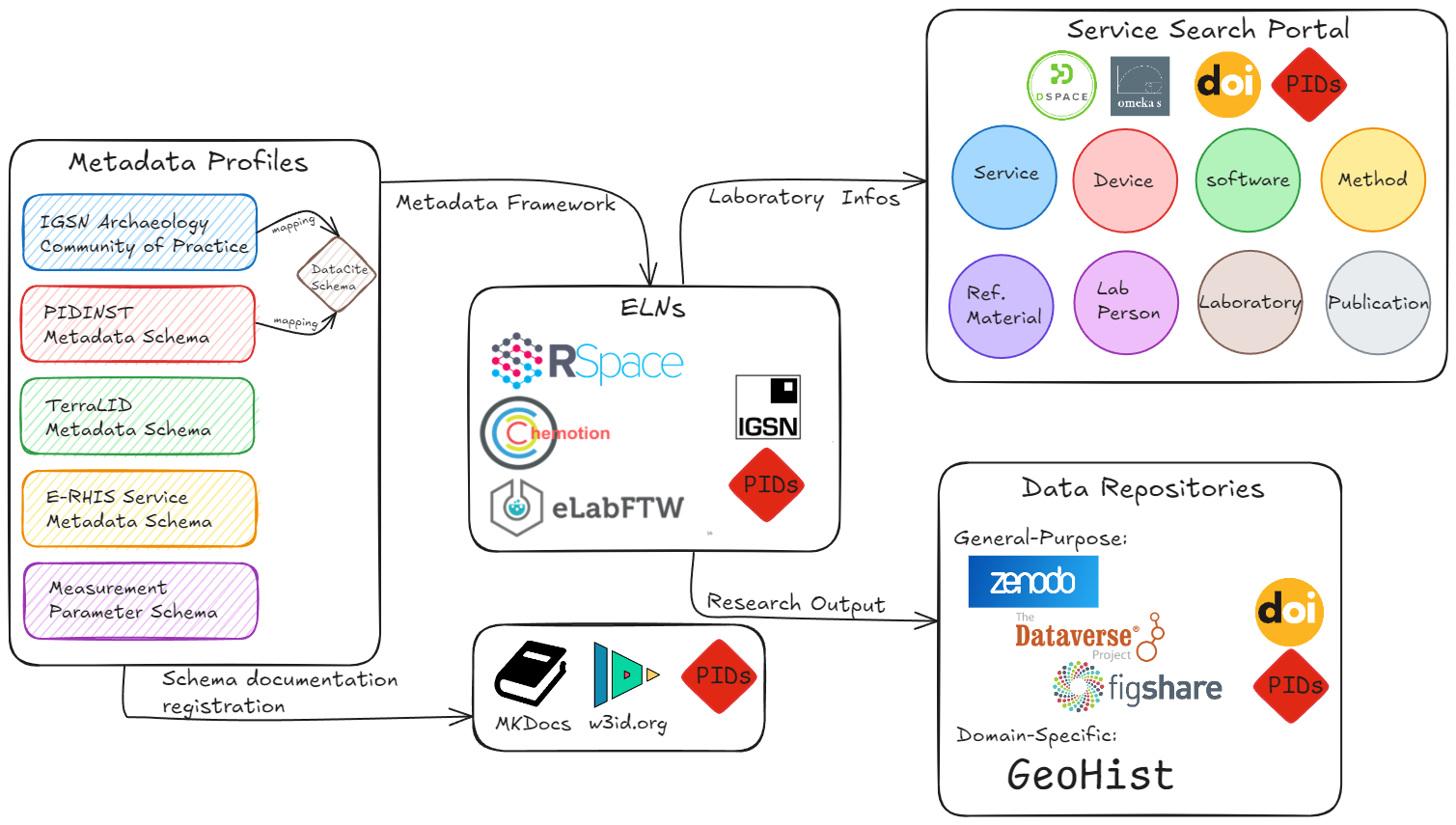
Figure 6: A FAIR research infrastructure for analytical data at the research laboratory of the DBM (image created by Yiu-Kang Hsu, licensed under CC0).
Table 1: A summary of the Metadata Profile Version 3.2 developed by the IGSN-DataCite Archaeology CoP. Here, M = Mandatory, R = Recommended, and O = Optional.
Brown, C., Simons, N., Bangert, D., and Sadler, S 2023 RDA National PID Strategies Guide and Checklist (1.0), Zenodo. https://doi.org/10.15497/RDA/00091
Brown, J., Jones, P., Meadows, A. and Murphy, F 2022a Incentives to Invest in Identifiers: A Cost–Benefit Analysis of Persistent Identifiers in Australian Research Systems, Zenodo. https://doi.org/10.5281/zenodo.7100578
Brown, J., Jones, P., Meadows, A. and Murphy, F 2022b Revised Cost–Benefit Analysis for the UK PID Support Network, Zenodo. https://doi.org/10.5281/zenodo.7356219
Brown, J., Jones, P., Meadows, A., Murphy, F. and Clayton, P 2021 UK PID Consortium: Cost–Benefit Analysis, Zenodo. https://doi.org/10.5281/zenodo.4772627
Buys, M. and Lehnert, K 2021 'Partnership between IGSN and DataCite', [online] DataCite e.V. https://datacite.org/blog/igsn-and-datacite-partnership/
Carroll, S., Garba, I., Figueroa-Rodríguez, O., Holbrook, J., Lovett, R., Materechera, S., Parsons, M., Raseroka, K., Rodriguez-Lonebear, D., Rowe, R., Sara, R., Walker, J., Anderson, J. and Hudson, M 2020 'The CARE principles for Indigenous data governance', Data Science Journal 9, 43. https://doi.org/10.5334/dsj-2020-043
CODATA RDM Terminology WG 2023a 'CODATA Research Data Management Terminology: PID System', [online] CODATA. https://terms.codata.org/rdmt/pid-system [Last accessed: 5 September 2025].
CODATA RDM Terminology WG 2023b 'CODATA Research Data Management Terminology: PID Service', [online] CODATA. https://terms.codata.org/rdmt/pid-service [Last accessed: 5 September 2025].
CODATA RDM Terminology WG 2023c 'CODATA Research Data Management Terminology: Persistent Identifier', [online] CODATA. https://terms.codata.org/rdmt/persistent-identifier [Last accessed: 5 September 2025].
COPDESS 2018 'Commitment Statement in the Earth, Space, and Environmental Sciences', [online] Coalition for Publishing Data in the Earth and Space Sciences (COPDESS). https://copdess.org/enabling-fair-data-project/commitment-statement-in-the-earth-space-and-environmental-sciences/ [Last accessed: 5 September 2025].
DataCite Metadata Working Group 2024 'DataCite Metadata Schema for the Publication and Citation of Research Data and Other Research Outputs', Version 4.6, [online] DataCite e.V. https://doi.org/10.14454/mzv1-5b55 [Last accessed: 5 September 2025].
DataCite e.V 2022 'IGSN IDs', [online] DataCite e.V. https://support.datacite.org/docs/igsn-ids [Last accessed: 5 September 2025].
DataCite e.V 2025a 'DOI Basics', [online] DataCite e.V. https://support.datacite.org/docs/doi-basics [Last accessed: 5 September 2025].
DataCite e.V 2025b 'Harmonizing DataCite Schema Metadata and Disciplinary Sample Metadata', [online] DataCite e.V. https://support.datacite.org/docs/harmonizing-datacite-schema-metadata-and-disciplinary-sample-metadata [Last accessed: 5 September 2025].
DCMI 2025 'DublinCore: DCMI Metadata Terms', [online] Dublin Core Metadata Initiative (DCMI). https://www.dublincore.org/specifications/dublin-core/dcmi-terms/ [Last accessed: 5 September 2025].
Deutsche Nationalbibliothek 2019 'URN Service', [online] Deutsche Nationalbibliothek. https://www.dnb.de/EN/Professionell/Services/URN-Service/urn-service_node.html [Last accessed: 5 September 2025].
Forum on Information Standards in Heritage 2025 FISH Terminologies, [online] Forum on Information Standards in Heritage. https://heritage-standards.org.uk/fish-vocabularies/ [Last accessed: 5 September 2025].
Hsu, Y.-K., Jan, S., Löffler, I. and Stöllner, T 2024 NFDI4Objects Temporary Working Group: Metadata Profiles for Analytical Methods in Archaeometry, Zenodo. https://doi.org/10.5281/zenodo.10990411
IGSN e.V 2016 IGSN Descriptive Metadata Version 1.0 [online] IGSN e.V. https://github.com/IGSN/metadata/wiki/IGSN-Descriptive-Metadata-Version-1.0 [Last accessed: 5 September 2025].
IGSN e.V 2024 'Archaeology', [online] IGSN e.V. https://ev.igsn.org/communities/archaeology [Last accessed: 5 September 2025].
IGSN–DataCite Crosswalk and Metadata Management Working Group 2022 'IGSN ID Metadata Recommendations', [online] DataCite e.V. https://support.datacite.org/docs/igsn-id-metadata-recommendations [Last accessed: 5 September 2025].
Jones, P., Brown, J., Meadows, A. and Murphy, F 2024 'A cost-benefit analysis for PID implementation in Czechia', [online] National Library of Technology. https://doi.org/10.48813/x4vd-yj13
Klein, S., Rose, T., Westner, K.J. and Hsu, Y.-K. 2022 'From OXALID to GlobaLID: Introducing a modern and FAIR lead isotope database with an interactive application', Archaeometry 64(4), 935–950. https://doi.org/10.1111/arcm.12762
Klump, J., Lehnert, K., Ulbricht, D., Devaraju, A., Elger, K., Fleischer, D., Ramdeen, S. and Wyborn, L. 2021 'Towards globally unique identification of physical samples: governance and technical implementation of the IGSN global sample number', Data Science Journal 20, 33. https://doi.org/10.5334/dsj-2021-033
National Open Research Forum and MoreBrains Cooperative 2024 'Efficiency and Insight: A Cost-Benefit Analysis for a Central Service to Support Persistent Identifier Implementation in Ireland', Text [Type], Digital Repository of Ireland [Publisher] [Depositor]. https://doi.org/10.7486/DRI.nz80kt123
Niven, K. and Watts, J. 2011 Guides to Good Practice: Project Metadata, [online] Archaeology Data Service/Digital Antiquity. https://archaeologydataservice.ac.uk/help-guidance/guides-to-good-practice/the-project-lifecycle/project-metadata/ [Last accessed: 5 September 2025].
PID4NFDI 2025 'PID4NFDI Cookbook: Getting Started with PIDs', [online] PID4NFDI. https://pid4nfdi-training.readthedocs.io/en/latest/ [Last accessed: 5 September 2025].
Schmidt, S.C., Thiery, F. and Trognitz, M 2022 'Practices of linked open data in archaeology and their realisation in Wikidata', Digital 2(3), 333–364. https://doi.org/10.3390/digital2030019
UNESCO 2022 Understanding Open Science. Online Open Access programme and meeting document, UNESCO. https://doi.org/10.54677/UTCD9302
Wilkinson, M.D., Dumontier, M., Aalbersberg, Ij.J., Appleton, G., Axton, M., Baak, A., Blomberg, N., Boiten, J.-W., da Silva Santos, L.B., Bourne, P.E., Bouwman, J., Brookes, A.J., Clark, T., Crosas, M., Dillo, I., Dumon, O., Edmunds, S., Evelo, C.T., Finkers, R., Gonzalez-Beltran, A., Gray, A.J.G., Groth, P., Goble, C., Grethe, J.S., Heringa, J., 't Hoen, P.A.C., Hooft, R., Kuhn, T., Kok, R., Kok, J., Lusher, S.J., Martone, M.E., Mons, A., Packer, A.L., Persson, B., Rocca-Serra, P., Roos, M., van Schaik, R., Sansone, S.-A., Schultes, E., Sengstag, T., Slater, T., Strawn, G., Swertz, M.A., Thompson, M., van der Lei, J., van Mulligen, E., Velterop, J., Waagmeester, A., Wittenburg, P., Wolstencroft, K., Zhao, J. and Mons, B 2016 'The FAIR Guiding Principles for scientific data management and stewardship', Scientific Data 3(1), 160018. https://doi.org/10.1038/sdata.2016.18
ARK Alliance. https://arks.org/ [Last accessed: 5 September 2025].
Handle.Net Registry, Corporation for National Research Initiatives. https://www.handle.net/ [Last accessed: 5 September 2025].
Crossref https://www.crossref.org/ [Last accessed: 5 September 2025].
DataCite e.V., Connecting Research, Advancing Knowledge https://datacite.org/ [Last accessed: 5 September 2025].
DOI Foundation https://www.doi.org/ [Last accessed: 5 September 2025].
Getty Research Institute, Art and Architecture Thesaurus® Online https://www.getty.edu/research/tools/vocabularies/aat/ [Last accessed: 5 September 2025].
IGSN e.V https://ev.igsn.org/ [Last accessed: 5 September 2025].
Internet Archive, PURL Administration https://purl.archive.org/ [Last accessed: 5 September 2025].
Morebrains Consulting https://www.morebrains.coop/ [Last accessed: 5 September 2025].
ORCID: Connecting Research and Researchers, ORCID, Inc. https://orcid.org/ [Last accessed: 5 September 2025].
Research Organization Registry (ROR) https://ror.org/ [Last accessed: 5 September 2025].
Internet Archaeology is an open access journal based in the Department of Archaeology, University of York. Except where otherwise noted, content from this work may be used under the terms of the Creative Commons Attribution 3.0 (CC BY) Unported licence, which permits unrestricted use, distribution, and reproduction in any medium, provided that attribution to the author(s), the title of the work, the Internet Archaeology journal and the relevant URL/DOI are given.
Terms and Conditions | Legal Statements | Privacy Policy | Cookies Policy | Citing Internet Archaeology
Internet Archaeology content is preserved for the long term with the Archaeology Data Service (ROR). Help sustain and support open access publication by donating to our Open Access Archaeology Fund.
 Home
Home