Cite this as: Savine, B. et al. 2026 Romano-British Agricultural Land Management Adjacent to the Dringhouses Roadside Settlement, York: Archaeological investigations Abbeyfields House, Regency Mews, Dringhouses, York, Internet Archaeology 71. https://doi.org/10.11141/ia.71.8
Excavation in advance of building work at Abbeyfield House, Regency Mews, led to the discovery of field systems laid out in the early Roman period. Evidence of land management survived in the form of a series of ditches laid out in a grid pattern respecting the line of the nearby southern approach road to York. Pottery dates indicate use and maintenance of the field system in the 2nd century CE before falling out of use in the 3rd century. Analysis of paleoenvironmental remains from a 2nd-century CE well tentatively suggests that the local environment was one of damp open ground or grassland where the ditched enclosures were supplemented with hedgerows, and perhaps included small stands of trees. The presence of a large collection of 2nd-century white slipware flagons in the fill of the well indicate this water source was probably being accessed by people occupying roadside buildings at the neighbouring 42–50 Tadcaster Road site, where vessels of this type were also found in large quantities.
Following the Romano-British period there is no evidence to suggest that the site had been utilised in a particularly intensive manner. Several small and abraded medieval pottery sherds had found their way into the top of earlier features through post-depositional processes; however, it was not definitively possible to assign any features to that period. Agricultural activity likely continued at the site until enclosure of the area as gardens and sports grounds occurred in the 20th century.
Corresponding author: Ben Savine
[email protected]
York Archaeology
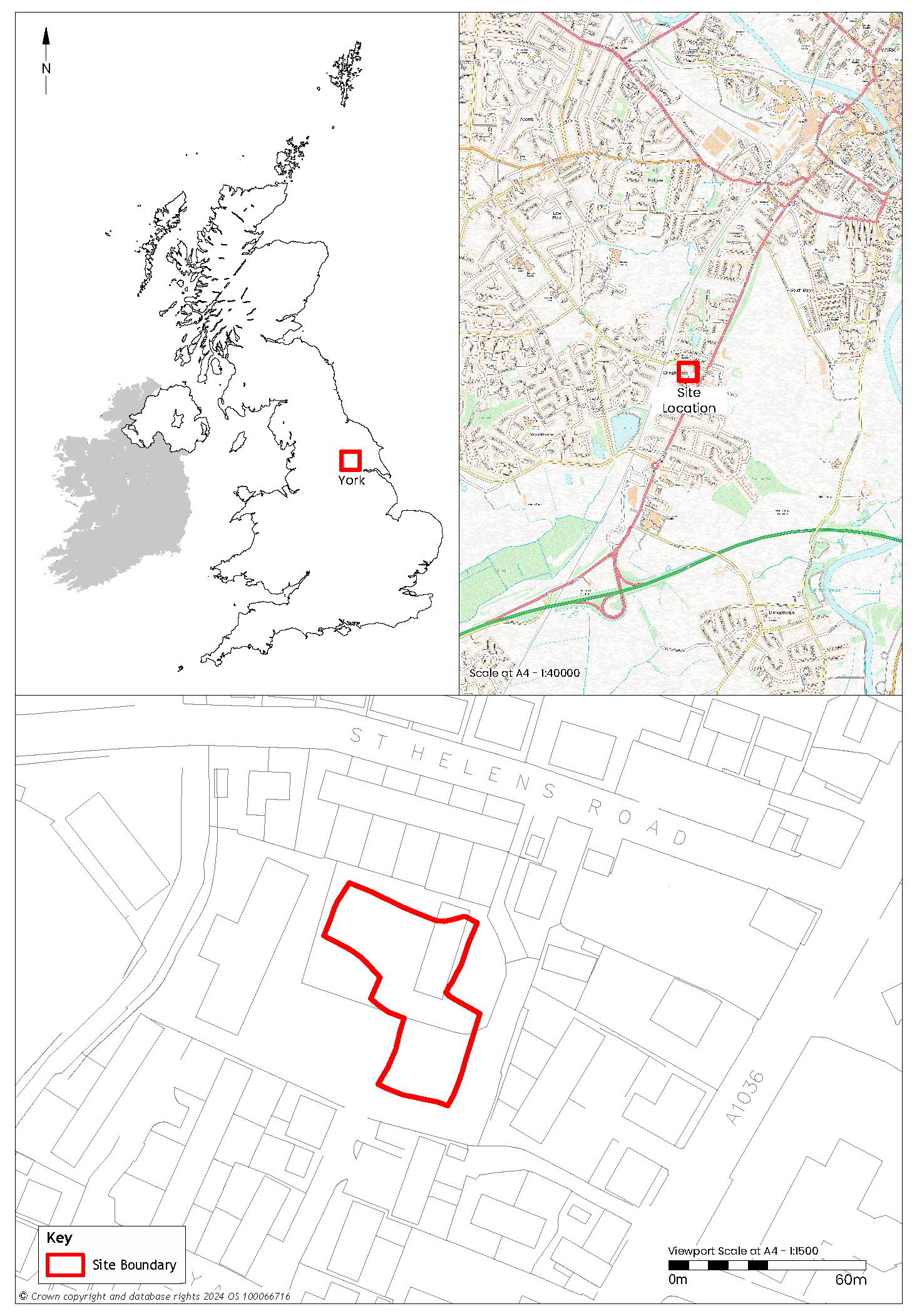
Figure 1:Site location
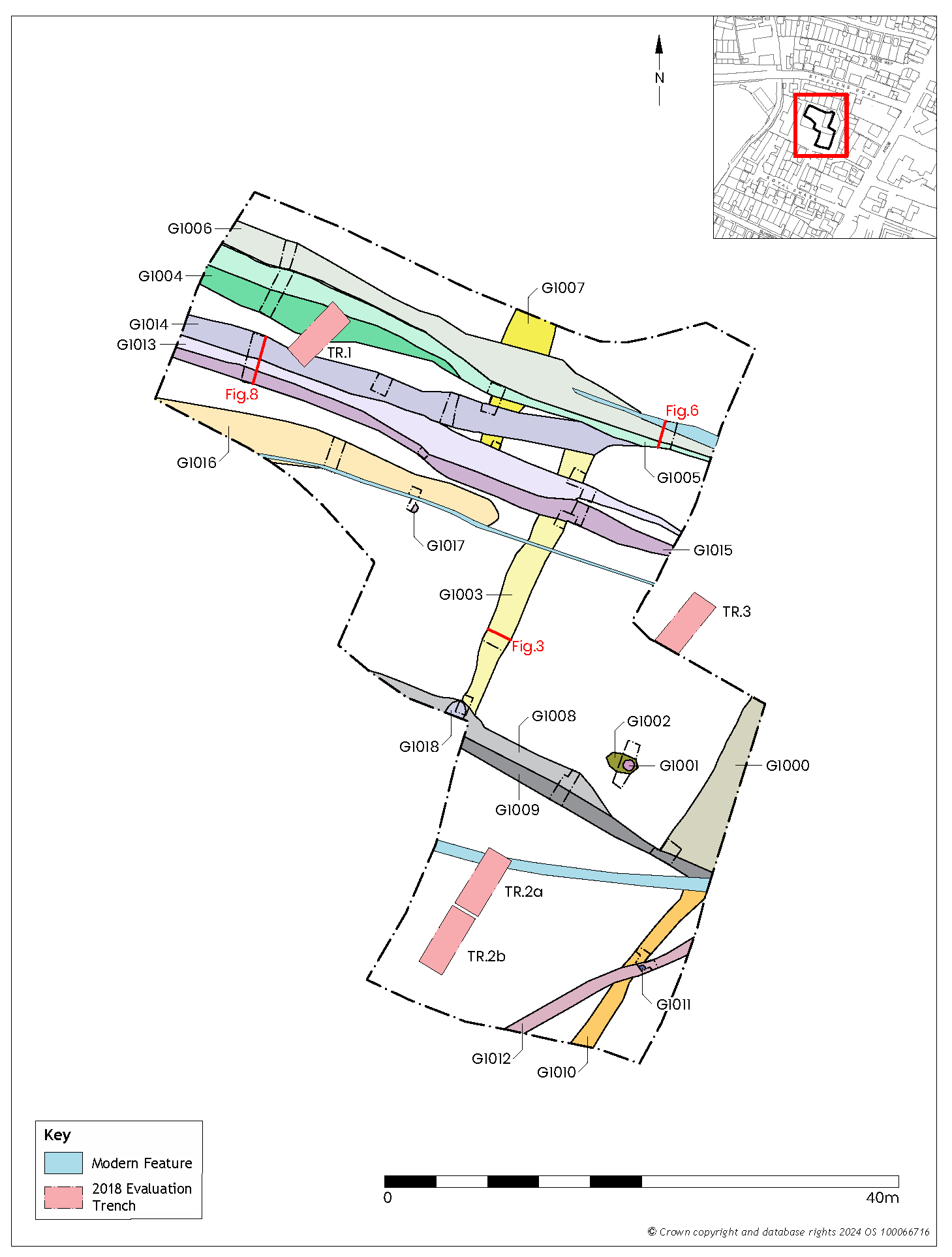
Figure 2: Archaeological features
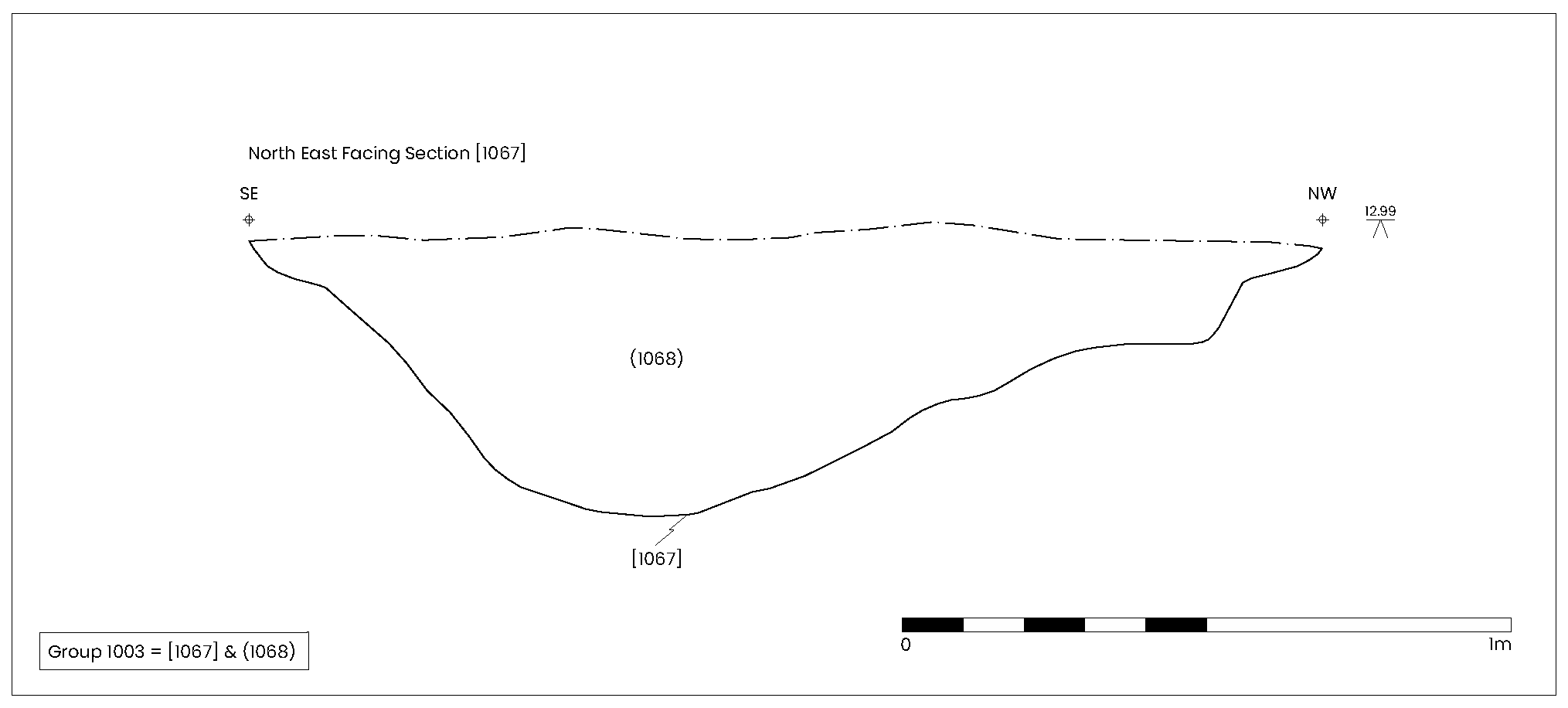
Figure 3: Ditch Group 1003, cut [1067], north-east facing section
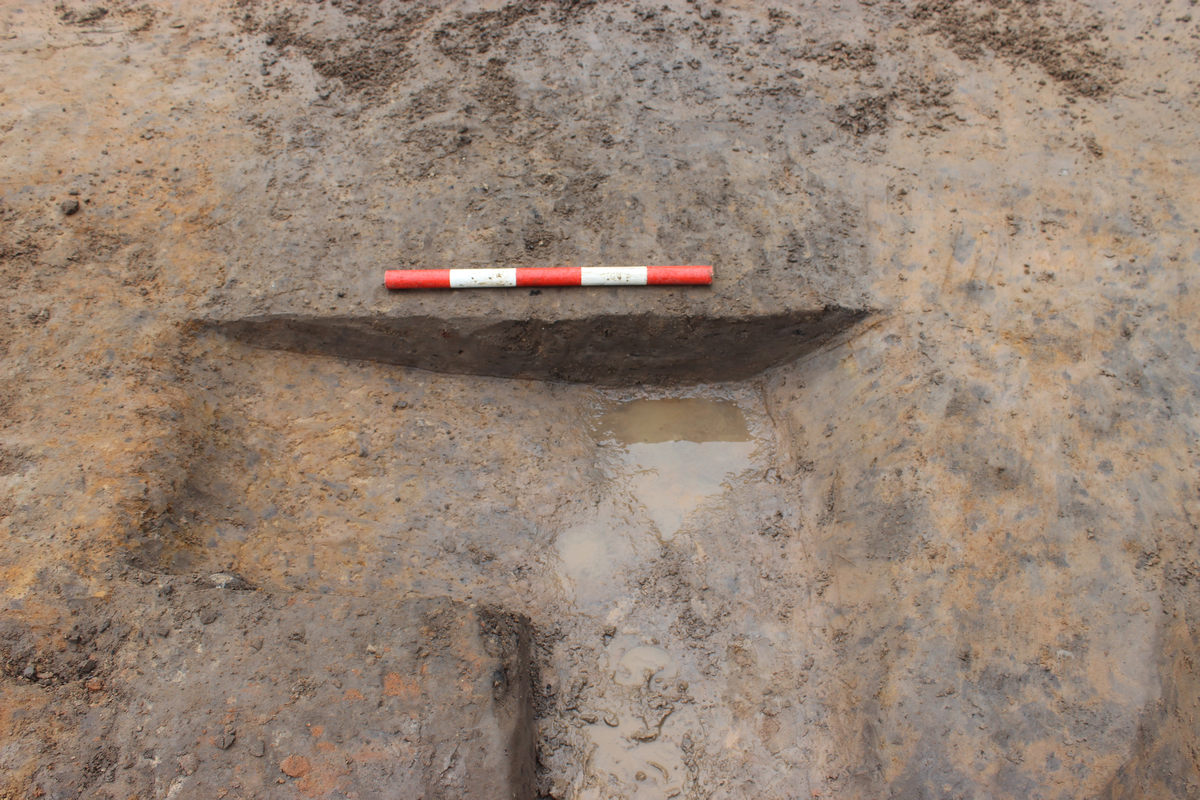
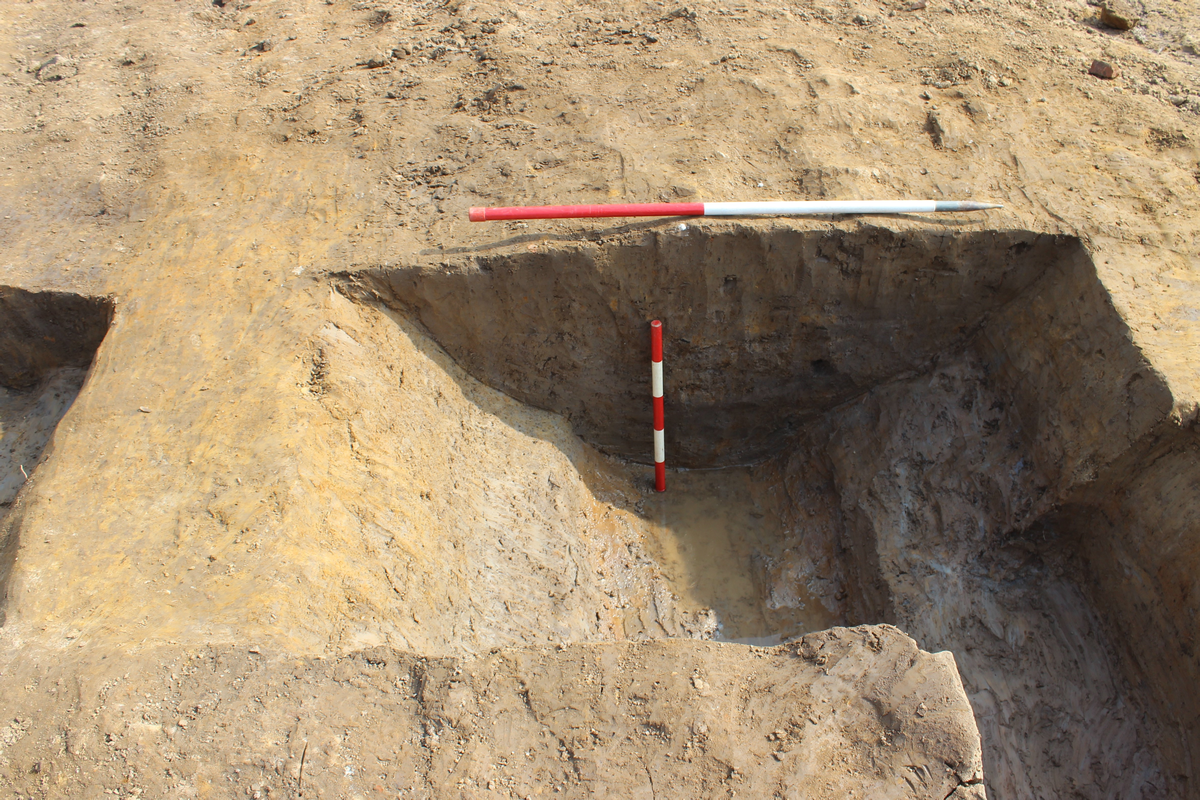
Figure 4: Ditch Group 1010, cut [1101], looking north-east. 0.1m scale units. Image credit: York Archaeology
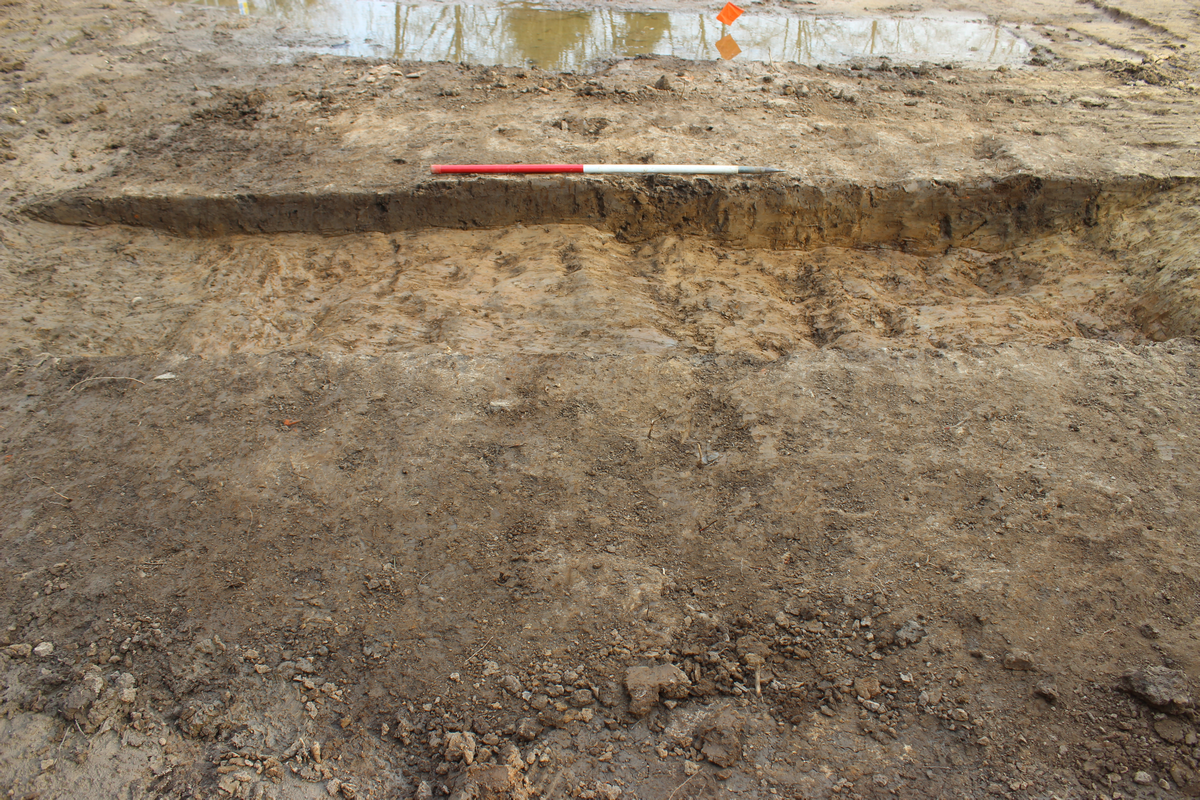
Figure 5: Ditch Group 1005 (left) cutting Ditch Group 1004 (right), looking south-east. 0.5m scale units. Image credit: York Archaeology
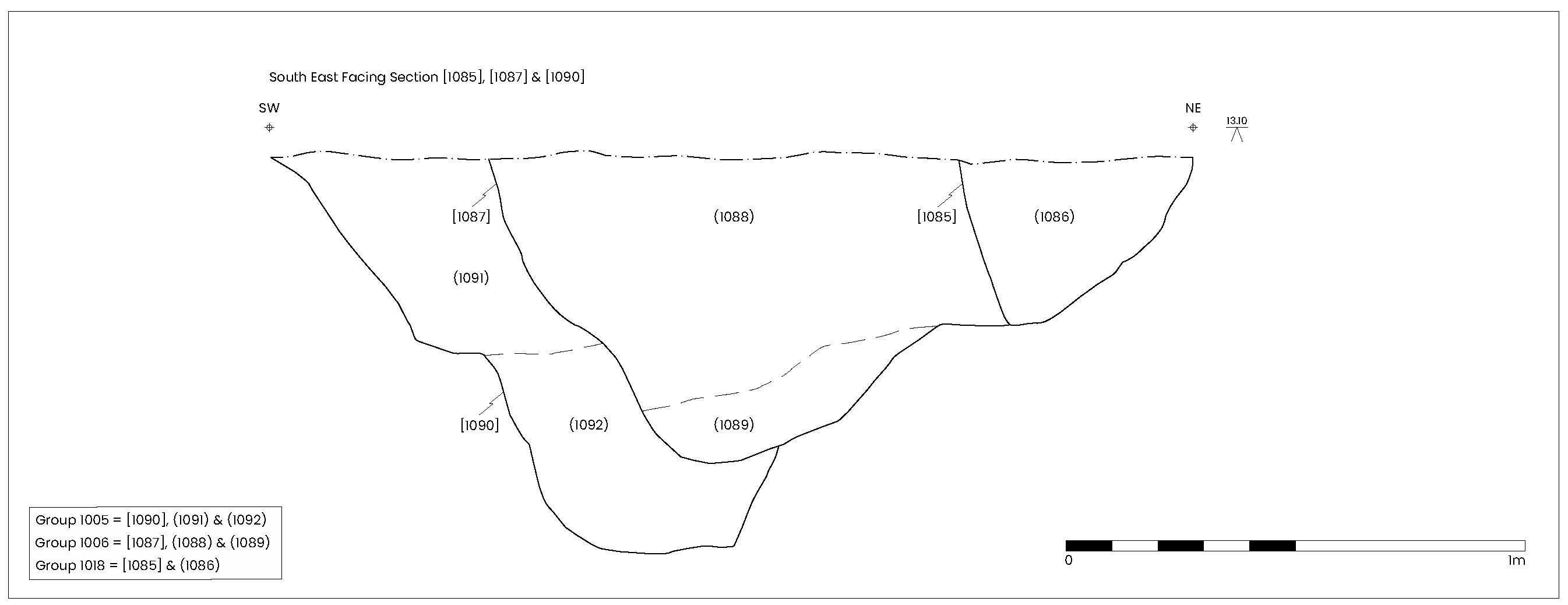
Figure 6: Ditch Group 1005, Ditch Group 1006 ditch re-cut and modern land drain Group 1018, south-east facing section
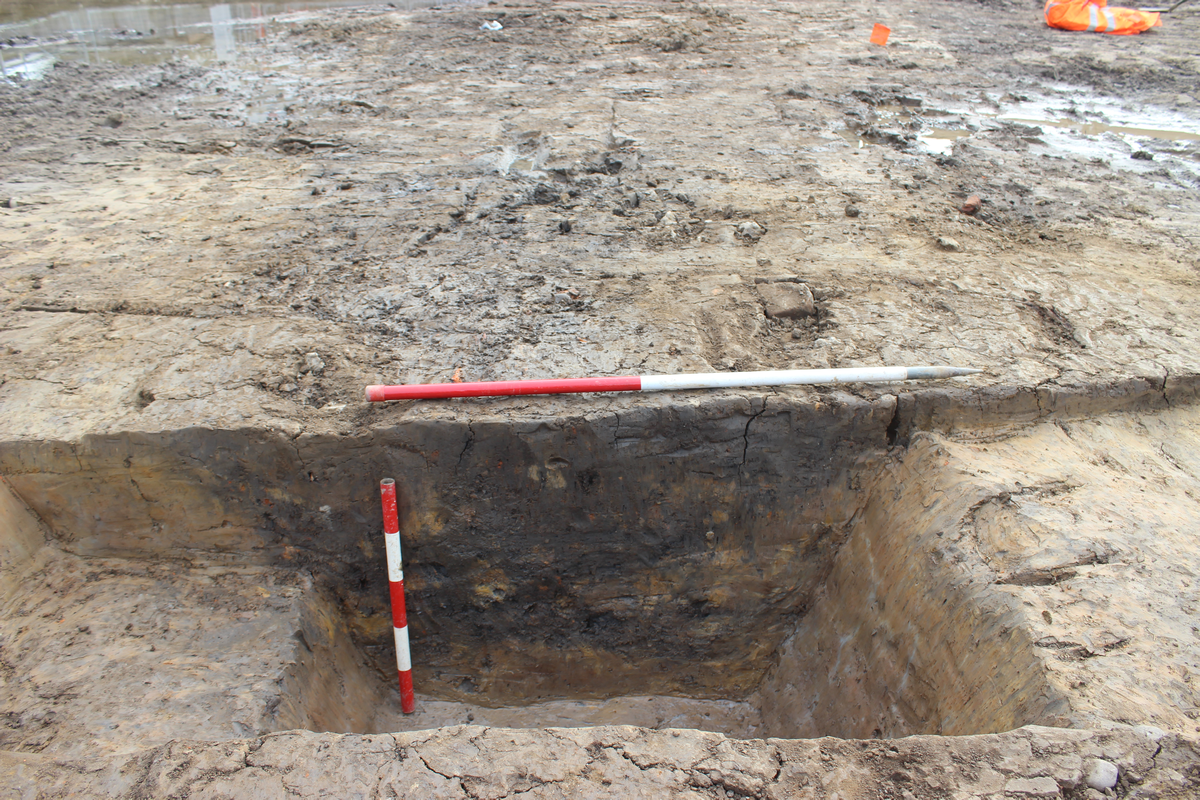
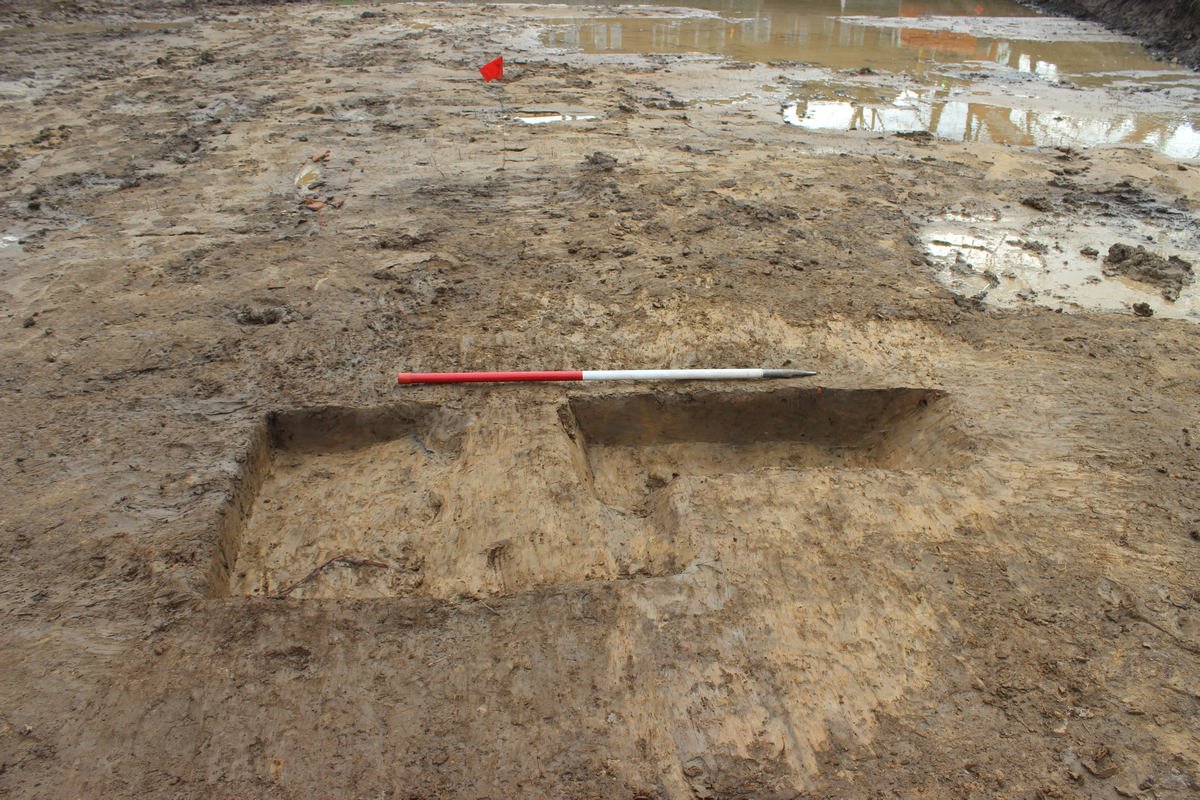
Figure 7: Ditch Group 1006, cut [1022], looking north-west. 0.1m scale units. Image credit: York Archaeology
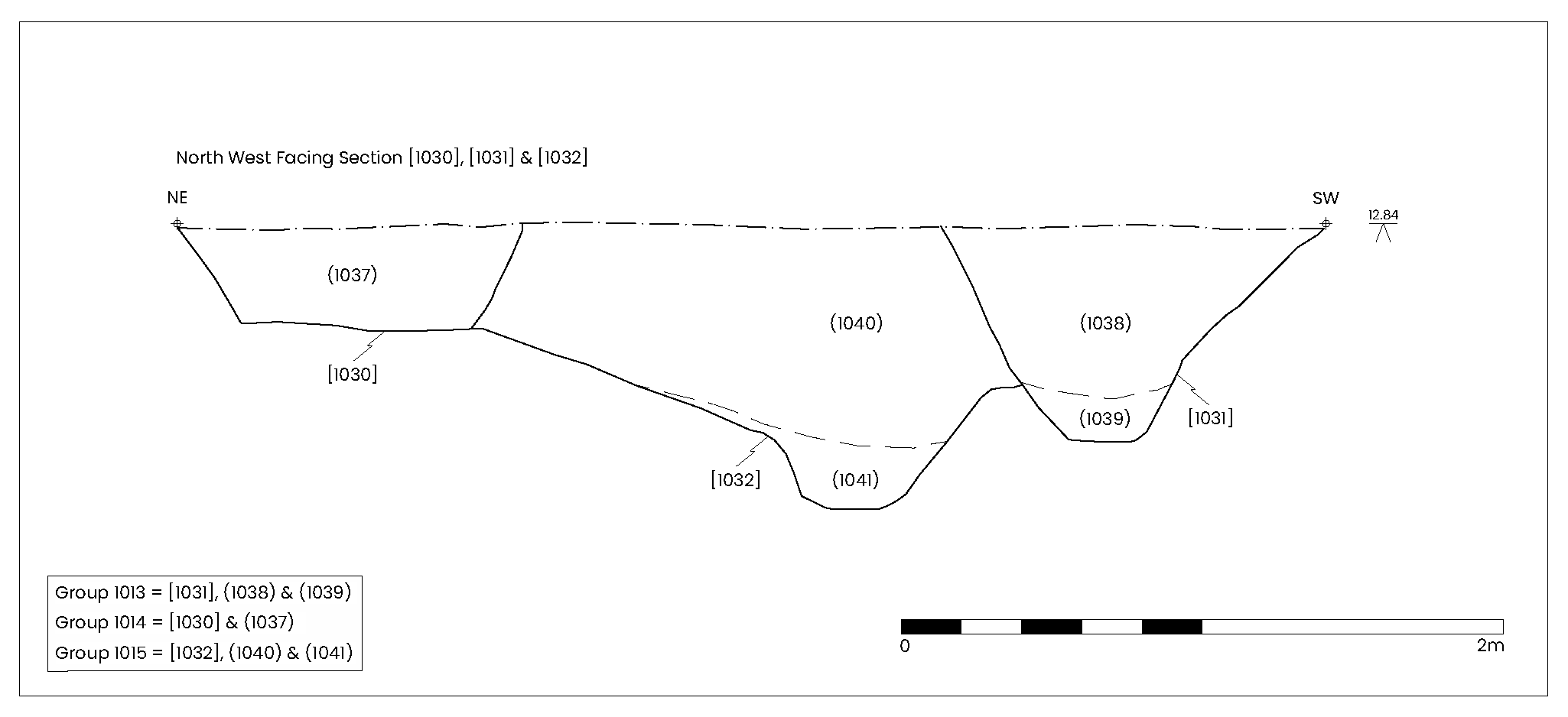
Figure 8: Ditch Groups 1014, 1013 and 1015 (left to right), north-west facing section
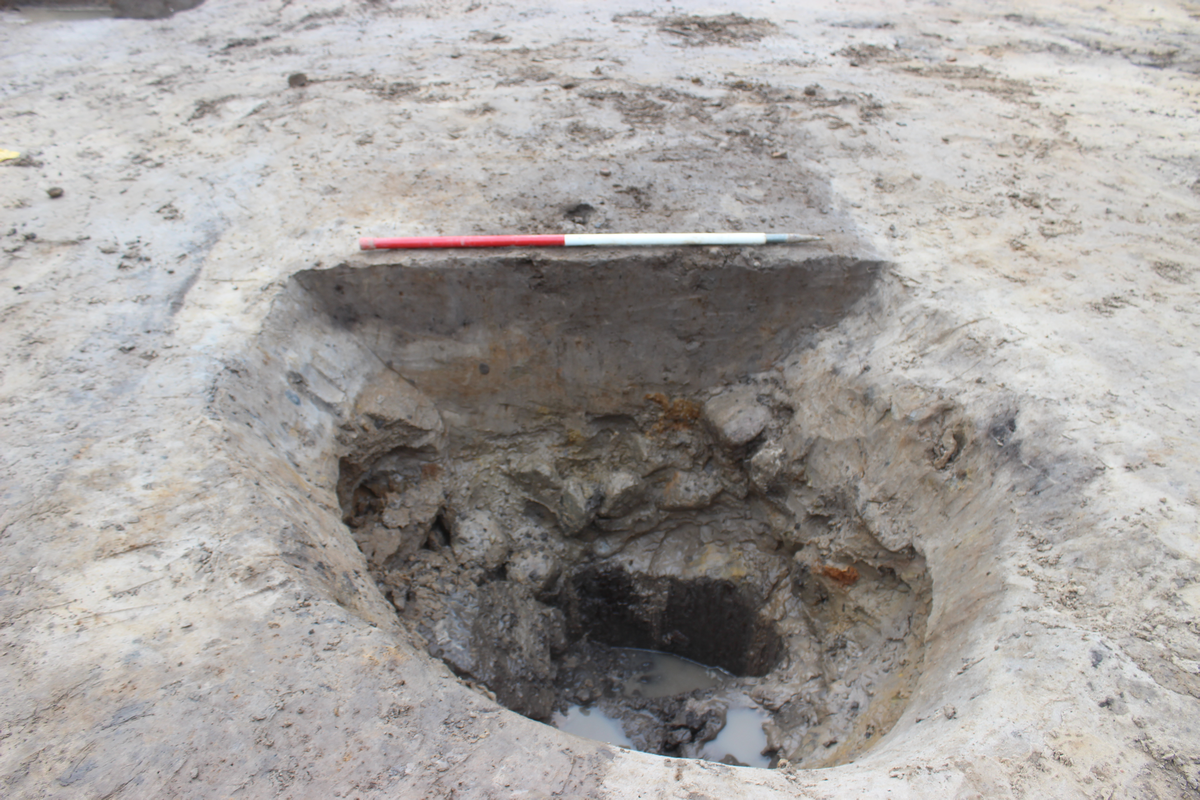
Figure 9: Ditch Group 1015, cut [1064], looking south-east. 0.1m and 0.5m scale units. Image credit: York Archaeology
Figure 10: Ditch Group 1014, cut [1016], looking north-west. 0.1m and 0.5m scale units. Image credit: York Archaeology
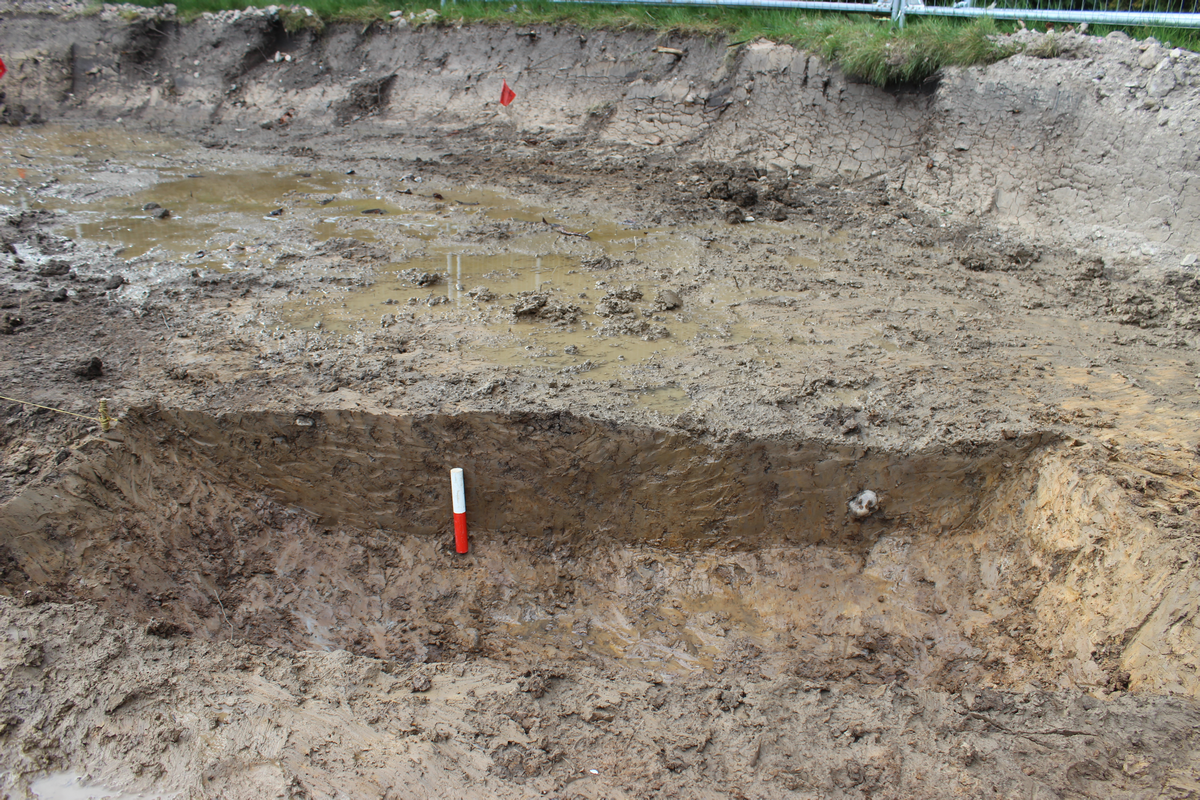
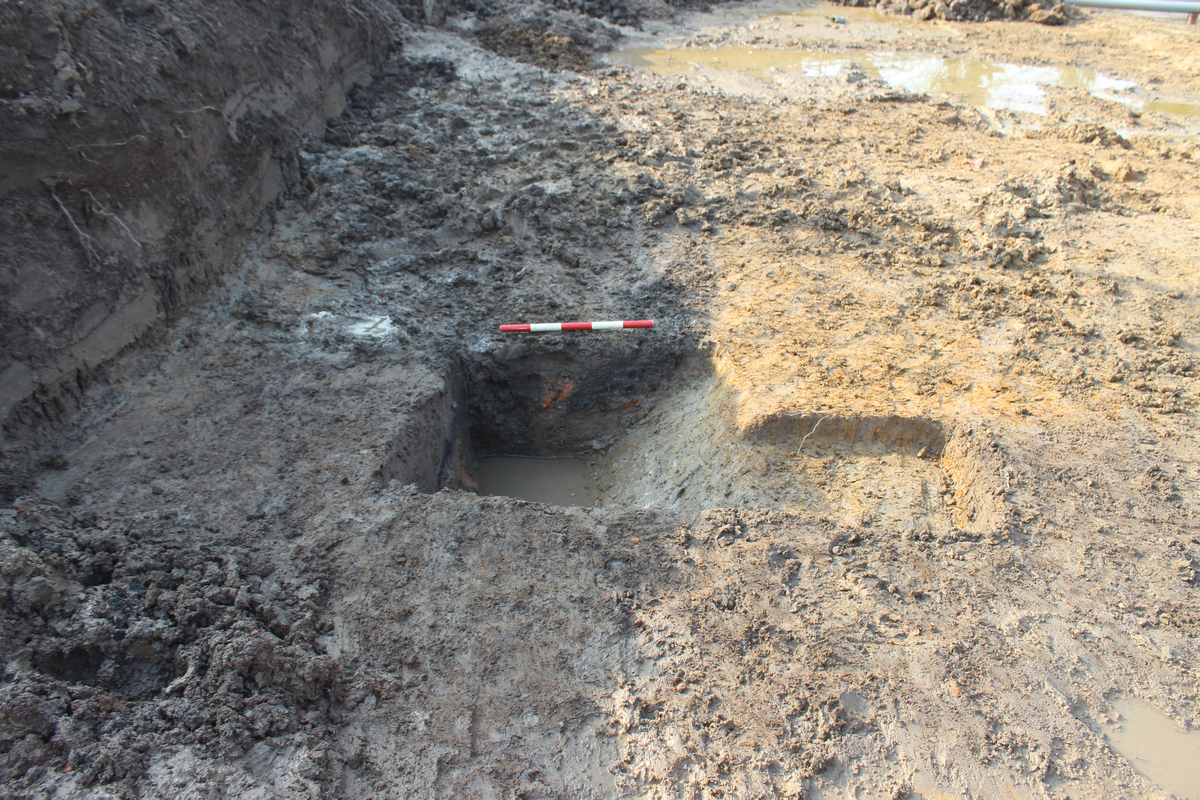
Figure 11: Ditch Group 1008 and modern pit, Group 1018, facing south-west. 0.1m scale units. Image credit: York Archaeology
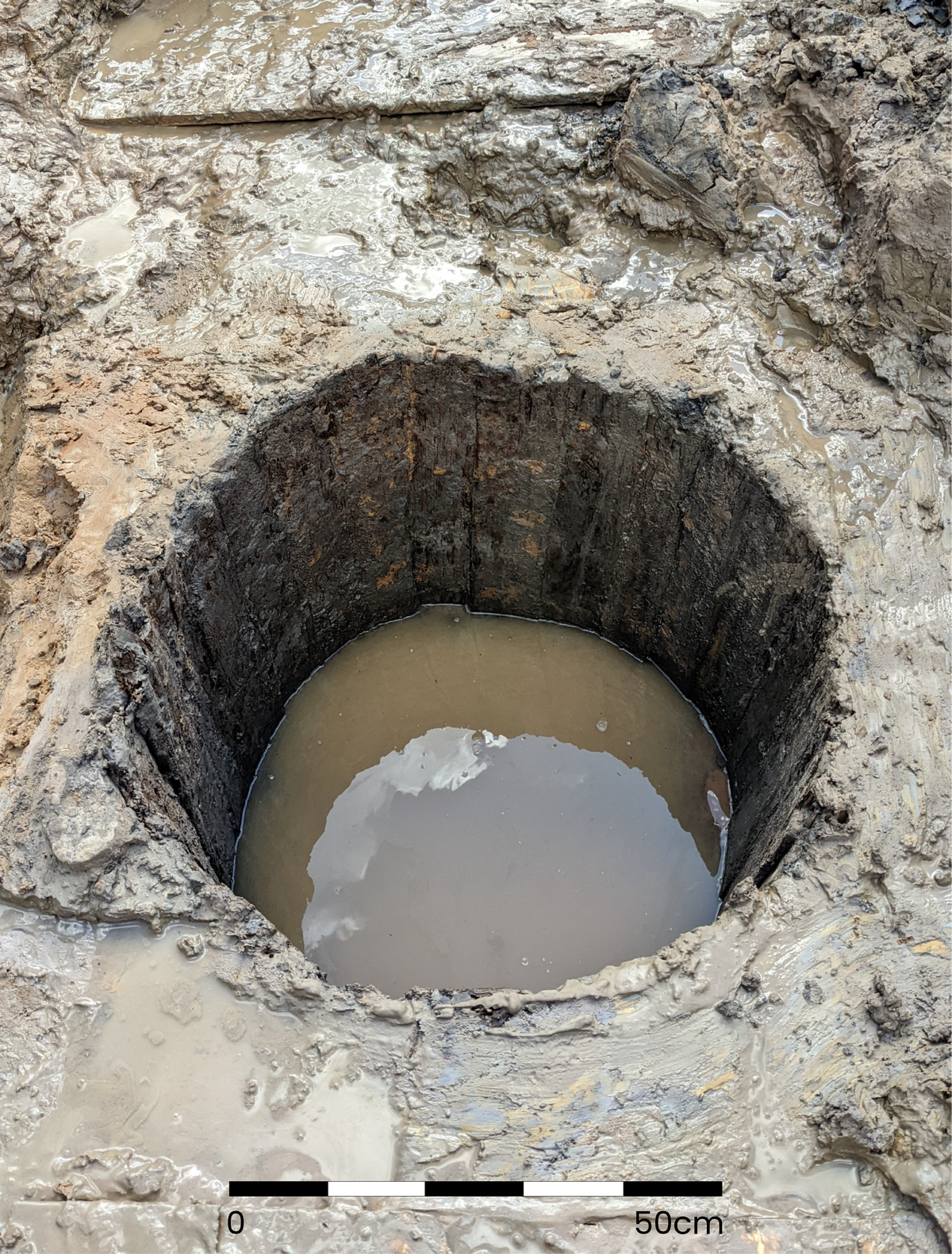
Figure 12: Reused timber cask lining Well Group 1001. 0.1m scale units. Image credit: York Archaeology
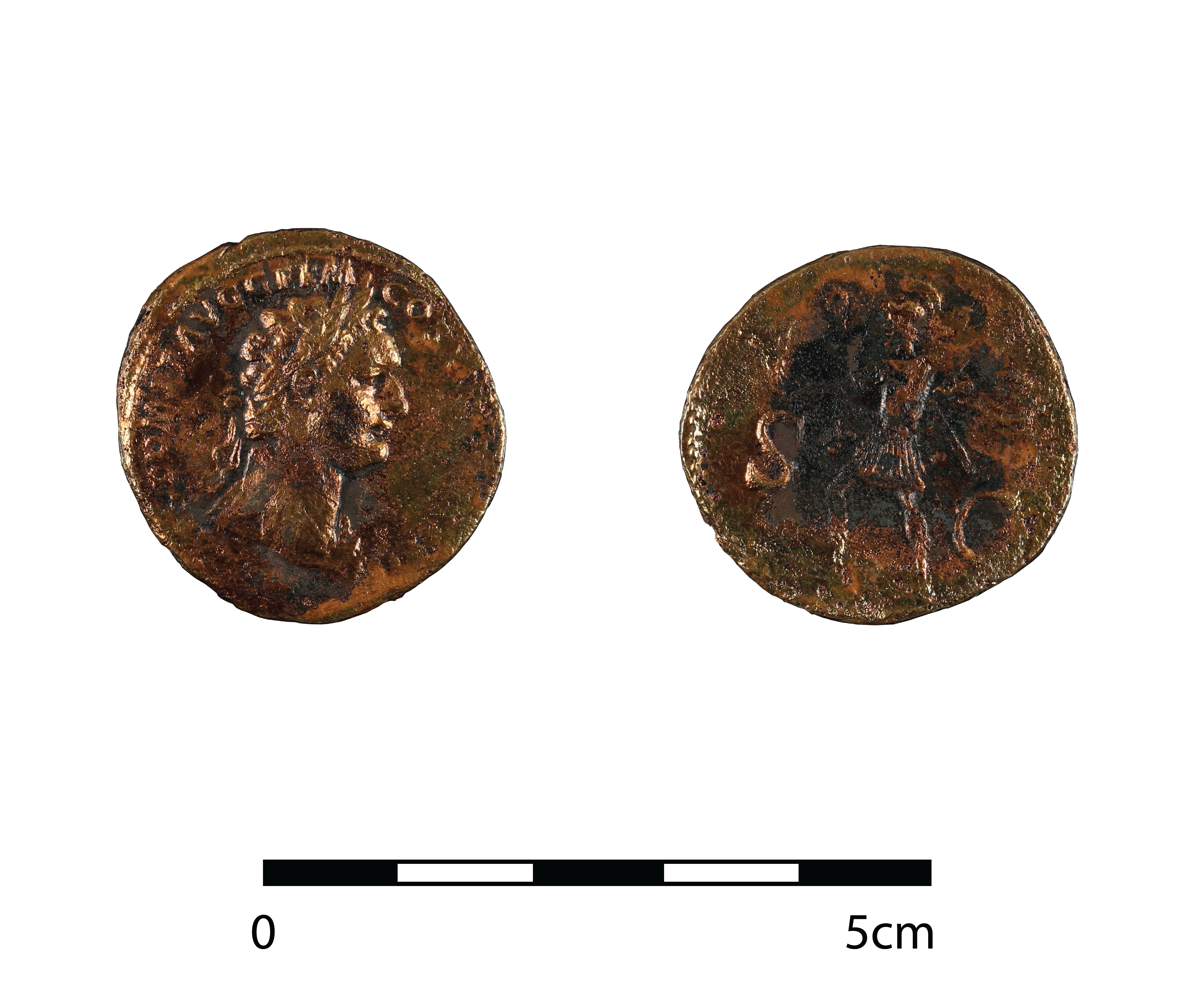
Figure 13: Copper-alloy coin SF1 from (1114), base of Well Group 1001. Domitian As, 85 CE. Image credit: York Archaeology
Figure 14: Pit Group 1002, cut [1105] and top of Well Group 1001, looking north-east. 0.5m scale units. Image credit: York Archaeology
Figure 15: Ditch/Furrow Group 1016 (left) and Pit Group 1017 (right), looking south-east. 0.5m scale units. Image credit: York Archaeology
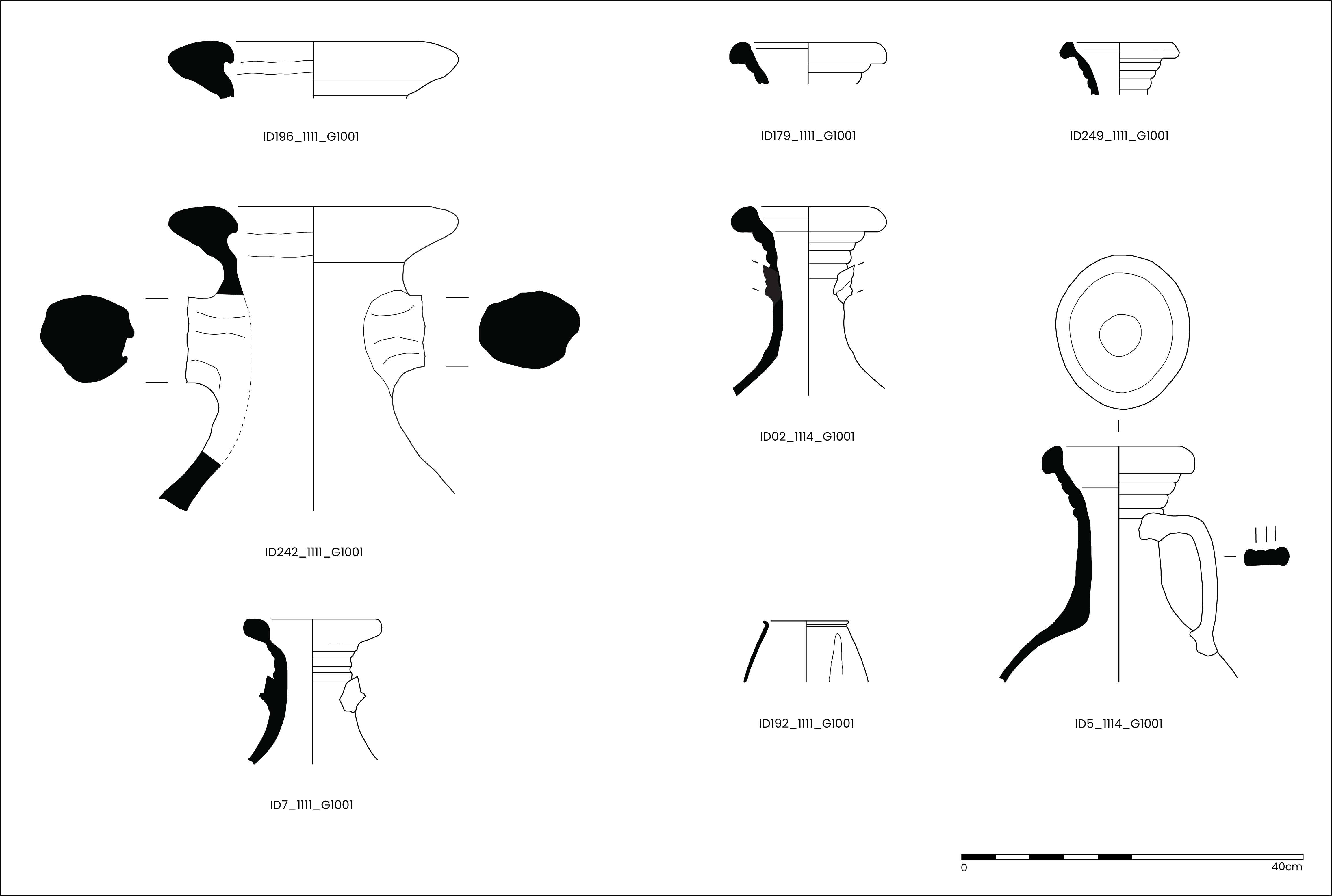
Figure 16: Pottery from Well Group 1001 – Drawn by D.G. Griffiths
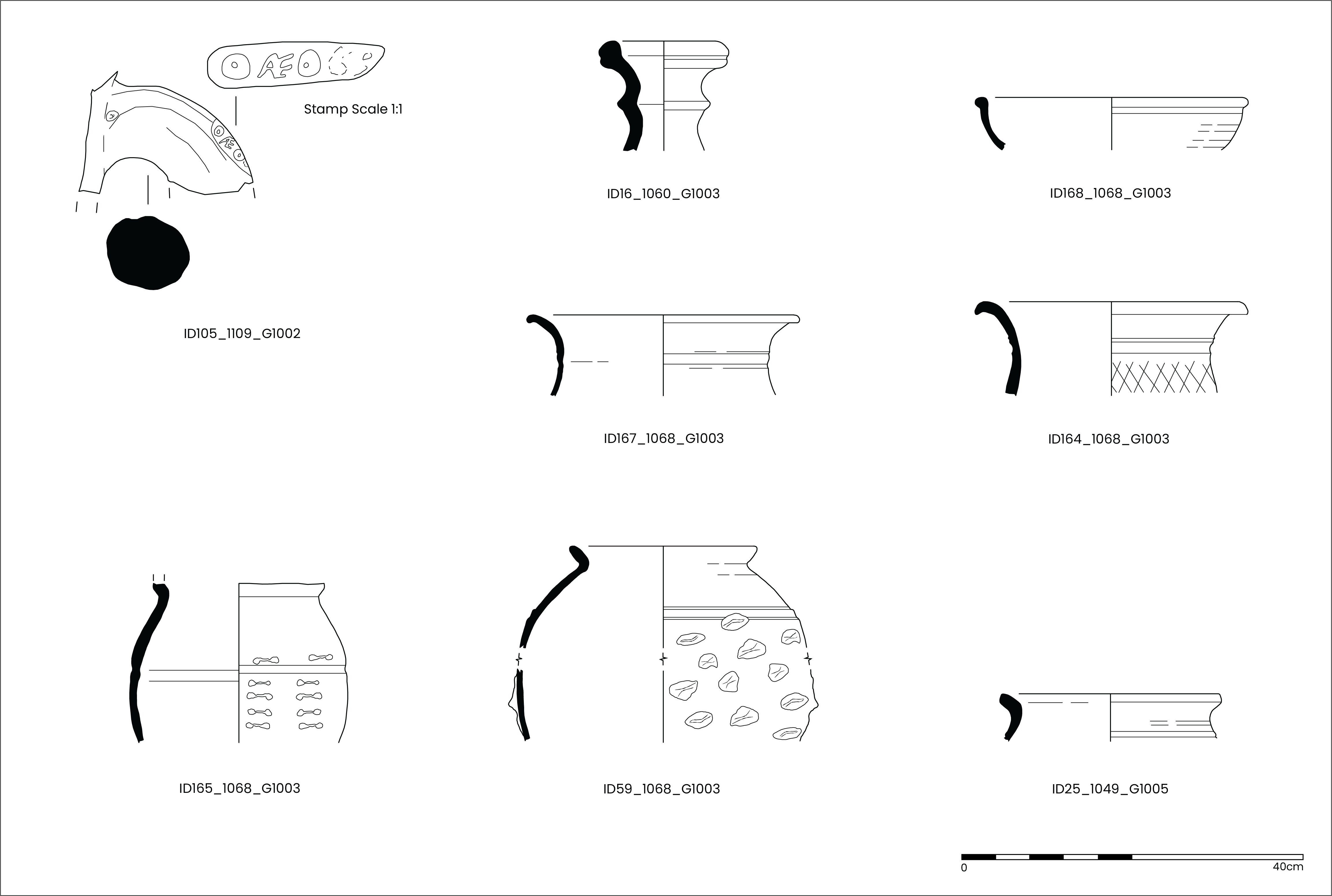
Figure 17: Pottery from Pit Group 1002, Ditch Groups 1003 and 1005 – Drawn by D.G. Griffiths
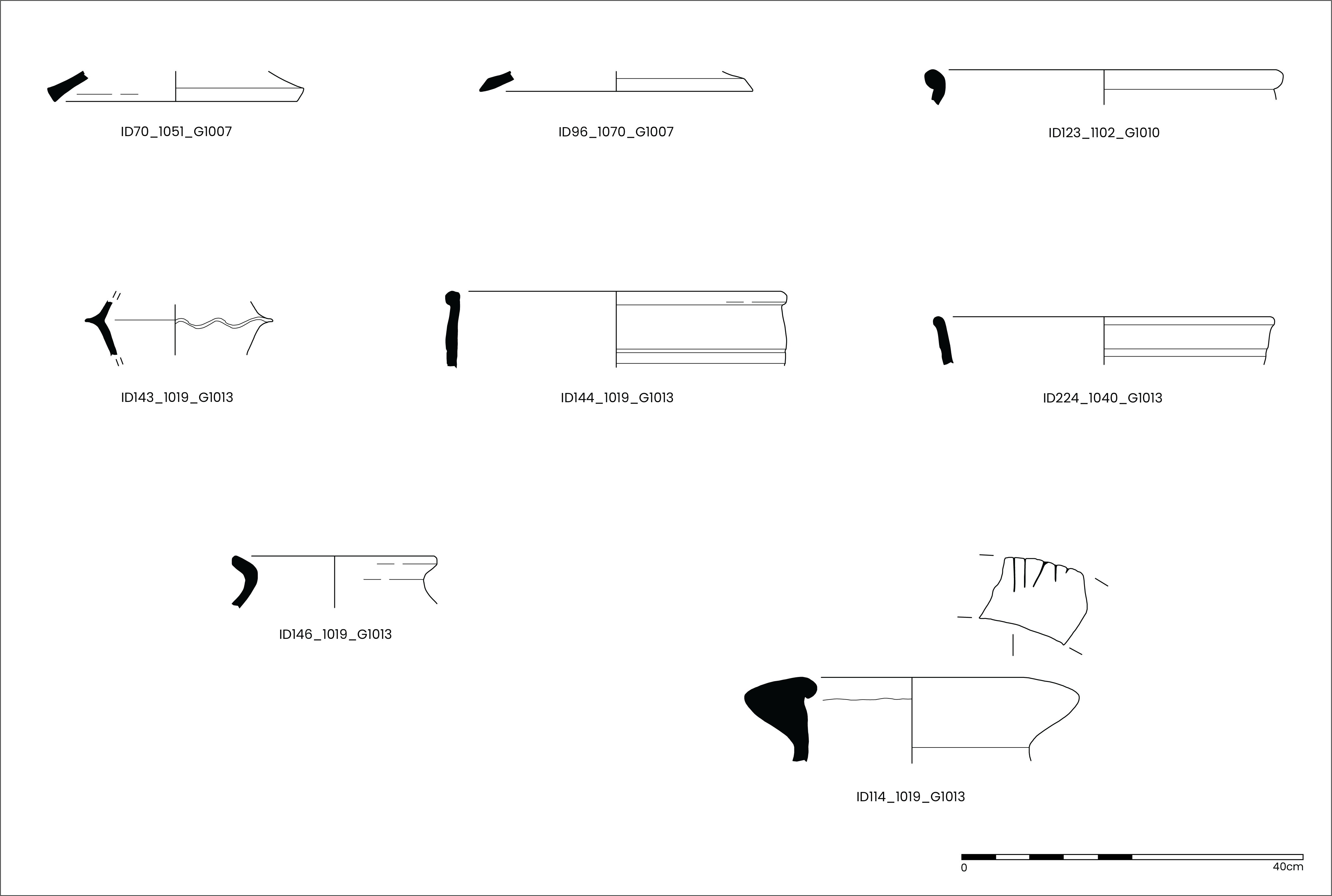
Figure 18: Pottery from Ditch Groups 1007, 1010 and 1013 – Drawn by D.G. Griffiths
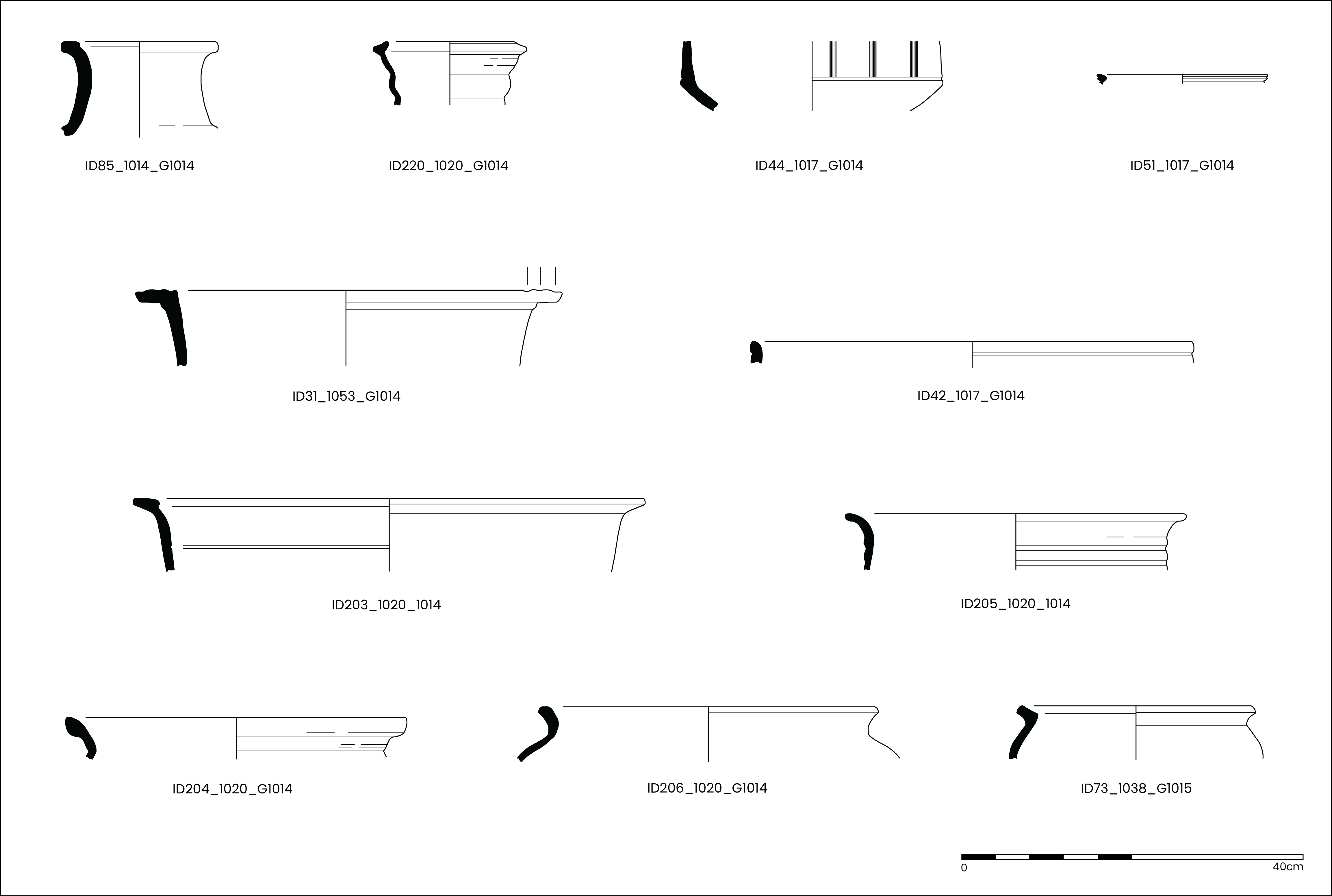
Figure 19: Pottery from Ditch Groups 1014 and 1015 – Drawn by D.G. Griffiths
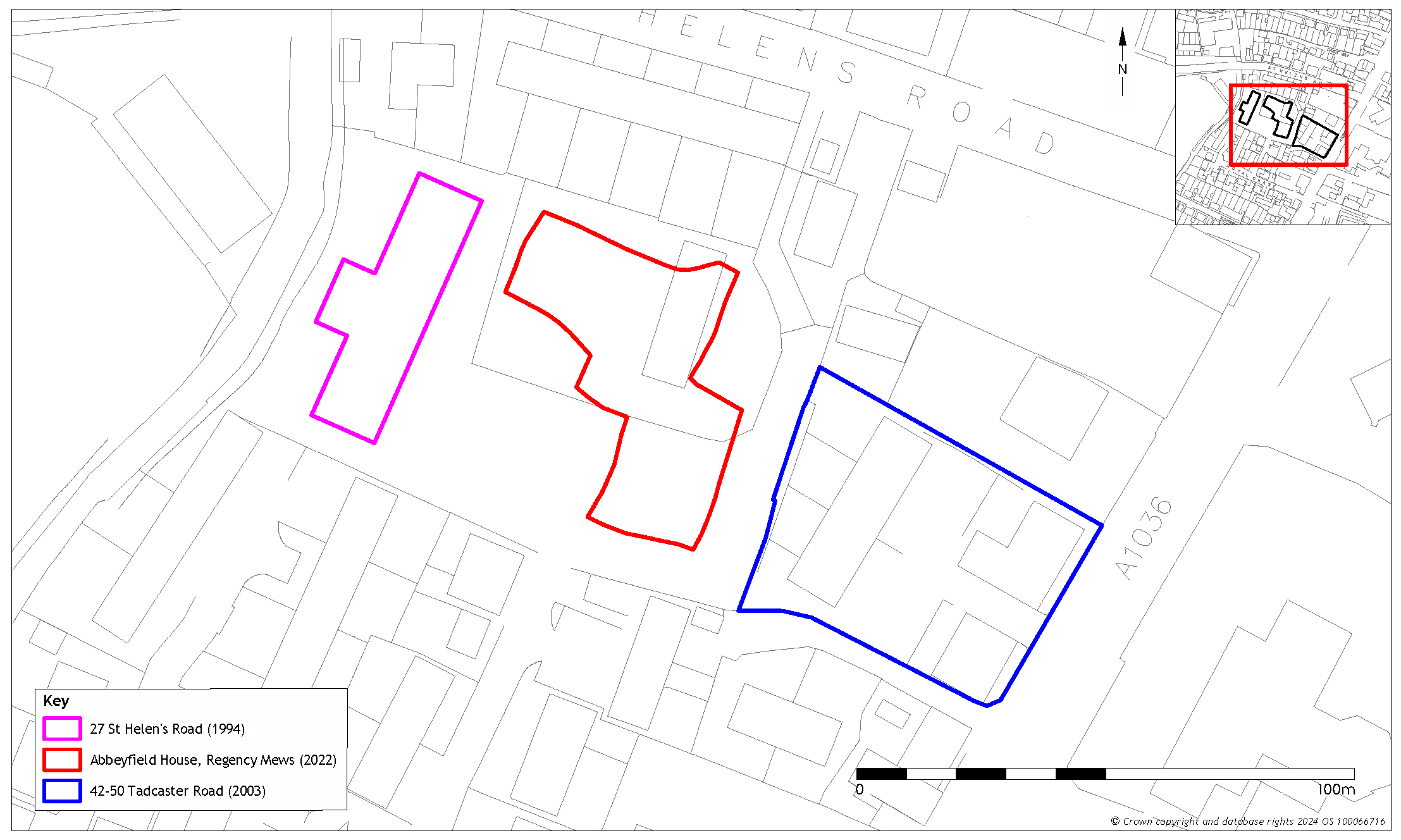
Figure 20: Regency Mews and adjacent sites
Table 1: Romano-British pottery by ware (count, weight (in grams), and estimated vessel equivalents)
Table 2: Phase 2 pottery by ware and class (count, weight (in grams), and estimated vessel equivalents)
Table 3: Phase 2 Romano-British pottery by feature
Table 4: Functional analysis by form (based on relative proportion of EVEs)
Table 5: Analysis of waterlogged plant macrofossils from Roman Well Group 1001
Table 6: Charcoal analysis from Roman Ditch Group 1003
Table 7: CBM by form in relation to period
Adams, S. 2022 'The environmental samples', in M. Vatylioti, B. Savine and B. Reeves, 'Archaeological Strip, Map, and Record Excavation at Abbeyfield House, Regency Mews, York', Report number YA/2022/59, YA unpublished report, 25–8.
Adams, S. 2024 'The bulk environmental samples' in B. Savine 'Archaeological Investigations at The North Annexe, York Guildhall', Report number YA/2023/277, YA unpublished report. 164–5.
Allen S.J. 2022 'The waterlogged wood, timbers and wooden small finds' in M. Vatylioti, B. Savine and B. Reeves 'Archaeological Strip, Map, and Record Excavation at Abbeyfield House, Regency Mews, York', Report number YA/2022/59, YA unpublished report.
Batchelor, C.R. 2022 '27 St Helens Road, Regency Mews, York: pollen assessment report', Report number 061/22, Quaternary Scientific (QUEST) unpublished report.
Berni Millet, P. 2008 Epigrafía anfórica de la Bética. Nuevas formas de análisis, Barcelona: Col Lecció instrumenta 29.
Betts, I.M. 1985 A Scientific Investigation of the Brick and Tile Industry of York to the Mid-Eighteenth Century, PhD thesis, University of Bradford.
Boast, E. 2018 '27 St Helen's Road, Regency Mews, York', Report number 2018/154, YAT unpublished report.
Callender, M.H. 1965 Roman Amphorae, Oxford: Oxford University Press.
Carreras, C. and Funari, P.P. 1998 Britannia Y El Mediterraneo: estudios sobre el abastecimiento de aceite betico y africano en Britannia, Barcelona.
Carrott, J., Dobney, K., Hall, A., Issitt, M., Jaques, D., Johnstone, C., Kenward, H., Large, F., McKenna, B. and Milles, A. 1995 'Assessment of biological remains from excavations at Wellington Row, York (Sitecode 1988–9.24)', Reports from the Environmental Archaeology Unit, York 95. 17–44.
Creighton, J. 1999 'The pottery' in P. Halkon and M. Millett (eds) Rural Settlement and Industry: studies in the Iron Age and Roman archaeology of lowland East Yorkshire, Yorkshire Archaeological Report 4, Leeds: Yorkshire Archaeological Society. 141–64.
Cumberpatch, C. 2018 'Late Prehistoric and Roman period handmade pottery' in C. Ambrey, D. Fell, R. Fraser, S. Ross, G. Speed and P.N. Wood A Roman Roadside Settlement at Healam Bridge: The Iron Age to Early Medieval Evidence, Volume 2, Artefacts, Northern Archaeological Associates: NAA Monograph Series 3. 4–16.
Cumberpatch, C. 2020 'Iron Age tradition pottery' in D.W. Fell Contact, Concord and Conquest: Britons and Romans at Scotch Corner. A1 Leeming to Barton, NAA Monograph Series 5. 255–95.
Ekwall, E. 1960 The Concise Oxford Dictionary of English Place-Names, Oxford.
Fiorentino, G. and D'Oronzo, C. 2010 'An archaeobotanical and experimental approach to identify successive fire events in hearth structures in the Sanctuary of Apollo in Hierapolis (Turkey)' in I. Théry-Parisot, L. Chabal and S. Costamagno (eds) The Taphonomy of Burned Organic Residues and Combustion Features in Archaeological Contexts, Proceedings of the Round Table, May 27-29 2008, CEPAM, P@lethnology 2. 59-68. https://doi.org/10.4000/palethnologie.8400
Finlayson, R. 1995 'A Concise Report on Land to the Rear of 52–60 Tadcaster Road, Dringhouses, York', Report number 1995/55, YAT unpublished report.
Gale, R. and Cutler, D. 2000 Plants in Archaeology, Otley: Westbury Publishing and Kew.
Gerrard, J. 2012 'Native and Roman pottery' in J. Proctor Faverdale, Darlington: Excavations at a Major Settlement in the Northern Frontier Zone of Roman Britain, PCA Archaeology Ltd Monograph 15. 77–81.
Griffiths, D.G., 2024 'The Roman pottery' in B. Savine 'Archaeological Investigations at The North Annexe, York Guildhall', Report number YA/2023/277, YA unpublished report. 339.
Hall, A.R. and Kenward, H.K. 1982 'Environmental evidence from Roman deposits in Skeldergate', Britannia 13, 433–4.
Hall, A.R. and Kenward, H.K. 1990 Environmental Evidence from the Colonia, The Archaeology of York 14/6, London: Council for British Archaeology.
Hingley, R. 1989 Rural Settlement in Roman Britain, London: Seaby.
Howlett, P.W. 2024 'Land off Boroughbridge Road, York Post-Excavation Assessment Report', Report number YA/2023/63, YA unpublished report.
Jenner, A. 2022 'The Post-Roman pottery' in M. Vatylioti, B. Savine and B. Reeves 'Archaeological Strip, Map, and Record Excavation at Abbeyfield House, Regency Mews, York', Report number YA/2022/59, YA unpublished report. 15–16.
Johnson, M. 1997 '26–30 Regency Mews, Tadcaster Road, Dringhouses, York: Report on an Archaeological Excavation', Report number 1997/30, YAT unpublished report.
Kenward, H.K., Hall, A.R. and Jones, A.K.G. 1986 Environmental Evidence from a Roman Well and Anglian Pits in the Legionary Fortress, The Archaeology of York 14/5, London: Council of British Archaeology.
Leary, R. 2021 'Romano-British Pottery. Appendix I: the wares and types series' in S. Ross and C. Ross Cataractonium: Establishment, Consolidation and Retreat, Volume 2. A1 Leeming to Barton, Northern Archaeological Associates: NAA Monograph Series 6. 16–78.
Macnab, N. 1997 'The Fox Public House, Tadcaster Road, Dringhouses, York: Archaeological Investigation Report', Report number 1997/18, YAT unpublished report.
Macnab, N. and Marwood, R. 1998 '27 St Helen's Road, Dringhouses, York', Report number 1998/29, YAT unpublished report.
Manning, W.H. 1985 Catalogue of Romano-British Iron Tools, Fittings and Weapons in the British Museum, London: British Museum Press. 115.
McComish, J.M. 2004 Roman Occupation at the Site of the Former Starting Gate Public House, 42–50 Tadcaster Road, Dringhouses, York, UK, YAT Web Publication 8. https://research.yorkarchaeology.co.uk/wp-content/uploads/2023/11/AYW8-Starting-gate.pdf
McComish, J. 2012 An Analysis of Roman Ceramic Building Material from York and its Immediate Environs, MA thesis, University of York.
McParland, L.C., Collinson, M.E., Scott, A.C., Campbell G. and Veal, R. 2010 'Is vitrification in charcoal a result of high temperature burning of wood?', Journal of Archaeological Science 37, 2679–87. https://doi.org/10.1016/j.jas.2010.06.006
Monaghan, J. 1993 Roman Pottery from the Fortress: 9 Blake Street, The Archaeology of York 16/7, York: Council of British Archaeology.
Monaghan, J. 1997 Roman Pottery from York, The Archaeology of York 16/8, York: Council of British Archaeology.
Ottaway, P. 2011 Archaeology in the Environs of Roman York: Excavations 1976–2005, The Archaeology of York 6/2, York: Council for British Archaeology.
Peña, J.T. 2007 Roman Pottery in the Archaeological Record, Cambridge: Cambridge University Press. https://doi.org/10.1017/CBO9780511499685
Prior, J. and Alvin, K.L. 1983 'Structural changes on charring wood of Dichrostachys and Salix from Southern Africa', International Association of Wood Anatomists 4, 197–206. https://doi.org/10.1163/22941932-90000782
Raine, J. 1893 Historic Towns: York, London: Longman, Green and Co.
RCHME 1962 An Inventory of the Historical Monuments of the City of York, Vol. I: Eboracum Roman York, London: HMSO.
Roskams, S. and Neal, C. 2020 Landscape and Settlement in the Vale of York. Archaeological investigations at Heslington East, York, 2003–13, Research Report of the Society of Antiquaries of London 82, London: The Society of Antiquaries of London. https://doi.org/10.26530/20.500.12657/39942
Ross, S. and Ross, C. 2021 Cataractonium: Establishment, Consolidation and Retreat, Volume 2. A1 Leeming to Barton, Northern Archaeological Associates: NAA Monograph Series 6.
Savine, B. and Coates, T. 2023 'A1237/B1224 Wetherby Road Roundabout, York. Analysis Report on an Archaeological Watching Brief and Excavation', Report number YA/2023/49, YA unpublished report.
Schweingruber, F.H. 1990 Macroscopic Wood Anatomy, 3rd edition, Birmensdorf: Swiss Federal Institute for Forest, Snow and Landscape Research.
Swan, V.G. 2002 'The Roman pottery of Yorkshire in its wider historical context' in P. Wilson and J. Price (eds) Aspects of Industry in Roman Yorkshire and the North, Oxford: Oxbow Books. 35–79.
Taylor, M. 1981 Wood in Archaeology, Aylesbury: Shire Publications.
Tomber, R. and Dore, J. 1998 The National Roman Fabric Reference Collection, MoLAS Monograph 2, London: Museum of London Archaeology Service.
Tomlinson, P.R. 1989 Plant Remains from Excavations at 5 Rougier Street, York, Ancient Monuments Laboratory Report 57/89, London: Historic Buildings and Monuments Commission for England.
Vatylioti, M., Savine, B. and Reeves, B. 2022 'Archaeological Strip, Map and Record Excavation at Abbeyfield House, Regency Mews, York', Report number YA/2022/59, YA unpublished report.
VCH 1961 A History of Yorkshire, The City of York, The Victoria History of the Counties of England, Oxford: Oxford University Press.
Warry, P. 2006 Tegulae: manufacture, typology and use in Roman Britain, Oxford: British Archaeological Reports, British Series 417. https://doi.org/10.30861/9781841719566
Whitehouse, C. 2019 '26–28 Tadcaster Road, Dringhouses, York, Archaeological Strip, Map and Record', Report number A260719, MAP unpublished report.
OS 1930 25 inch: 1 mile map sheets Yorkshire CLXXIV.14
OS 19631:2500SE 5849 & SE 5949
Internet Archaeology is an open access journal based in the Department of Archaeology, University of York. Except where otherwise noted, content from this work may be used under the terms of the Creative Commons Attribution 3.0 (CC BY) Unported licence, which permits unrestricted use, distribution, and reproduction in any medium, provided that attribution to the author(s), the title of the work, the Internet Archaeology journal and the relevant URL/DOI are given.
Terms and Conditions | Legal Statements | Privacy Policy | Cookies Policy | Citing Internet Archaeology
Internet Archaeology content is preserved for the long term with the Archaeology Data Service (ROR). Help sustain and support open access publication by donating to our Open Access Archaeology Fund.
 Home
Home