Cite this as: Barrett, R. 2026 'The Continued Lifecycle of Archaeological Archives in Ireland', Internet Archaeology 72. https://doi.org/10.11141/ia.72.8
The National Monuments Service (NMS), Ireland, sits within the Department of Housing, Local Government, and Heritage, and is responsible for the promotion, preservation and protection of Ireland's archaeological and built heritage. The core work of the NMS involves advising the Minister on legislation and policy; providing advice on developments and infrastructure in the vicinity of archaeology; regulating excavations at or near archaeological monuments, including the use of detection devices; identifying and designating classifications of new monuments; managing monuments in State Care and Ireland's world heritage UNESCO sites; and safeguarding the NMS archive collections for future research. The protection and storage of artefacts is the responsibility of the National Museum of Ireland (NMI), with whom the NMS liaises closely in ensuring policy and legislation is adhered to.
The NMS Archive, one of eight units within the organisation, retains the documentary heritage of all known archaeological monuments in Ireland, with records dating from the late nineteenth century and including information on newly identified sites. The NMS Archive collections comprise in excess of 500,000 individual records in a range of formats, each with specific storage and preservation requirements, i.e. paper, photographs, microfilm and digital. As the NMS archivist, I am solely responsible for the organisation, storage, preservation, digitisation and provision of access to the collections for both internal and external stakeholders. Data management improvements, including the removal of duplicates from the system and ensuring correct and accurate indexing of legacy databases, are also a key part of the archive process. A final archive objective is for a digital surrogate copy for every original paper record.
Internal stakeholders engaging with the NMS Archive include the other seven units within the organisation, namely Archaeological Survey, Licensing and Planning, Monument Protection, Underwater Archaeology, World Heritage, Photographic Unit, and Administration. Each of these units regularly transfer records to the archive, with each requiring different levels of access. External stakeholders include other government departments and agencies such as the NMI, our closest organisation relating to the National Monuments Acts, and the Office of Public Works (OPW), which conserves and carries out the daily management of National Monuments owned by the Minister. Both of these organisations are further specifically mentioned in the recent Historic and Archaeological Heritage and Miscellaneous Provisions Act [No.26 of 2023] (Office of the Attorney General 2023).
A more recent group of external stakeholders who deposit their documentary records from licensed excavations with the NMS Archive are commercial archaeology companies. These resources are then made available to researchers for consultation. This engagement is relatively new, introduced during the economic downturn in Ireland in 2008 as a direct response to the risk posed to archaeological archives created during the excavation process by the potential closure of archaeological companies. Subsequent to this, two major private sector companies ceased trading and their artefacts and archives had to be taken in by State bodies, ourselves and the NMI. The NMS Archive had to quickly develop a system for transferring archive material to our care (see section 3). The archive material from one of these companies has been fully catalogued and integrated into our system, and the material from the other is currently being processed. This unforeseen financial problem for private sector companies caused by economic uncertainty left the State with a large and unexpected financial issue of its own and, therefore, it was important that our response to it proved to be value for money as well as meeting archive standards in the long-term.
The lifecycle of records, from creation to deposit, is a concept familiar to many. However, it is often assumed that, once deposited, the records are boxed away forever, but that is where the work begins for archive staff, particularly when the records are not born digital. There are at least four additional stages in the archive process that need to be completed before any material can be made available in digital format. These include assessment, arrangement and description, preservation, and conservation. Each of these stages will be explained in further detail below (Figure 1).
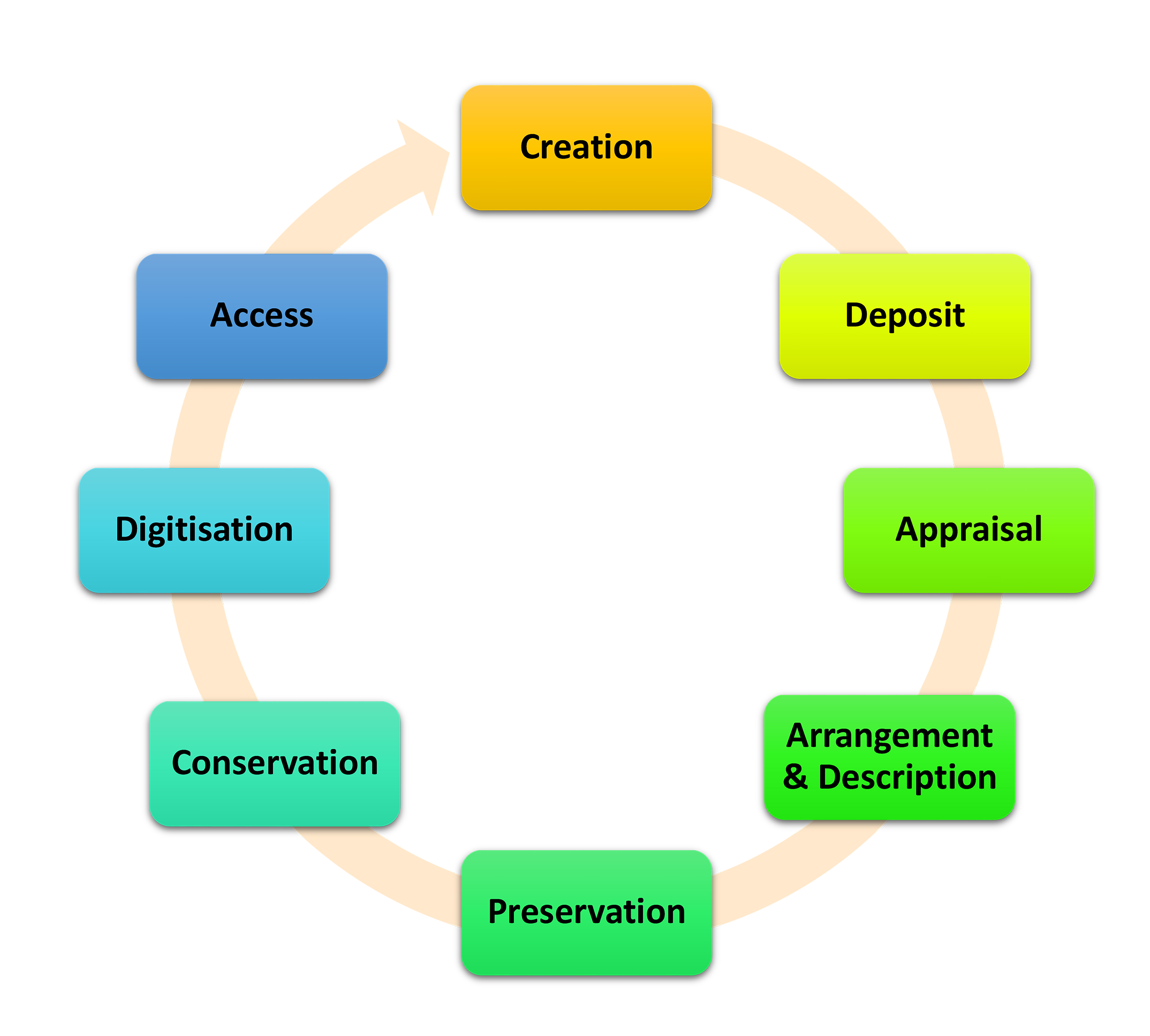
Appraisal is the process of distinguishing records of continuing value from those of no further value. An archivist's professional knowledge and experience helps them evaluate and recommend items for retention, return to the depositor or, in certain circumstances, destruction. Items deposited are assessed to determine the relevance of the items to the collection policy or business function of an organisation, or whether the items would be of interest to researchers. Appraisal decisions can vary from archive to archive, depending on their specific collection policies, but will ultimately conform to the archival principle of keeping records of continuing value. In the case of the NMS Archive, items are assessed based on their relevance to Ireland's archaeological heritage.
One of the NMS Archive collections that demonstrates the appraisal process comprises the records deposited by commercial archaeological companies. Documentary archives produced in the course of an excavation are often overlooked as a source but can be invaluable to researchers of archaeology. The material can include plans, drawings, maps, specialist reports, photographs, site notebooks, skeleton registers, radiocarbon date certificates, etc. Up until the new act was passed in 2023 (Office of the Attorney General 2023), the NMS Archive had no legal obligation to accept these types of records from third parties, but it was very much felt that there was a moral obligation on us to ensure they were preserved and, in 2008, we set about developing guidelines on depositing them. It is a welcome development that the recently enacted legislation recognises that the process of depositing archaeological field records with archives is in fact an integral part of the excavation. A further requirement for excavation licence holders is that they now have to state where the documentary archives are to be stored. With the NMS Archive and the NMI reserve collections now sharing the same premises, this has the exciting potential to allow researchers to consult both the NMS Archive documentary archives from excavations and the NMI collections, including artefacts, in one location.
As part of the appraisal process for the deposit of these archaeological archive records, a comprehensive list of the type of material was produced, indicating what the NMS Archive will and will not accept from commercial archaeological companies. This important first stage of assessment resulted in the identification of 50 record types accepted as part of a deposit, with separate lists of the types of records accepted in larger folders. A further list of the records that may be considered following discussion, as well as the type of records that the NMS Archive will not accept, was also decided upon. It is recognised that the lists are not exhaustive and that these are open to the inclusion of additional items as time progresses. Open communication with depositors is encouraged, and any suggestions for new record types to be added will be taken into consideration. Table 1 details the full lists of items under the abovementioned categories.
Items that are not accepted by the NMS Archive, such as commercially sensitive information, Human Resource (HR) records, and financial information, will, in turn, be returned to the depositor or placed on a retention schedule for disposal. As shown in Table 1, NMS Archive does not accept any artefacts or environmental samples as this is not part of the remit of the wider organisation and is in fact the responsibility of the NMI. The refusal to accept nitrate film is because of the high risk this material poses to archives due to its ability to spontaneously combust if not stored correctly.
| Items Accepted in Boxes by NMS Archive | |||
|---|---|---|---|
| 1. Lists of all materials submitted (by licence number) | 26. Site assessments relating to excavations | ||
| 2. Licence application form | 27. Building surveys relating to excavations | ||
| 3. Method statement | 28. Pre-excavation desktop studies | ||
| 4. Maps/maps from licence application | 29. Relevant portions of Environmental Impact Statement (EIS) | ||
| 5. Preliminary/stratigraphic report | 30. X-rays | ||
| 6. Interim reports | 31. Background research | ||
| 7. Feature/context register/sheets | 32. General notes | ||
| 8. Sample registers/descriptions | 33. Drawing registers | ||
| 9. Photographic registers | 34. Finds registers/descriptions | ||
| 10. Site notes/notebooks | 35. Final reports | ||
| 11. Plans/profiles/sections/sketches | 36. Non-standard Information | ||
| 12. Photographs (digital copies) | 37. Architectural survey | ||
| 13. Colour photographs | 38. Photographic survey | ||
| 14. B&W photographs | 39. Levels notebook | ||
| 15. Slides | 40. Underwater reports | ||
| 16. Negatives (colour) | 41. Bone register | ||
| 17. Negatives (B&W) | 42. Skeleton registers/descriptions | ||
| 18. Finds drawings | 43. Radiocarbon date certificates | ||
| 19. Specialist reports | 44. Licenses to alter/export | ||
| 20. Digital copies of reports/maps/plans, etc. | 45. Site registers | ||
| 21. Publications relating to licensed activity | 46. Index cards | ||
| 22. Plans of development applied for (developer plans) | 47. Wetland field survey record sheets | ||
| 23. Newspaper cuttings | 48. Timber sheets | ||
| 24. Microfilm | 49. Worked wood sheets | ||
| 25. Film and Video or other medium of recording | 50. Metallurgical register | ||
| Items accepted in Folders by NMS Archive | Items that may be accepted by NMS Archive | Items not accepted by NMS Archive | |
| 1. Plan | 1. Site assessments | 1. Commercially sensitive information | |
| 2. Section | 2. EIS reports | 2. Non-excavation related | |
| 3. Elevation | 3. Desktop studies | correspondence with developer | |
| 4. Artefacts | 4. Building surveys | 3. Administration files | |
| 5. Plan/section | 5. Reports on works carried out to | 4. Financial files | |
| 6. Reconstruction | monuments | 5. HR files | |
| 7. Map | 6. Archives of non-licensed | 6. Artefacts | |
| 8. X-rays | excavations | 7. Environmental samples | |
| 9. Conservation | 8. Nitrate-based film | ||
To encourage third parties to engage with the NMS Archive, deposit guidelines were produced (Barrett 2024). These guidelines take into account access, ownership and copyright requirements, and provide step by step instructions for preparing and cataloguing records for deposit. However, as no additional staff are available to spend time on this aspect of the deposit, this project required a certain level of creativity. The fact remains that it is not feasible for the NMS Archive staff to devote a significant amount of time to recording the contents of deposits in a new catalogue, at the expense of work on other archive collections. However, it was found that the NMS Archive are in the position to purchase archival quality boxes for the project, which effectively eliminates any additional financial cost to depositors. Thereby, in return for depositors themselves completing the catalogue on their own time and in advance of transferring the boxes, the NMS Archive will purchase and provide the costly archival quality boxes to depositors free of charge. This innovative approach is the 'carrot and stick' concept at its most effective, and it has allowed for a significant reduction in the time required of staff on this project. A further advantage of this, from a collections management point of view, is that it allows for the use of standard box sizes that results in an easy calculation of the amount of archive space that may be required for future deposits.
A bespoke catalogue is now designed for each depositor to complete in advance of depositing. Although basic in structure, these pre-prepared catalogues capture all necessary information that will allow for the creation of a more detailed database at a later stage, including the metadata required for digitisation. They are populated by using drop down lists based on the list of items accepted by the NMS Archive, and are designed to control content and allow for consistent data entry. The final part of the deposit process is a sample check of the deposits in advance of transfer to archive storage. Again, due to the lack of available staff time, the policy enforced by the NMS Archive is that deposits will not be accepted until the information provided is correct. This project is still in its infancy but is working well to date, with several archaeological companies engaged at different stages of the deposit process.
The process of arrangement and description of records allows for them to be easily identified by researchers. As much as is possible, the archivist works to re-establish the 'original order' so that the records reflect the way they were originally created, that will, in turn, allow more detailed analysis by researchers. The creation of a unique identifier or reference code for each record is usually necessary at this stage in the archive process and is essential for security, preventing duplication, and ensuring consistent cataloguing. Unique identifiers do not need to be complex, they usually include both letters and numbers, but should ultimately assist users to easily recognise the series, file and item from a specific collection. Before digitisation can begin, a unique identifier must be assigned to all original files, and this will remain with the specific file as part of the metadata for as long as it remains with the repository. Although this part of the work can be quite time consuming for archive staff, this is a vital step that links the original file with all future formats of the material through digitisation, allows for the file to be easily located to ensure that correct storage and temperature controls are applied, and allows additional information to be added as part of the description process. A perfect example of this is in the case of archaeological archives deposited by commercial companies. When a licence number is assigned by the NMS to an archaeological investigation, it is also assigned to any artefacts uncovered during the excavation process and subsequently deposited with the NMI. The use of the licence number as the unique identifier allows a direct link between the documentary records from the excavation and the material artefacts uncovered.
In 2020, the COVID-19 pandemic provided the opportunity for a cataloguing project of a previously unsorted collection of over 9000 Topographical Files to advance. Dating from the 1930s and 1940s, this collection comprises a series of envelopes containing extracts from journals, survey notes, pen and ink sketches, and photographs relating to sites, monuments and finds on a county basis. Two copies were prepared at the time, with one copy sent to the NMI. While the NMI copy of this collection had supplementary descriptive information added to the original files over the intervening years, the NMS copy is unique in that it remained as it was when it was created, with no additional information added to it. This collection in fact serves as the precursor to the Archaeological Survey, with the contents further used to populate the Sites and Monuments Record in the 1980s. Figure 2 shows an example of the contents of this collection during the cataloguing process.
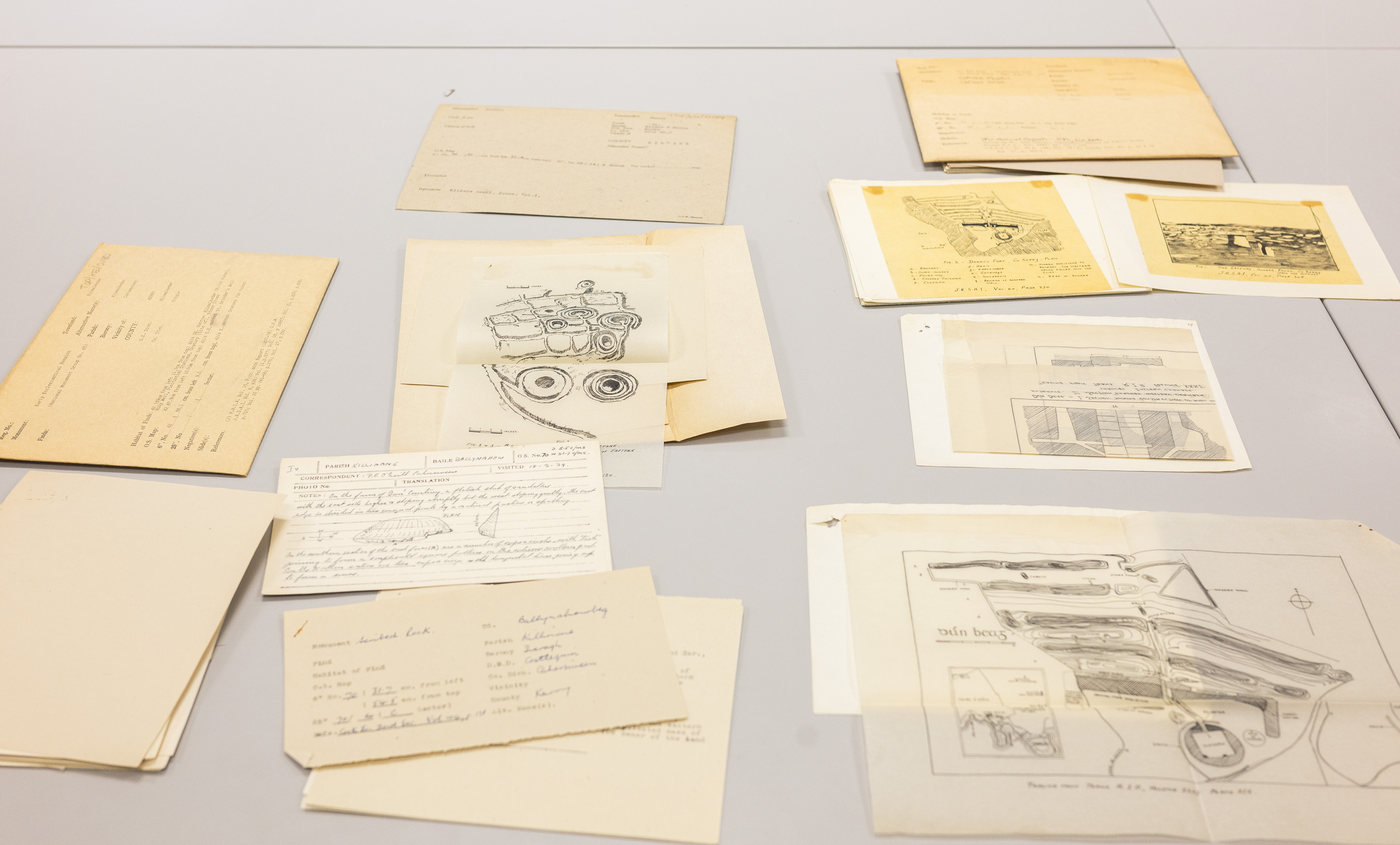
The cataloguing process involved the arrangement of the envelopes by Ordnance Survey sheet number and recording relevant details in a database, noting the monument name, location, references, and the presence of any hand drawn-sketches and photographs. However, the most important part of this project was the assignment of a unique identifier to the collection for the first time, which will ultimately allow it to be digitised and made available online. In this instance the code is simply TOP/GA/0001, referring to the collection name, the Topographical Files; the county name, Galway; and the numerical sequence of envelopes relating to that site. Simply yet effective, the addition of an identifier immediately enhanced access possibilities for this wonderful collection. This was a rewarding project to have the time to dedicate to, in the knowledge that it will be shared with general researchers for the very first time since its inception.
For archives to be used by the widest audience possible, collections must be accurately described so that all who wish to use them can easily identify the relevance to their personal research. Having the option of knowing which archives are not relevant to researchers can be just as important as knowing which collections are. This part of the archive process allows the identification of preservation and conservation needs, can widen access to the descriptions and collections themselves, and can enable the contribution of data to archive networks. Many archives have their own cataloguing guidelines, however these should all adhere to the best practice cataloguing standard ISAG(G), developed by the International Council on Archives (ICA 2000). There are 26 data elements of description defined in ISAG(G), six of which are considered to be essential. Some of the most common fields of description are the unique identifier, title, repository information, period covered, extent or volume, language, scope and content, and access conditions. The hierarchical structure of catalogues indicates that they should be arranged from the general to the specific, e.g. going from who created the records to subject matter to specific details on what is contained in the file. Although different archives may have different cataloguing needs due to differing record types, consistency and adherence to accepted professional standards is essential.
In addition to establishing intellectual control over collections, archivists must also oversee the physical preservation of the material in their care. Where possible, plastic is preferable to the use of metal. Paperclips, staples and pins, as well as rubber bands and adhesive tape, can cause damage to paper files due to degradation and it is recommended that they are not used (Figure 3). Documents are unfolded or unrolled where possible. Material is then packed into acid-free folders and placed in acid-free boxes. Photographs and particularly fragile textual documents are protected further using polyester pockets. Environmental conditions in the store rooms are monitored to ensure that the temperature and humidity levels remain within acceptable standards. Whether it is staff or researchers handling these records, similar care must be taken to ensure their continued protection. It is often advised that no liquids or pens are allowed near documents, and weights should be used to prevent damage to fragile edges. Internationally recognised standards for archives, including EN 16893:2018 and BS 4971:2017 (BSI 2017, 2018), provide guidance on best practice for the care of archive collections and the buildings they are housed in.
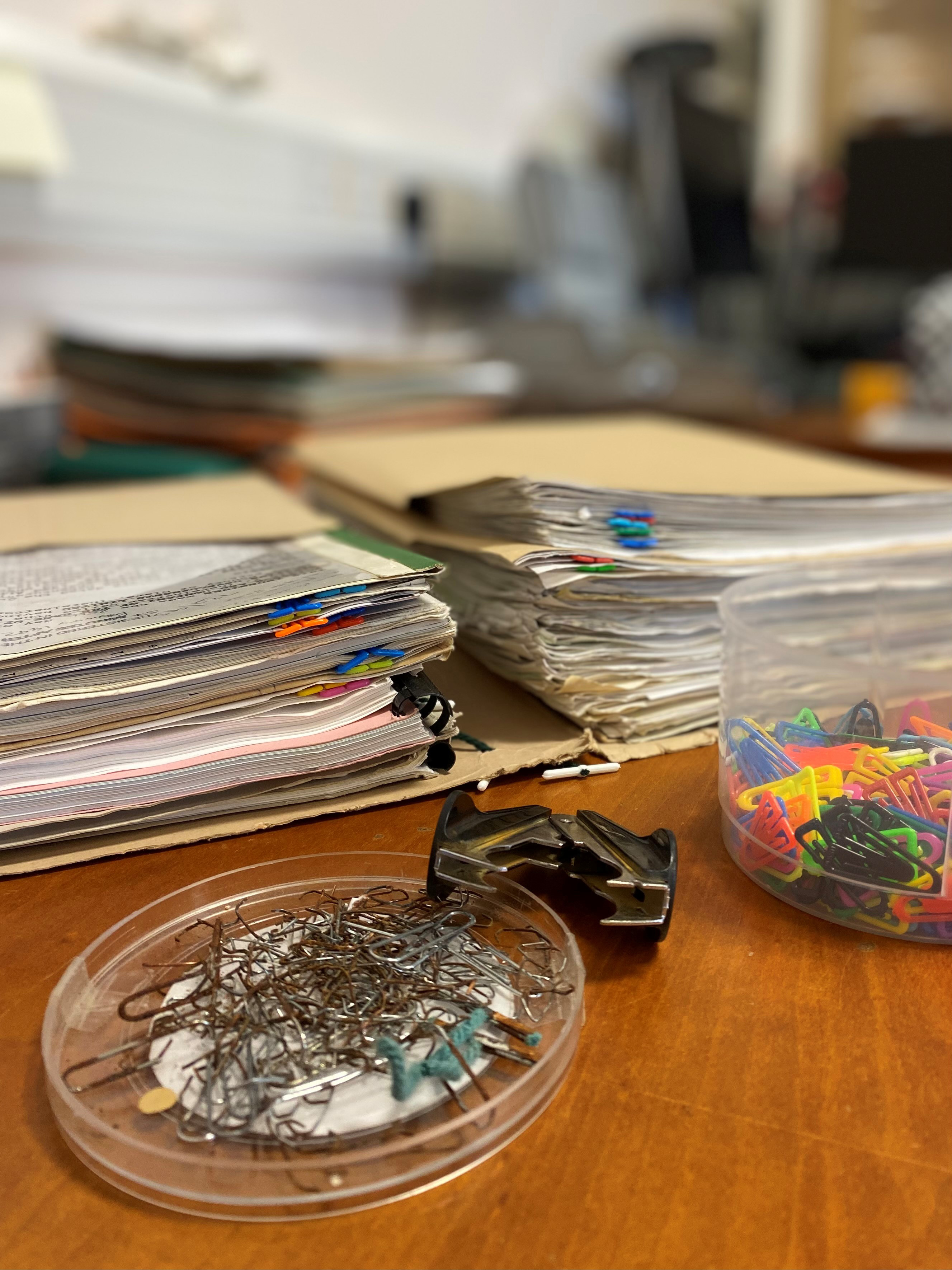
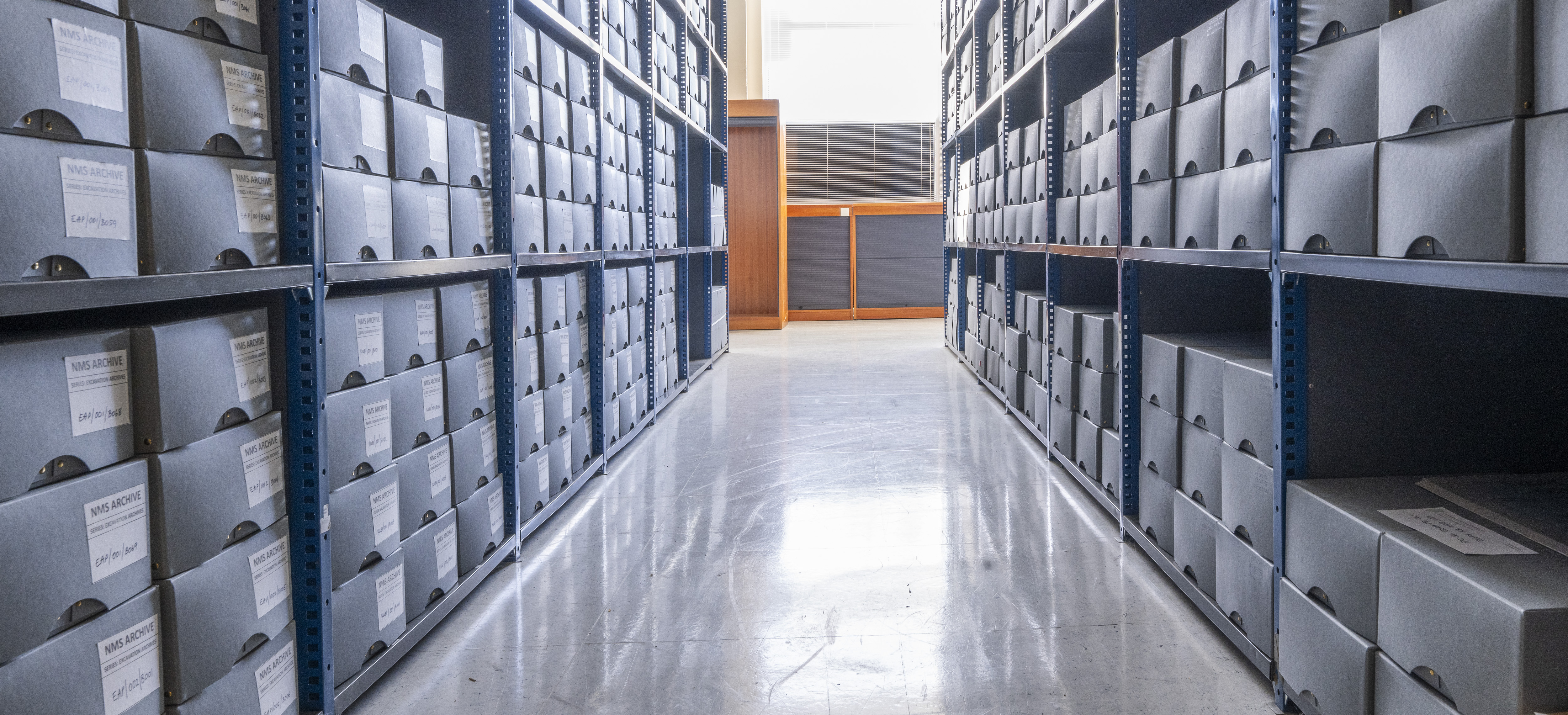
A legacy collection of approximately 70,000 NMS business records are currently being processed by the NMS Archive. This filing system dates from 1936 and continued into the early 2000s, and records the day to day work of the NMS, including details on any works carried out on archaeological monuments. This project includes describing the content of each file, updating the file location in a database, and rehousing the files from previous, unsuitable, storage into archival quality boxes (Figure 4). An important additional aspect of this work is the removal of all metal treasury tags and metal staples, and securing them with plastic-ended treasury tags and paper clips. This basic intervention will prevent any future damage from the effects of degrading metal, including tearing and staining of the already fragile pages.
While basic preservation and regular monitoring of collections can often be the extent of intervention for damaged or fragile records, it can also help identify damage from an early stage. This then allows for more concentrated active care through conservation, where necessary, with the aim of prolonging the life and accessibility of the collection. A professional conservator may intervene if records are damaged by water, fire, mould, insects, or from tearing, and a dedicated conservation laboratory is required for this delicate work. However, many archives do not have on-site access to such specialised laboratories and would often need to seek specialist advice on damaged records.
The unchanging ambition of archivists is to make as much material under their care as possible accessible to researchers. As demonstrated above, the preparation of records that are not born digital for digitisation can be one of the greater challenges for archives. Continued resourcing of staff, financial support and ICT support, automatically allows work to be done quicker in line with demand for digital access. Yet without this, it is often necessary to think outside the (archival!) box to find creative ways to continue progressing projects. For NMS Archive, the contribution of contract staff has made it possible to move quickly through the earlier stages of appraisal, preservation and cataloguing of legacy collections, so that now, at a best estimate, all collections in the NMS Archive are sitting between the last stages of cataloguing and preparing for digitisation. The value of this assistance more widely demonstrates the benefits of ensuring that archives are resourced sufficiently with permanent staff. The quicker the early stages can be completed according to standards, the more material can be made available to researchers.
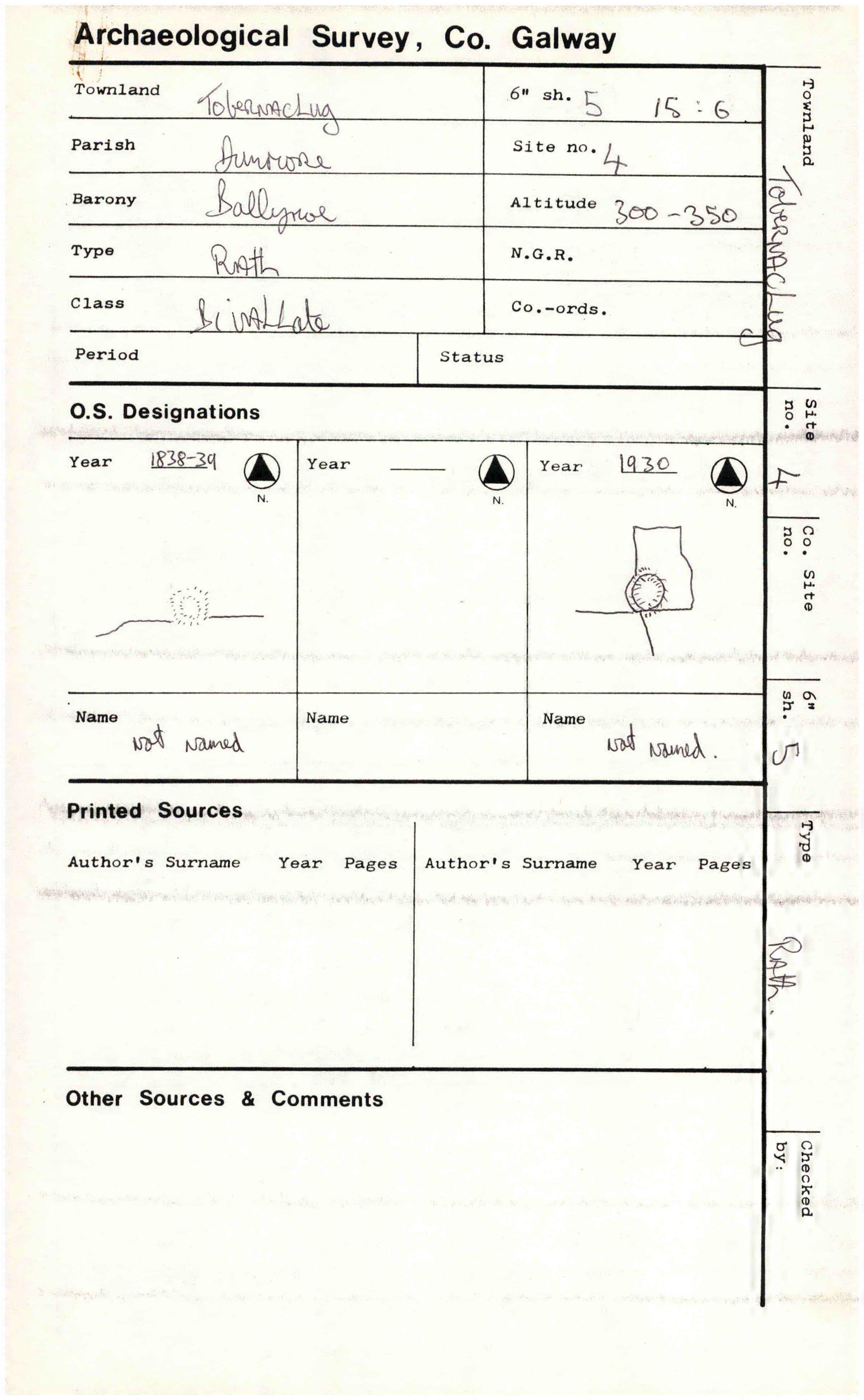
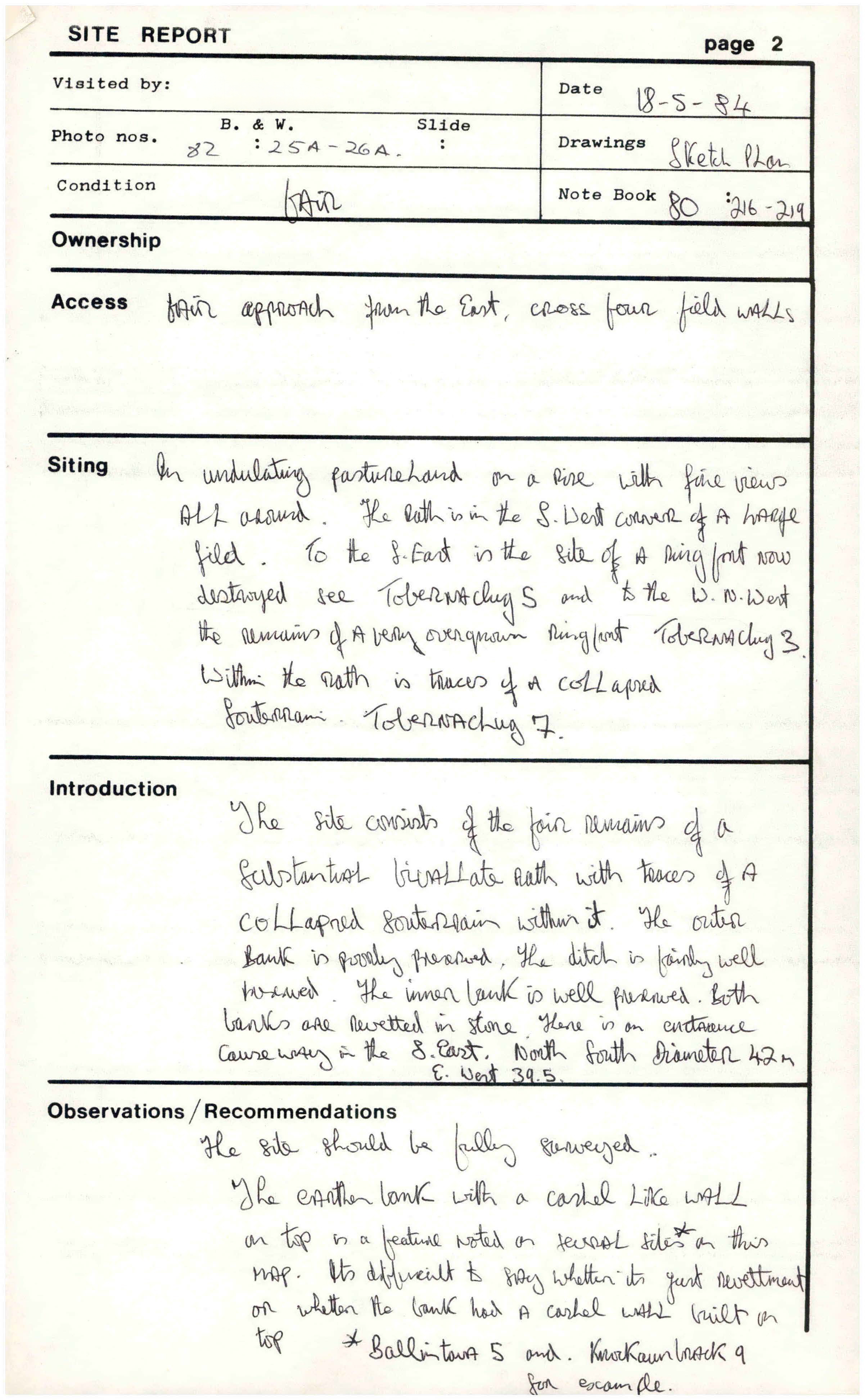
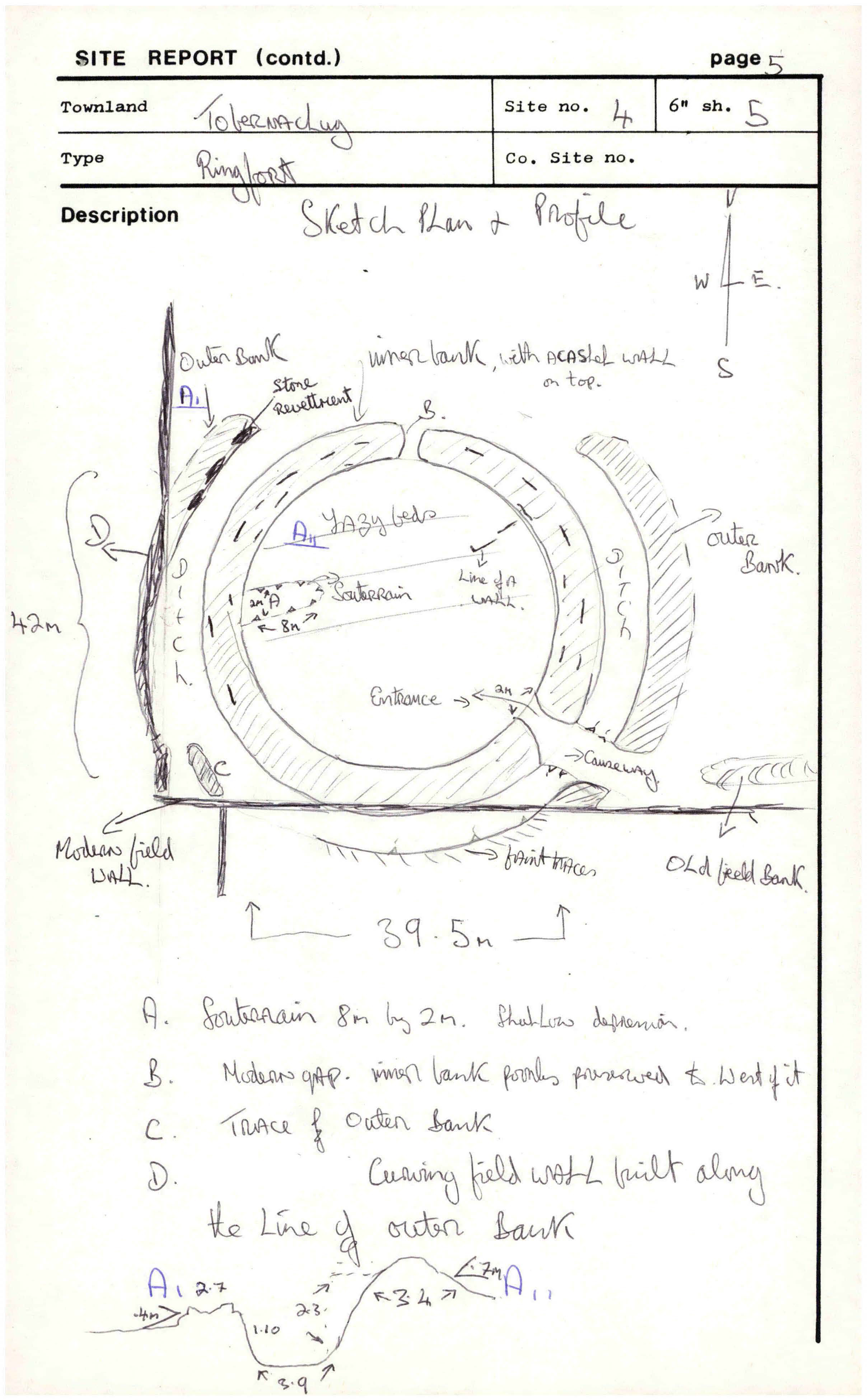
This brings us to the final stages of the archival process: digitisation and access. An unexpected obstacle to making one of the largest collections in the NMS Archive available digitally is the sheer volume of records and the fact that this is an active collection, with new and additional information of up to 2000 files incorporated annually. The Archaeological Survey of Ireland (ASI) collection comprises c. 160,000 files relating to every known monument in the country, to date. Each site has an original hard copy file recording the location and condition of the monument, field surveys by NMS staff, and journal references. They can also contain sketches and photos (Figure 5). From an archive point of view it is necessary to have an exact digital surrogate copy of this important collection, and every new file created or new information to add to a file is digitised before being incorporated into the collection. Following the unexpected closure of archive reading rooms as a direct result of the COVID-19 pandemic, the NMS Archive was one of a very small number of archives in Ireland to be able to maintain a full service to researchers seeking access to collections. This was only possible because a digital surrogate copy already existed for archive purposes. It was decided to retain the method of providing PDF copies of the original ASI files to researchers when restrictions were eventually lifted, which has both improved accessibility to this collection and benefitted the NMS Archive staff by reducing the time required to monitor a reading room.
The Digital Repository of Ireland (DRI), a wonderful online platform for sharing digital archive collections, was considered as a way to share the ASI collection. However, due to the active nature of this collection, and the volume of files and different formats to consider, it was ultimately decided that the DRI is not a suitable platform for our active collections. While some of our smaller, inactive collections, such as the Topographical Files mentioned above, could potentially be shared on the DRI, further consideration needs to be given as to how to make the larger, active, collections more available.
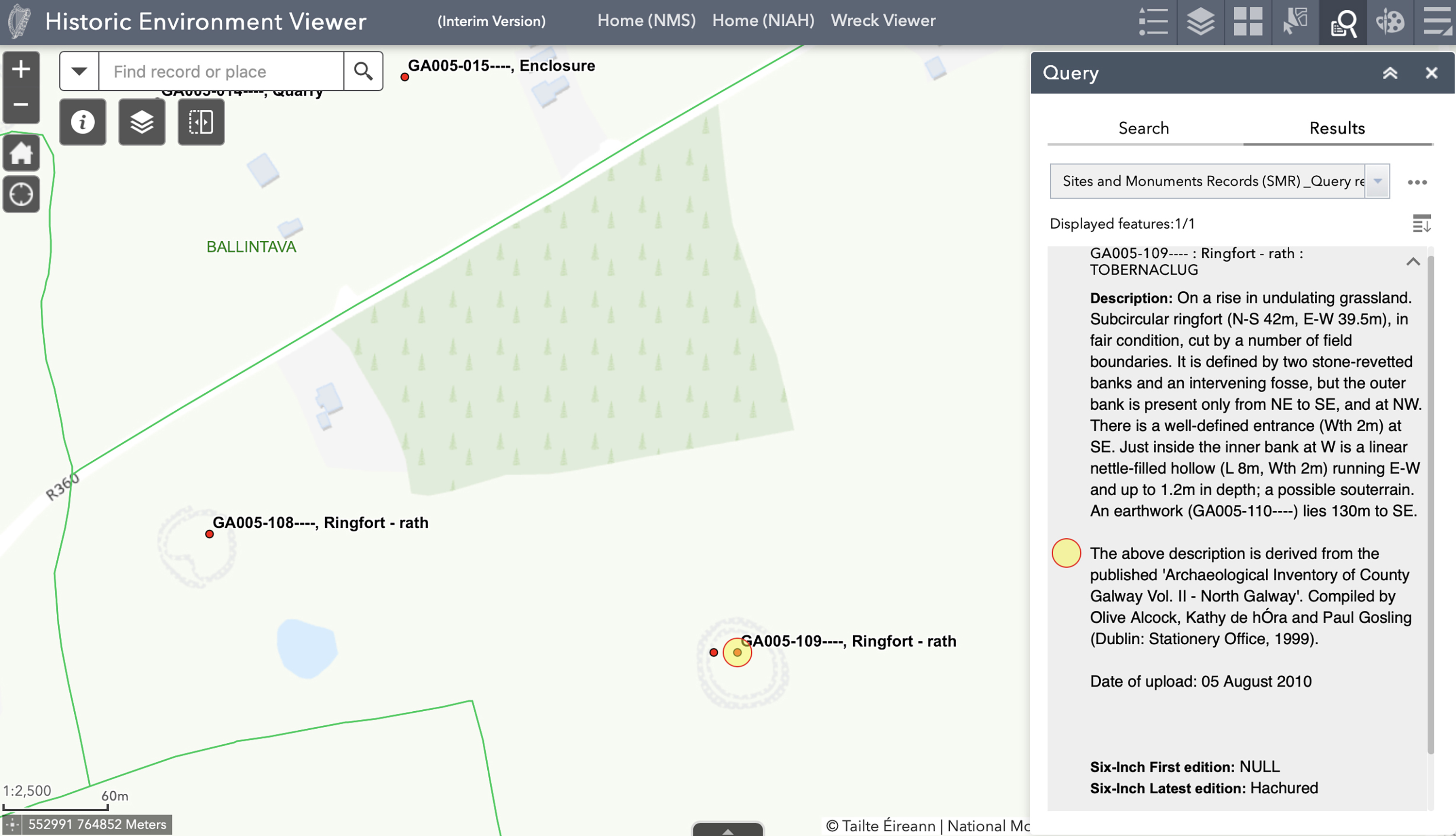
A significant step towards making the ASI collection available online has been the development of the NMS's Historic Environment Viewer (HEV; NMS n.d.b). Users with any level of interest in archaeology can search for information on monuments in any area in Ireland. It can be searched by county, townland, site classification, or through a general map search. Datasets for both archaeological monuments, mostly dating to before AD 1700, and standing architectural monuments of post AD 1700 date, are available through open access. It was designed to provide a synopsis of descriptive information about known monuments. Figure 6 is an example of the HEV entry for the same site from Figure 5, where details on the location, description, and a summary of the field survey, are available. The level of information provided is sufficient for most researchers, however it is always recommended that the original file be consulted too, as these generally contain more information, such as plans, drawings, and photographs, as demonstrated in Figure 5.
The excavation report archive, consisting of c. 45,000 reports, is the second largest collection in the NMS Archive, with over 2000 licences currently issued annually. In Ireland, construction carried out at or near an archaeological monument normally requires a licence to excavate in advance of any development. A report of the findings is required to be presented to the NMS, for the NMS Archive to make it available. As with the ASI collection, all original hard copy reports in the collection require a digital surrogate copy. Although quite modern in format, such reports may be the only record of a site ever existing, particularly if 'preservation by record' is an agreed part of the development. Therefore, the importance of this collection to researchers cannot be underestimated.
Recently, the creation of the NMS Virtual Reading Room (VRR), where researchers undertaking large-scale research projects have full access to over 45,000 reports from archaeological excavations carried out in Ireland since the 1930s, has transformed how the NMS Archive can share its collections digitally, and has shown what could potentially be done for the vast ASI collection. The VRR is a SharePoint program, where users are allowed controlled access to cloud-based servers to consult the full digital archive of excavation reports and export copies as required. It is important to recognise that a significant part of the success and potential of the VRR is a result of the contribution of the NMS Archive to ensure accurate indexing and quantities of reports were recorded. A comprehensive assessment of all hard copy reports was carried out in advance to record the number of original reports, the number of corresponding digital copies, and to arrange for the digitisation of any original reports that did not already have a digital surrogate copy. The fact that the VRR has received such promising feedback from users during this early testing phase is testament to the quality of the archive processing that was carried out in advance, and validates the often unnoticed work of the NMS Archive.
The development of the VRR also allows the potential of the ASI collection of 160,000 records to be made available in full to researchers. However, due to the volume and active nature of this collection, there are challenges in achieving this, the most significant being comprehensive quality control checks. But, as previously demonstrated in the advancement of another archive project, a bit of creativity and determination could certainly make this happen in time.
The grand ambition for the NMS Archive is to have a one-stop shop for information, where separate catalogues of information can feed into one database with links all the collections relevant to individual monuments. For example, a search of the centralised database of the NMS collections would ideally provide results of any deposits from archaeological companies, topographical files, NMS business records, ASI files, excavation reports, excavation licences, or plans and drawings that are relevant to a particular monument. Corresponding archive box numbers and locations would also be provided, and with the potential to add in columns indicating whether the information is digitised, etc. This work is already progressing and the results to date have seen significant improvement in access to the collections, in particular to the NMS staff. The ultimate beneficiary of this, however, will be the archive user.
The purpose of this article was to highlight the work involved in processing collections once they are deposited in an archive in order to prepare them for digitisation and online access. An important starting point is to know your collections, so that you can plan how best they can be made available to the widest audience possible. From appraisal and arrangement, to description and preservation, the work of an archive is to standardise, quantify and be consistent in the preparation of material for digitisation. It does not happen immediately, but with appropriate financial, staffing and ICT support this work can progress relatively quickly so that collections can be made available in digital format in line with demand from users. In the case of the NMS Archive, being creative yet realistic in our limitations has allowed for us to face certain challenges, to adapt, and to continue to work on progressing collections under our care. Where staff time could not be dedicated to certain projects, it was recognised that we could offer a financial saving to depositors in return for their staff completing the work. Data entries have also been diligently corrected to allow for more accurate searches by users. The results of this tireless work may not be immediately obvious to others, and may be perceived as being rather slow, but progress is being made on a daily basis and the NMS Archive continues to demonstrate that the ongoing effort to catalogue and prepare collections now, will allow for continued accessibility for many years to come.
Internet Archaeology is an open access journal based in the Department of Archaeology, University of York. Except where otherwise noted, content from this work may be used under the terms of the Creative Commons Attribution 3.0 (CC BY) Unported licence, which permits unrestricted use, distribution, and reproduction in any medium, provided that attribution to the author(s), the title of the work, the Internet Archaeology journal and the relevant URL/DOI are given.
Terms and Conditions | Legal Statements | Privacy Policy | Cookies Policy | Citing Internet Archaeology
Internet Archaeology content is preserved for the long term with the Archaeology Data Service (ROR). Help sustain and support open access publication by donating to our Open Access Archaeology Fund.
 Home
Home