Cite this as: Atalan Çayırezmez, N., Çit, D. and Wright, H. 2025 Digital Archiving in Archaeology: Assessing the State of the Art, Internet Archaeology 67. https://doi.org/10.11141/ia.67.1
The COST Action Saving European Archaeology from the Digital Dark Age (SEADDA) was funded by the European Union (CA18128). The aim of SEADDA was to bring partners and researchers together to collaborate and build capacity to support the long-term care of digital archaeological data, and make that data openly accessible (Figure 1 and Figure 2). SEADDA was organised into four Working Groups, including Stewardship of Archaeological Data (Working Group 1-WG1), Planning for Archiving (Working Group 2-WG2), Preservation and Dissemination Best Practice (Working Group 3-WG3) and Use and Re-Use of Archaeological Data (Working Group 4-WG4). Within these working groups, SEADDA members discussed issues and challenges and exchanged know-how about how to support the management of archaeological data in the digital environment.
This paper focuses on 33 SEADDA 'State of the Art' articles written during the period of this analysis. These articles were published in 2021, in Internet Archaeology: Issue 58 (2021), and in 2023, in Internet Archaeology: Issue 63 (2023) (Table 1).
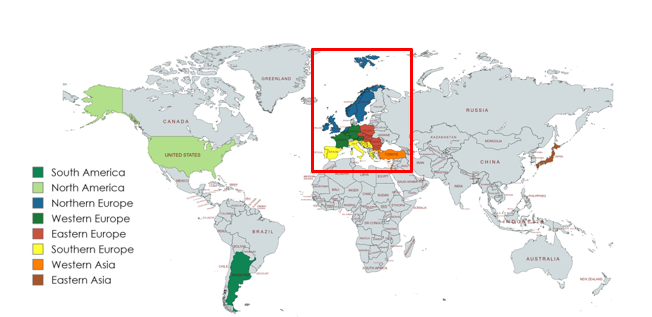
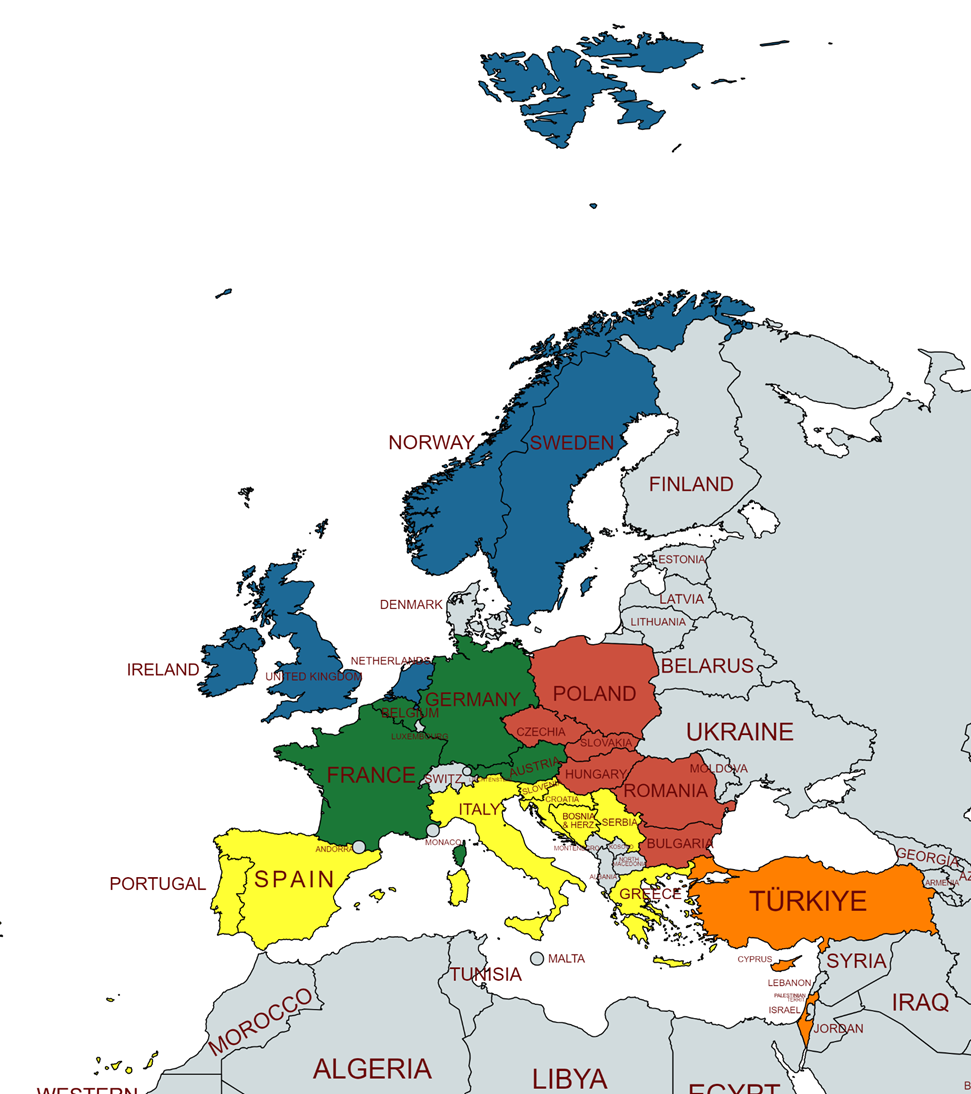
The articles detail the current state-of-the-art, focused on the legal frameworks and practical implementation of archaeological data management in the relevant country, nation, or state. The review was undertaken between January 2022 and September 2023. The collected data was managed using Zotero as well as Excel spreadsheets, while Miro was used for analysing the articles. The analysis was part of doctoral research by Atalan Çayırezmez (2023), and the first results were shared and discussed with SEADDA members during the WG1 and WG4 Discussion Workshops in May 2022 (Braga, Portugal, and online).
| No. | Country | Region | Continent | Number of articles related to a country | Digital Object Identifier |
|---|---|---|---|---|---|
| 1 | Argentina | South America | South America | 1 | https://doi.org/10.11141/ia.58.1 |
| 2 | Austria | Western Europe | Europe | 1 | https://doi.org/10.11141/ia.58.2 |
| 3 | Belgium | Western Europe | Europe | 1 | https://doi.org/10.11141/ia.58.7 |
| 4 | Bosnia and Herzegovina | Southern Europe | Europe | 1 | https://doi.org/10.11141/ia.63.3 |
| 5 | Bulgaria | Eastern Europe | Europe | 1 | https://doi.org/10.11141/ia.58.24 |
| 6 | Croatia | Southern Europe | Europe | 1 | https://doi.org/10.11141/ia.63.1 |
| 7 | Republic of Cyprus | Western Asia | Asia | 1 | https://doi.org/10.11141/ia.63.5 |
| 8 | Czechia | Eastern Europe | Europe | 1 | https://doi.org/10.11141/ia.58.5 |
| 9 | France | Western Europe | Europe | 1 | https://doi.org/10.11141/ia.58.26 |
| 10 | Germany* | Western Europe | Europe | 2 |
https://doi.org/10.11141/ia.58.3
https://doi.org/10.11141/ia.58.4 |
| 11 | Greece | Southern Europe | Europe | 1 | https://doi.org/10.11141/ia.58.8 |
| 12 | Hungary | Eastern Europe | Europe | 1 | https://doi.org/10.11141/ia.58.9 |
| 13 | Ireland | Northern Europe | Europe | 1 | https://doi.org/10.11141/ia.63.4 |
| 14 | Israel | Western Asia | Asia | 1 | https://doi.org/10.11141/ia.58.10 |
| 15 | Italy | Southern Europe | Europe | 1 | https://doi.org/10.11141/ia.58.27 |
| 16 | Japan | Eastern Asia | Asia | 1 | https://doi.org/10.11141/ia.58.11 |
| 17 | Netherlands (Kingdom of the) | Northern Europe | Europe | 1 | https://doi.org/10.11141/ia.58.28 |
| 18 | Norway | Northern Europe | Europe | 1 | https://doi.org/10.11141/ia.58.29 |
| 19 | Poland | Eastern Europe | Europe | 1 | https://doi.org/10.11141/ia.58.12 |
| 20 | Portugal | Southern Europe | Europe | 1 | https://doi.org/10.11141/ia.58.13 |
| 21 | Romania | Eastern Europe | Europe | 1 | https://doi.org/10.11141/ia.63.2 |
| 22 | Serbia | Southern Europe | Europe | 1 | https://doi.org/10.11141/ia.58.15 |
| 23 | Slovakia | Eastern Europe | Europe | 1 | https://doi.org/10.11141/ia.58.16 |
| 24 | Slovenia | Southern Europe | Europe | 1 | https://doi.org/10.11141/ia.58.17 |
| 25 | Spain** | Southern Europe | Europe | 1 | https://doi.org/10.11141/ia.58.25 |
| 26 | Sweden | Northern Europe | Europe | 2 |
https://doi.org/10.11141/ia.58.18
https://doi.org/10.11141/ia.58.19 |
| 27 | Türkiye | Western Asia | Asia | 1 | https://doi.org/10.11141/ia.58.20 |
| 28 | United Kingdom of Great Britain and Northern Ireland (UK)*** | Northern Europe | Europe | 3 |
https://doi.org/10.11141/ia.58.14
https://doi.org/10.11141/ia.58.6 https://doi.org/10.11141/ia.58.21 |
| 29 | United States of America | North America | North America | 1 | https://doi.org/10.11141/ia.58.22 |
The study analysed the published articles and compared them using a set of questions concerning administrative issues, digital and physical archives, and capacity enhancements. Countries and areas were divided according to Standard Country or Area Codes for Statistical Use. Twenty-nine countries or areas were assessed in total, representing four continents (Asia, Europe, North America and South America) or eight regions (Eastern Asia, Western Asia, North America, South America, Eastern Europe, Western Europe, Southern Europe and Western Europe). (See Table 1 and Table 2).
| Continent | Region | Number of Countries Represented |
|---|---|---|
| Asia (Total 4 countries) | Eastern Asia | 1 Country |
| Western Asia | 3 Countries | |
| Europe (Total 23 countries) | Eastern Europe | 6 Countries |
| Northern Europe | 5 Countries | |
| Southern Europe | 8 Countries | |
| Western Europe | 4 Countries | |
| North America (1 country) | North America | 1 Country |
| South America (1 country) | South America | 1 Country |
The questions were divided into four groups.
The answers were also divided into four standardised categories (Table 3).
| Category No. | Category Title | Description |
|---|---|---|
| 1 | Yes | The answer is clear and understandable from the article. |
| 2 | No | The answer is no and clear from the article. |
| 3 | Insufficient – to be improved | The authors mention the situation in the article, and they also mention that it needs to be improved and is not enough for all professionals. |
| 4 | Unclear | The answer cannot be found, or it is not clearly explained in the article. |
Q1: Are all archaeological studies managed/supervised by the state?
| Question 1 | Answer | Asia | Europe | North America | South America |
|---|---|---|---|---|---|
| Are all archaeological studies managed/supervised by the state? | Yes | 100% | 75% | 0% | 100% |
| No | 0% | 21% | 100% | 0% | |
| Insufficient | 0% | 0% | 0% | 0% | |
| Unclear | 0% | 4% | 0% | 0% |
To understand the legal management structures in each country, it was necessary to generalise. The central government or state manages all archaeological studies in every country although North America stands out due to its diverse states, each with their own laws governing archaeological research. In Europe, one article indicates that state-based regulations are unclear in Bosnia and Herzegovina, while the UK, Spain, Belgium, and Germany do not have state-based regulations (Table 4).
Q2: Who carries out archaeological studies? For instance, various entities such as universities, commercial companies, municipalities, and museums are responsible for conducting archaeological studies.
Different stakeholders, such as universities, commercial archaeology companies, museums, and institutions, carry out archaeological studies. Answers show that regions/countries have different stakeholders involved in archaeological studies and archiving. Academics working for the universities are responsible for scientific excavations and archaeological surveys; however, all countries are doing rescue excavations due to large/small development-led works. Archaeological studies are typically coordinated and supervised by the Ministry of Culture (Culture and Tourism, Culture and Sport, Education).
Q3: Does legislation exist in the field of cultural heritage?
All countries have legislation to protect archaeological heritage. When conducting archaeological work, national and international legislation serves as the primary basis.
Q4: Is there legislation for archiving studies in the field of archaeology?
| Question 4 | Answer | Asia | Europe | North America | South America |
|---|---|---|---|---|---|
| Is there legislation for archiving studies in the field of archaeology? | Yes | 75% | 74% | 100% | 0% |
| No | 25% | 4% | 0% | 0% | |
| Insufficient | 0% | 13% | 0% | 100% | |
| Unclear | 0% | 9% | 0% | 0% |
Most of the countries studied have legislation to protect archives. Some countries have archaeological archiving subjects in their legislation although Japan and Poland do not. The legislation needs to improve archiving in Czechia, Ireland, Spain, and Argentina, while Bosnia and Herzegovina's and Italy's situations are unclear. Archaeological legislation alone is not sufficient to ensure proper archiving of archaeological work. It must be strengthened, and appropriate regulations need to be developed. The participation of various stakeholders has led to some fragmentation of archives, which in turn complicates the discovery and accessibility of archaeological records (Table 5).
Q5: Is digital archiving an obligation?
| Question 5 | Answer | Asia | Europe | North America | South America |
|---|---|---|---|---|---|
| Is digital archiving an obligation? | Yes | 25% | 22,22% | 0% | 0% |
| No | 75% | 70,37% | 100% | 100% | |
| Insufficient | 0% | 3,70% | 0% | 0% | |
| Unclear | 0% | 3,70% | 0% | 0% |
Countries are aware of digital archaeological data archiving. Reporting fieldwork and sending field reports using systems are mandatory for some countries e.g. Belgium and the Netherlands. Directives mention sending reports and data using different mediums, even though the regulations do not always explicitly state this. For example, in Türkiye, archaeologists are required to submit their reports using a CD or external hard drive to the Ministry. It is not easy to work on digital data management, and digital archiving is time-consuming. Digital data management is difficult when countries have multiple stakeholders for archaeological study. Different stakeholders, such as companies and universities, hold archives and are responsible for storing, managing and archiving their data (Table 6).
Q6: Is there a legal obligation for the repository of physical archaeological archives and the existence of physical archaeological archives?
| Question 6 | Answer | Asia | Europe | North America | South America |
|---|---|---|---|---|---|
| Is there a legal obligation for the repository of physical archaeological archives and the existence of physical archaeological archives? | Yes | 50% | 56,50% | 0% | 100% |
| No | 50% | 30,40% | 100% | 0% | |
| Insufficient | 0% | 4,30% | 0% | 0% | |
| Unclear | 0% | 8,70% | 0% | 0% |
Understanding the state of physical archives for archaeological work was complicated because each country or region operates under different legislation shaped by its political and regional context. In some countries, cultural heritage institutions are responsible for keeping the archaeological archives held by commercial companies or universities. In other instances, regional museums are responsible. Countries with mandatory physical archiving require improved policies and guidelines to ensure better protection for physical archives (Table 7).
Q7: Is there a legal obligation for the preservation of digital archaeological archives and the existence of archaeological repositories?
| Question 7 | Answer | Asia | Europe | North America | South America |
|---|---|---|---|---|---|
| Is there a legal obligation for the preservation of digital archaeological archives and the existence of archaeological repositories? | Yes | 0% | 17,40% | 0% | 100% |
| No | 75% | 52,20% | 0% | 0% | |
| Insufficient | 25% | 21,70% | 100% | 0% | |
| Unclear | 0% | 8,70% | 0% | 0% |
The nature of archaeological work has evolved, often producing data that is born-digital. The article authors acknowledge the emergent challenges associated with archiving born-digital data; however, most countries have not updated their legislation and still lack mandatory requirements for digital archiving. While some countries have added mandatory digital data archiving to their legislation, the requirements remain insufficiently clear for implementing proper archival practice and defining robust standards for digital data management. If there is an obligation for digital archiving, it is still difficult to do digital archiving because the top-down approach is not useful for professionals, and the bottom-up approach will be more helpful to do archiving (Table 8).
Physical Archives
Q8: Is the data produced in the field of archaeology kept in a single physical environment connected to government bodies? e.g. excavation results reports
| Question 8 | Answer | Asia | Europe | North America | South America |
|---|---|---|---|---|---|
| Is the data produced in the field of archaeology kept in a single physical environment connected to government bodies? e.g. excavation results reports. | Yes | 75% | 47,80% | 0% | 0% |
| No | 0% | 30,40% | 0% | 100% | |
| Insufficient | 25% | 17,40% | 100% | 0% | |
| Unclear | 0% | 4,30% | 0% | 0% |
This question is related to excavation documents and archives and most of the time, grey literature like excavation reports is kept in museums or state-based archives. Archaeologists, commercial companies, or excavation directors keep the primary data created by these excavations. Regulations do not establish sufficient standards for the physical archiving of excavation reports or provide adequate templates for these documents (Table 9).
Q9: Are physical archiving standards maintained at the national level?
| Question 9 | Answer | Asia | Europe | North America | South America |
|---|---|---|---|---|---|
| Are physical archiving standards maintained at the national level? | Yes | 0% | 17,40% | 0% | 0% |
| No | 50% | 60,90% | 0% | 100% | |
| Insufficient | 25% | 8,70% | 0% | 0% | |
| Unclear | 25% | 13% | 100% | 0% |
Most of the countries that were analysed don't have national archiving standards for organising, managing, or preserving their physical archives. The importance of physical archives is mentioned, and to obtain archaeological work permission, it is necessary to do physical archiving. However, primary datasets are often poorly organised, and there are insufficient standards to ensure proper archiving. Archaeologists don't have enough knowledge about how to produce, organise, and keep files for preserving archives (Table 10).
Digital Archives
Q10: Is the data produced in the field of archaeology kept in a single digital data archive connected with the state?
| Question 10 | Answer | Asia | Europe | North America | South America |
|---|---|---|---|---|---|
| Is the data produced in the field of archaeology kept in a single digital data archive connected with the state? | Yes | 25% | 17,40% | 0% | 0% |
| No | 50% | 34,80% | 0% | 100% | |
| Insufficient | 25% | 39,10% | 100% | 0% | |
| Unclear | 0% | 8,70% | 0% | 0% |
Only five countries have a single state-based data repository. Most of the countries that were examined in this study have separate distributed archives and are trying to connect and create portals to share and facilitate access to the data from one repository. The reason for having a central repository is also related to regulations due to state-based archaeology. The five countries that use a single portal are those which practise state-based archaeology. Most European responses indicated that data is either not centralised or that the current situation is "insufficient" (Table 11).
Q11: Is there awareness of digital archaeology within the government?
| Question 11 | Answer | Asia | Europe | North America | South America |
|---|---|---|---|---|---|
| Is there awareness of digital archaeology within the government? | Yes | 75% | 91,30% | 100% | 100% |
| No | 0% | 0% | 0% | 0% | |
| Insufficient | 25% | 4,30% | 0% | 0% | |
| Unclear | 0% | 4,30% | 0% | 0% |
This study examined all the country's governments and found that they are aware of and actively working to preserve digital data in archaeology. These governments are making efforts to increase awareness of open science and research data preservation for all research disciplines. In countries where scientific and educational institutions are responsible for open access policies, governments are encouraging researchers to share and preserve their archaeological data. Archaeological studies that are related to universities and their research data continue to need to be organised, managed, and preserved (Table 12).
Q12: Are digitisation studies in the field of archaeology open access?
| Question 12 | Answer | Asia | Europe | North America | South America |
|---|---|---|---|---|---|
| Are digitisation studies in the field of archaeology open access? | Yes | 0% | 21,70% | 0% | 0% |
| No | 0% | 0,00% | 0% | 0% | |
| Insufficient | 75% | 65,20% | 100% | 100% | |
| Unclear | 25% | 13% | 0% | 0% |
All authors addressed the issue of open access for archaeological data in their article. Accessing archives openly is important, especially during crisis times such as pandemics, wars, and natural disasters. Five countries have an open access policy to share their archaeological data. Others mention that open access policies and standards/guidelines need to be improved to support and implement the creation of an open access data environment for archaeological data (Table 13).
Q13: Does it comply with FAIR (Findable, Accessible, Interoperable, Reusable) principles?
| Question 13 | Answer | Asia | Europe | North America | South America |
|---|---|---|---|---|---|
| Does it comply with FAIR (Findable, Accessible, Interoperable, Reusable) principles? | Yes | 0% | 4,30% | 0% | 0% |
| No | 0% | 0,00% | 0% | 0% | |
| Insufficient | 75% | 91,30% | 100% | 100% | |
| Unclear | 25% | 4,30% | 0% | 0% |
All authors mentioned implementing FAIR principles for archaeological data. However, not all archaeological data is FAIR. To achieve this, there needs to be improved collaboration and training as well as standards and guidelines (Table 14).
Q14: Is there a common database where archaeological digital archive studies are kept?
| Question 14 | Answer | Asia | Europe | North America | South America |
|---|---|---|---|---|---|
| Is there a common database where archaeological digital archive studies are kept? | Yes | 0% | 21,70% | 0% | 0% |
| No | 25% | 17,40% | 0% | 0% | |
| Insufficient | 75% | 52,20% | 100% | 100% | |
| Unclear | 0% | 4,30% | 0% | 0% |
Digitisation and inventory efforts for archaeological data are ongoing processes that started many years ago in most countries. Different distributed databases are created for archaeological studies by different stakeholders e.g. universities, museums. There are challenges in locating and retrieving data from a single shared database. Authors also mention that they experience difficulties preserving digital data in a proper repository, and sustainability is a problem for databases (Table 15).
Q15: Is archaeological data kept in databases or digital data archives without legal obligation?
| Question 15 | Answer | Asia | Europe | North America | South America |
|---|---|---|---|---|---|
| Is archaeological data kept in databases or digital data archives without legal obligation? | Yes | 75% | 60,90% | 100% | 100% |
| No | 0% | 0,00% | 0% | 0% | |
| Insufficient | 25% | 21,70% | 0% | 0% | |
| Unclear | 0% | 17,40% | 0% | 0% |
In most countries, archaeologists are aware of digital archiving and preserve their data in digital archives. However, some archaeologists are carrying out digital archiving and preservation work without proper standards and training. The distribution of databases complicates the access and sharing of archaeological data. A sustainable digital repository is not available for all countries, so the need for further development and improved infrastructure for archaeological digital data archives is frequently cited (Table 16).
Q16: Are digitisation activities implemented across the country regarding the digitisation of physical archives?
| Question 16 | Answer | Asia | Europe | North America | South America |
|---|---|---|---|---|---|
| Are digitisation activities implemented across the country regarding the digitisation of physical archives? | Yes | 100% | 69,60% | 100% | 0% |
| No | 0% | 0,00% | 0% | 0% | |
| Insufficient | 0% | 13% | 0% | 100% | |
| Unclear | 0% | 8,70% | 0% | 0% |
Most countries digitise their physical archives, including archaeological reports and museum assets. In most cases, the digitisation of movable and immovable archaeological heritage is carried out by government institutions. The authors mentioned that digitisation activities are also helping with inventories and serving as another way to preserve the physical archives (Table 17).
Q17: Are only archaeologists included in digital archiving studies? (Assessment as an institution-organization archivist)
| Question 17 | Answer | Asia | Europe | North America | South America |
|---|---|---|---|---|---|
| Are only archaeologists included in digital archiving studies? (Assessment as an institution-organisation archivist) | Yes | 0% | 13% | 0% | 0% |
| No | 25% | 34,80% | 100% | 0% | |
| Insufficient | 25% | 8,70% | 0% | 0% | |
| Unclear | 50% | 43,50% | 0% | 100% |
Most of the time, trained archaeologists carry out archival work. Only in a few countries are information specialists, information technology staff, and archivists involved in archaeological archiving. Awareness, collaboration, and training between archaeologists, cultural heritage professionals, and other related disciplines therefore are also mentioned to aid in the archiving and preservation of digital data (Table 18).
Q18: Are digital archiving standards implemented at the national level?
| Question 18 | Answer | Asia | Europe | North America | South America |
|---|---|---|---|---|---|
| Are digital archiving standards implemented at the national level? | Yes | 25% | 8,70% | 0% | 0% |
| No | 0% | 43,50% | 0% | 0% | |
| Insufficient | 75% | 39,10% | 100% | 100% | |
| Unclear | 0% | 8,70% | 0% | 0% |
At the national level, most countries try to implement and develop standards for digital archiving. Most countries have started digitising their physical archives. Archaeologists need standards to organise, manage, and preserve archives. Governments and the European Union are attempting to enforce research data management, open access, and FAIR principles. All articles mentioned that universities, archaeologists, and companies are holding more digital data on their servers which is not secure and report problems with formats and backups (Table 19).
Capacity
Q19: Is training given to relevant experts in this field?
| Question 19 | Answer | Asia | Europe | North America | South America |
|---|---|---|---|---|---|
| Is training given to relevant experts in this field? | Yes | 0% | 13% | 0% | 0% |
| No | 0% | 4,30% | 0% | 0% | |
| Insufficient | 100% | 34,80% | 100% | 0% | |
| Unclear | 0% | 47,80% | 0% | 100% |
Some countries provide archaeologists with training for digital archaeological data management. Associations are providing training and certificates for archaeologists and other experts in the field. More training and support are necessary for creating and preserving archaeological data. Creating knowledge and sharing know-how are also mentioned in order to increase capacity (Table 20).
Q20: Is the infrastructure, budget, etc. sufficient?
| Question 20 | Answer | Asia | Europe | North America | South America |
|---|---|---|---|---|---|
| Is the infrastructure, budget, etc. sufficient? | Yes | 0% | 0,00% | 0% | 0% |
| No | 0% | 8,70% | 0% | 0% | |
| Insufficient | 75% | 34,80% | 100% | 0% | |
| Unclear | 25% | 56,50% | 0% | 100% |
Authors mentioned infrastructure and budget issues. Infrastructure (such as storage, databases, and repositories) and the budget allocated for digital archiving need to be improved to organise, manage, and preserve the data. All governments and relevant stakeholders need to support activities related to the digitalisation, creation, management, and sustainability of digital repositories. Archaeologists and other experts (IT staff, archivists) need training, guidelines, and policies. Building an infrastructure and having qualified people in this field are also mentioned as requirements for the preservation of archaeological data (Table 21).
The analysis highlights several common themes and challenges across participating countries. A consensus exists on the importance of archiving archaeological heritage and the role of the state in providing protective legislation. The countries surveyed are primarily state-based and possess laws safeguarding archaeological and cultural heritage. However, the rapid development of information and communication technologies has significantly impacted the preservation of cultural heritage, especially archaeological work, over the last 20–30 years. Different stakeholders produce different formats and types of data due to the digitisation of analogue material and the creation of born-digital data. Every country preserves archaeological reports both physically and digitally, yet safeguarding, organising, and gaining access to primary data remain a challenge.
Archaeological activities conducted by different stakeholders cause difficulties, such as creating different types and formats of data and storing data or not having interoperable data for sharing. This causes the formation of dispersed information for archaeological data.
Legislation and policies are not enough for digital archaeological data creation, organisation, and management; however, governments and the European Union (EU) do support the activities e.g. digitisation, building databases. These initiatives can be small, medium, or large-sized according to the type of institution and funding. Digitisation and the creation of databases were discussed or analysed for organising data and protecting cultural heritage, especially during crisis times e.g. pandemics, earthquakes, political issues, wars. While archaeological data management and preservation processes are mentioned in the articles, the historical development of countries and the disasters they experienced affect archaeological materials. Reducing the loss of archaeological data will be possible through digitisation studies e.g. in Czechia. At the same time, with the recent worldwide pandemic outbreak, people who could not access physical materials were able to access digital data regardless of time and place e.g. Italy. Producing and transferring methods of archaeological data are also changing due to the pandemic e.g. no paper archive was submitted to the Ministry by the excavation directors due to the pandemic.
Almost all authors support open access and publicly available archaeological data and mention open access and FAIR principles in their articles. While the information such as museum and archive materials (photographs, maps, drawings.) is digitally transferred to electronic media is noted, digital materials are not presented as open access. Policymakers, archaeologists, and stakeholders have concerns about copyright, accessing data, and illegal use (looting, illicit trafficking of materials). To increase awareness and support open access activities, preparation of guidelines and training of experts is necessary. Geser et al. 2022 and Novak et al. 2023 also recommend increasing data management knowledge for archaeologists (Geser et al. 2022; Novak et al. 2023, Göldner et al. 2023).
Several articles mentioned research data management issues. Research data management is a recent concept and adapting it to archaeology presents challenges. Inventorying and digitising movable and immovable cultural assets have been ongoing for several years, but interoperability and reusability are not easily achieved. Additionally, the long-term preservation of digital data related to archaeology presents another challenge. Only a limited number of articles discussed the use of trusted digital repositories (e.g. those who hold the Core Trust Seal).
The analysis reveals multiple, interconnected barriers to the reuse of archaeological data faced by researchers. These challenges span technical and institutional limitations, shortcomings in existing infrastructure, persistent difficulties in data export, the ongoing need for professional development, training, collaboration, and clearer frameworks regarding copyright and Creative Commons licenses. These interconnected issues reveal that sustainable and meaningful data reuse cannot be achieved within the confines of the current top-down curatorial model, in which institutions retain strict control over access and use. Instead, as emphasised by recent discussions and the reuse of existing repositories and archives (Seaton et al. 2023), the field must transition towards more democratic, bottom-up, open, and crowd-sourced data stewardship models that prioritise transparency, interoperability, and active community engagement.
Universities, the public sector, and associations for archaeologists like the Chartered Institute for Archaeologists (CIfA) are working to create standards, share know-how and provide training to cultural heritage professionals and archaeologists e.g. Dig Digital in the UK.
The majority of countries analysed in this article were European members of the COST Action SEADDA and were already sharing know-how and expertise through several EU projects e.g. ARIADNE, CARARE, DARIAH-EU. But state-of-the-art articles from other non-EU countries also helped to understand the situation from other parts of the world.
Digital archaeological data management is an ongoing process that requires more awareness and effort to organise, manage, share, and reuse data. The articles showcase significant efforts and advancements in this field, highlighting areas that require further improvement.
Collaboration and communication will help increase awareness and capacity for cultural heritage professionals, especially archaeologists, to share and reuse their data. To organise and manage experts in this field, there needs to be more support from information scientists when applying standards and interoperability.
We would like to thank the SEADDA Project and its members for their support and contribution. We would also like to thank Christopher Joseph Dolphin for his help and insightful proofreading, Assoc. Prof. Dr. Tutku Tuncalı Yaman for her help and support during the statistical analysis, and Duygu Tarkan from ANAMED for their hospitality and for allowing us to use their library. Without help and support from BIAA, it would have been impossible to write this article.
Internet Archaeology is an open access journal based in the Department of Archaeology, University of York. Except where otherwise noted, content from this work may be used under the terms of the Creative Commons Attribution 3.0 (CC BY) Unported licence, which permits unrestricted use, distribution, and reproduction in any medium, provided that attribution to the author(s), the title of the work, the Internet Archaeology journal and the relevant URL/DOI are given.
Terms and Conditions | Legal Statements | Privacy Policy | Cookies Policy | Citing Internet Archaeology
Internet Archaeology content is preserved for the long term with the Archaeology Data Service (ROR). Help sustain and support open access publication by donating to our Open Access Archaeology Fund.
 Home
Home