Cite this as: van Tongeren, T. 2026 Furnace Fields: Iron Age and Roman Metalworking between York and the Humber, Internet Archaeology 71. https://doi.org/10.11141/ia.71.11
An archaeological investigation associated with a proposed renewable energy development at Thornton in the East Riding of Yorkshire (UK) revealed extensive evidence for middle Iron Age to early Roman industrial activity. The site demonstrates how communities adapted settlement patterns, enclosure systems and production strategies in response to changing environmental conditions. The availability of fuelwood and bog iron ore within this hydrologically sensitive setting created favourable conditions for iron production, situating Thornton within a wider zone of metalworking activity in the Vale of York. Radiocarbon dating shows that iron smelting was firmly established during the middle Iron Age, with dates clustering in the fourth to second centuries BC and extending into the late Iron Age and early Roman period. Evidence shows this to be a long-lived industrial landscape in which enclosure systems were repeatedly modified and re-cut, serving both drainage and waste-disposal functions. By the Roman period, these systems were reconfigured, with activity extending into Core Area 6, reflecting evolving land-use practices rather than abrupt abandonment.
The recovery of a large quantity of archaeometallurgical residues, including a uniquely intact 155kg furnace bottom, confirms large-scale non-slag tapping slag-pit smelting employing wood pit-packing. Microstructural and elemental analyses demonstrate technological consistency across the assemblage and confirm that the residues derive predominantly from smelting rather than smithing. The large size of the furnace bottom suggests blooms were produced sequentially, rather than singly. Requiring considerable ore and charcoal, it is also suggestive of a communal effort. Similarly sized furnaces are known from the early and middle Iron Age further south in England but they are unknown from the Midlands and the North. The Thornton furnace bottom is described in detail and provides the first microstructural dataset for Iron Age smelting residues from East Yorkshire.
Corresponding author: Tim van Tongeren
[email protected]
Headland Archaeology 
Tim Young
[email protected]
GeoArch
Figure 1: Site Location. Image credit: Headland Archaeology (UK)
Figure 2: Site Plan [zoomable]. Image credit: Headland Archaeology (UK)
Figure 3: Distribution of radiocarbon dates and finds [zoomable]. Image credit: Headland Archaeology (UK)
Figure 4: Selected pottery vessels found at Thornton. Image credit: Headland Archaeology (UK)
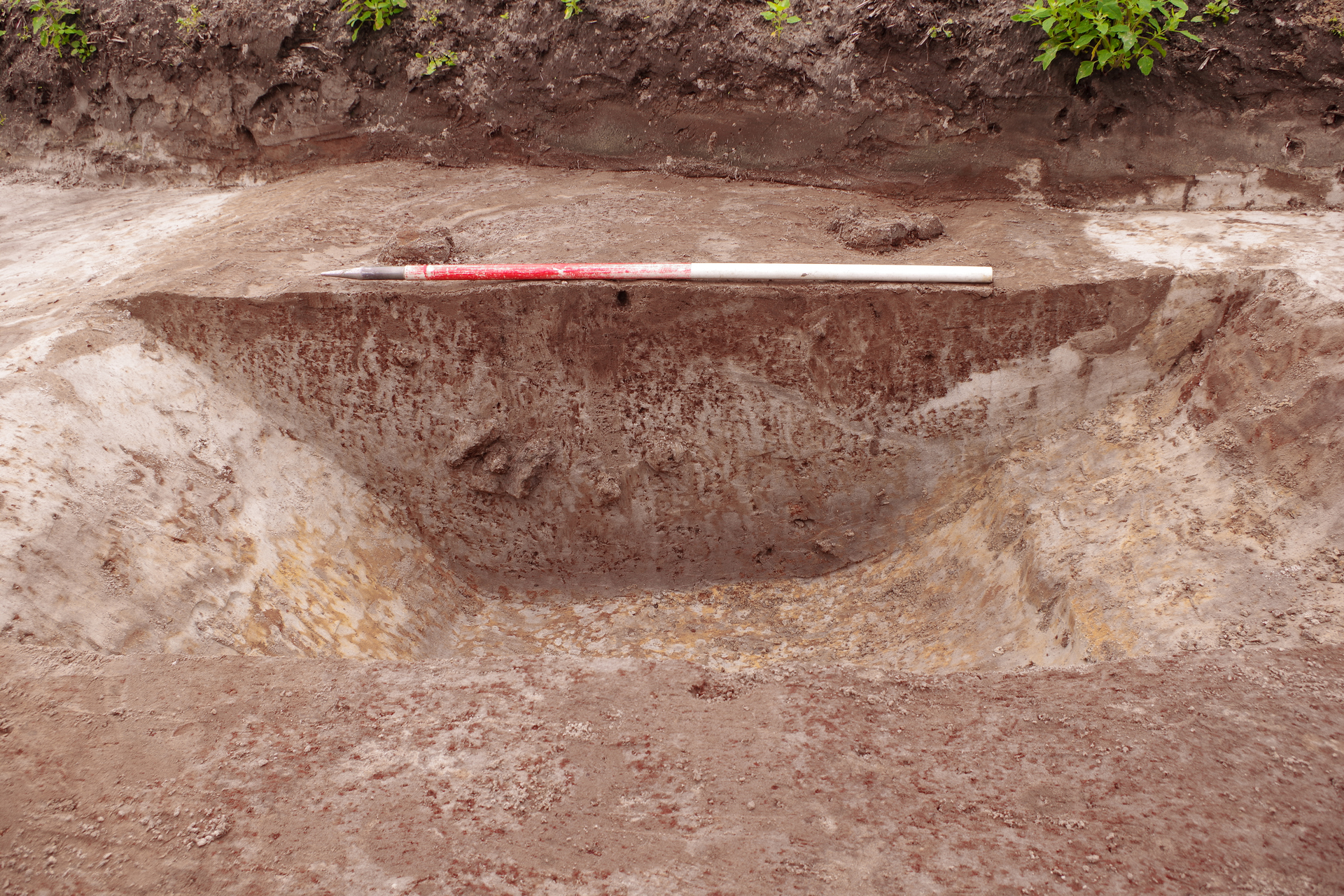
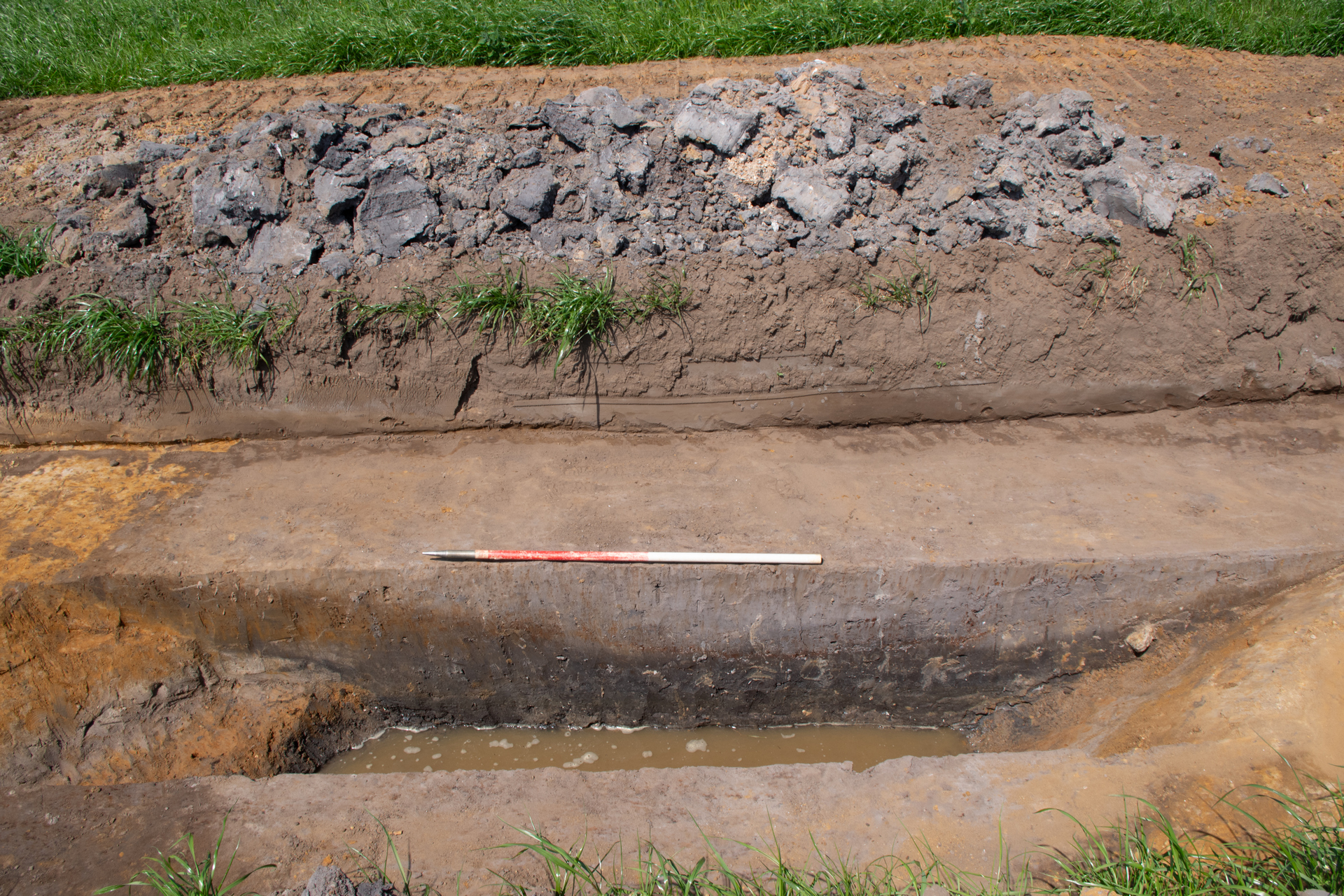
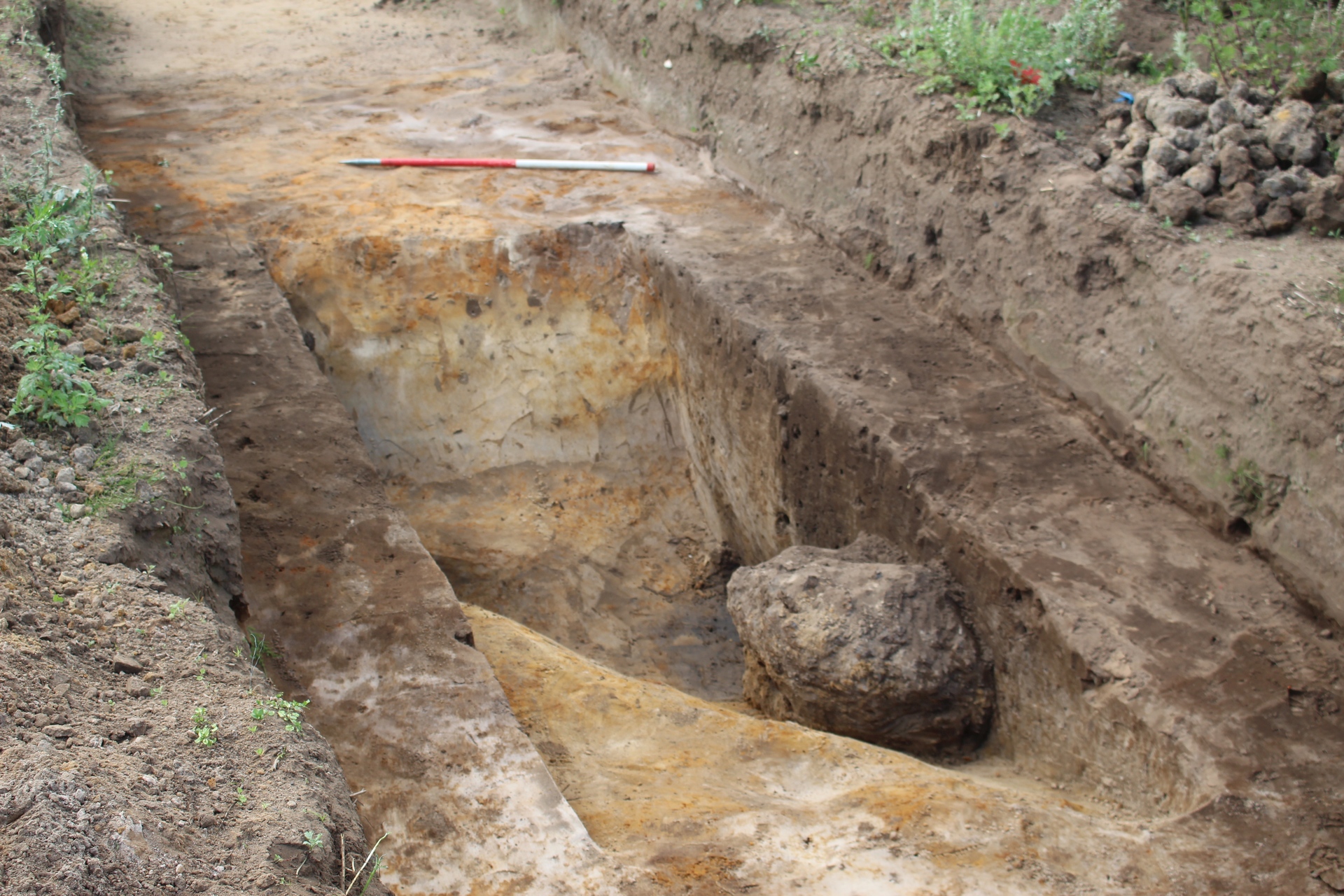
Figure 5: North-east facing overview photo of pit [085009] in Trench 85, containing a middle Iron Age furnace bottom. Image credit: Headland Archaeology (UK)
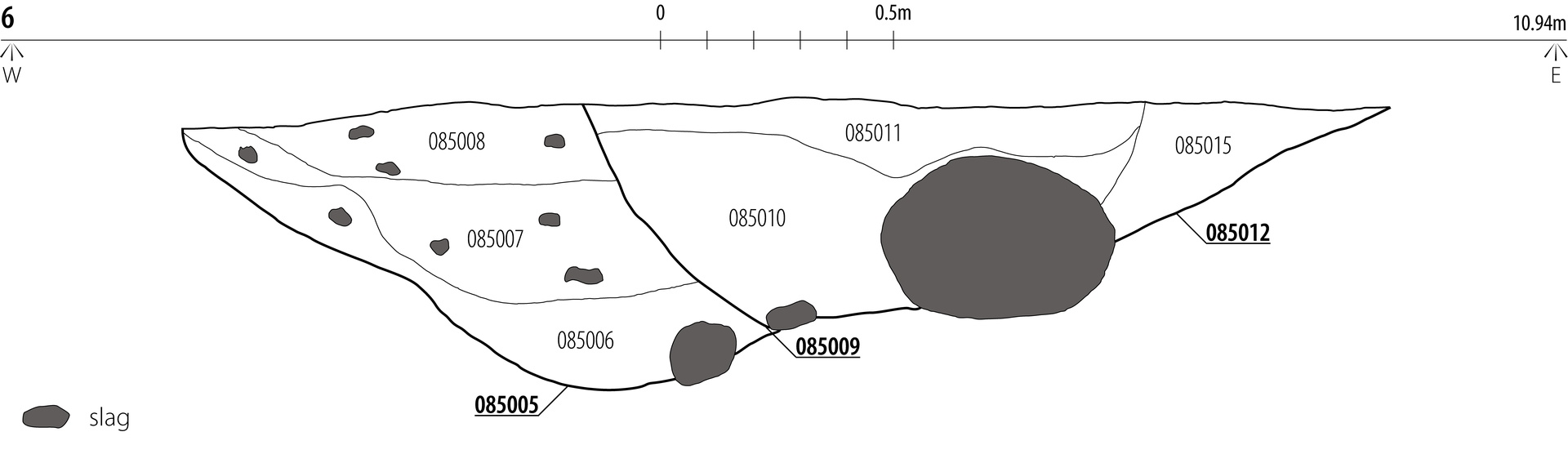
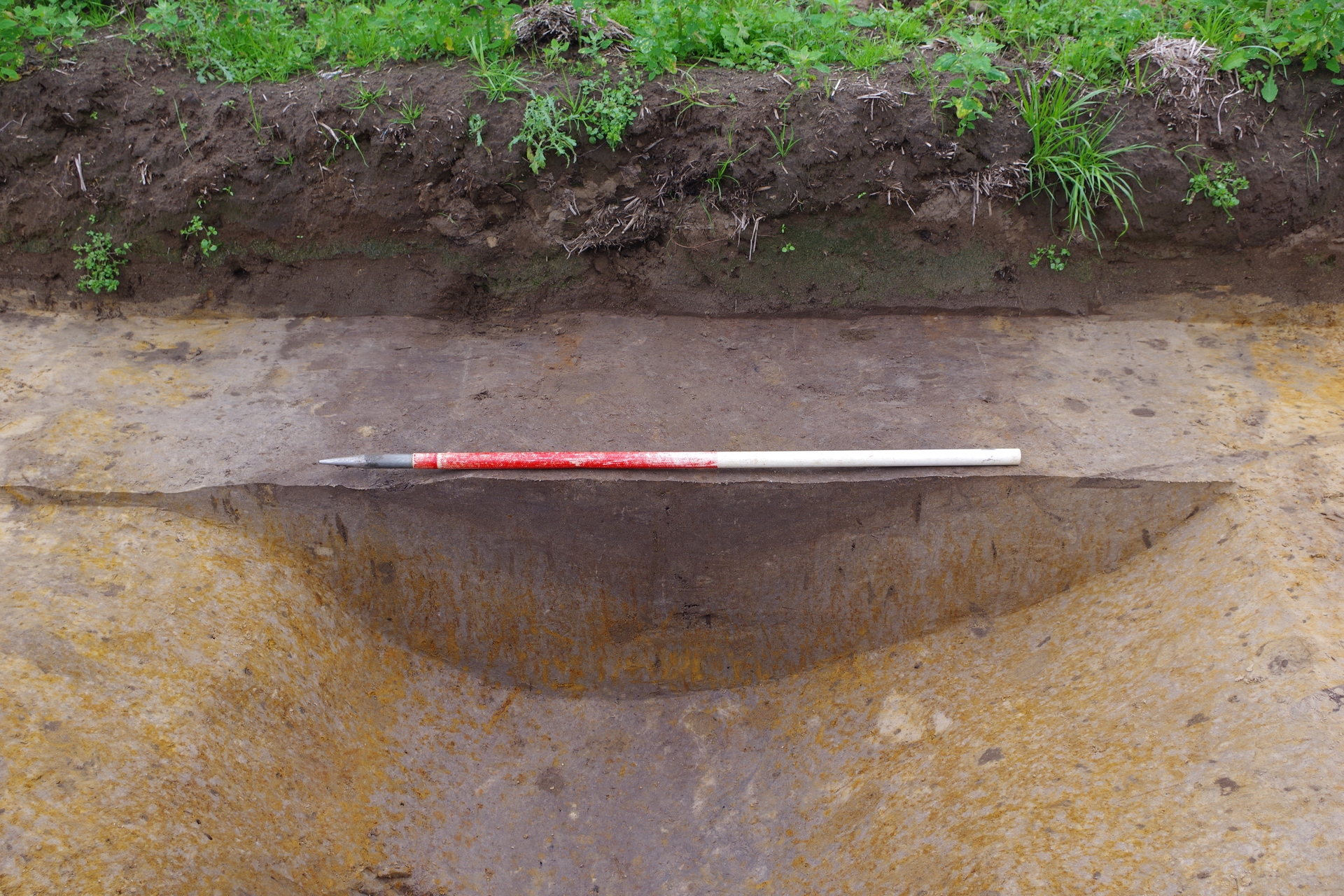
Figure 6: South-facing section of pit [085009] in Trench 85, truncating ditches [085005] and [085012] and containing a large middle Iron Age furnace bottom. Image credit: Headland Archaeology (UK)
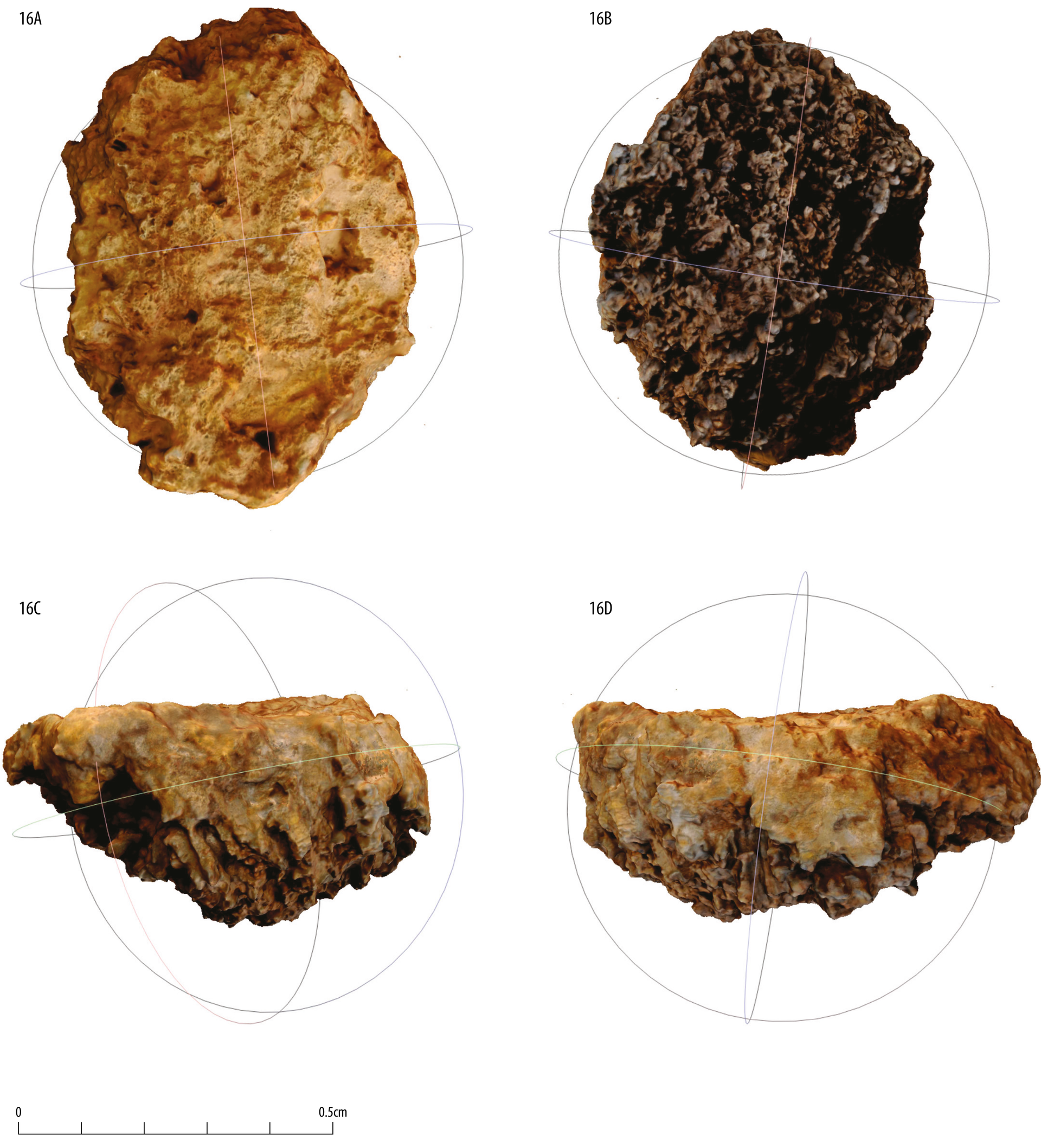
Figure 7: 3D-rendering of an intact furnace bottom from pit fill (085010). Image credit: Headland Archaeology (UK)
Figure 8: South-west facing overview photo of ditch slot [137003] in Trench 137. Image credit: Headland Archaeology (UK)
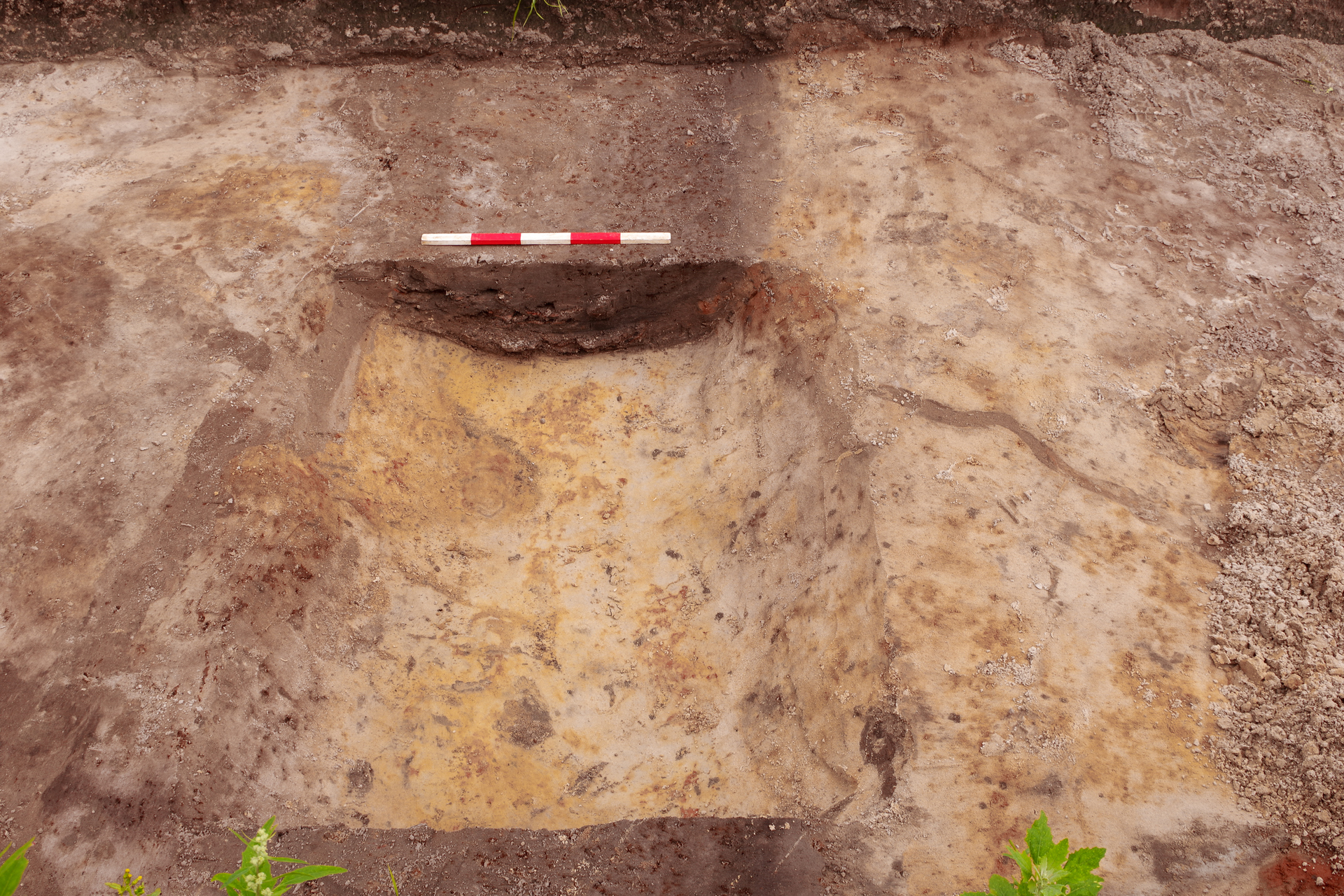
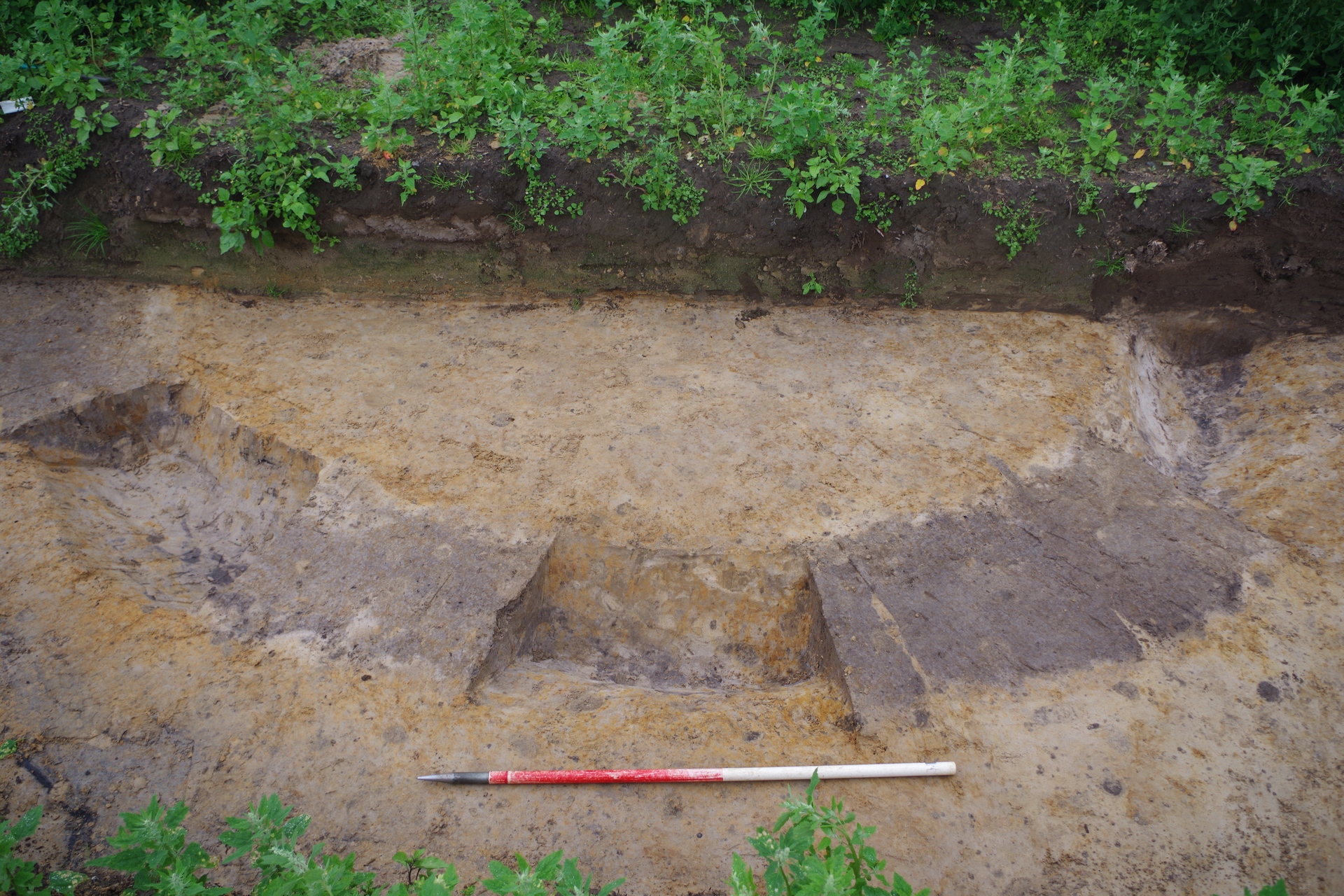
Figure 9: North-east facing overview photo of ditch slot [137008] in Trench 137, containing a large quantity of pottery. Image credit: Headland Archaeology (UK)
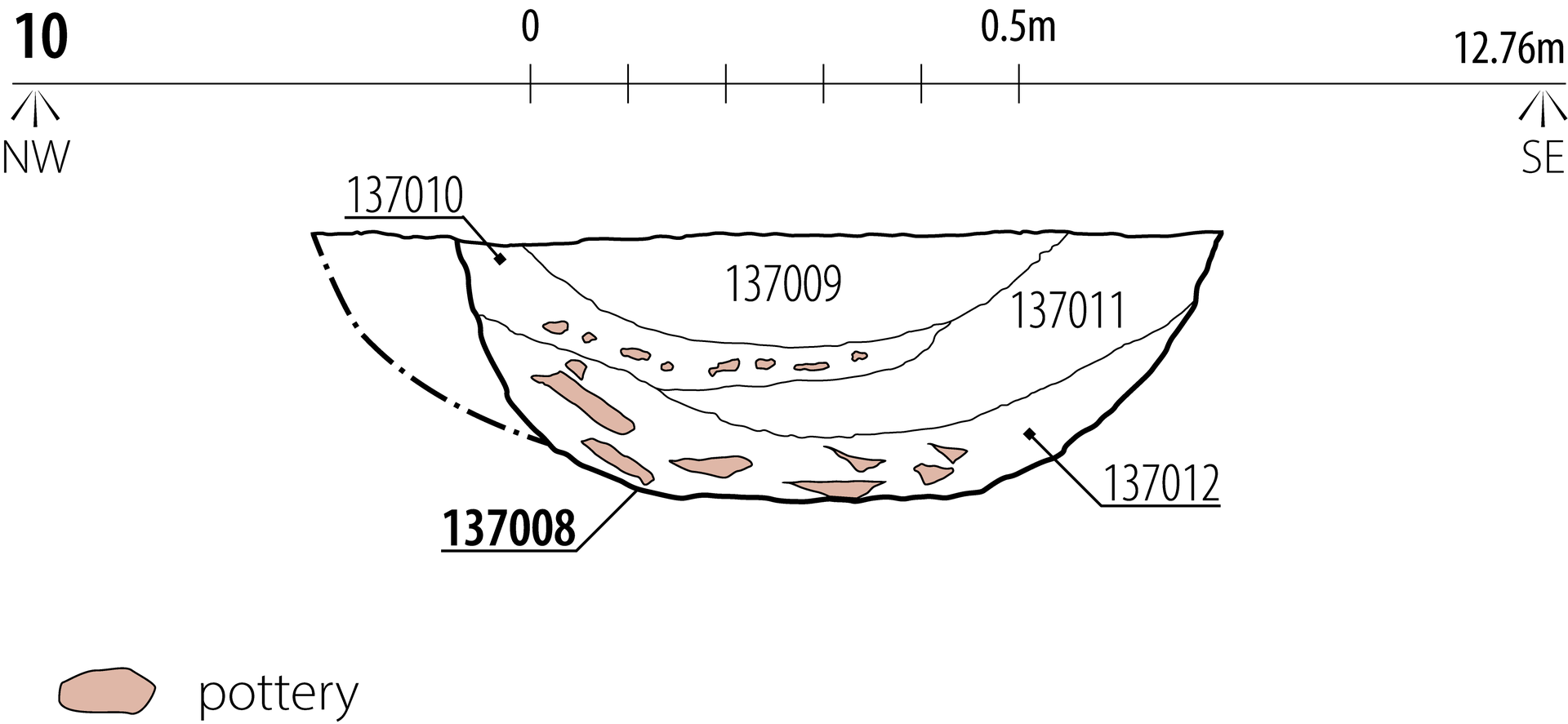
Figure 10: West-facing section of ditch slot [137008] in Trench 137, containing a large quantity of pottery. Image credit: Headland Archaeology (UK)
Figure 11: North-facing overview photo of ditch slot [040018] in Trench 40, with fills showing the effect of prolonged waterlogging. Image credit: Headland Archaeology (UK)
Figure 12: West facing overview photo of ditch slot [135007] in Trench 135. Image credit: Headland Archaeology (UK)
Figure 13: South-facing overview photo of the ring-ditch in Trench 133, including slot [133008]. Image credit: Headland Archaeology (UK)
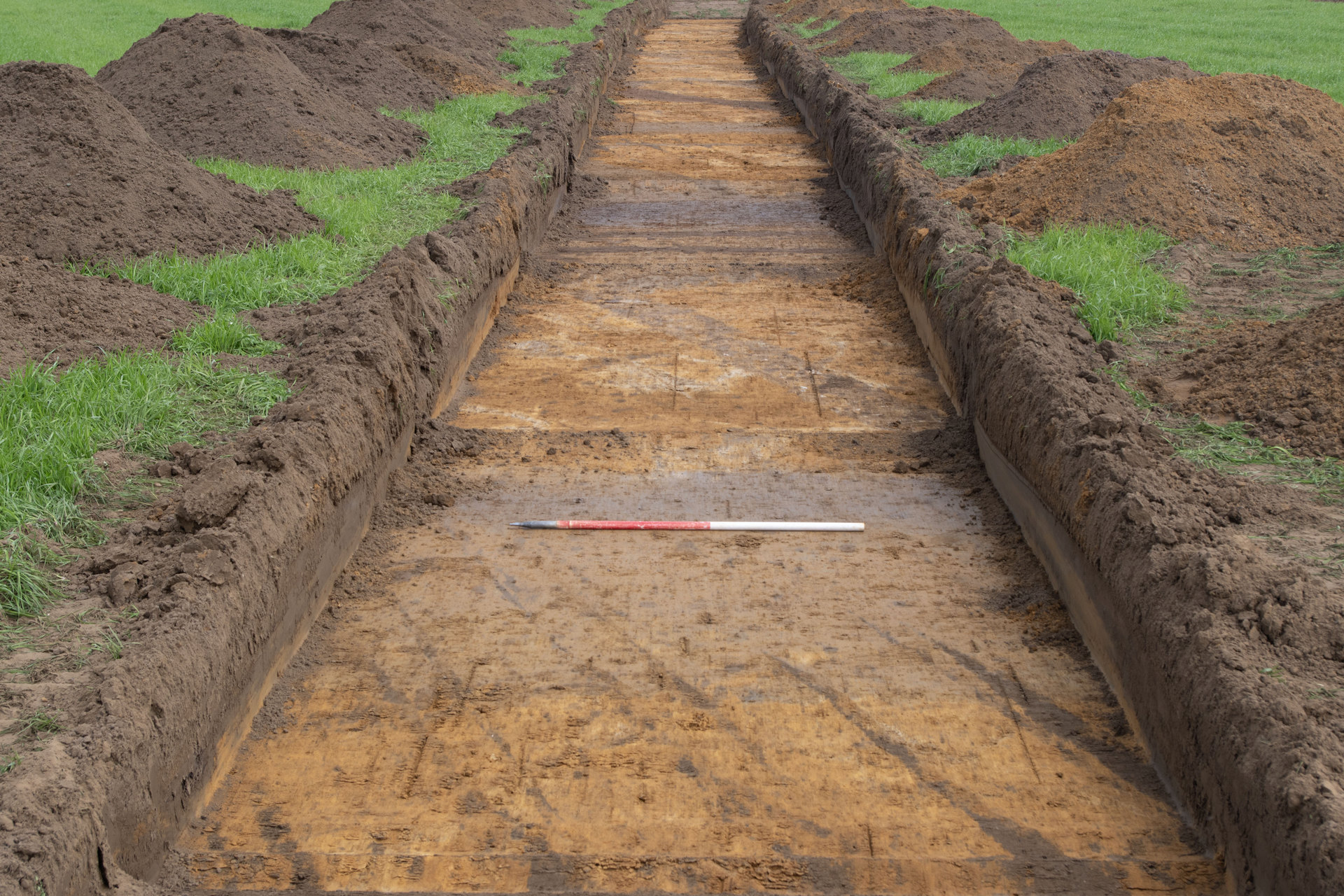
Figure 14: North-east facing overview photo of Trench 26, including the double-ditched enclosures. Image credit: Headland Archaeology (UK)
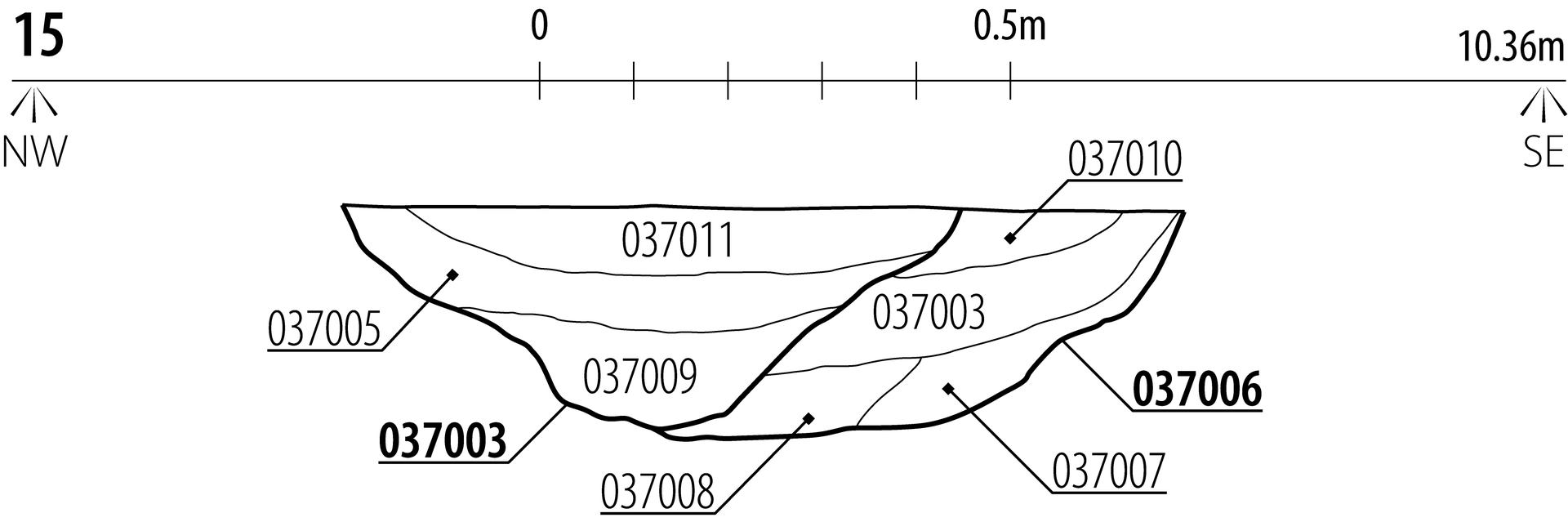
Figure 15: North-west facing section of the relationship between ditches [037003] and [037006] in Trench 37, Core Area 1. Image credit: Headland Archaeology (UK)
Figure 16: 3D-rendering of intact furnace bottom from pit fill (085010). Scale bar gives an approximate scale. (A) Upper surface, proximal end to right, distal to left. (B). Lower surface, proximal end to left, distal to right. (C) Left lateral surface, proximal end to right, distal to left. (D) Proximal surface, upper surface to top (Young 2025a, 66)
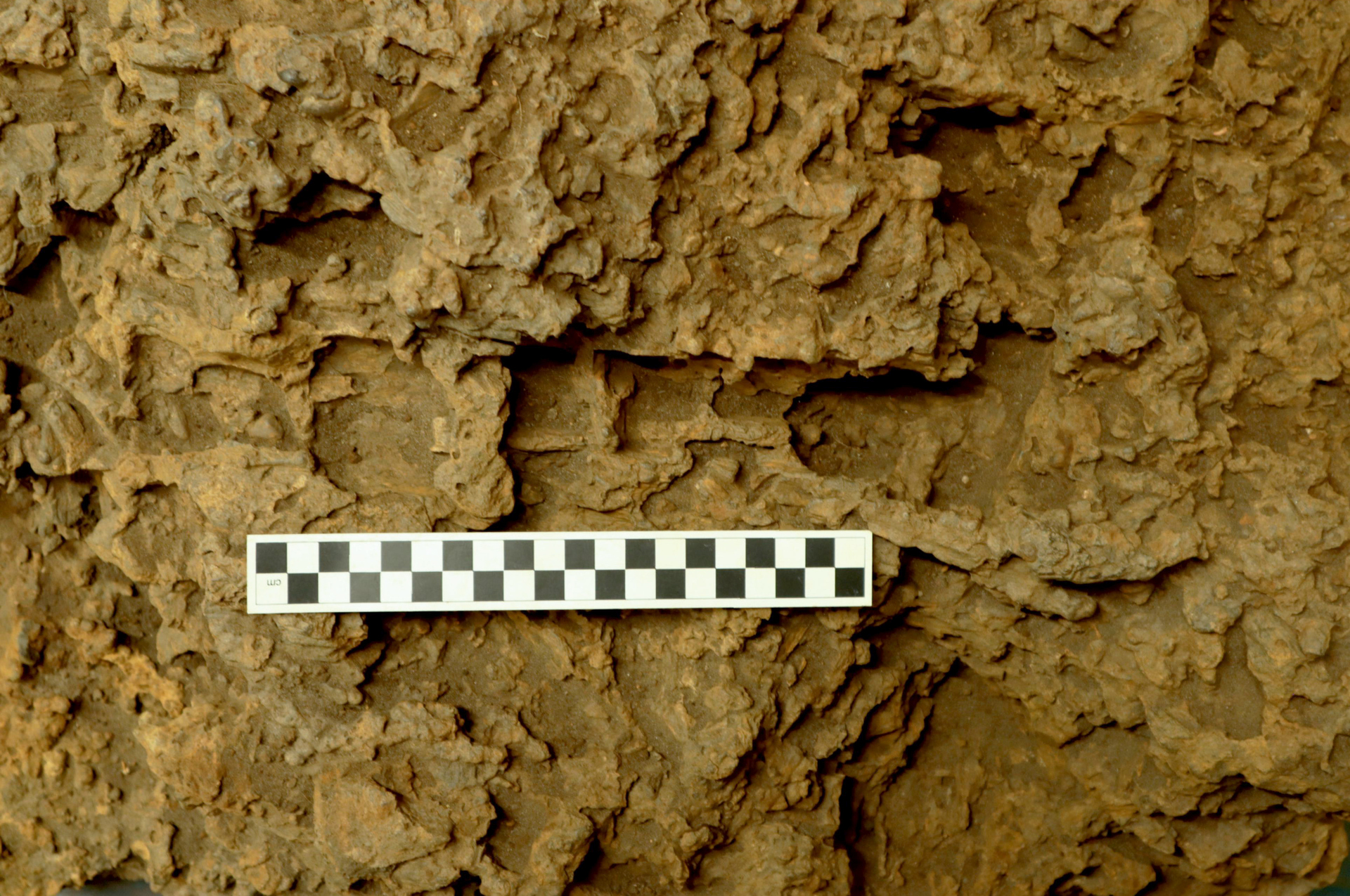
Figure 17: Detail of the lower surface of the intact furnace bottom from pit fill (085010). Scale in cm. The area just above scale shows typical preservation of wood pit-packing as moulds (in this instance lying sub-horizontally), with shrinkage cracks (filled by slag) breaking the mould into smaller regions (Young 2025a, 72)
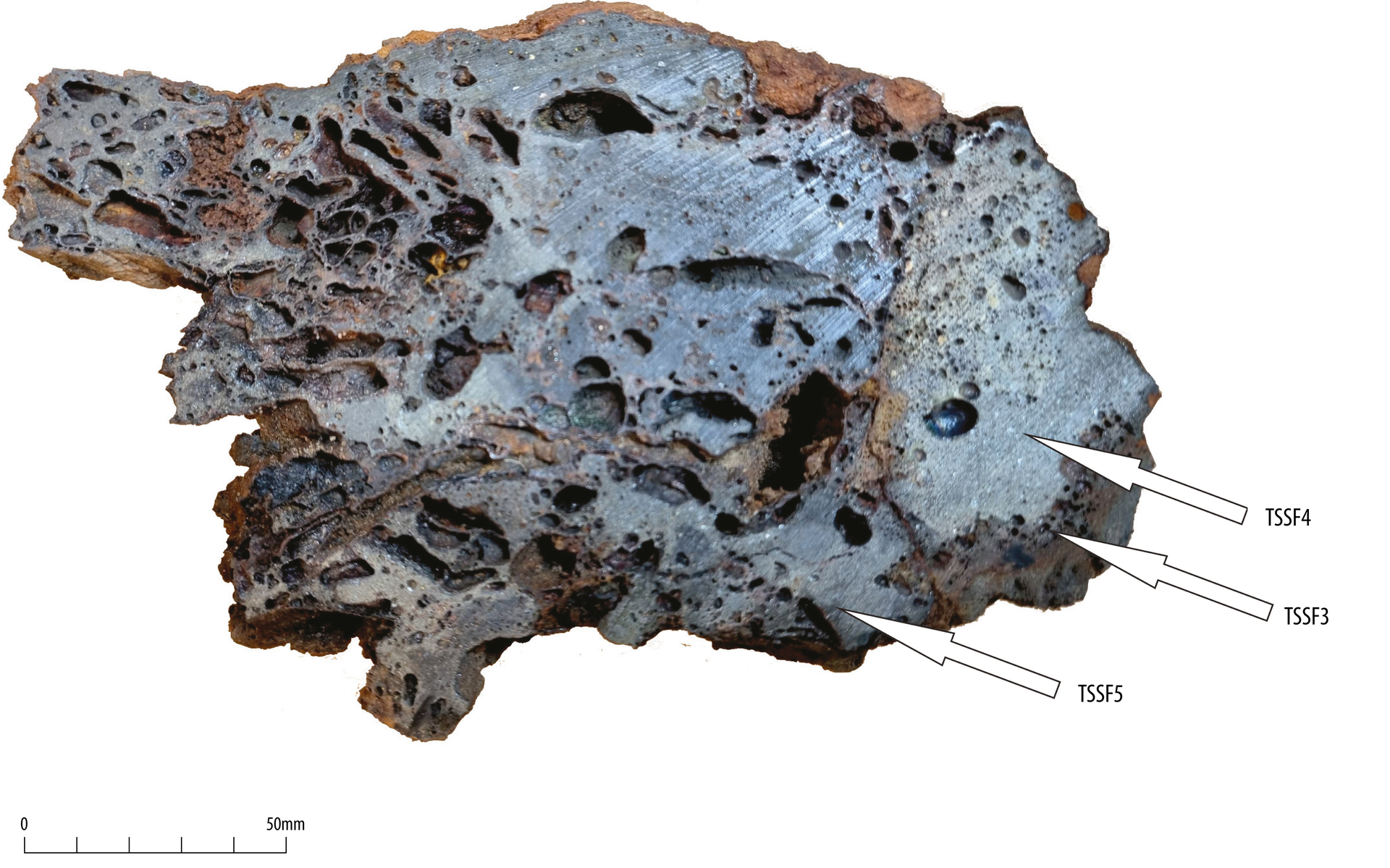
Figure 18: Details of locations of samples TSSF3-5 within a single large (2850g) slag block from ditch fill (074004). Sample TSSF5 is flow slag flowing away from the wall, sample TSSF3 is from a sliver of partially melted dark grey wall, and TSSF4 is part of the burr, or burr-like, zone of interaction between the slag and wall (Young 2025a, 72)
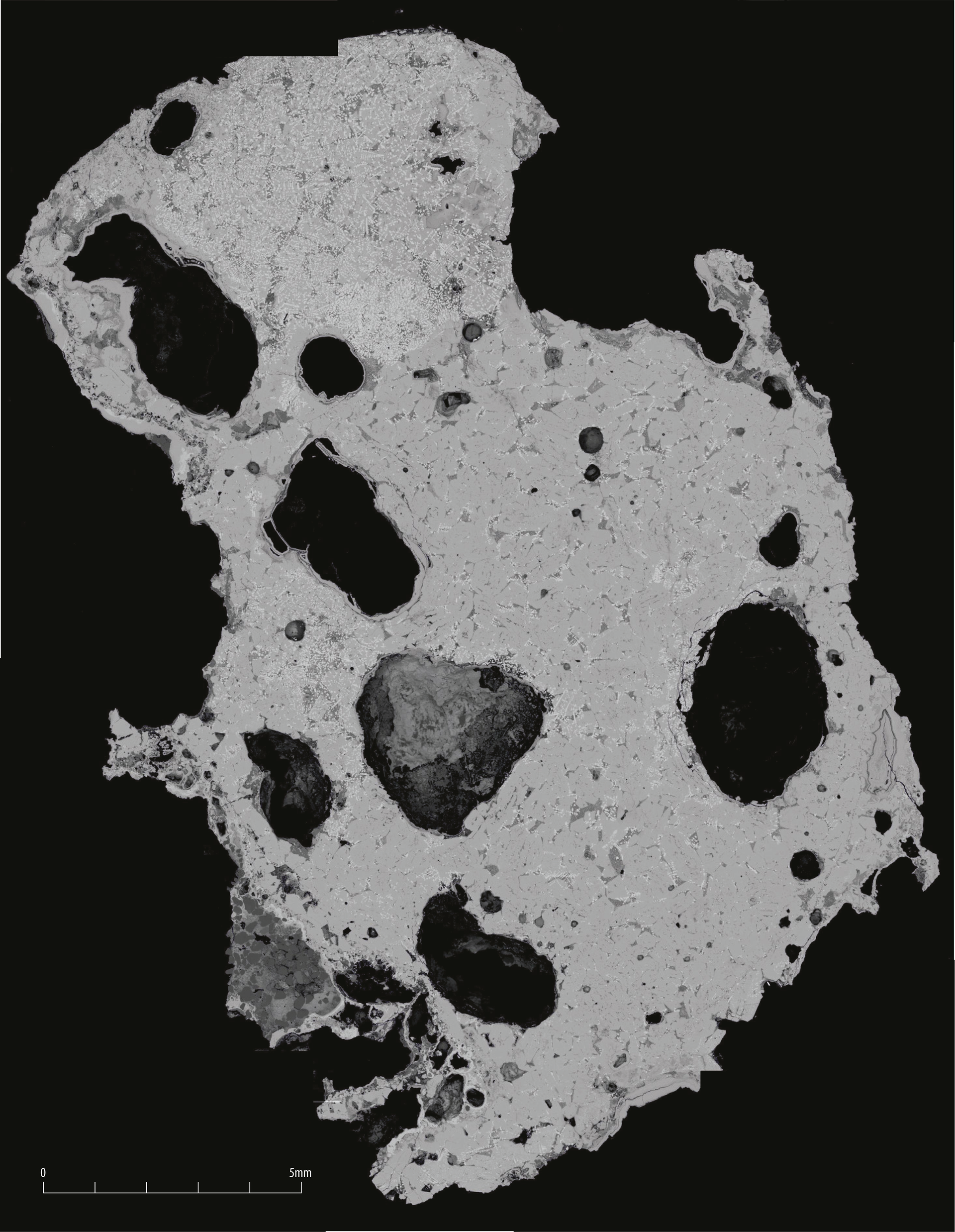
Figure 19: Backscattered electron image montage of sample TSSF5 (Young 2025a, 74)
Figure 20a-h: Backscattered electron images of sample TSSF5. (A) Typical microstructure of the wustite-dominated part of the sample. (B) Detail from with wustite-dominated area. Wustite (pale) shows exsolved laminae of magnetite (pale grey). The main secondary phase is olivine (mid-grey) to which the interstices are mainly a cotectic of leucite (very dark grey) and fine wustite. (C) as (B) but with a more complex interstitial microstructure, involving late olivine (pale grey) and apatite. (D) as (C) but with a larger interstitial area with large elongate apatite grains, as well as some iron sulphides (bright). (E) Margin of the wustite-dominated area showing a variation in the density of wustite dendrites, perhaps indicative of the remnants of an ore particle. (F) The microstructure within a wustite-poor area. The rounded outlines are former prills of metallic iron, wustite is limited, and the olivine contains a cotectic hercynite grain. (G) Typical microstructure of a wustite-poor area, dominated by olivine (pale grey). (H) detail of an interstitial area in the wustite-poor region. The interstitial area is partly filled by a leucite-wustite cotectic and partly by a complex finely crystalline region of olivine and apatite. Some of the olivine (lower right) shows a cotectic with wustite (Young 2025a, 75)
Figure 21: Graphs of olivine composition. The percentage of (Fe+Mg) substitution by Mn and by Ca (i.e. in the octahedral sites) and that of Si by P (in the tetrahedral sites) are shown, each plotted against to the proportion of Fe to (Fe+Mg) (i.e. the proportion of fayalite (Fa) in the fayalite to forsterite (Fo) solid solution) (Young 2025a, 76)
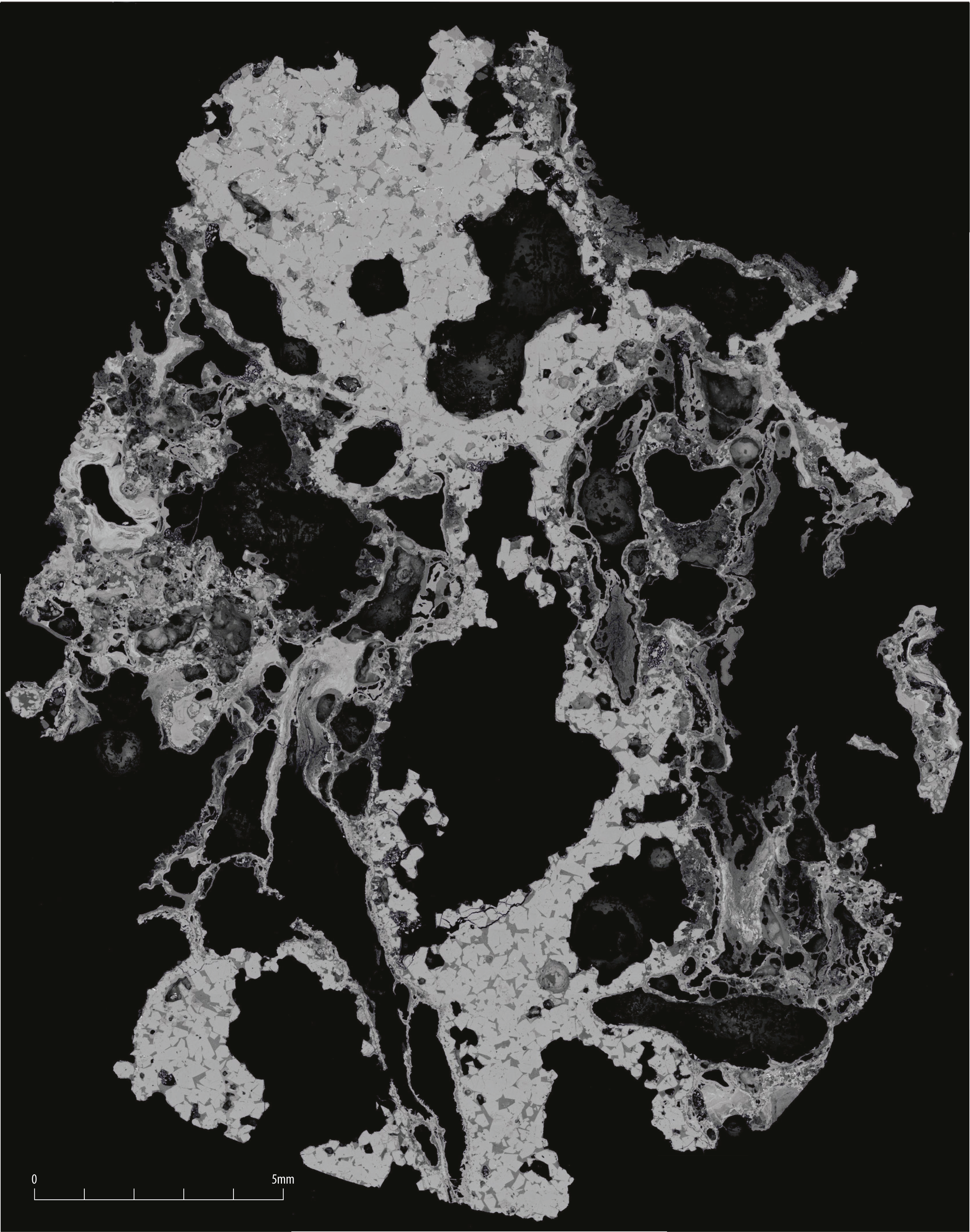
Figure 22: Backscattered electron image montage of sample TSSF11 (Young 2025a, 78)
Figure 23: Backscattered electron images of sample TSSF11, (23A) typical microstructure, with primary olivine (pale grey), with its outer parts showing cotectic hercynite. Wustite is restricted to intercalation in the outer parts of the olivine and to interstitial areas, (23B) detail of microstructure shown in (23A) with complex finely crystalline interstitial areas with phosphate minerals, olivine, (23C) areas interstitial to the olivine commonly show a microcrystalline microstructure, probably a quench texture, (23D) detail of microstructure shown in (23C) with microcrystalline interstitial phases (Young 2025a, 79)
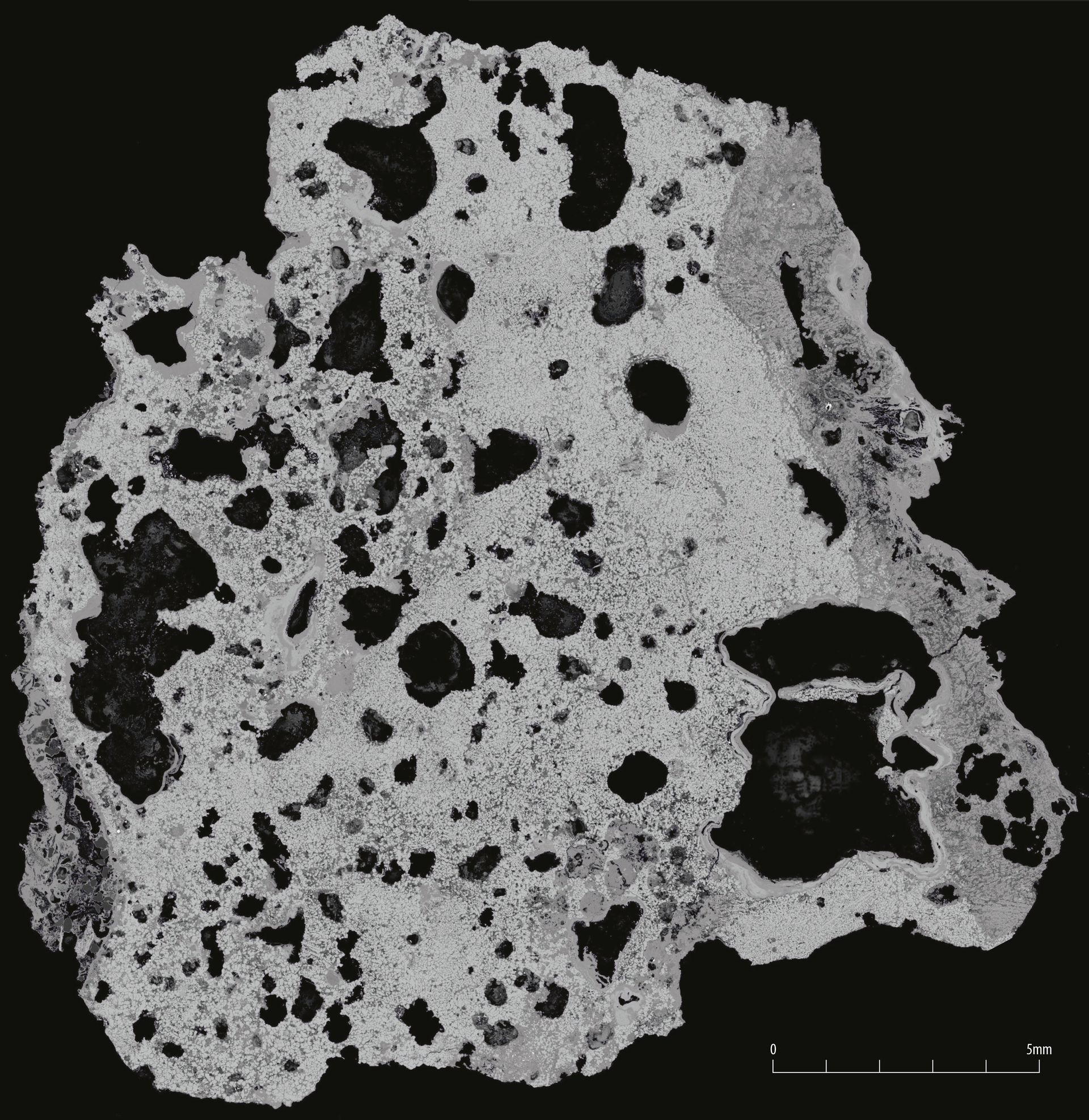
Figure 24: Backscattered electron image montage of sample TSSF12 (Young 2025a, 80)
Figure 25: Backscattered electron images of sample TSSF12. (A) The microstructure within the wustite-dominated area. Wustite is followed by olivine with poorly preserved minor interstitial areas, (B) as (A) but with minor remnants of prills of metallic iron – now completely weathered. (C) Detail of the microstructure in an area outside the wustite-dominated zone. There is evidence for the former presence of abundant prills of metallic iron – now entirely weathered. The texture is highly altered. (D) A variant of the wustite-poor microstructure that has a modest amount of primary wustite dendrites alongside the abundant weathered metallic iron (Young 2025a, 81)
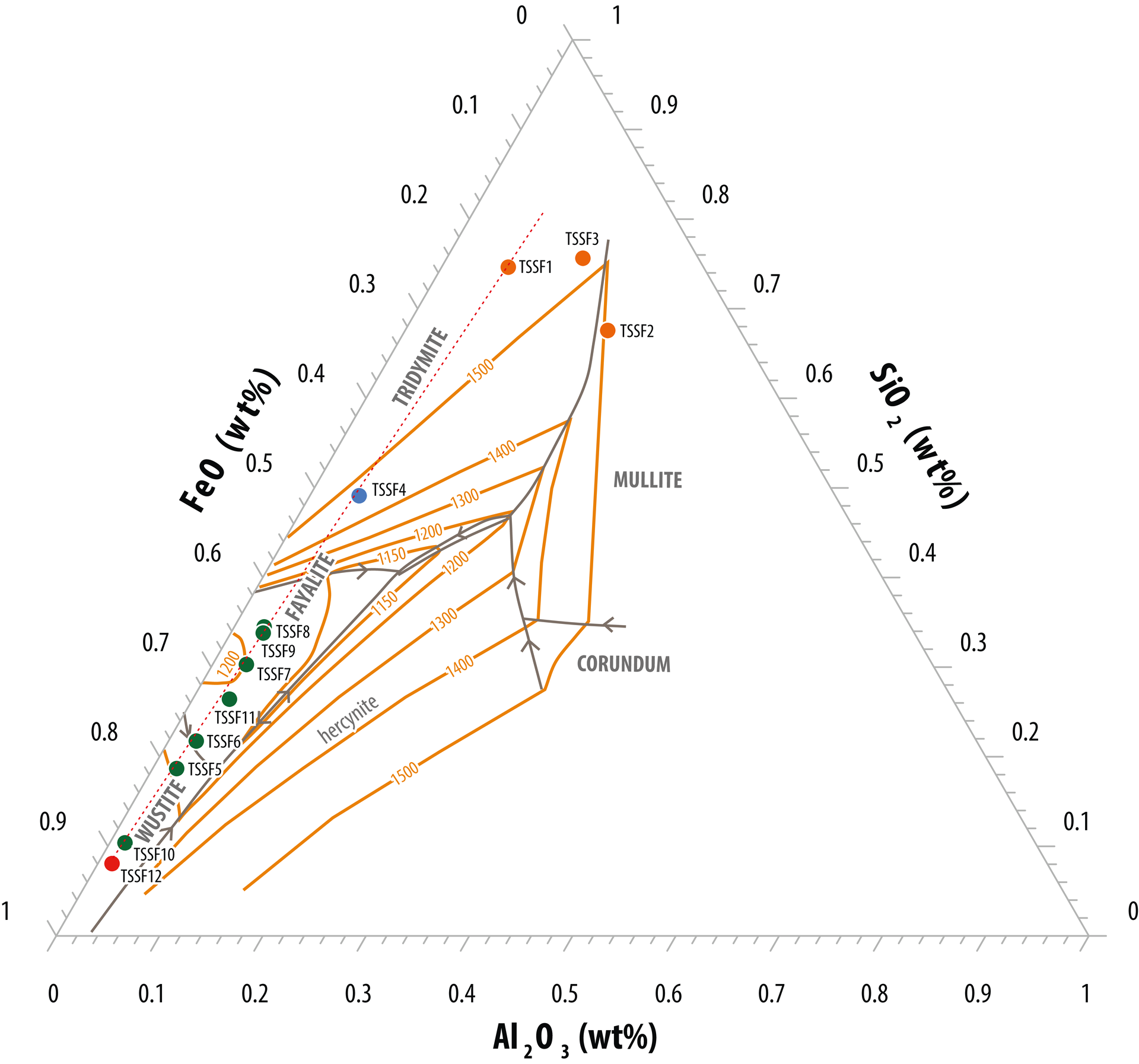
Figure 26: Analyses of materials from Thornton plotted within the ternary system FeO–SiO₂–Al₂O₃ [fields after Schairer and Yagi 1952, Fig 6] (Young 2025a, 82)
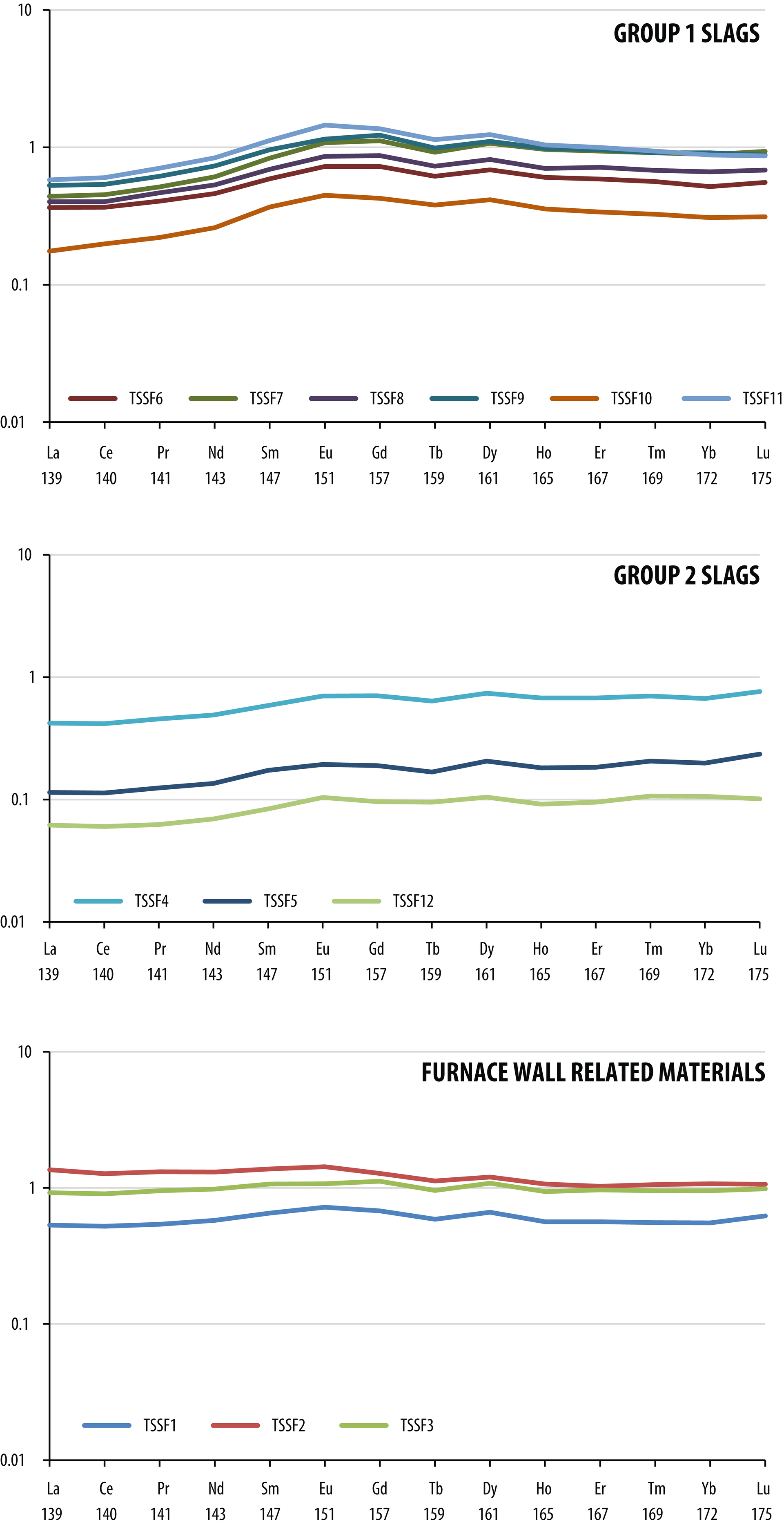
Figure 27: Upper crust-normalised rare earth element (REE) profiles (normalisation after Taylor and McLennan 1981) for samples from Thornton (Young 2025a, 83)
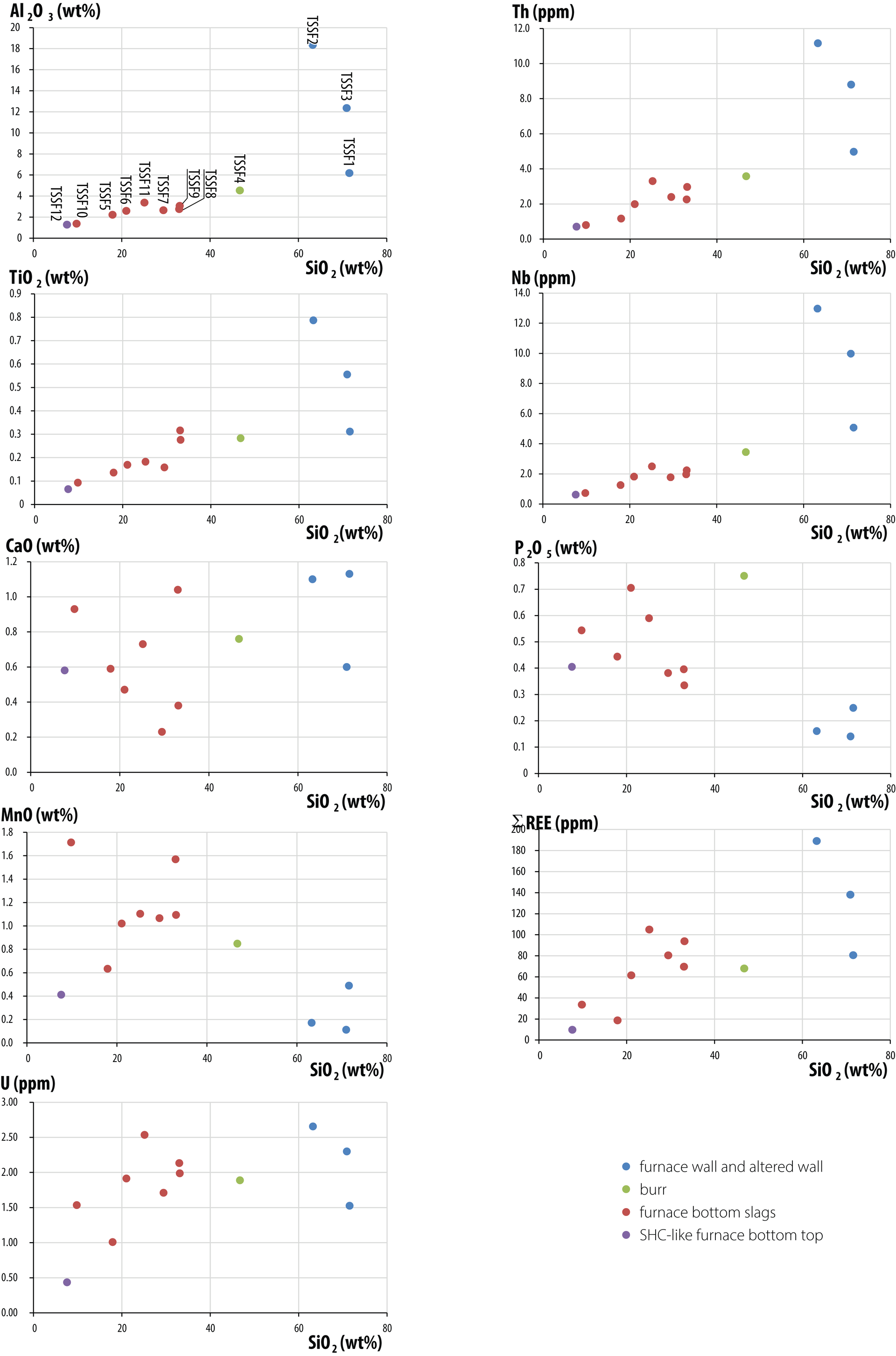
Figure 28: Plots of various element and elemental oxide species against silica for the samples from Thornton. The plot of alumina against silica includes the key for the identification of individual samples (Young 2025a, 84)
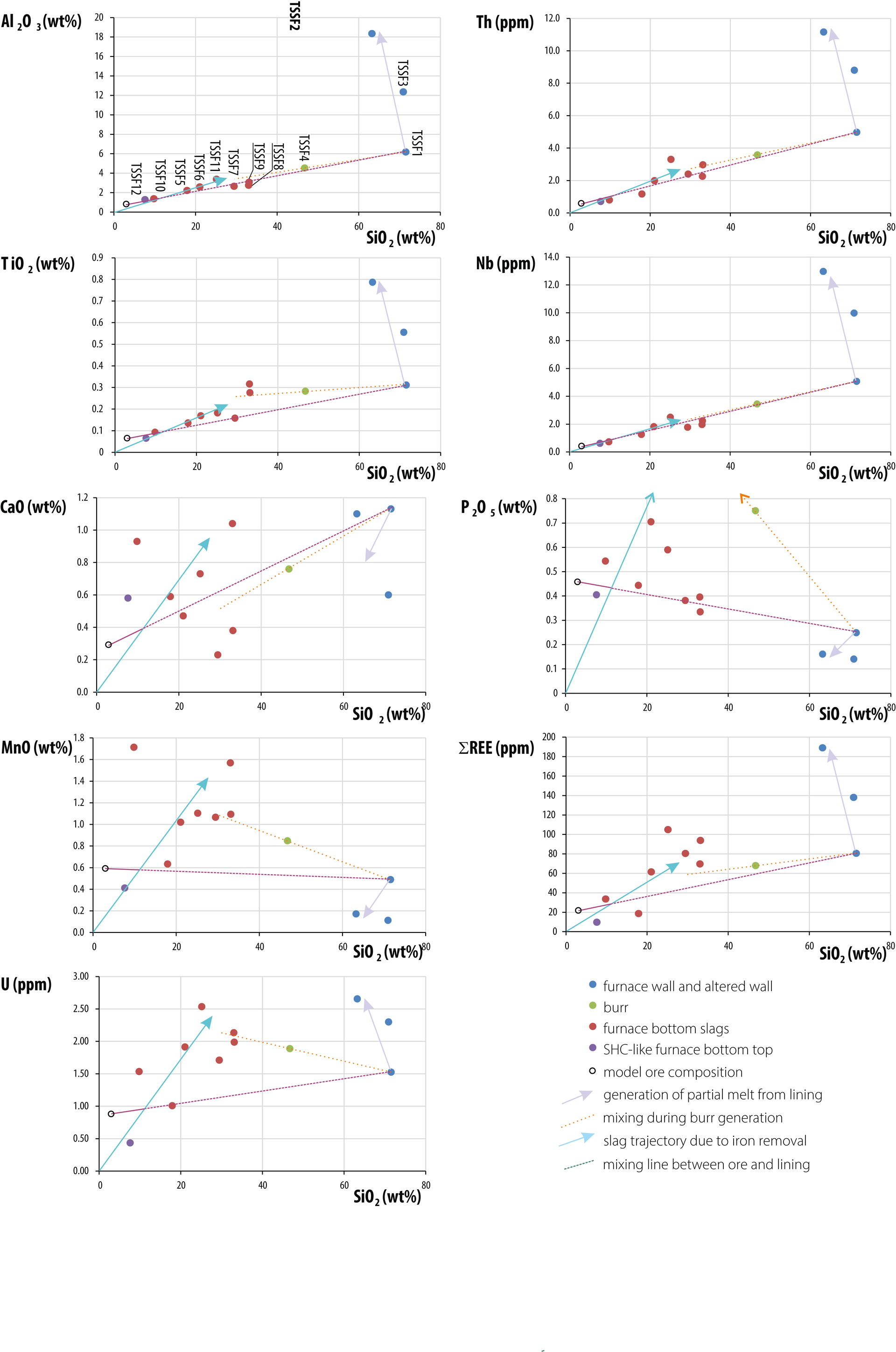
Figure 29: Binary plots of the sample analyses, also including a model for the smelting system (after the methodology of Young 2016b). The dashed purple line is the tie line between the measured composition of sample of furnace ceramic TSSF1 and a model ore composition (open circle). The blue arrow shows the trajectory of slag composition as iron is extracted from the smelting mixture, based on a smelting mixture of 12% lining and 88% ore (typical parameters observed in other works). The orange dashed line represents a mixing line between furnace ceramic TSSF1 and slag compositions capable of generating the observed composition of burr sample TSSF4. The lilac arrow gives an indication of the evolution of a partial melt of the furnace lining (Young 2025a, 85)
Table 1: Results of radiocarbon dating for Thornton SOAY Solar Farm and Greener Grid Park
Table 2: Typology of pottery vessels found in Core Area 2 (Rowlandson 2025, 67)
Table 3: Typology of pottery vessels found in Core Area 3 (Rowlandson 2025, 68). Pottery is illustrated in Figure 4
Table 4: List of analysed archaeometallurgy samples
Table 5: Metallurgical residues per context and trench
Table 6: Composition of iron ore
Alldritt, D. 2015 'Environmental record: Carbonised plant macrofossils and charcoal' in J. Richardson 'Hensall Barrier Bank, Hensall, North Yorkshire: Archaeological Investigations', Leeds: Archaeological Services WYAS, unpublished client report. 15–19.
Archaeological Services Durham University 2023 'Land East of Moor Lane Haxby, North Yorkshire, Archaeological Evaluation', Durham: Durham University, unpublished client document.
Arcus 2021 'Heritage Impact Assessment – Soay Solar Farm and Greener Grid Park – Statkraft UK Ltd (Parts 1 and 2)', York: Arcus Consultancy Services. https://projects.statkraft.co.uk/globalassets/0/.uk/0--projects/wind/soay/planning-application-documents/appendix-9a/chapter_2_heritage-impact-assessment.pdf
Bailey, L. and K. Turner 2025 'Charcoal and plant macrofossil analysis' in A. Thouki and T. van Tongeren, 'Thornton SOAY Solar Farm and Greener Grid Park: Evaluation and SMR', Headland Archaeology, unpublished client document. 88–98.
Boesenberg, J. and Hewins, R. 2010 'An experimental investigation into the metastable formation of phosphoran olivine and pyroxene', Geochimica et Cosmochimica Acta 74, 1923–1941. https://doi.org/10.1016/j.gca.2009.12.008
Brewster, T. 1963 The Excavation of Staple Howe, Scarborough: The East Riding Archaeological Research Committee.
Bronk Ramsey, C. 2009 'Bayesian analysis of radiocarbon dates', Radiocarbon 51(1), 337–360. https://doi.org/10.1017/S0033822200033865
Cabboi, L. and Dunikowski , C. 2004 'Les systèmes de production sidérurgiques chez les Celtes au nord de La France', Pre-Actes XXVIIIe colloque international AFEAF, Toulouse.
Cabboi, L., Dunikowski, C., Leroy, M. and Merluzzo, P. 2007 'Les systèmes de production sidérurgiques chez les Celtes au nord de La France' in P-Y. Milcent (ed) L'économie du fer protohistorique: de la production à la consommation du metal, XXVIIIe colloque de l'AFEAF Toulouse 20–23 mai 2004, Bordeaux: Fédération Aquitania. 35–62. https://hal.science/AFEAF/hal-03975722v1
Chadwick, A. 2008 Fields for Discourse. Landscape and Materialities of Being in South and West Yorkshire and Nottinghamshire in the Iron Age and Romano British Periods: A Study of People and Place, Newport: University of Wales, unpublished PhD dissertation.
Chadwick, A. 2019 'Iron Age and Romano-British', South Yorkshire Historic Environment Research Framework , Historic England and the South Yorkshire Archaeology Service. https://researchframeworks.org/syrf/iron-age-and-romano-british/ [Last accessed: 4 December 2025].
Challis, A. and Harding, D. 1975 Later Prehistory for the Trent to the Tyne, Oxford: BAR.
Clogg, P. 1999 'The Welham Bridge slag' in P. Halkon P and M. Millett (eds) Rural Settlement and Industry: Studies in the Iron Age and Roman Archaeology of Lowland East Yorkshire, Leeds: Yorkshire Archaeological Society, 81–96.
Coles, A. 2010 Palaeogeographical and Relative Sea-level Changes at Hotham Carrs, East Yorkshire, Durham: University of Durham (unpublished BSc dissertation).
Collard, M., Darvill, T. and Watts, M. 2006 'Ironworking in the Bronze Age? Evidence from a 10th century BC settlement at Hartshill Copse, Upper Bucklebury, West Berkshire', Proceedings of the Prehistoric Society 72, 367–421. https://doi.org/10.1017/S0079497X0000089X
Cowgill, J., Godfrey, E. and McDonnell, G. 2003 'Evidence for Iron Production — The Slags from TSEP Site 238 (Incorporating Comments on TSEP Sites 222 and 908)', Caerphilly: Geoarch, unpublished client report.
Cumberpatch, C. 2016 'Later prehistoric hand-made pottery' in G. Glover, P. Flintoft and R. Moore (eds) A Mersshy Contree Called Holderness: Excavations on the Route of a National Grid Pipeline in Holderness, East Yorkshire, Oxford: Archaeopress. 103–170.
Cumberpatch, C. 2017 'Later prehistoric and Roman period handmade pottery' in C. Ambrey, D. Fell, R. Fraser, S. Ross, G. Speed and P. Wood (eds) A Roman Roadside Settlement at Healam Bridge: The Iron Age to Early Medieval Evidence – Volume 2 (NAA Monograph Series No. 3). Oxford: Archaeopress. 4–15.
Dent, J. 1989 'Settlements at North Cave and Brantingham' in P. Halkon (ed) New Light on the Parisi. Recent Discoveries in Iron Age and Roman East Yorkshire, Hull: East Riding Archaeological Society and University of Hull. 26–32.
Dent, J. 1995 Aspects of Iron Age Settlement in East Yorkshire, Sheffield: University of Sheffield, PhD thesis.
Didsbury, P. n.d. 'Report on the Pottery from Creyke Beck, Cottingham', NAA, unpublished report.
Didsbury, P. 2004 'The Iron Age and Roman pottery' in P. Rahtz and L. Watts (eds) The North Manor and North-West Enclosure Wharram: A Study of Settlement on the Yorkshire Wolds IX, York University Archaeological Publications 11, York: University of York, 139–183.
Dunbar, E., Cook, G.T., Naysmith, P., Tripney, B.G. and Xu, S.2016 'AMS 14C dating at the Scottish Universities Environmental Research Centre (SUERC) Radiocarbon Dating Laboratory', Radiocarbon 58(1), 9–23. https://doi.org/10.1017/RDC.2015.2
Dungworth, D. 2009 Redcliff, Welton, East Yorkshire – An Examination of the Slag, Portsmouth: English Heritage.
Edlin, H. 1949 Woodland Crafts in Britain: an Account of the traditional Uses of Trees and Timbers in the British Countryside, London: Batsford.
Elsdon, S. 1996 'Iron Age pottery' in J. May (ed) Dragonby: Report on Excavations at an Iron Age and Romano-British Settlement in North Lincolnshire, Oxford: Oxbow Books. 317–512.
Evans, D., Roberts, D., Bateman, M., Medialdea, A., Ely, J., Moreton, S., Clark, C. and Fabel, D. 2018 'Sedimentation during Marine Isotope Stage 3 at the eastern margins of the Glacial Lake Humber basin, England', Journal of Quaternary Science 33(8), 871–891. https://doi.org/10.1002/jqs.3066
Evans, J. 1995 'Reflections on later Iron Age and 'native' Romano-British pottery in northeastern England' in B. Vyner (ed) Moorland Monuments: Studies in the Archaeology of North-East Yorkshire in Honour of Raymond Hayes and Don Spratt, CBA Research Report 1001, York: Council for British Archaeology. 46–68.
Gale, R. 2009 'Charcoal' in J. Wright, M. Leivers, R. Seager Smith and C. Stevens (eds) Cambourne New Settlement Iron Age and Romano-British Settlement on the Clay Uplands of West Cambridgeshire. Vol 2: Specialist Appendices, Wessex Archaeology. https://www.wessexarch.co.uk/sites/default/files/projects/cambourne-online-appendices/09_slag.pdf
Gale, R. and Cutler, D. 2000 Plants in Archaeology: Identification Manual of Artefacts of Plant Origin from Europe and the Mediterranean, Otley: Westbury Academic and Scientific Publishing.
Godwin, H. 1975 History of the British Flora, Cambridge: Cambridge University Press.
Halkon, P. 1997 'Fieldwork on early iron working sites in East Yorkshire', Historical Metallurgy 31, 12–16.
Halkon, P. 2006 Archaeology and Environment in a Changing East Yorkshire Landscape: The Foulness Valley c.800 BC to c.AD 400, Kingston upon Hull: University of Hull, PhD thesis.
Halkon, P. 2007 'Valley of the first iron masters: recent research on Iron Age iron production and its significance in the Foulness Valley, East Yorkshire, England' in P-Y. Milcent (ed) L'économie du fer protohistorique: de la production à la consommation du métal. Actes du XXVIIIe coloque international de l'Association française pour l'étude de l'âge du Fer (Toulouse, 20-23 mai 2004), Bordeaux: Fédération Aquitania. 151–163.
Halkon, P. 2011 'Iron, landscape, and power in Iron Age East Yorkshire', Archaeological Journal 168, 133–165. https://doi.org/10.1080/00665983.2011.11020831
Halkon, P. 2014 'Iron and the Parisi – socio-economic and ritual aspects of the iron industry in Roman East Yorkshire, UK' in B. Cech and T. Rehren (eds) Early Iron in Europe (Instrumentum Monographis 50), Drémil-Lafage: Editions Mergoil. 203–214.
Halkon, P. 2020 'Setting the scene – landscape and settlement in Ion Age eastern Yorkshire' in P. Halkon (ed) The Arras Culture of Eastern Yorkshire – Celebrating the Iron Age, Oxford: Oxbow Books. 25–52. https://doi.org/10.2307/j.ctv138wskk
Halkon, P. and Innes, J. 2005 'Settlement and economy in a changing prehistoric lowland landscape – an East Yorkshire (UK) case study', European Journal of Archaeology 8(3), 225–-259. https://doi.org/10.1177/1461957105076062
Halkon, P. and Millett, M. (eds) 1999 Rural Settlement and Industry: Studies in the Iron Age and Roman Archaeology of Lowland East Yorkshire, Leeds: Yorkshire Archaeological Society.
Halkon, P., Innes, J., Long, A., Shennan, I., Manby, T., Gaunt, G., Heath, A., Wagner, P., Schofield, J., Schreve, D. and Roe, D. 2009 'Change and continuity within the prehistoric landscape of the Foulness Valley', East Yorkshire East Riding Archaeology 12, 1–66.
Hall, N.S. 2017 An investigation into phosphoric iron production in Eastern England, Nottingham: PhD Dissertation, University of Nottingham. https://repository.nottingham.ac.uk/handle/123456789/29678
Hall, A., J. Carrott, H. Kenward and J. Richardson 1991 Report on Biological Analyses of Deposits from Excavations in Jewbury, York (YAT/Yorkshire Museum Site Code 1982–3.5), York: York Archaeological Trust. https://www.york.ac.uk/inst/chumpal/EAU-reps/eau91-24.pdf
Hardy, A. and Young, T. 2019 'Iron Age smelting and medieval charcoal production at Fleet Hill Farm, Eversley Quarry, Finchampstead, Wokingham: archaeological investigations in 2009– 2011', Berkshire Archaeological Journal 84, 43–65.
Hill, J.D. 1995 Ritual and Rubbish in the Iron Age of Wessex: A Study of the Formation of a Specific Archaeological Record, Oxford: BAR. https://doi.org/10.30861/9780860547846
Hughes, S. and Farnell, A. 2016 'Excavations at Tolgarrick Farm, Truro, Cornwall', Cornish Archaeology 55, 1–63.
Hurford, R. 2020 'Reconstructing British Chariots' in P. Halkon (ed) The Arras Culture of Eastern Yorkshire – Celebrating the Iron Age, Oxford: Oxbow Books, 199–216. https://doi.org/10.2307/j.ctv138wskk.12
Jarvis, I. and Jarvis, K. 1992a 'Inductively coupled plasma-atomic emission spectrometry in exploration geochemistry', Journal of Geochemical Exploration 44. https://doi.org/10.1016/0375-6742(92)90050-I
Jarvis, I. and Jarvis, K. 1992b 'Plasma spectrometry in earth sciences: techniques, applications, and future trends', Chemical Geology 95(1-2), 1–33. https://doi.org/10.1016/0009-2541(92)90041-3
Jay, M., Haselgrove, C., Hamilton, D., Hill, J. and Dent, J. 2012 'Chariots and context: new radiocarbon dates from Wetwang and the chronology of Iron Age burials and brooches in East Yorkshire', Oxford Journal of Archaeology 31(2), 161–189.
Kenicer, G. 2020 Scottish Plant Lore, an Illustrated Flora, Edinburgh: Birlinn Ltd.
Lawton, J. 2021 'Soay Solar Farm, Thornton, East Riding of Yorkshire: Archaeological Geophysical Survey', AOC Archaeology Group, unpublished client document.
Lewis, J., Crabb, S. and Ford, S. 2013 'Bronze Age urns, Iron Age iron smelting and Saxon charcoal production at Sadler's End, Sindlesham, Wokingham, Berkshire' in S. Preston (ed) Iron Age Production Sites in Berkshire, Excavations 2003–2012, Monograph 16, Reading: Thames Valley Archaeological Services, 1–34.
Pearce, T., Besly, B., Wray, D. and Wright, D. 1999 'Chemostratigraphy: a method to improve interwell correlation in barren sequences – a case study using onshore Duckmantian/Stephanian sequences (West Midlands, UK)', Sedimentary Geology 124, 197–220. https://doi.org/10.1016/S0037-0738(98)00128-6
Reimer, P., W. Austin, E. Bard, A. Bayliss, P. Blackwell, C. Bronk Ramsey, M. Butzin, H. Cheng, R. Lawrence Edwards, M. Friedrich, P. Grootes, T. Gulderson, I. Hajdas, T. Heaton, A. Hogg, K. Hughen, B. Kromer, S. Manning, R. Muscheler, J. Palmer, C. Pearson, J. van der Plicht, R. Reimer, D. Richards, E. Scott, J. Southon, C. Turney, L. Wacker, F. Adolphi, U. Büntgen, M. Capano, S. Fahrni, A. Fogtmann-Schulz, R. Friedrich, P. Köhler, S. Kudsk, F. Miyake, J. Olsen, F. Reinig, M. Sakamoto, A. Sookdeo and S. Talamo 2020 'The IntCal20 northern hemisphere radiocarbon age calibration curve (0–55 cal kBP)', Radiocarbon 62(4), 725–757. https://doi.org/10.1017/RDC.2020.41
Richardson, J. 2015 'Hensall Barrier Bank, Hensall, North Yorkshire: Archaeological Investigations', Leeds: Archaeological Services WYAS, unpublished client report.
Rigby, V. 2004 Pots in Pits: The British Museum East Yorkshire Settlements Project 1988–1992, London: The British Museum.
Rowlandson, I. 2015 'Prehistoric and Roman pottery' in J. Richardson 'Hensall Barrier Bank, Hensall, North Yorkshire: Archaeological Investigations', Leeds: Archaeological Services WYAS, unpublished client report. 6–7.
Rowlandson, I. 2025 'Prehistoric and Roman pottery' in A. Thouki and T. van Tongeren (eds) 'Thornton SOAY Solar Farm and Greener Grid Park: Evaluation and SMR', Headland Archaeology, unpublished client document. 62–69.
Rowlandson, I., Fiske, H., Hartley, K., Mills, J., Bird, J. and Williams, D. 2021 'The Roman pottery' in J. Phillips and P. Wilson (eds) Life, Death and Rubbish Disposal in Roman Norton, North Yorkshire: Excavations at Brooklyn House 2015–16, Oxford: Archaeopress. https://doi.org/10.2307/j.ctv1gn3srk.9
Schairer, J. and K. Yagi 1952 'The system FeO-Al2O3-SiO2', American Journal of Science, The Bowen volume in appreciation of Norman L. Bowen, Geophysical Laboratory, Carnegie Institution of Washingtonm Publication No. 1200, 471–512. https://earth.geology.yale.edu/~ajs/1952A/471.pdf
Schweingruber, F. 1990 Microscopic Wood Anatomy (3rd edn), Remagen: Verlag Kessel.
Shaffrey, R. 2025 'Worked stone' in A. Thouki and T. van Tongeren (eds) 'Thornton SOAY Solar Farm and Greener Grid Park: Evaluation and SMR', Headland Archaeology, unpublished client document. 68–69.
Stephens, M. and Ware, P. 2020 'The Iron Age cemeteries at Pocklington and other excavations by MAP' in P. Halkon (ed) 2020 The Arras Culture of Eastern Yorkshire: Celebrating the Iron Age, Oxford: Oxbow Books. 17–32.
Strickland Dent, J. 2020 'Excavations in Garton Slack and Wetwang Slack 1963–1989' in P. Halkon (ed) The Arras Culture of Eastern Yorkshire – Celebrating the Iron Age, Oxford: Oxbow Books, 81–103.
Stuijts, I. 2005 'Wood and charcoal identification' in M. Gowen, J. O'Neill and M. Phillips (eds) The Lisheen Mine Archaeological Project 1996–8, Bray: Wordwell Books.
Swain, H. 1987 'The Iron Age pottery' in D. Heslop (ed) The Excavations of an Iron Age Settlement at Thorpe Thewles, Cleveland, 1980–1982, CBA Research Report 65, York: Council for British Archaeology. 57–57.
Taylor, S. 2022 Down the Bright Stream: The Prehistory of Woodcock Corner and the Tregurra Valley, Cornwall, Oxford: Archaeopress. 170-204. https://doi.org/10.2307/j.ctv2nwq8zn
Taylor, S. and McLennan, S. 1981 'The composition and evolution of the continental crust: rare earth element evidence from sedimentary rocks', Philosophical Transactions of the Royal Society A 301(1461), 381–399. https://doi.org/10.1098/rsta.1981.0119
Thouki, A. and van Tongeren, T. 'Thornton SOAY Solar Farm and Greener Grid Park: Evaluation and SMR', Headland Archaeology, unpublished client document.
Wells, M., and Williams, D. 2021 'Hazel Lane Quarry, Hampole, South Yorkshire – Post Excavation Archive Report for Areas D, F and G 2002-2006', Leeds: Archaeological Services WYAS, unpublished client report.
Young, T. 2007 'Archaeometallurgical Residues from Richard Lander School (RLS04) and Truro College (TCF05)', GeoArch Report 2007/22, Caerphilly: GeoArch, unpublished client report.
Young, T. 2016a 'Archaeometallurgical Residues from Tolgarrick Farm, Truro, Cornwall', GeoArch Report 2016/19, Caerphilly: GeoArch, unpublished client report.
Young, T. 2016b 'Ironworking Residues from Tregurra, Truro, Cornwall', GeoArch Report 2016/38, Caerphilly: GeoArch, unpublished client report.
Young, T. 2016c 'Archaeometallurgical Residues from Fleet Hill Farm, Finchampstead, Berkshire', GeoArch Report 2016/35, Caerphilly: GeoArch, unpublished client report.
Young, T. 2018 'Archaeometallurgical Residues from Folly Court, Wokingham, Berkshire', GeoArch Report 2018/15, Caerphilly: GeoArch, unpublished client report.
Young, T. 2020 'Archaeometallurgical Residues from Hartshill Copse (HCB01)', Caerphilly: GeoArch, unpublished client document.
Young, T. 2021 'Industrial Residues' in J. Gossip 'Section 5: Life Outside the Round: Bronze Age and Iron Age Settlement at Higher Besore and Truro College, Threemilestone, Truro, 2004-5' in A. Jones and G. Kirkham (eds) Later Prehistoric Settlement in Cornwall and the Isles of Scilly: Evidence from Five Excavations, Oxford: Archaeopress. 241-250.
Young, T. 2022 'Chapter 7: Archaeometallurgy' in D. Taylor (ed) Down the Bright Stream: The Prehistory of Woodcock Corner and the Tregurra Valley, Cornwall, Oxford: Archaeopress. https://doi.org/10.2307/j.ctv2nwq8zn.15
Young, T. 2023 'Assessment of Materials from Probus, Phase 2, Cornwall', GeoArch Report 2023/25, Caerphilly: GeoArch, unpublished client report.
Young, T. 2024 'Archaeometallurgical residues from the CA Site (HCB01)' in A.-M. Huvig, P.-D. Manisse and S. Preston (eds) Later Bronze Age to Middle Iron Age Occupation and Iron Production, Late Iron Age to Early Roman Enclosures and Cremations, and Medieval Occupation at Hartshill Copse, Thatcham, West Berkshire, Reading: Thames Valley Archaeological Services Ltd. 109–123.
Young, T. 2025a 'Archaeometallurgy' in A. Thouki and T. van Tongeren (eds) 'Thornton SOAY Solar Farm and Greener Grid Park: Evaluation and SMR', Headland Archaeology, unpublished client document. 69–86.
Young, T. 2025b 'Ironworking residues from Probus ACD2489', GeoArch Report 2025/3, Caerphilly: GeoArch, unpublished client report.
Young, T. and Anelay, G. 2025 'Iron Age iron smelting, Folly Court, Wokingham and the interpretation of 'dome' furnaces', Historical Metallurgy 55, 30–46. https://doi.org/10.54841/hm.671
Internet Archaeology is an open access journal based in the Department of Archaeology, University of York. Except where otherwise noted, content from this work may be used under the terms of the Creative Commons Attribution 3.0 (CC BY) Unported licence, which permits unrestricted use, distribution, and reproduction in any medium, provided that attribution to the author(s), the title of the work, the Internet Archaeology journal and the relevant URL/DOI are given.
Terms and Conditions | Legal Statements | Privacy Policy | Cookies Policy | Citing Internet Archaeology
Internet Archaeology content is preserved for the long term with the Archaeology Data Service (ROR). Help sustain and support open access publication by donating to our Open Access Archaeology Fund.
 Home
Home