Cite this as: Oniszczuk, A. 2026 'Pick One – A Model of a Site-Centred Approach to Community Integration Around Local Heritage', Internet Archaeology 72. https://doi.org/10.11141/ia.72.10
In order to ensure day-to-day protection of sometimes remote archaeological sites, heritage managers must boost the interest of local communities in heritage that can improve their quality of life and give them a sense of belonging.
The community outreach model proposed in this paper is based on using one chosen site as a focal point for all activities. Explaining heritage-related issues and archaeology through the local perspective brings archaeological heritage closer to the people and integrates community around common values. Remaining local, it can be best suited for the needs of the public.
This model results from participation of Poland’s National Institute of Cultural Heritage (NID) in a European Union (EU) project entitled TRIQUETRA - Toolbox for assessing and mitigating Climate Change risks and natural hazards threatening cultural heritage, funded by the EU Higher Education research and innovation programme under GA No. 101094818 in 2023–2025 (Ioannidis 2025).
Corresponding author: Agnieszka Oniszczuk
[email protected]
Narodowy Instytut Dziedzictwa/National Institute of Cultural Heritage
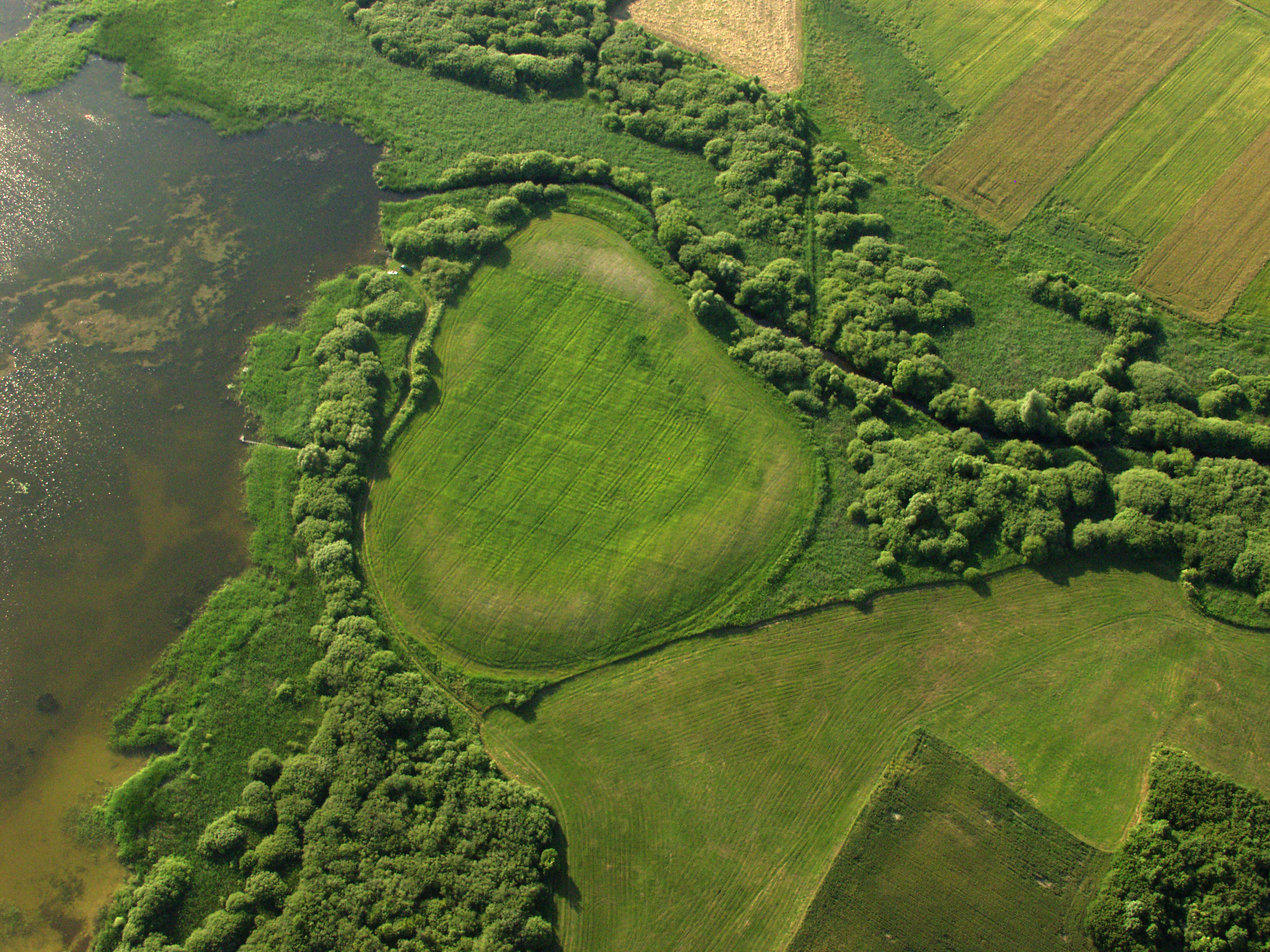
Figure 1: Aerial view of Smuszewo site 3, Polish pilot site of the TRIQUETRA project, by W. Rączkowski, Adam Mickiewicz University.
Figure 2: The TRIQUETRA project team at the National Institute of Cultural Heritage.
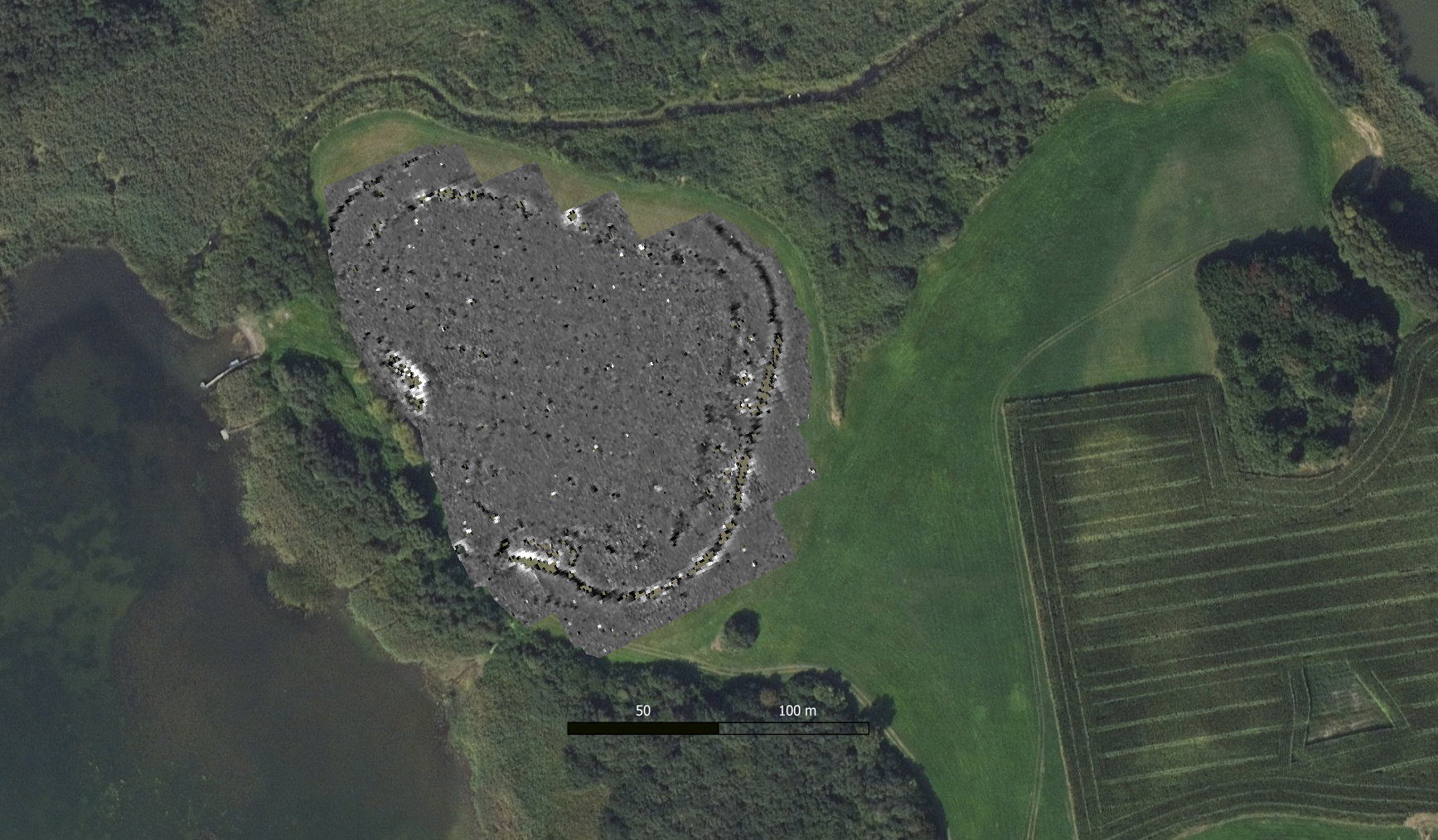
Figure 3: Anomalies detected by A. Harding in a gradiometer survey, indicating the spatial layout of Smuszewo site 3 settlement on the background of an aerial photograph (by W. Rączkowski, Adam Mickiewicz University, after Rączkowski et al. 2009, figure 8, p. 90).
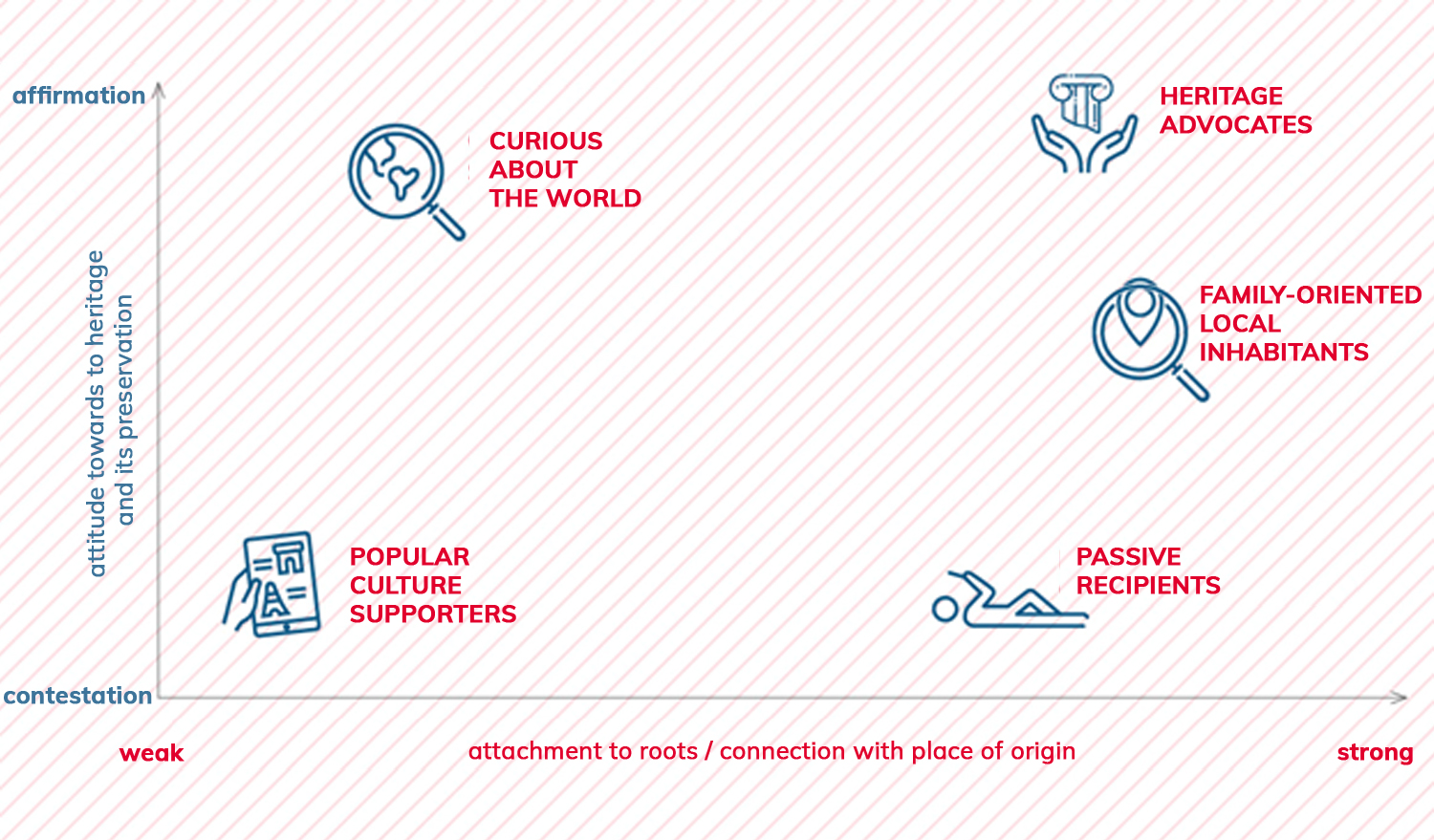
Figure 4: Groups of heritage recipients in Poland (aged 18+), determined in a survey from 2021 (Narodowy Instytut Dziedzictwa 2021, 2).
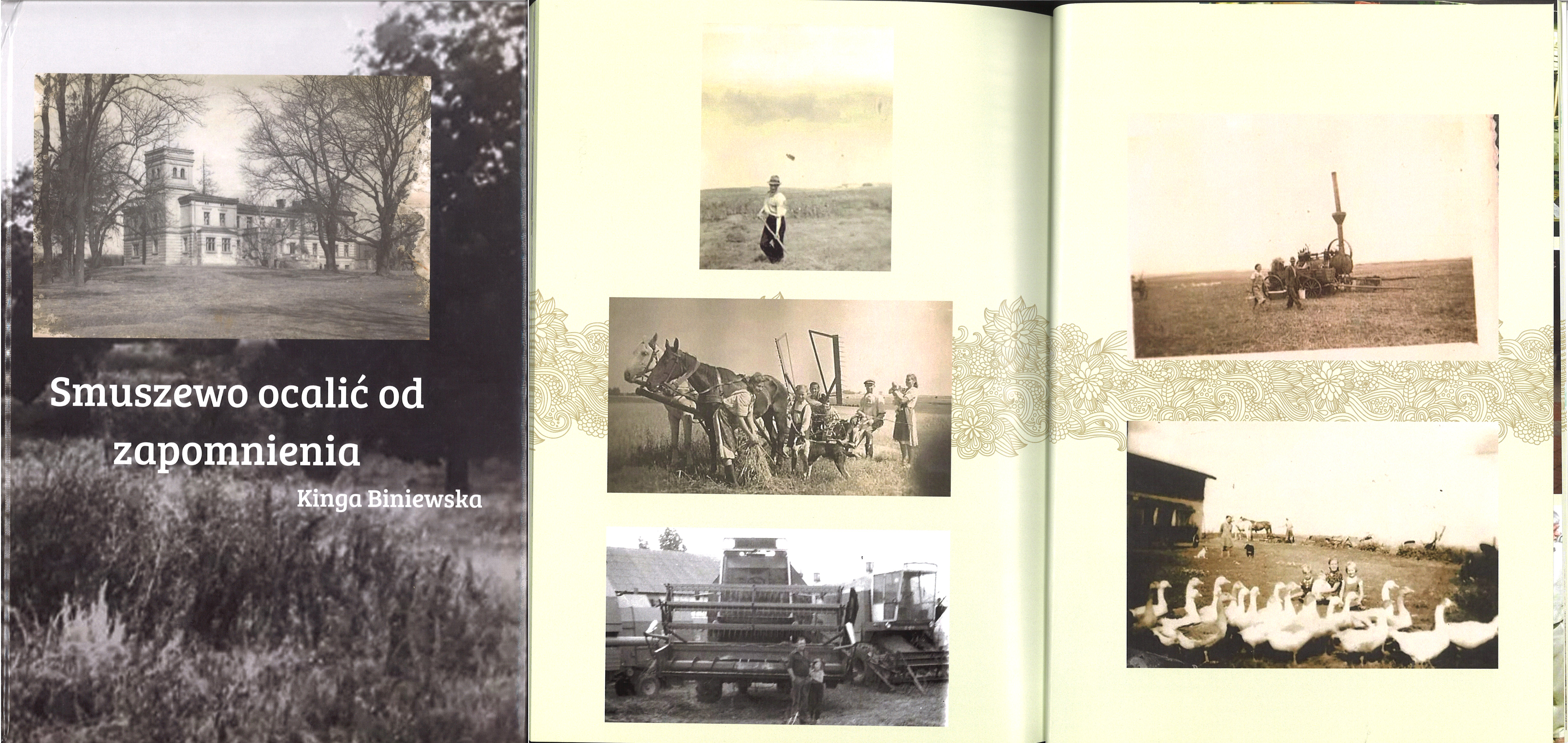
Figure 5: The cover and some pages of the self-published book ‘Smuszewo – save from oblivion’ by Kinga Biniewska. The book presents a photo archive of the inhabitants, as well as a history of the village and its families.
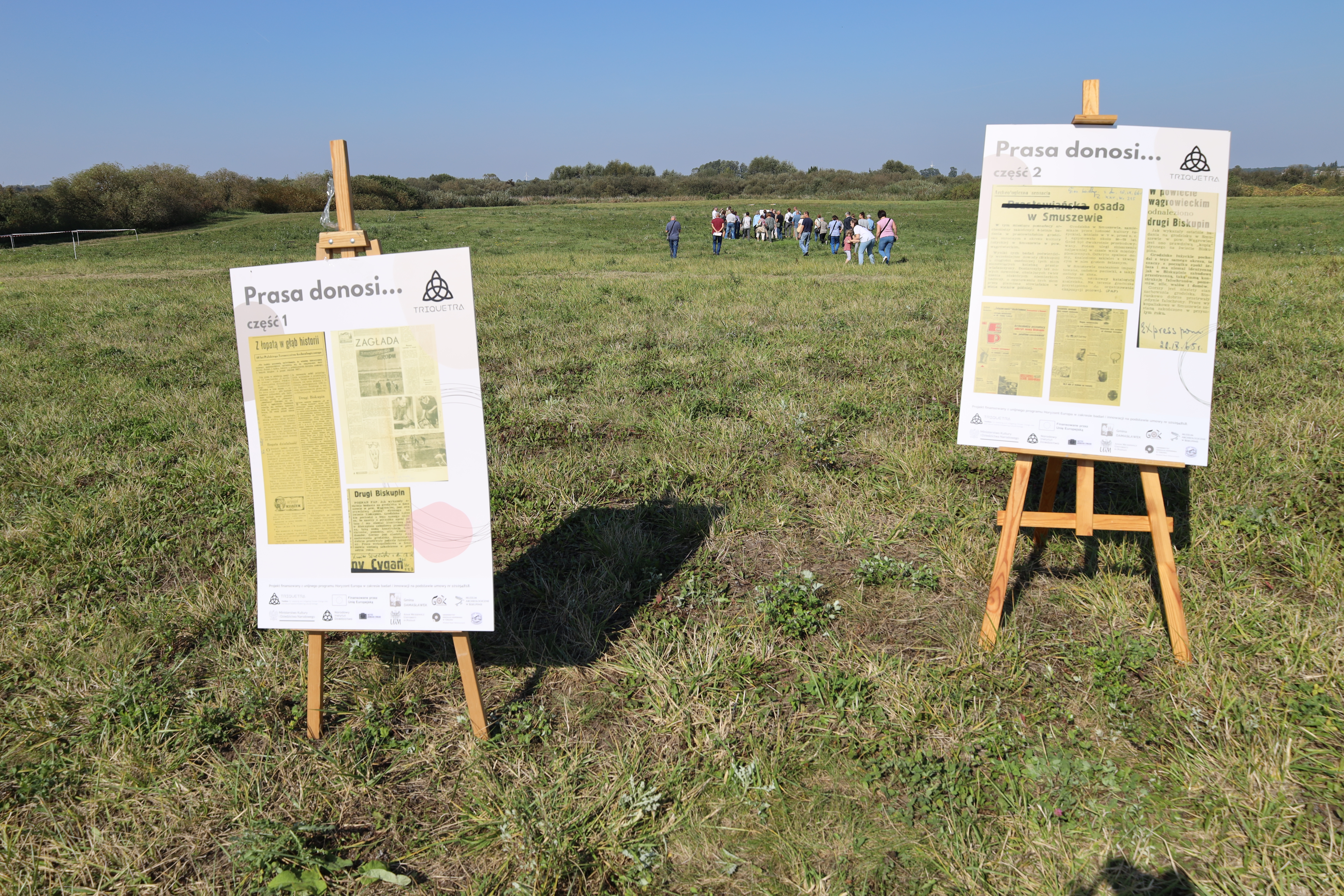
Figure 6: Posters with press articles on archaeological research in Smuszewo from the 1950s and 1960s at the archaeological picnic in 2024, based on the archives of the Archaeological Museum in Poznań, by A. Makowska, National Institute of Cultural Heritage (NID).
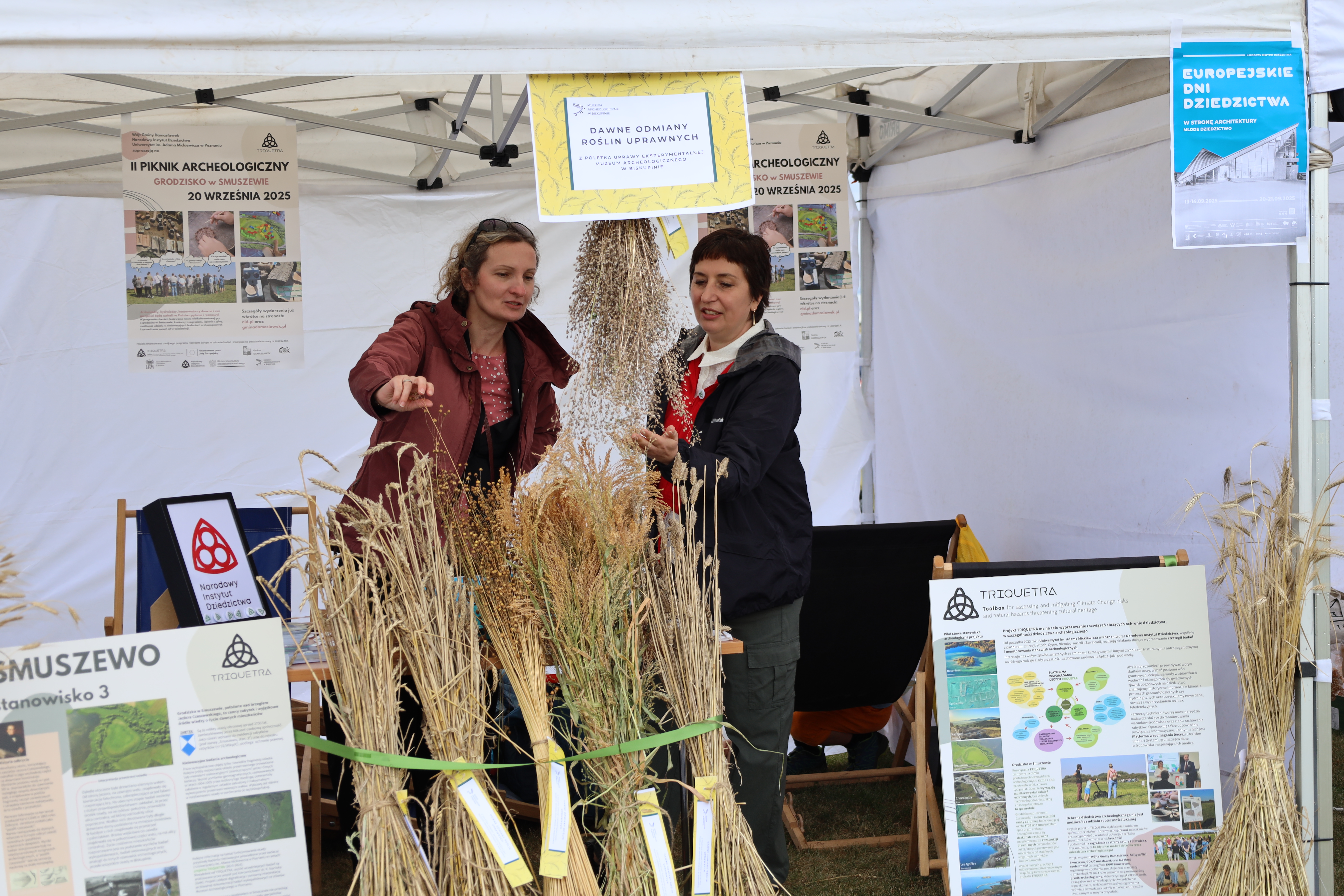
Figure 7: Agnieszka Makowska from National Institute of Cultural Heritage (NID) and Dr Lidia Żuk from Adam Mickiewicz University (AMU) in Poznań during the harvest festival in Damasławek, 2025, by W. Rączkowski, AMU.
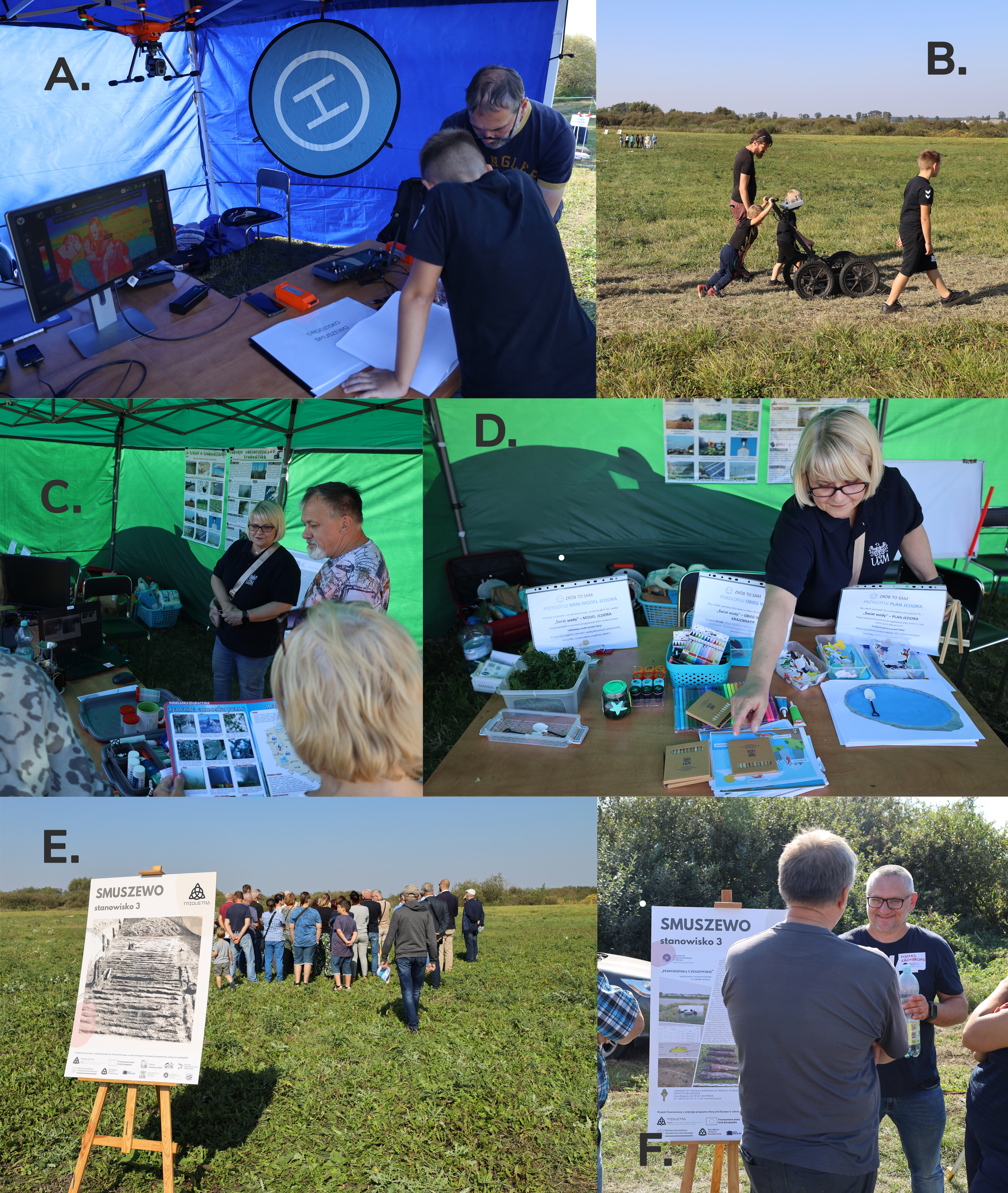
Figure 8: Snapshots from the archaeological picnic in Smuszewo in 2024: explaining remote sensing (A, B), hydrology for adults (C) and children (D), touring the Bronze Age settlement (E), underwater archaeology on one poster (F), by A. Makowska, National Institute of Cultural Heritage (NID). Researchers in the photos are (from top left): Dr hab. Sławomir Królewicz (Adam Mickiewicz University, AMU), Robert Ryndziewicz (IAiE PAN), Professor Dr hab. Renata Graf (AMU), Dr Lech Kaczmarek (AMU), Dr Ryszard Kaźmierczak (UMK).
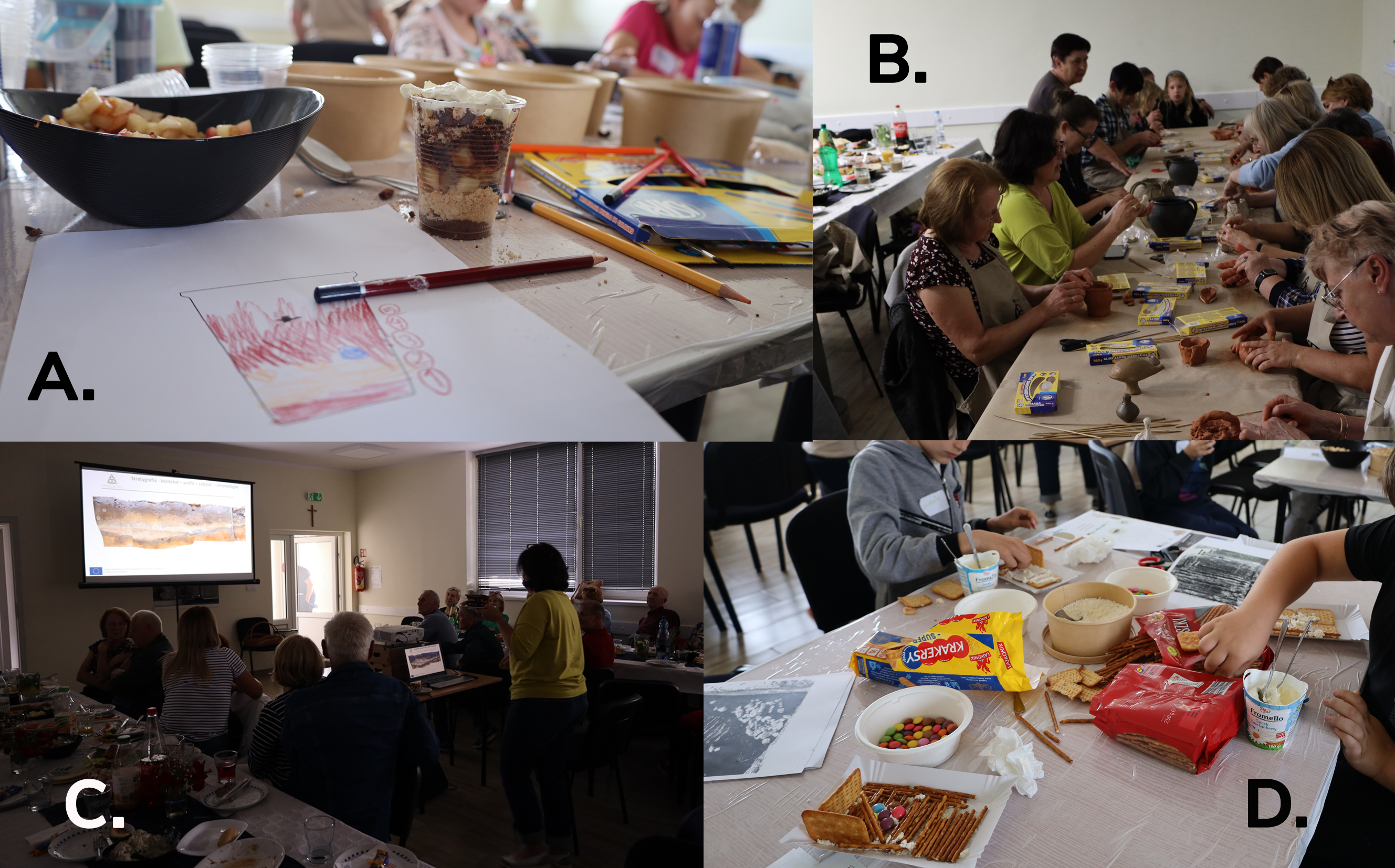
Figure 9: Snapshots from the workshops in Smuszewo in 2024: explaining stratigraphy with layered desserts (A) and cake (C), working side by side with the community (B), building Bronze Age structures with crackers and bread sticks (D), by A. Makowska, National Institute of Cultural Heritage (NID).
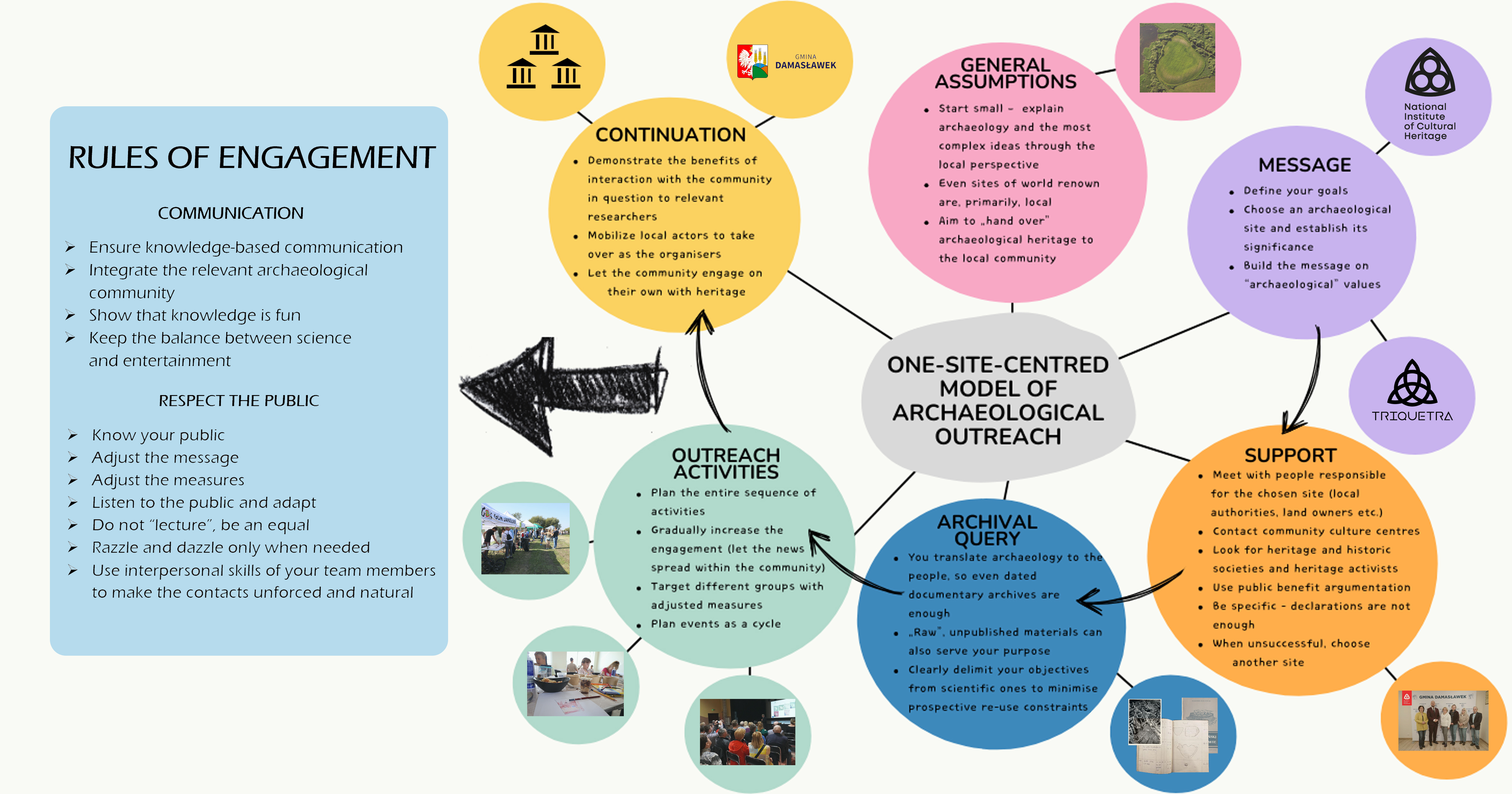
Figure 10: Summary of the proposed approach to local communities, by A. Oniszczuk.
Chudziak, W., Kaźmierczak, R. and Niegowski, J. 2011 Podwodne dziedzictwo archeologiczne Polski. Katalog stanowisk (badania 2006–2009), Toruń: Instytut Archeologii Uniwersytetu Mikołaja Kopernika.
Council of Europe 2005 Framework Convention on the Value of Cultural Heritage for Society, Council of Europe Treaty Series 199, Faro, 27.X.2005, Strasbourg: Council of Europe, CETS 199 - Council of Europe Framework Convention on the Value of Cultural Heritage for Society [Last accessed: 1 Jan 2026].
Durczewski, D. 1970 'Prasłowiański Gród w Smuszewie' in W. Błaszczyk (ed) Biblioteka Popularnonaukowa Muzeum Archeologicznego w Poznaniu nr 5, Poznań: Muzeum Archeologiczne w Poznaniu.
Dzięgielewski, K. 2017 'The rise and fall of Biskupin and its counterparts' in U. Bugaj (ed) The Past Societies. Polish Lands from the First Evidence of Human Presence to the Early Middle Ages. 3. 2000–500 BC, Warszawa: Institute of Archaeology and Ethnology, Polish Academy of Sciences. 341–366.
European Commission 2017 Special Eurobarometer 466. Report, Cultural Heritage, Brussels: European Commission. https://data.europa.eu/doi/10.2766/576064
European Commission 2024a Special Eurobarometer 557. European Citizens' Knowledge and Attitudes Towards Science and Technology, Brussels: European Commission.. https://data.europa.eu/doi/10.2777/6040908
European Commission 2024b Special Eurobarometer 562. Europeans' Attitudes Towards Culture, Brussels: European Commission. https://europa.eu/eurobarometer/surveys/detail/3364
Graf, R., Kaczmarek, L., Królewicz, S., Rączkowski, W. and Żuk, L. 2025 'Climate change and archaeological heritage: risk identification and monitoring of a lakeshore archaeological site in Smuszewo (Poland) - a case study', Italian Journal of Engineering Geology and Environment, Special Issue 1, 47–64. https://doi.org/10.4408/IJEGE.2025-01.S-04
Ioannidis, C. 2025 'The TRIQUETRA project', Italian Journal of Engineering Geology and Environment, Special Issue 1, 5–6. https://doi.org/10.4408/IJEGE.2025-01.S-ED
Narodowy Instytut Dziedzictwa 2021 'Podsumowanie badania „Segmentacja psychograficzna Polaków ze względu na ich postawy wobec dziedzictw', Wnioski i rekomendacje dla promotorów kultury i dziedzictwa, Warszawa: Narodowy Instytut Dziedzictwa. https://nid.pl/wp-content/uploads/2021/12/NID_infografika_Segmentacja-Polako%CC%81w-wobec-dziedzictwa_27.04.2021.pdf [Last accessed: 1 Jan 2026].
Poland 1990 'Ustawa z dnia 8 marca 1990 roku o samorządzie lokalnym'[Act of 8 March 1990 on local government, JoL 1990.16.95].
Rączkowski, W., Harding, A. and Ważny, T. 2009 'The date and internal organisation of Early Iron Age fortified sites in North-Western Poland: new results from geophysical survey and dendrochronological dating', Przegląd Archeologiczny 55, 39–71.
Internet Archaeology is an open access journal based in the Department of Archaeology, University of York. Except where otherwise noted, content from this work may be used under the terms of the Creative Commons Attribution 3.0 (CC BY) Unported licence, which permits unrestricted use, distribution, and reproduction in any medium, provided that attribution to the author(s), the title of the work, the Internet Archaeology journal and the relevant URL/DOI are given.
Terms and Conditions | Legal Statements | Privacy Policy | Cookies Policy | Citing Internet Archaeology
Internet Archaeology content is preserved for the long term with the Archaeology Data Service (ROR). Help sustain and support open access publication by donating to our Open Access Archaeology Fund.
 Home
Home