Cite this as: Oniszczuk, A., Makowska, A. and Novák, D. 2026 Life after Life of Archaeological Archives - Accessibility and Re-use of Archaeological Collections in Heritage Management: Introduction, Internet Archaeology 72. https://doi.org/10.11141/ia.72.2
In 2005, the Council of Europe Framework Convention on the Value of Cultural Heritage for Society (Faro Convention) stated that a prerequisite for cultural heritage is its recognition as a reflection and expression of the constantly evolving values, beliefs, knowledge and traditions of people (Council of Europe 2005, Art 2). Signatories of the Faro Convention decided to place people and human values, sometimes contradictory, at the heart of an enhanced interdisciplinary concept of cultural heritage. They recognised everyone's right to benefit from cultural heritage and to contribute towards its enrichment, while respecting the rights and freedoms of others. Respect for the heritage of others as part of the common heritage of Europe is henceforth an obligation. 'In return', the Convention gave people a voice to assign their own meanings and values to those remains of the past that they considered heritage. The Parties to the Convention were also convinced of the need to involve everyone in society in the ongoing process of defining and managing cultural heritage (Council of Europe 2005, preamble).
Ten years later, in the spirit of the said convention, the European Archaeological Council (EAC) set out on a mission to embed archaeology in the society. As stated in the Amersfoort Agenda (European Archaeological Council 2015, 16), heritage managers across Europe wanted to:
In order to fulfil its ambitious plan, the EAC's work in the following years concentrated around the broad topic of making choices, resulting in the publication of EAC Guidelines 3-11, tackling issues of significance, public benefit, research frameworks and archaeological archiving. Within the broader strategic context, an increasing number of parties have ratified the Faro Convention, and there has been a general increase in the attention given to cultural heritage and its potential. For example, from 2017 onwards, the European Heritage Strategy for the 21st Century – Culture and Cultural Heritage and related activities were undertaken (Strategy 21 2017), and, in 2018, the European Year of Cultural Heritage was celebrated.
2025 marked the 10th anniversary of the formulation of the Amersfoort Agenda and the 20th anniversary of the Faro Convention. Such a double jubilee called for some form of retrospective reflection on the current state of archaeological heritage management, with special attention given to archaeological archives: records and finds that will or at least should outlive the archaeologists of today.
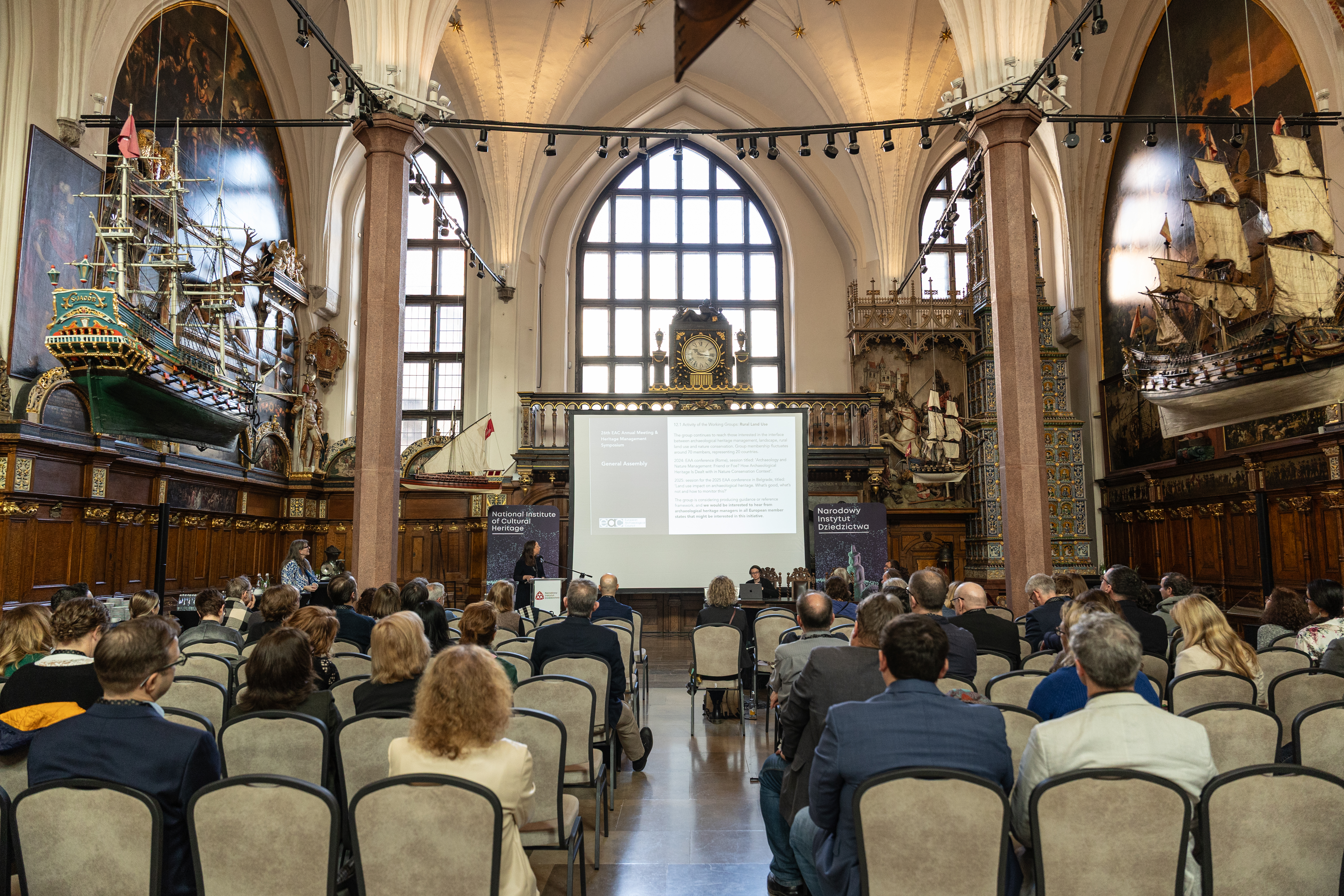
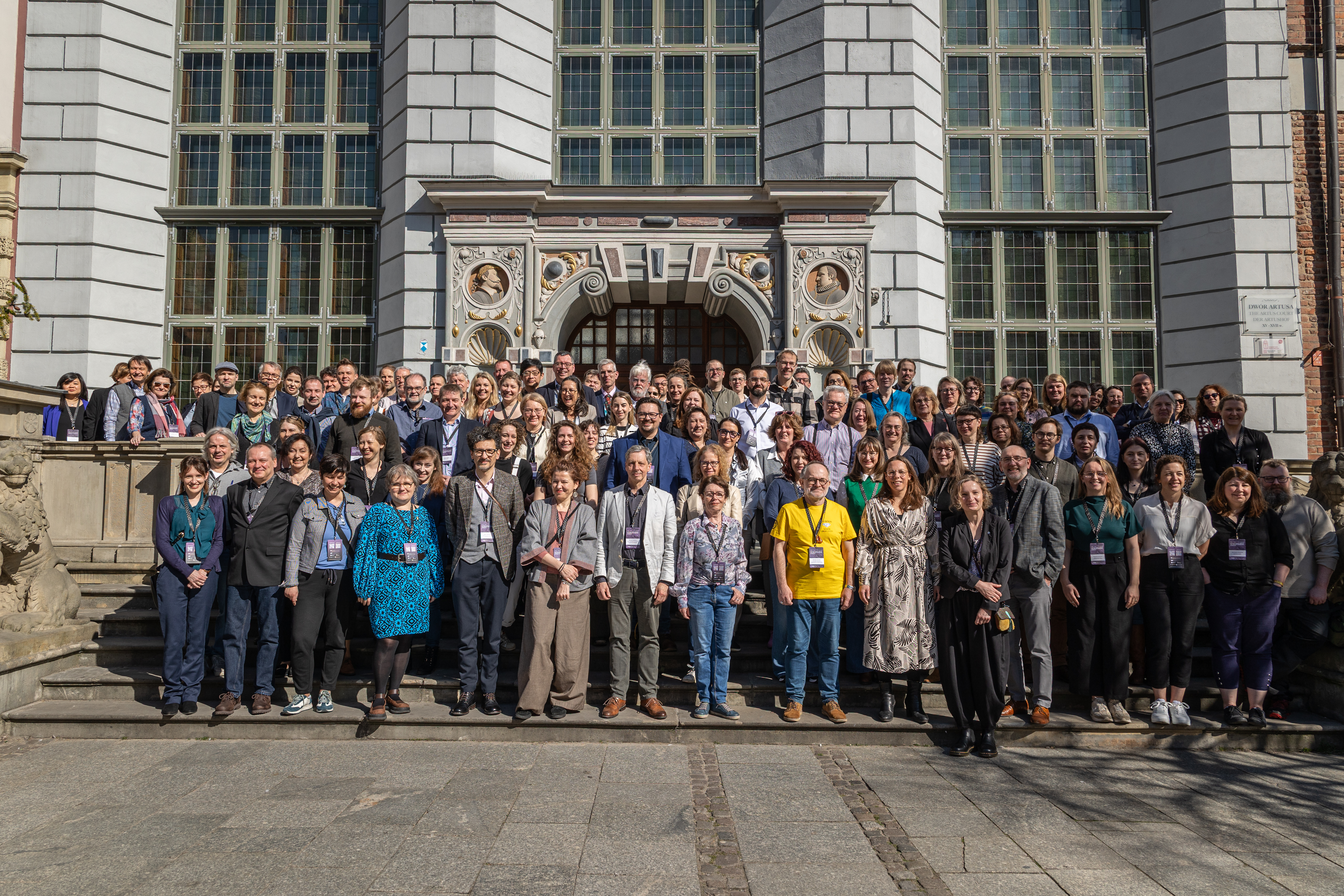
Papers published in this volume were presented during the 26th EAC Heritage Symposium held on 27–28 March 2025 in Gdańsk, Poland, where heritage managers gathered to discuss 'Life after life of archaeological archives – accessibility and re-use of archaeological collections in heritage management'. On a general level, the topics included the 'FAIRness' of archaeological data, the role of modern archaeological repositories, and the value of archaeological archives taking a wider perspective of science and innovation, medicine, education, health and well-being.
The past three decades have witnessed a significant shift towards digitalisation in the management of archaeological heritage. A number of initiatives and individual projects have been established with the objective of digitising, enhancing and sharing data. Since 2016, the FAIR principles have served as a gold standard for this endeavour. It is worth noting that ARIADNE RI and SEADDA represent two significant examples of projects addressing this issue on a large scale. A European overview of existing solutions provided during short interventions by the delegates and guests to the thematic session 'Archaeology and Artificial Intelligence' organised in 2021 by the Council of Europe's (CoE) Steering Committee for Culture, Heritage and Landscape, revealed a vast collection of geographical information system (GIS) database and archiving systems throughout Europe.
It is imperative that archaeological heritage data should be made FAIR: or is it? Do all the relevant stakeholders have an adequate understanding of the heritage assets that we possess, and where they can be found? Is there sufficient clarity and explicitness in the communication of the value of our archives? To what extent can archaeological data and systems be made understandable, interesting and user-friendly for the general public, not just for heritage professionals and developers? How can we ensure and measure user satisfaction with the product? How can we ascertain the extent of our digital success, and what novel methodologies can be employed to enhance it? Are our digital solutions sustainable?
In order to address these pressing questions and challenges, this issue presents three articles that tackle digital heritage from different perspectives. The first, by Yiu-Kang Hsu and Rorie Edmunds, introduces the concept of using persistent identifiers (PIDs) with prescribed metadata profiles to describe and identify archaeological material and sites, a fundamental aspect of FAIRness. They demonstrate the implementation of the IGSN PID scheme, supported by DataCite, using a case study rooted in the work of the Deutsches Bergbau-Museum Bochum. Their contribution is also valuable because they provide a thorough description of the principles of using PIDs and their potential impact on archaeological practice. The second article, written by Jonas Abele, Anna-Marie Dürr, Steffen Berger and Marco Schrickel, focuses on practical data management within institutions responsible for archiving fieldwork data at a state level. The State Office for Cultural Heritage Baden-Württemberg has a long tradition of exploring systemic frameworks to facilitate data standardisation and handling for long-term preservation. While not directly related to FAIR principles, the article illustrates the complex workflows within institutions that provide the necessary digital infrastructure. It also highlights the value of clear guidelines and documentation of processes to ensure that provenance information is available in accordance with best practice. The following contribution from Manda Foster and Jen Parker Wooding present a comprehensive package designed to promote FAIRness and effective data management planning. They introduce the Dig Digital project, an initiative that has been running in England for the last 10 years. This allows us to see the interesting, reusable materials that the project produced, as well as all the steps involved, from analysing the situation and providing measures and recommendations to field units on how to move forward, to evaluating what has proved successful and why. This example, which is worth following, shows the true length and complexity involved in introducing new practices for managing digital data and appraising the FAIR principles.
Overall, the contributions demonstrate the wide range of topics that the digital transition has brought to archaeological archiving, which are difficult to address without sustained and systemic specialist support for the current research and heritage community.
EAC guidance thus far has been concerned with archaeological projects that conclude with the transfer of properly prepared and studied archives to permanent storage facilities. Archaeologists are advised to collaborate with curators from selected repositories, and the necessity of ensuring access to the gathered materials is emphasised. However, the role of repositories as modern archaeological institutions has not been sufficiently addressed. Should they and do they have enough capacity to reach the public outside the archaeological sector, either directly or through collaboration with museums and other organisations specialising in outreach activities? How can repositories contribute to the integration of archaeology into society: specifically, how can they facilitate access without compromising the heritage in their care? In what way can archaeological repositories most effectively be used to highlight the participatory potential of archaeology? How can the sometimes contradictory needs of different heritage communities be accommodated in the use of archaeological collections?
Three contributions within this theme begin to address the above questions. Rachel Barrett from National Monuments Service Ireland takes us behind the scenes, describing the amount of work needed to make the 'analogue' documentary archives digitally accessible. The complexity of tasks related to the varied item types accepted by the archive ranges from the initial assessment, through annotation and conservation, to digitisation and sharing the archives. The article points at the tensions arising from the growing demand for access and the understaffing or, more generally, underfinancing of archiving institutions. Peter McKeague, using the example of Scottish maritime heritage, illustrates the diversity of available sources that are being brought together, and related challenges and emerging opportunities. Interoperable archaeological archives, properly linked to other digital resources, can enhance public engagement and enrich the entire maritime community. Lien Lombaert, Lieselotte Desnerck, Clémence Marchal, Daan Heynderickx and Stani Vandecatsye from Flanders tackle the public-oriented functions of repositories, with a focus on the Ename Heritage Site. They propose specific measures, aided by archaeological depots that can become active agents of public engagement, education and inclusive heritage care.
In summary, these three contributions illustrate the subsequent phases of archives' lifecycles in permanent curation, i.e. enabling access, exploring opportunities, and taking action.
Engaging the wider public with the re-use of archaeological archives should not be focused solely on studying the past. The report entitled The Benefits of Development-led Archaeology (EAC Guidelines 4;) lists several substantial public benefits that can be achieved and maximised through careful consideration and planning. The value of archaeology as a source of knowledge lies also in its potential to contribute to the development of other disciplines. Questions concerning the use of archaeological archives beyond archaeology were addressed to the speakers invited to session 3. How can we use archaeological archives for science and innovation? In what ways can archaeological archives be used for medicine, education, health and well-being, etc?
Barney Sloane's contribution from Historic England demonstrates how materials and samples gathered during excavations can contribute to studies in other research areas, and how this knowledge dividend can be unleashed to create tangible public benefit. It presents some incredible case studies that demonstrate what has already been achieved and what could be possible in the near future with the right collaborations. The focus of many examples is the study of ancient DNA extracted from organic material within archaeological collections, but not just that. Agnieszka Oniszczuk demonstrates how significant public benefits can be realised on a local scale through the use of archaeological archives, as well as the value of interpreting heritage and archaeology issues from a local perspective. This article proposes a community outreach model based on using one chosen site as a focal point for all activities. In this model, archaeologists act as translators and intermediaries between archives and the community, among other roles. Paulina Florjanowicz shows that archaeological archives are a key source of knowledge, shedding light not only on prehistory, but also on the evolution of archaeology as a discipline, its institutionalisation, and its management over time. The article illustrates how the history of archaeological policy can be analysed, and archival documents and past decisions critically assessed, to help improve current approaches, ensuring a more sustainable role is played by archaeology in society. In contrast, Jiří Unger, Dalibor Dzurilla, Martin Košťál and Jiří Košta remind us that archaeological archives and repositories contain many fascinating stories about our past. These stories are well known within academia but are largely unknown to the public. Three-dimensional (3D) computer reconstructions now play a key role in making the past accessible. But how can uncertainty — such as temporal or spatial gaps, missing data and interpretive bias — be visualised in ways that are comprehensible to diverse audiences? This article aims to define a practical and conceptual framework for 3D archaeological storytelling that balances scientific transparency and public communication.
The 2025 EAC Symposium was also a place to think about the future priorities of the association. During the workshop session, the attendees had an opportunity to develop the most recurrent topics collected a year before at the 25th EAC symposium in Brussels. A summary of these discussions by Jenni Butterworth, supplemented with comments from the Board, opens this volume.
An exceptionally high attendance at the Gdańsk symposium demonstrated how the multifaceted topic of archaeological archives is dear to the hearts of archaeological heritage managers. The scientific coordinators would therefore like to use this opportunity to thank all the speakers for their engagement and substantive input, bringing inspiration to the archaeological sector throughout Europe.
Abele, J., Dürr, A-M., Berger, S. and Schrickel, M. 2026 'Digital Archaeological Primary Documentation Data in Baden-Württemberg (Germany). The LAD-BW's Path from Standards to Archives', Internet Archaeology 72. https://doi.org/10.11141/ia.72.5
Barrett, R. 2026 'The Continued Lifecycle of Archaeological Archives in Ireland', Internet Archaeology 72. https://doi.org/10.11141/ia.72.8
Butterworth, J. 2026 'The EAC at 25: Looking Forward', Internet Archaeology 72. https://doi.org/10.11141/ia.72.3
Council of Europe 2005 Council of Europe Framework Convention on the Value of Cultural Heritage for Society, Faro, 27.X.2005, Council of Europe Treaty Series - No. 199. https://rm.coe.int/1680083746
European Archaeological Council (EAC) 2015 'Amersfoort Agenda – Setting the agenda for the future of archaeological heritage management in Europe' in Schut, P.A.C., Scharff, D. and de Wit, L.C. (eds) EAC Heritage Management Symposium: Setting the Agenda: Giving New Meaning to the European Archaeological Heritage, EAC Occasional Paper 10, Budapest: Archaeolingua. https://doi.org/10.5281/zenodo.10686954
Florjanowicz, P. 2026 'Looking Back to Move Forward – The Benefits of Researching Archaeological Archives for Policy Making Today', Internet Archaeology 72. https://doi.org/10.11141/ia.72.12
Forster, M. and Parker Wooding, J, 2026 'Work Digital, Think Archive, Create Access: Exploring The Legacy Of The Dig Digital Project', Internet Archaeology 72. https://doi.org/10.11141/ia.72.6
Hsu, Y-K. and Edmunds, R. 2026 'Persistent Identifiers: Towards the FAIRness of Archaeological Samples for Scientific Analysis', Internet Archaeology 72. https://doi.org/10.11141/ia.72.4
Lombaert, L., Desnerck, L., Marchal, C., Heynderickx, D. and Vandecatsye, S. 2026 'Chalking the Past: Participatory Archaeology Embedded in Community', Internet Archaeology 72. https://doi.org/10.11141/ia.72.9
McKeague, P. 2026 'The Maritime Record in Scotland from Recording to Presentation', Internet Archaeology 72. https://doi.org/10.11141/ia.72.7
Oniszczuk, A. 2026 'Pick One – A Model of a Site-Centred Approach to Community Integration Around Local Heritage', Internet Archaeology 72. https://doi.org/10.11141/ia.72.10
Sloane, B., Degraeve, A., Farrugia, K. et al. 2024 The Benefits of Development-led Archaeology (EAC Guidelines 4), Brussels: Europae Archaeologiae Consilium (European Archaeological Council). https://zenodo.org/records/10696765
Sloane, B. 2026 'Legacy and Springboard: The Untapped Potential of Archaeological Archives for Scientific Innovation', Internet Archaeology 72. https://doi.org/10.11141/ia.72.11
Strategy 21 2017 Recommendation CM/Rec(2017)1 to member States on the 'European Cultural Heritage Strategy for the 21st century'. https://www.coe.int/en/web/culture-and-heritage/strategy-21
Unger, J., Dzurilla, D., Košťál, M. and Košta, J. 2026 'Breathing Life into Archaeological Archives: Crafting Compelling Narratives with 3D Digital Storytelling', Internet Archaeology 72. https://doi.org/10.11141/ia.72.13
Corresponding author: Agnieszka Oniszczuk
[email protected]
Narodowy Instytut Dziedzictwa (National Institute of Cultural Heritage)
Agnieszka Makowska
[email protected]
Narodowy Instytut Dziedzictwa (National Institute of Cultural Heritage)
David Novák
[email protected]
Institute of Archaeology of the Czech Academy of Sciences, Prague
Internet Archaeology is an open access journal based in the Department of Archaeology, University of York. Except where otherwise noted, content from this work may be used under the terms of the Creative Commons Attribution 3.0 (CC BY) Unported licence, which permits unrestricted use, distribution, and reproduction in any medium, provided that attribution to the author(s), the title of the work, the Internet Archaeology journal and the relevant URL/DOI are given.
Terms and Conditions | Legal Statements | Privacy Policy | Cookies Policy | Citing Internet Archaeology
Internet Archaeology content is preserved for the long term with the Archaeology Data Service (ROR). Help sustain and support open access publication by donating to our Open Access Archaeology Fund.
 Home
Home