Mini journal logo  Home Summary Issue Contents

Archaeological Excavations at the North Annexe, York Guildhall

Benjamin Savine with contributions from Stacey Adams, Lindsay Banfield, H.E.M. Cool, Paul Flintoft, Elizabeth Foulds, David G. Griffiths, Anne Jenner, Steve Malone, Jane M. McComish, Kris Poole, Ian Riddler, Hannah Russ and Carina Summerfield-Hill. Illustrations by Briannie Price, Ben Savine, Jane McComish and Lesley Collett

Chapter 4: The Augustinian Friary (Periods 7 and 8)

Cite this as: Savine, B. et al. 2026 Archaeological Excavations at the North Annexe, York Guildhall, Internet Archaeology 71. https://doi.org/10.11141/ia.71.10

Phase 26 | Phase 27 | Phases 28-29 | Phase 30 | Phase 31 | Phases 32-33 | Phases 34-35


An Augustinian friary is known to have been established on the site by at least 1272. Evidence for this can be seen in an intensification of activity during mid-13th to mid-14th century, including landscaping, organised refuse disposal and construction of a building incorporating a large hearth in Excavation Area 1.

4.1 Period 7: Mid-13th to mid-14th century activity (Phase 26)

After the P24 mortar surface in Trench 3 fell out of use a significant elevation to the ground level above occurred. That activity extended south-west to the periphery of Trench 4 (Figure 39).
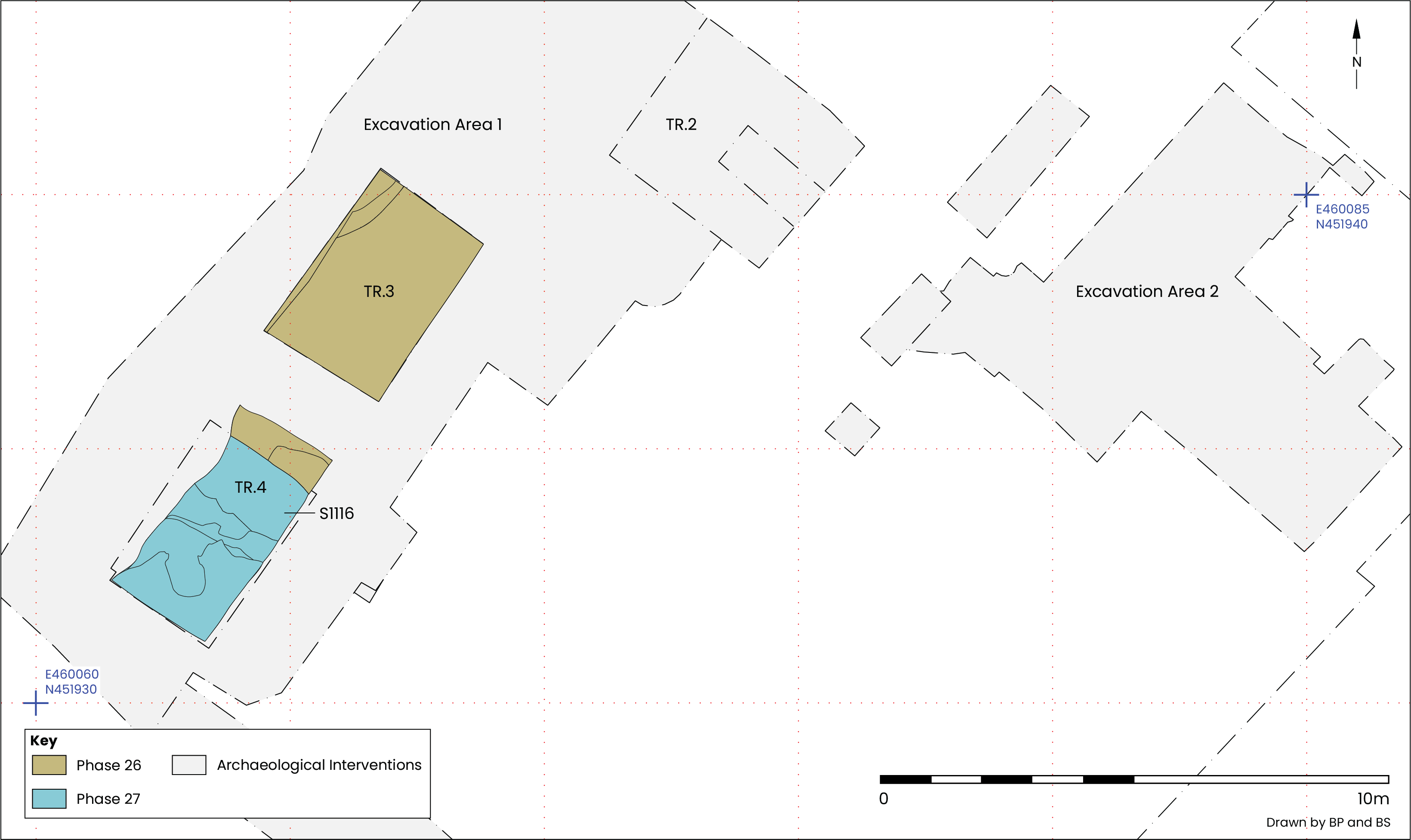
Figure 39: Period 7. Phases 26 and 27, mid-13th to mid-14th century build-up in Excavation Area 1
Figure 39

Phase 26 (P26): Build-up and pit digging at south-west end of Excavation Area 1 (G147–48, G193)

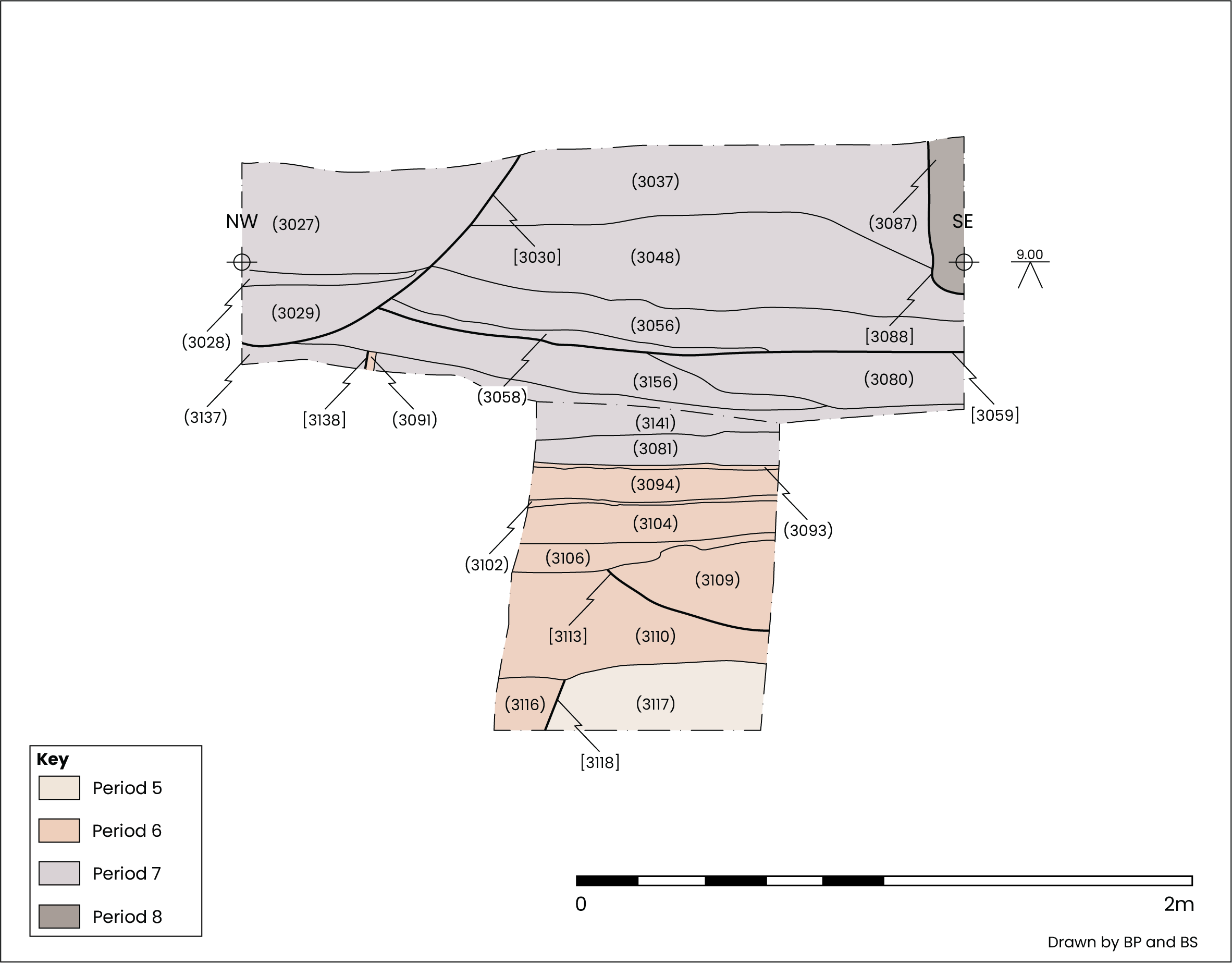
Overlying the trampled material in G146 (P24) and extending to 8.71m AOD were levelling deposits C3081 and C3141 (Figure 31). These comprised mid-orange brown sandy clays containing frequent cobbles and mortar flecks, with pottery dating to the mid-13th to mid-15th century present in C3081 (Figure 40).
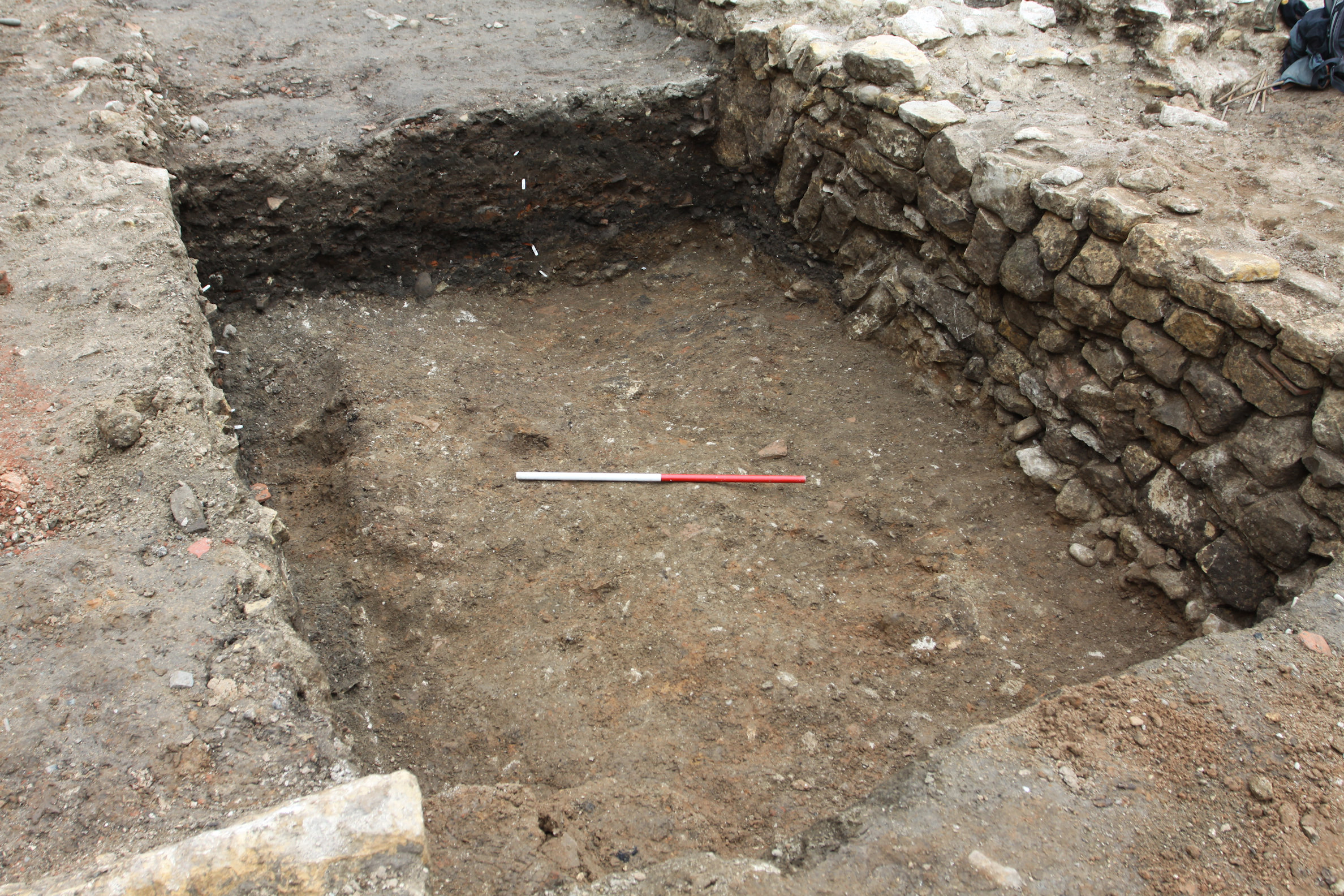
Figure 40: Build-up in Trench 3, C3081, Phase 26. Facing north-east, 0.5m scale units
Figure 40

Running along the full length of the north-western side of Trench 3 and cutting into a possible mortar surface C3091 (G146), was feature cut C3138. Only a narrow strip of this feature extended into Trench 3, making it difficult to interpret, but it could have been a robber cut for removing a wall up against which the mortar surface (C3091) had been laid.

A considerable rise in ground level then took place across the south-western end of Excavation Area 1, to around 9.15m AOD (Figure 41). Dumps and pits as far up as C3048, which contained domestic refuse and CBM, extended across the whole of Trench 3; some were clearly equivalent to deposits 1.43m to the south-west, along the edge of Trench 4, for example C3078. Pottery recovered from the lower deposits in this sequence dated to the 13th–15th century, while 12th–13th century pottery was recovered from stratigraphically later deposits. The latest feature attributed to this phase was a pit in Trench 4. The backfill (C3076; G148) contained early 13th to mid-14th century pottery.
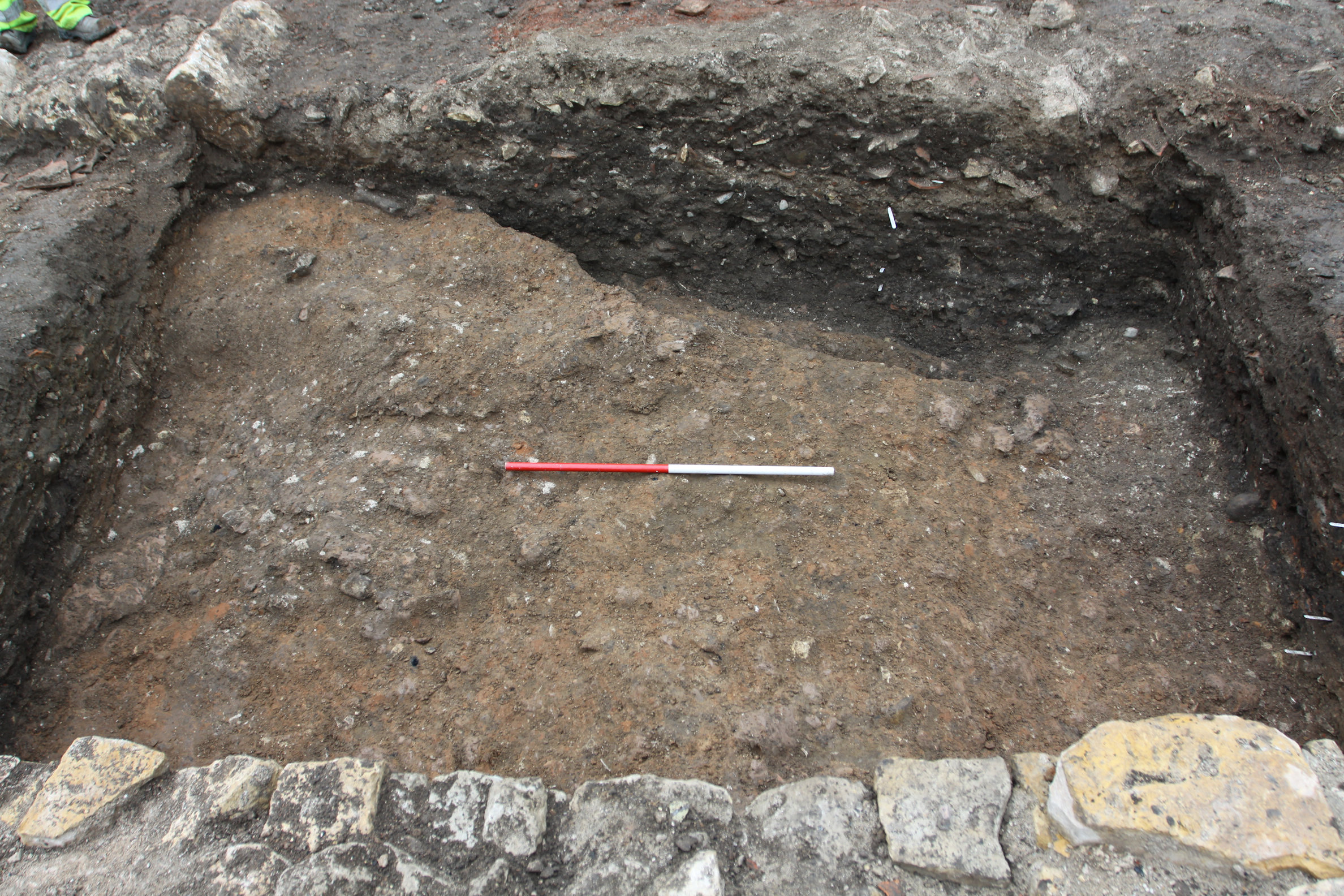
Figure 41: Build-up in Trench 3, C3081, Phase 26. Facing north-west, 0.5m scale units
Figure 41

Truncating the G148 pit was a probable wall robber cut (C3085; G150) relating to the demolition of a structure found in Trench 4, described below (see Phase 27). Pottery found in that feature provided a mid-13th to mid-14th century spot date, tightening the date range for the P26 activity to no later than the mid-14th century.

4.2 Period 7: Mid-13th to mid-14th century edge set tile hearth and associated structural remains (Phase 27)

Occupying a large part of Trench 4 was an edge-set tile surface (Figure 39), a construction form typical for medieval hearths. Exposure to sustained direct heat was also evident.

Phase 27 (P27): Hearth construction, use and demolition (G149–50)

The first component of the hearth comprised limestone fragments bedded into orange-pink clay (C3114), set into a slightly deeper part of the construction cut measuring 1.52m north-west/south-east by 1.04m north-east/south-west. Intense heat appears to have been centred above, fracturing the stone and causing scorching to radiate further out (Figure 42). Fragments of 13th century pottery and 14th–16th century CBM were recovered.
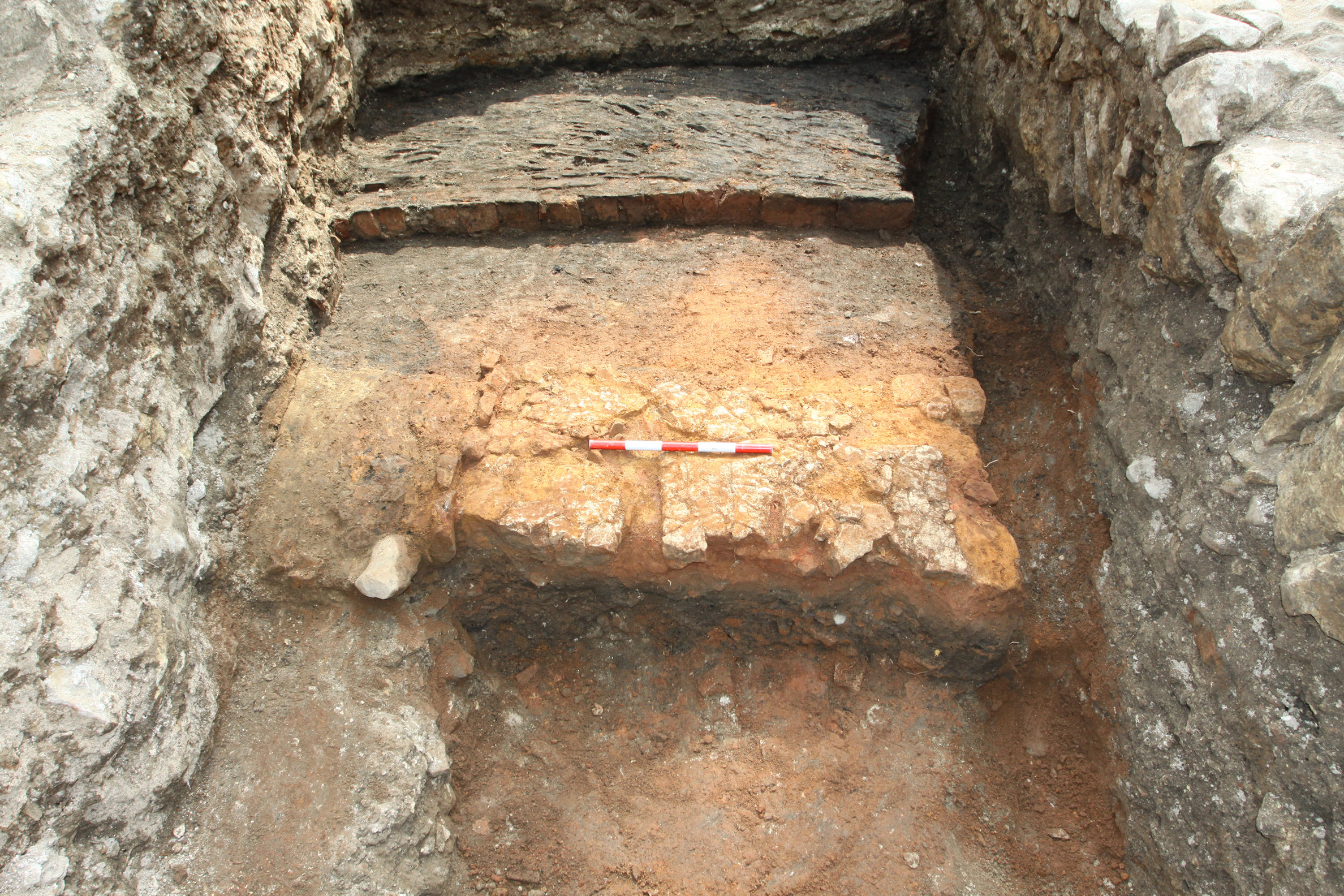
Figure 42: Heat fractured limestone C3114, Phase 27. Facing south-west, 0.1m scale units
Figure 42

Above the limestone was an edge-set tile surface measuring 2.51m north-east/south-west by 2.19m north-west/south-east at a height generally around 8.4m AOD but rising to 8.52m AOD in the eastern corner. The tiles dated to the 13th–16th century and a few sherds of mid-13th to mid-14th century pottery were also present. The surface continued beyond the south-western end of the trench, was truncated by a later wall to the north-west and a linear cut to the north-east and was then either cut or overlain by a later wall to the south-east. No other structural elements were found, but the layout maintained the same alignment established by earlier activity.

Two distinct areas of tiling were identified (Figure 43). To the north-east, directly above the limestone, was C3107. Here the tiles were mostly aligned north-east/south-west and scorching was apparent on the surface. Close to the eastern corner was an area, approximately 0.3m², where tiles had been set into a square pattern, possibly as part of a repair or a socket designed to hold a component of a surrounding or associated structure. To the south-west the tiles (C3099) continued at the same height but were arranged perpendicular to those in C3107. Although some burnt debris covered this part of the surface there was no scorching.
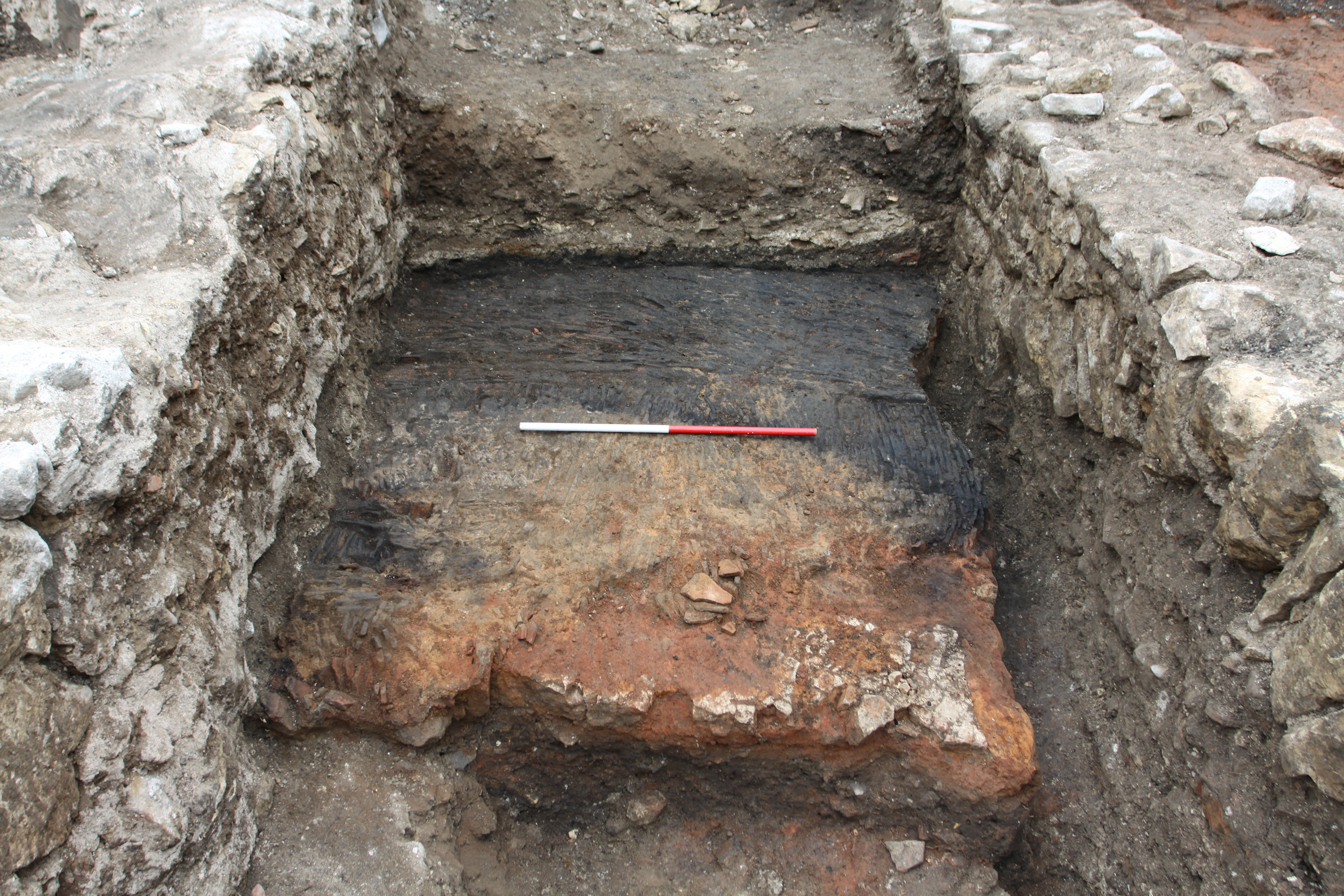
Figure 43: Edge set tile hearth C3099 and C3107, Phase 27. Facing south-west, 0.5m scale units
Figure 43

The hearth appears to have been well maintained and kept clean; only a thin friable, dark grey-black, silty clay containing frequent flecks and fragments of charcoal covered the surfaces. This deposit (C3098) was probably residue from the last use of the hearth.

Little evidence for demolition of the structure around the hearth was present, however, a thin layer of mortar (C3096), dating to the mid-14th to mid-15th century and perhaps derived from demolition activity, covered C3098, and a possible robber cut situated along the north-eastern edge of the hearth may have removed a wall there. This linear feature (S1116) extended the full width of Trench 4 on a north-west/south-east alignment and measured 1.37m across and 0.77m deep (Figure 39). Mid-13th to mid-14th century pottery was recovered from the fill.

The scale of the building that stood in Trench 4 during the 13th and 14th centuries is demonstrated by the size of the hearth and robber cut along its north-eastern edge, while some indication of its setting is provided by the 0.75m step down in height from the ground immediately to the north-east and the comparatively low level the hearth was present at. Construction of the building represents the first large-scale medieval occupational presence on the site. It appears to have been built no earlier than the mid-13th century and to have remained in use up until the mid-14th century, its dates corresponding with the establishment of the Augustinian friary (VCH 1961, 361).

4.3 Period 7: Landscaping and refuse disposal in Excavation Area 1 (Phases 28–29)

Following demolition of the building in Trench 4 the ground level was raised, bringing it closer to that in Trench 3. Landscaping activity was then followed by the digging of large refuse pits.

Phase 28 (P28): Dumping and levelling at south-west end of Excavation Area 1 (G151, G194)

At up to 0.4m thick C3070 was the most substantial of the levelling deposits in Trench 4 (Figure 44). It comprised friable, light brown, silty sand. No datable material was recovered from C3070 but late 11th to mid-12th century pottery and 13th–16th century CBM was present in subsequent levelling deposits (C3068 and C3074). The levelling activity increased the ground level in Trench 4 by around 0.65m to 9.12m AOD.
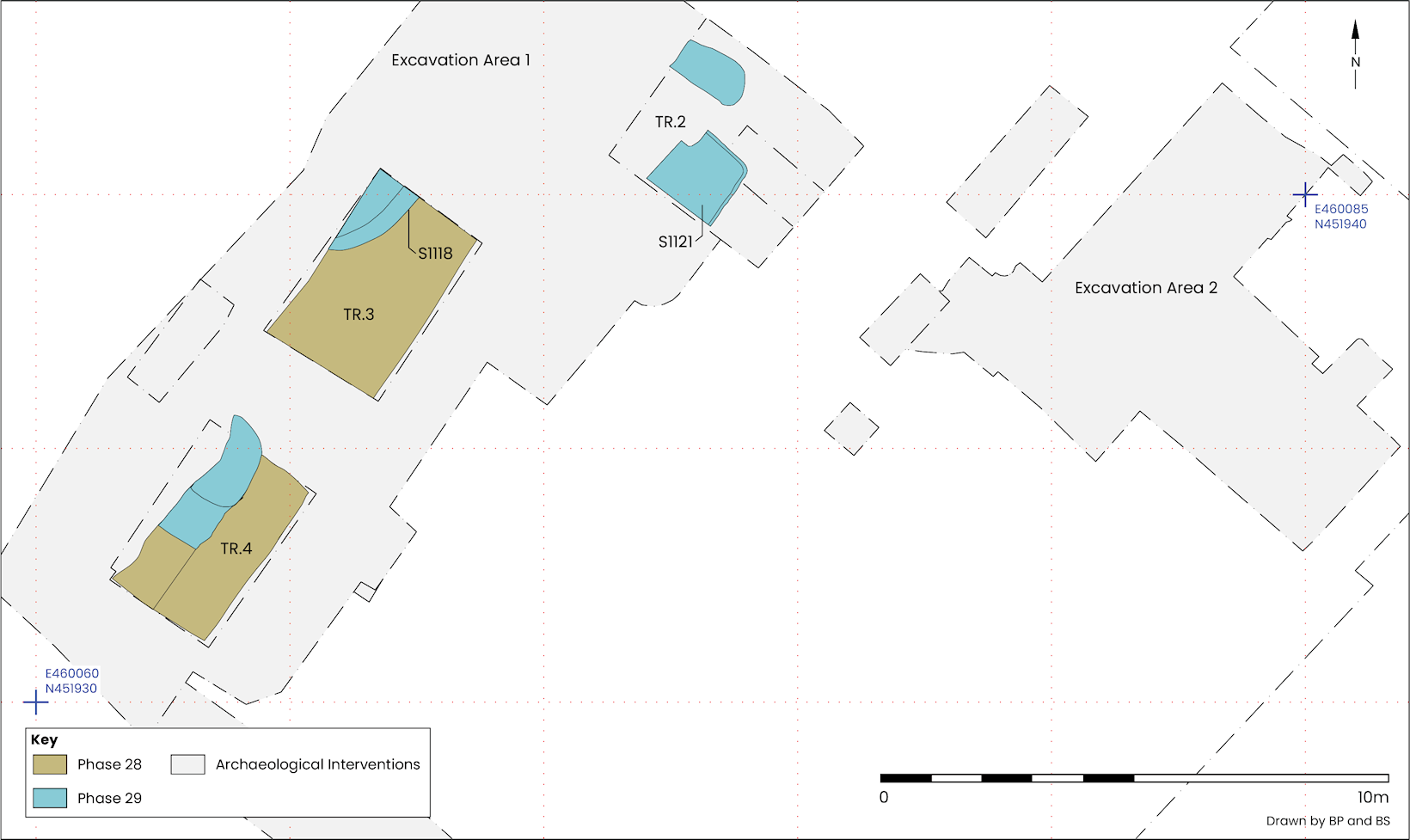
Figure 44: Period 7. Phases 28 and 29, landscaping and refuse disposal in Excavation Area 1
Figure 44

Similar friable brown sandy silts were also present across all of Trench 3 (Figure 39). Here C3037 extended to 9.3m AOD (Figure 31) and some 12th to mid-14th century pottery was recovered from it, together with a large volume of Roman pottery.

Considerable elevation of the ground level across the south-western end of Excavation Area 1 followed the demolition of the P27 building in Trench 4. The friable character of the levelling material suggests that it was deposited reasonably rapidly with little regard taken to compacting it well. In addition, the landscaping activity appears to have been extensive, measuring at least 9.63m north-east/south-west and, given the volume of residual artefacts present, included either material imported from elsewhere in the town or excavated from some depth from another part of the site. Digging building foundations could generate large quantities of material, however this kind of activity does not appear to have immediately followed in this part of the friary precinct.

Phase 29 (P29): Refuse disposal (G152)

Large refuse pits (five in total) were found in each of the trenches in Excavation Area 1, across an area nearly measuring 14m north-east/south-west. Pottery recovered from all of the pits provides a mid-13th to mid-14th century spot date, and was present alongside significant quantities of earlier artefacts, largely Roman pottery but also two Roman coins (SF37 and SF38) and a William I silver penny (SF41) minted at Canterbury in 1080–3 (see section 6.12; Table 33), which was found in the primary fill of pit S1118 (C3029) in Trench 3 (Figure 31, Figure 39 and Figure 44).

Of particular interest was pit S1121. This feature measured 1.5m by 1.5m and was at least 0.8m deep, although it was truncated to the north-west and south-west and the base was below the extent of excavation in this part of Trench 2 (Figure 46). The upper backfill (C3052) contained a vast quantity (774 sherds) of Splashed ware pitcher fragments. Many were wasters with some displaying glaze over the edges, as well as over-firing, glaze slag and fusing between vessels. An unusually large group of curved and flanged tile, accounting for nearly 21% of the assemblage of this type, was also present in C3052 and included many large sherds.
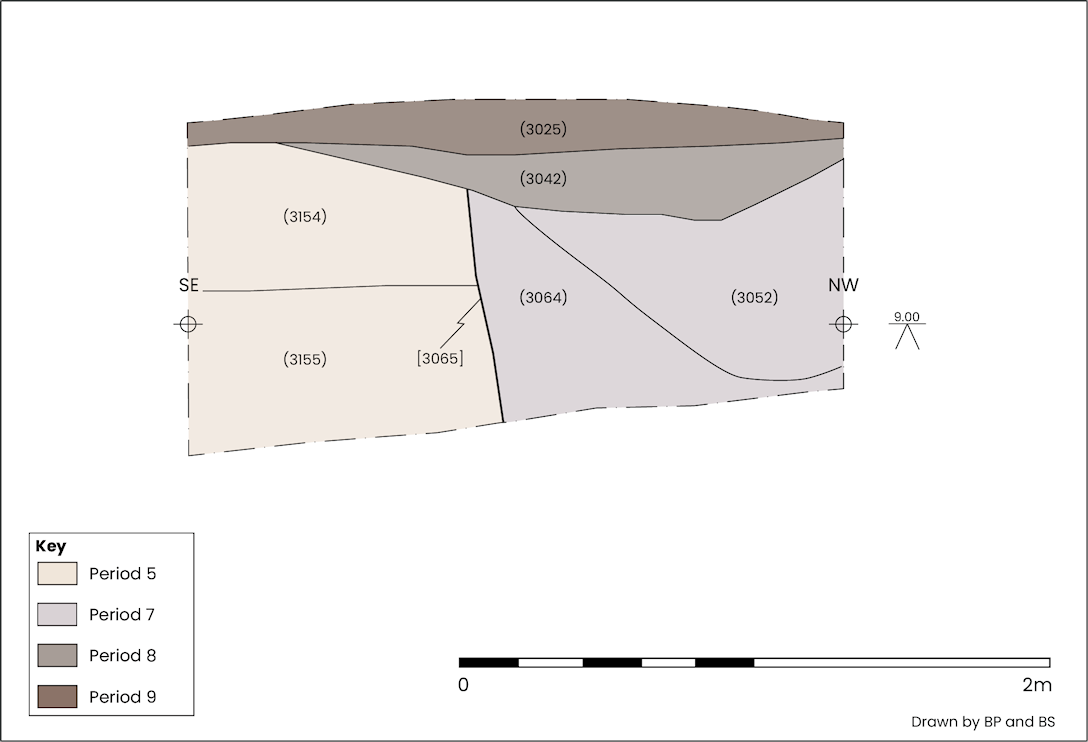
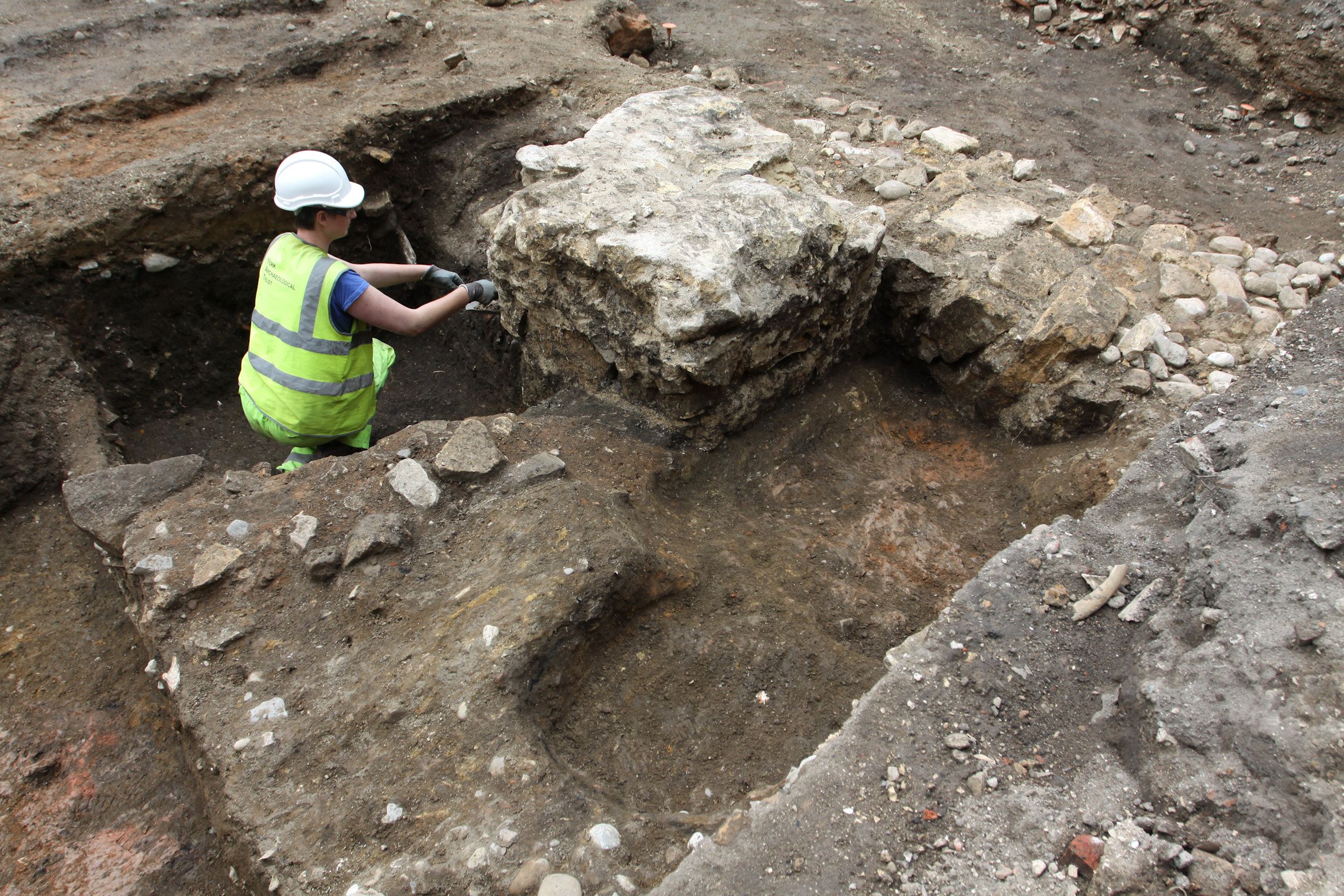
Figure 45: NE facing section of Trench 2 showing 14th century pit C3056/S1121 cutting Period 5 3rd century AD deposits
Figure 45
Figure 46: 14th century pit S1121, Phase 29, cut into to by buttress S1176 in Trench 2. Facing west
Figure 46

Splashed wares found in York are known to have been produced from the late 11th–13th century, with the C3052 assemblage typologically belonging to the early to mid-12th century (see section 6.2), and the presence of so many wasters might typically be considered to indicate the presence of a kiln nearby. However, chalk inclusions in the pottery fabric indicates that this material derived from a kiln, or kilns, at Beverley (see section 6.2); quite how it ended up here is uncertain. Production of curved and flanged tile encompasses a similar date range of the late 11th to early 13th century, and are a type commonly thought to be associated with high status buildings. The recovery of other, later, pottery types from the P29 pits, for example York glazed ware, Beverley ware and Brandsby ware from C3052, and C3064 lower down in the same pit (S1121), in addition to the abundance of 13th–16th century roof tile throughout the pit, could push the date for the clearance of redundant structures as late as the 14th century.

The significance of the waste materials present in C3052 lies not only in their sheer volume but also in what those material types infer about activities on the site during the 13th and 14th centuries compared to subsequent activity. What followed next may have required significant reorganisation and could have been the catalyst for the demolition of structures and raising of the ground level seen in P27–29.

4.4 Period 8: 14th century land division and associated structures (Phase 30)

Following landscaping and pit digging in Excavation Area 1 reorganisation of the site appears to have occurred. A stone wall was constructed through the middle of the site, which for the remainder of the medieval period delineated two very different zones of activity.

Phase 30 (P30): Possible ditch, wall and associated levelling activity (G154, G156, G158)

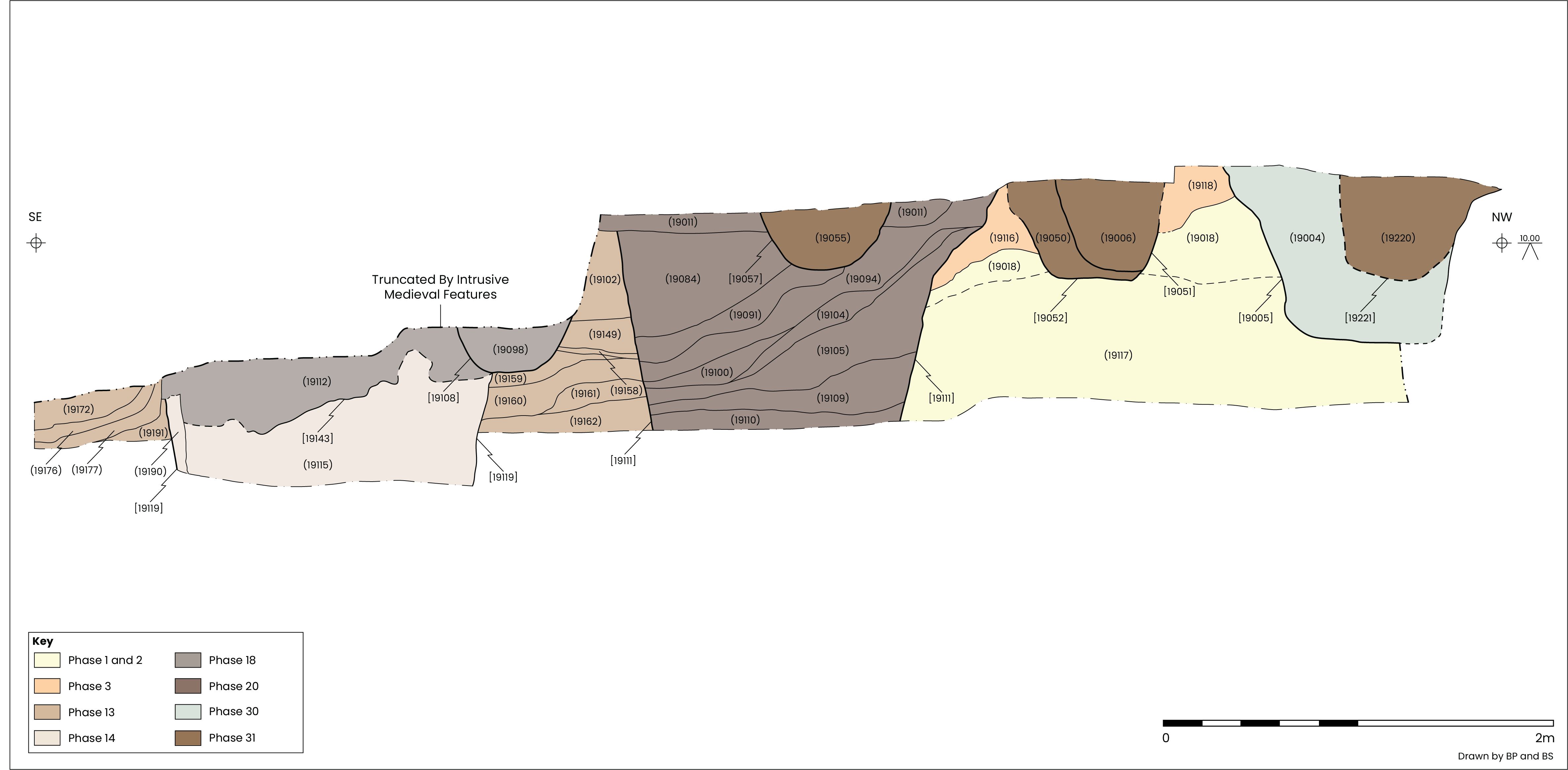
A possible linear feature was present at the northern end of Excavation Area 2 (C19005; S1131). Aligned north-west/south-east and measuring 1.40m long, 1.10m wide and 0.97m deep, this feature had steep sides and a flat, even base, suggesting a linear form (Figure 7 and Figure 47). Backfilling appears to have taken place in the 14th century and seems to have been a rapid process.
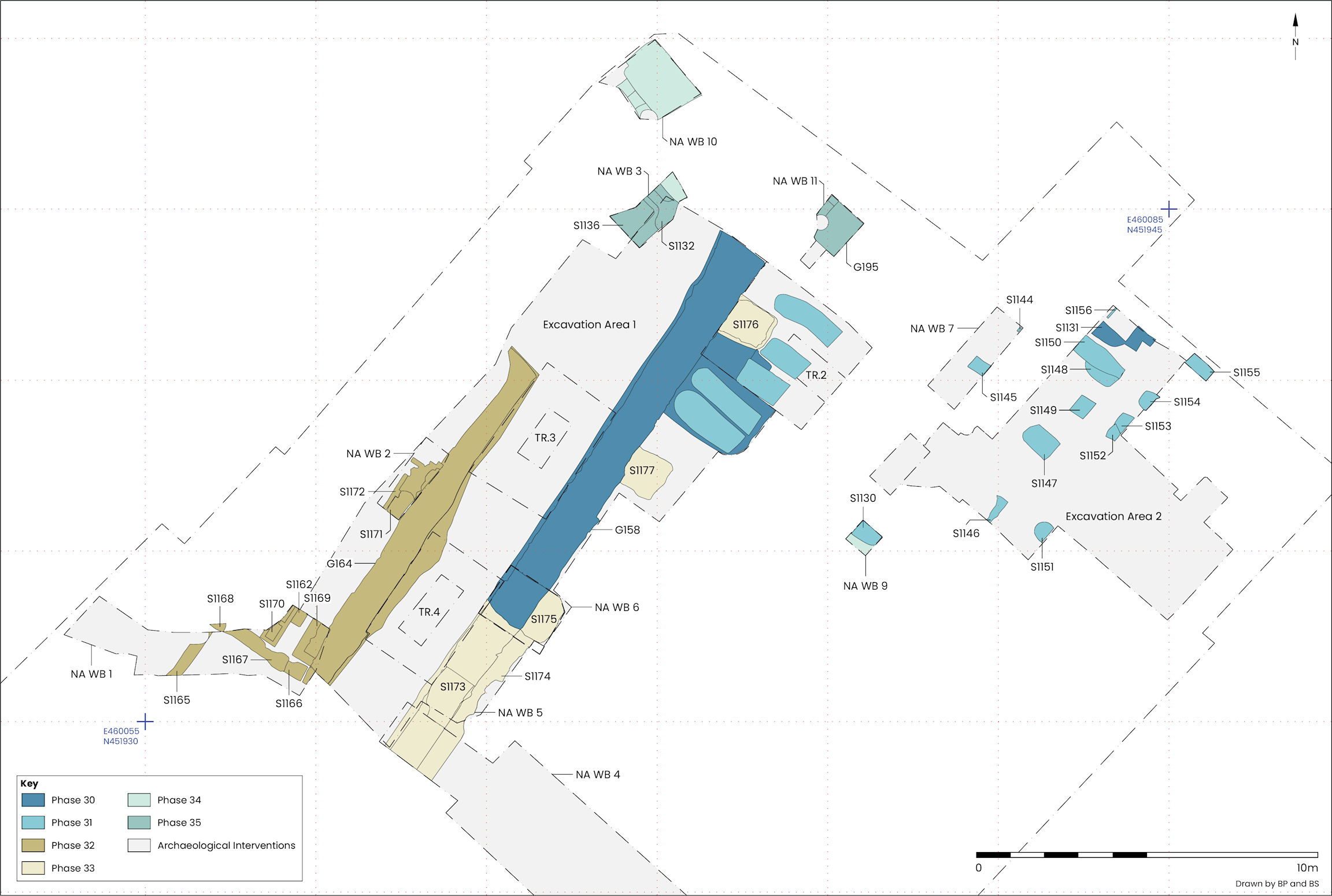
Figure 47: Period 8. Phases 30–35, the Augustinian friary
Figure 47

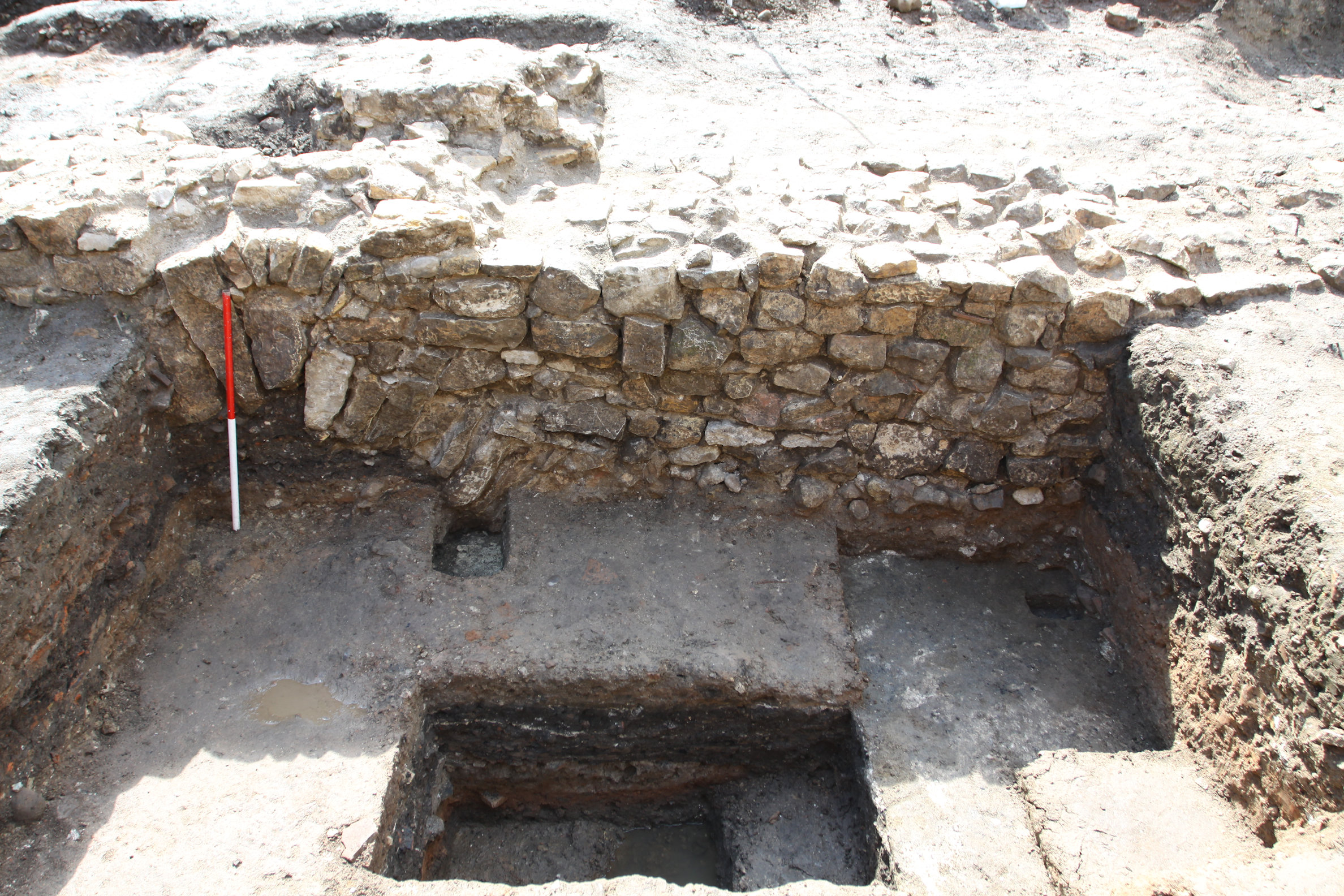
Preparation work for the construction of a limestone wall included stabilising the ground around the S1121 (P29) pit in Trench 2 with levelling deposits C3042 and C3049, S1123 in G154 (Figure 45).

The wall ran close to the full length of Excavation Area 1 on a north-east/south-west alignment (Figure 48). It measured 13.02m long and up to 1.6m wide, although it averaged 1.2m in width. It only survived to foundation level, which at its north-eastern end was at 9.79m AOD, falling to around 9.25m to the south-west, an angle of 2.3°. The foundation (C3088, C8088; G158) comprised roughly dressed, randomly coursed Magnesian limestone blocks bonded with a soft, crumbly yellow white lime mortar; at the north-eastern end cobbles made up a greater proportion (Figure 49). Trench 3 provided the most extensive elevation view; here a relieving arch was present in the eastern corner of the trench and the base of the foundation was observed at around 8.3m AOD, making its height in this area approximately 1m (Figure 31 and Figure 50). No dateable artefacts were recovered from the fabric of the wall, however its position in the stratigraphic sequence indicates a date later than the mid-13th to mid-14th century features and deposits in P28 and P29.
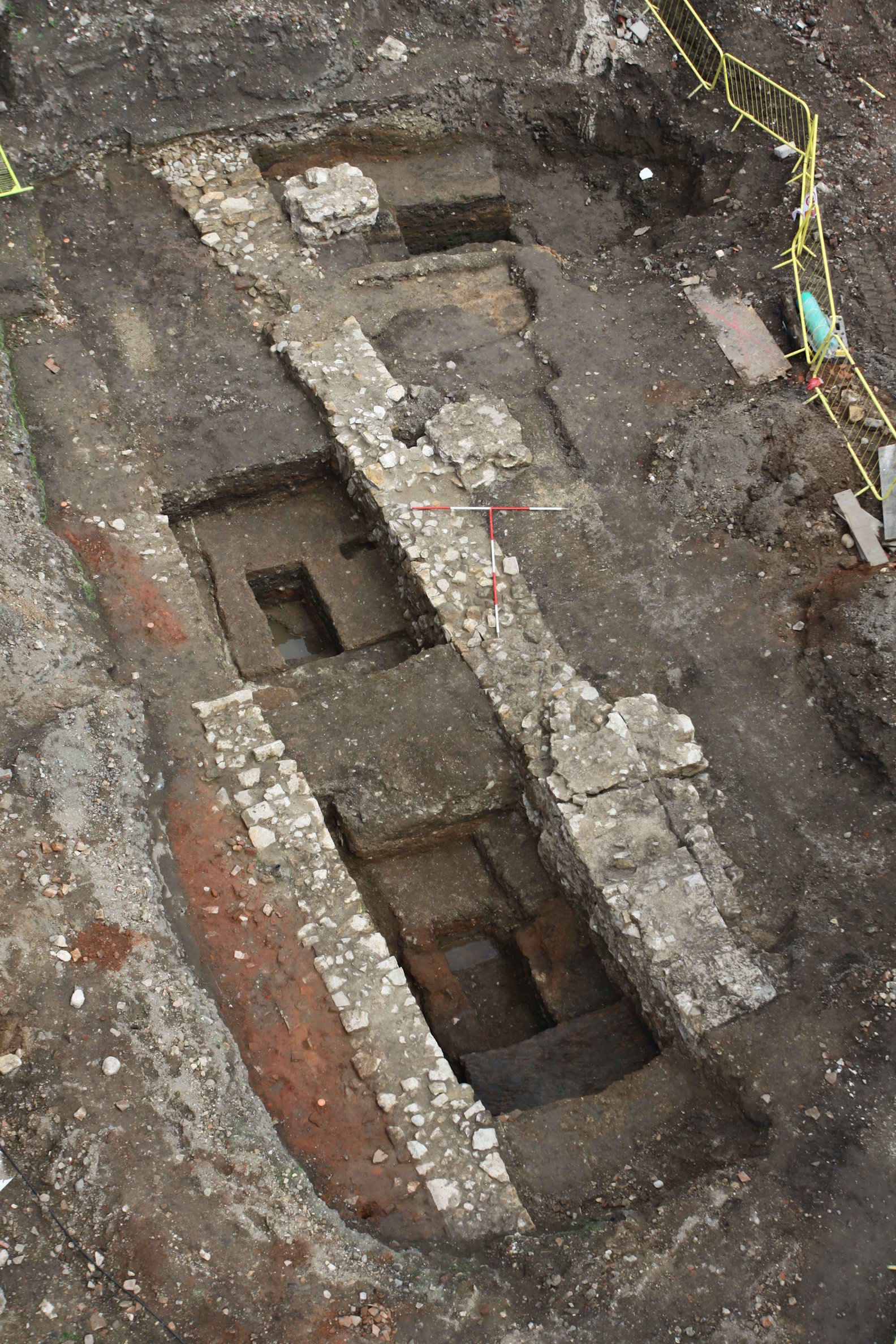
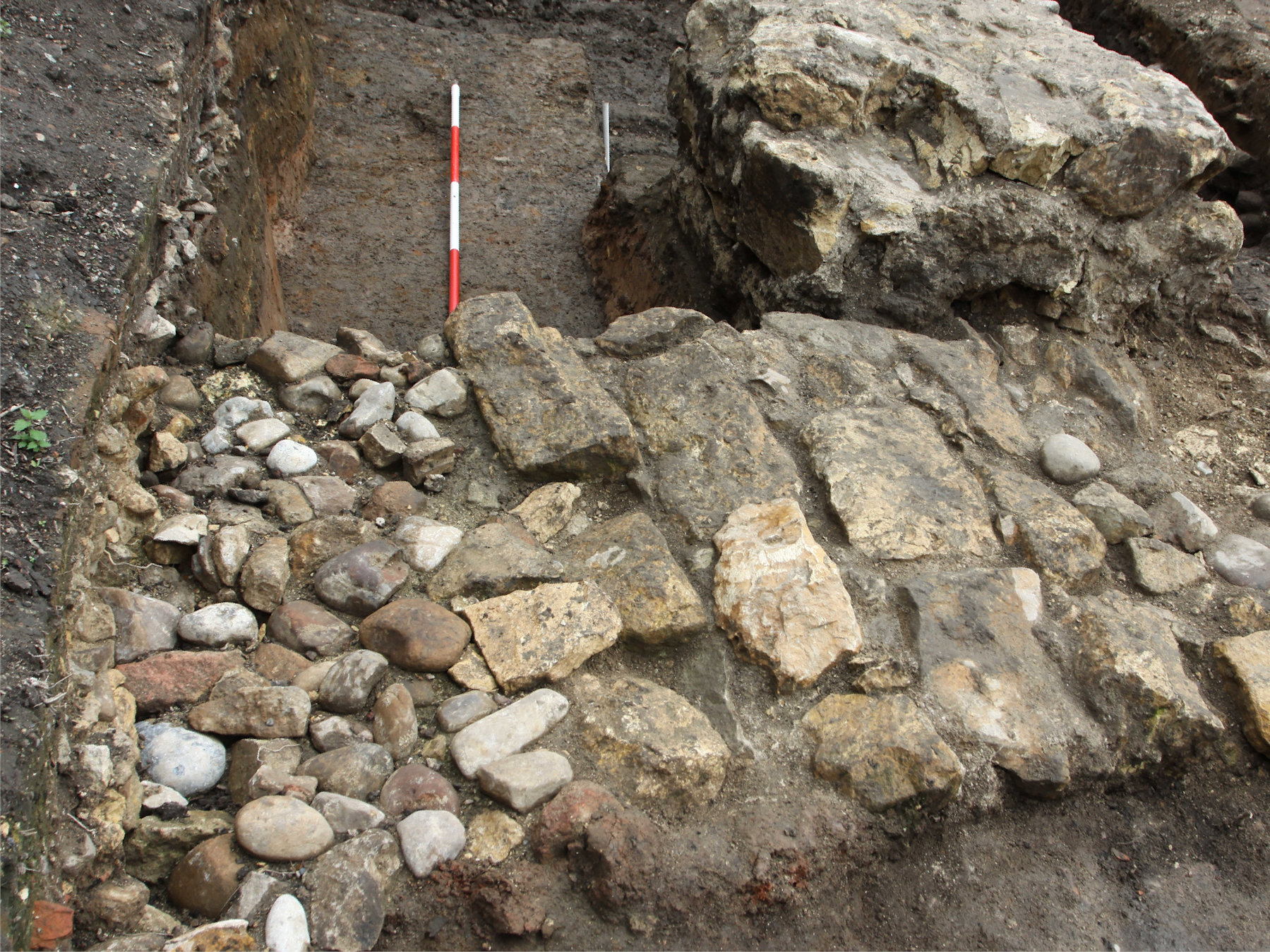
Figure 48: Medieval structures in Excavation Area 1. Facing north-east, 0.5m scale units
Figure 48
Figure 49: Cobbles at north-east end of wall foundation C3088, Phase 30. Facing south-east, 0.5m scale units
Figure 49
Figure 50: Profile of wall foundation C3088, Phase 30, in Trench 3. Facing south-east, 0.5m scale units
Figure 50

On the south-eastern side of the wall and extending south-west of Trench 2 were mortar-rich stony deposits (C3047 and C3051; G158). These were perhaps either levelling deposits preparing the ground prior to wall construction or waste material generated during its construction.

Alterations were later made to the wall (see Phase 33), but no part of the structure appears to have survived above foundation level. Consequently, it is not entirely clear whether it was part of a building or a stand-alone feature such as a boundary wall. The date of features and deposits cut by the wall suggest a 14th century or later date, placing it within the life span of the Augustinian friary. Construction of the wall and the infilling of the linear feature in the north-east of the site could have related to the consolidation of zones of activity or reorganisation within the friary precinct.

4.5 Period 8: Medieval graveyard (Phase 31)

By the 14th century the northern end of the site, south-west of the wall in P30, was being used as a graveyard. Five possible graves were found adjacent to the wall around Trench 2 and a further 13 burials were found across Excavation Area 2, NA WB 7 and NA WB 9.

Phase 31 (P31): Graveyard (G160–61)

Situated in an evenly spaced row, close to the north-eastern end of the G158 (P30) wall, were five possible graves (G160), all aligned north-west/south-east. They measured up to 2.36m long, 0.81m wide, and no more than 0.2m deep (Figure 47). No in situ human remains were found in any of the possible grave cuts, however, disarticulated human bone was recovered in sufficient quantity to suggest that each would have originally contained an inhumation burial.

More graves were identified in Excavation Area 2 and NA WB 7. Here, the graves appear to have been arranged in rows and included two instances where graves were found to intercut, indicating that the graveyard may have been in use for some time. In total, parts of ten inhumations were recovered from 14 possible graves (S1130 and S1144–56; G161). Where in situ remains were encountered these were invariably aligned north-west/south-east, and it was apparent that they had been laid out in an extended supine position. No complete individuals were recovered, either because of modern truncation or because part of some burials lay beyond the limit of excavation, although the general condition of the recovered bone was good.

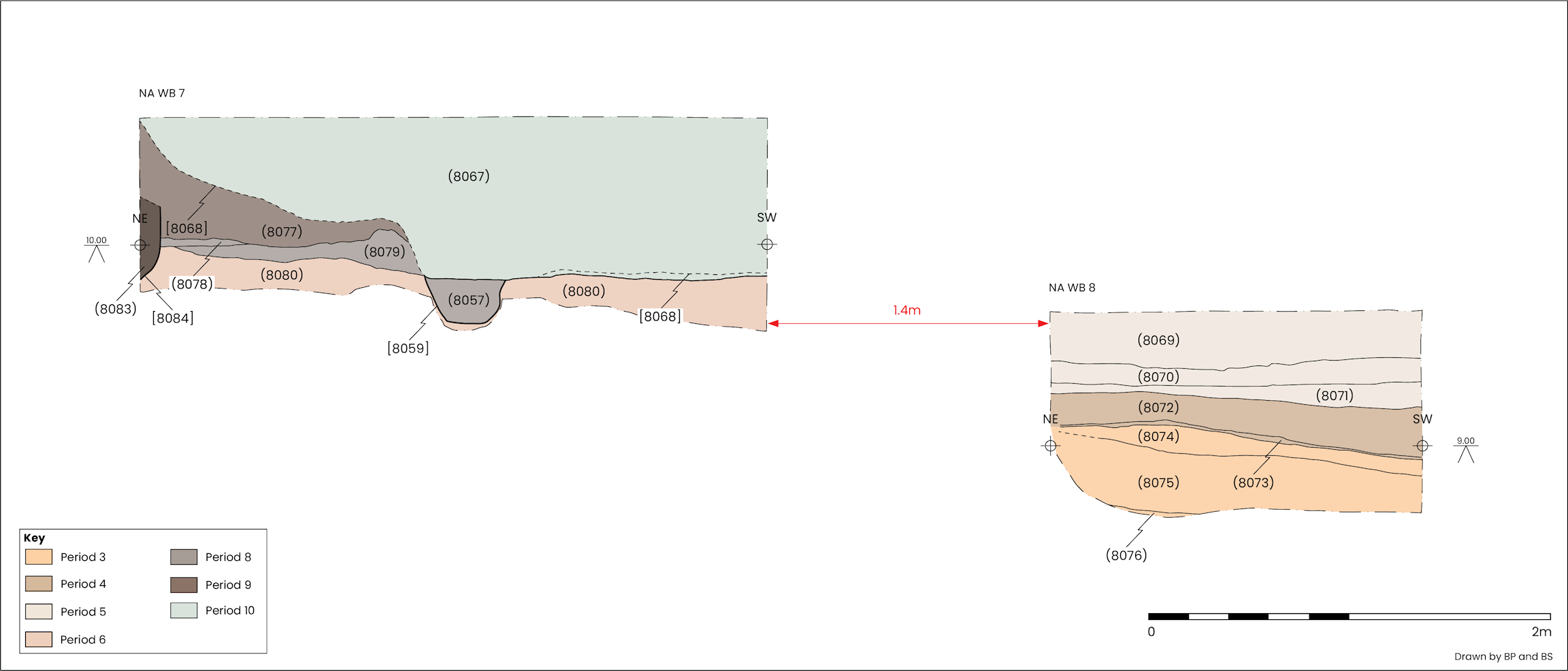
Two graves were encountered in NA WB 7 (Figure 15). In the north-eastern corner was grave cut C8084 (S1144); this was only seen retrospectively in section where its cut was observed to extend from 9.82–10.18m AOD. Part of an in situ inhumation (S1145) was found further to the south-west in grave cut C8059 extending from 9.61–9.84m AOD. It had been severely impacted by modern intrusion, but enough of the pelvis, femora and hands remained to identify an extended, supine burial with the hands placed across the pelvic area.

At the south-western end of the north-western row was grave S1146, containing SK8, an adult of unspecified sex. Later truncation had reduced the grave cut to between 0.2 and 0.45m long and 0.8m wide, which extended from 9.58–9.89m AOD. The extent of the later disturbance made it difficult to determine if any of the bone remained in situ, but some did appear to be articulated.

The next feature to the north-east was S1147, which was aligned north-west/south-east and measured 1.04m long, 0.68m wide and up to 0.24m deep, ranging between 9.9–10.14m AOD. No human remains were present in this feature, however its shape, size and position were similar to graves nearby.

The first definite burial on this row was SK3 in grave S1149. Here the lower legs of an adult of indeterminate sex in an extended and supine position were found in a grave cut that measured 0.58m wide and 0.35m deep, extending from 9.86–10.21m AOD. A modern drain had removed the south-eastern end of the grave and the feet along with it. Stepping in of the north-western edge of Excavation Area 2 at the level of this grave meant that only the south-eastern end of the grave was accessible; however, the distal ends of the femora could be seen in section. Late 12th to early 13th century pottery was recovered from the backfill.

Grave S1148 was 0.58m north-east of S1149 and measured 1.02m long, 0.75m wide and 0.51m deep, ranging from 9.81–10.32m AOD. The north-western end of the grave cut was within the limit of excavation in this area; however, the grave had been truncated from above and along its north-eastern side by a later grave (S1150) and to the south-east by a modern cut, both removing much of the burial. What remained intact indicated that the individual was a male, middle adult aged 35–44 (SK2), in an extended and supine position with the arms and hands extending either side of the pelvis. Radiocarbon dating of SK2 returned date ranges of 1415–1487 (68.3% probability), 1397–1530 (87.4% probability) and 1555–1623 (8% probability) (Savine 2024, 500, Appendix 5).

Cutting through S1148 was grave S1150. The cut for this grave extended north-west beyond the limit of excavation. The south-eastern end of the grave was investigated, revealing SK1 which comprised part of the pelvis and both legs and feet of a male, mature adult aged 45+, which was in an extended and supine position. The cut measured 1.5m long, 0.63m wide, and 0.46m deep and extended from 9.86–10.32m AOD. Radiocarbon dating of SK1 has returned date ranges of 1420–1499 (68.3% probability), 1400–1533 (85.1% probability) and 1553–1623 (10.4% probability) (Savine 2024, 500, Appendix 5).

The next grave in the alignment was S1156. Situated 0.93m north-east of S1150 this grave was only identified in section but was clearly cut into the backfill of linear feature S1131 (G156; P30). The cut was U-shaped in profile with a flat base, and measured 0.81m wide, 0.53m deep, extending from 9.81–10.34m AOD. Nothing was recovered from this grave, however ribs visible in section suggested that an in situ burial was originally present.

At the south-western end of the south-eastern row of graves was SK5 in grave S1151. Here a skull and mandible of an adult male was encountered in what may have been the north-western end of a grave, the cut of which ranged from 9.87–10.05m AOD. A single small sherd of almost certainly intrusive Pearl ware with a blue ribbed band was present along with a small quantity of Roman pottery.

The next grave (S1152) was 3.25m to the north-east. It had been truncated to the north-east by a later burial (S1153) and a modern drain to the north-west. It was only possible to investigate 0.4m of the grave's length, which here ranged from 9.93–10.22m AOD and contained SK6, part of the torso and right arm of an adult individual in a supine position. Roman and medieval pottery was present in the grave backfill.

Cutting into and removing part of the north-eastern side of grave S1152 was the north-western end of grave S1153. The cut measured 0.63m wide and 0.44m deep, extending from 9.78–10.22m AOD. Only a 0.35m length of this grave was excavated, but it was found to contain the skull of a male aged 35–44 (SK7) and a quantity of disarticulated human bone.

Grave S1154 was 0.37m to the north-east of S1153. The grave cut ranged from 9.94–10.38m AOD, and was truncated to the north-west and north-east, leaving a width of 0.48m. Only 0.37m of the length could be excavated, the rest extending south-east beyond the limit of excavation. The grave contained SK4, an adolescent individual aged 12–17 years, which had been laid in a supine position with the right arm flexed at the elbow from where the radius and ulna extended towards the pelvis, while what was exposed of the left arm extended straight along the left side of the body. A copper alloy annular brooch (SF196) and a copper alloy belt fitting (SF197) were found positioned just below the ribs on the left side of the torso (Figure 51) and late 14th to early 15th century pottery was recovered from the backfill.
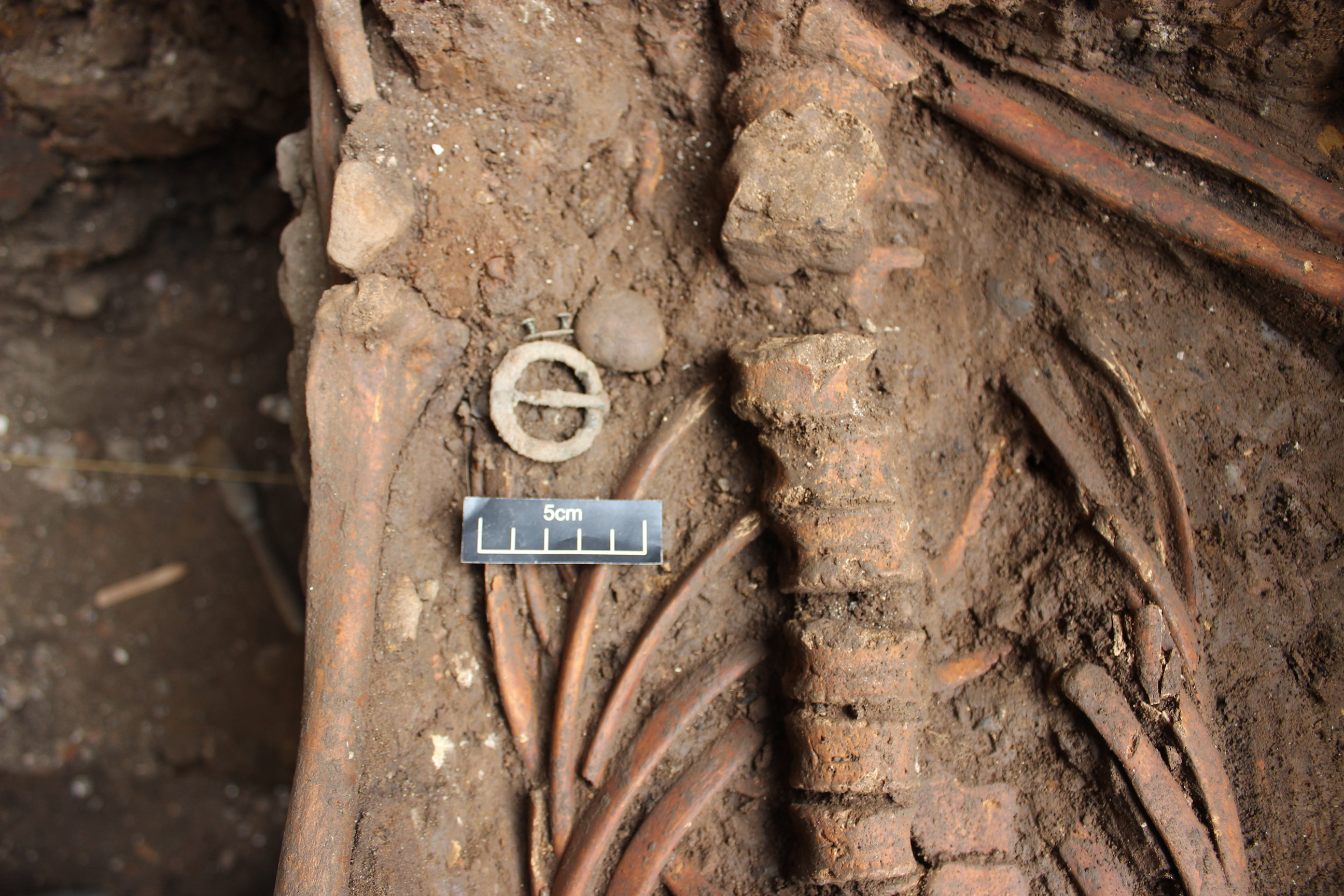
Figure 51: SF196–7 in grave S1154, Phase 31. Facing south-east, 10mm scale units
Figure 51

Located furthest to the north-east was SK8 in grave S1155. It had been truncated to the north-west, north-east and south-east, and appeared to extend below a concrete pad to the south-west. The base of the grave was at 9.85m AOD. Only the skull, mandible, right scapula and part of the right humerus remained, together suggesting a supine burial, in this case of a probable female aged 18–25 years. A late 4th century CE copper alloy coin (SF216) was found in the grave backfill, alongside fragments of 14th century pottery.

Disarticulated human bone was also found during excavation around a pile cap in a NA WB 9. Here the south-western side of a cut feature measuring 1.07 x 0.55m and 0.26m deep (S1130; G161) was identified in section and fragments of vertebrae, rib and humerus were recovered from the vicinity. The position, alignment and content of this feature suggests that it was a grave.

With the exception of a possible charnel pit in NA WB 10 (S1138; G159; P34), all deliberately deposited human remains were inhumation burials located south-east of the wall in P30, and with the exception of two graves were south-west of possible linear feature S1131 (P30). No burials were found south-east of wall S1085 (G137; P21). The general impression is of a well-organised and maintained graveyard, although there were two instances of intercutting burials, perhaps indicating grave markers were not necessarily universal or that the graveyard was in use long enough for burial locations to become lost or unclear. The burials and associated features were in perhaps as many as four rows, each arranged along a north-east/south-west axis, an alignment shared by medieval stone-built buildings to the west and the slight fall in ground level down towards the river.

A gentle downward slope in the topography from north-east to south-west may also be reflected by the depths to which graves were dug. The bases of possible graves in G160 adjacent to the P30 wall ranged in height from 9.4–9.6m AOD, while further to the east the height range of graves in G161 was between 9.58m and 9.94m AOD. The two deepest graves in G161 were S1145 and S1146, both located furthest to the south and the west in that area, while the only two above 9.9m AOD (S1152 and S1154) were among those towards the north-eastern end of the site. Seven of the graves where human remains were present had a maximum depth range of between 9.81m and 9.9m AOD (S1144, S1148–51 and S1155–56).

Determining a date for the use of the graveyard generally relies on the dating of the deposits cut by the graves. A few largely intact archaeological horizons were present above the graves, and while artefacts present in grave backfills may be informative there is a significant likelihood of residuality. In the case of the possible graves in Excavation Area 1, three cut into, or were very close to, 14th century pits in P29, while the two potential graves south-west of Trench 2 cut into S1123 deposits in G154 that were related to the construction of the adjacent wall and postdate the P29 pits. The fills of these features had clearly been heavily disturbed in the post-medieval period (see Phase 36) which may account for the tendency towards 15th and 16th century pottery and the presence of a Nuremburg Jetton issued between 1500–25 (see section 6.12; Table 33). The graves in Excavation Area 2 cut into Roman deposits, 12th–13th century levelling deposits (P21), or the 14th century linear feature S1131 (P30), while no burials were found at the south-eastern end of the area beyond the P21 wall S1085 (G137) wall, which appears to have been standing until at least the 13th century. As might be expected, residual Roman artefacts were regularly present in G161 grave backfills. Medieval artefacts were only recovered from four graves, including pottery ranging in date from the late 12th to the early 15th century, and 13th–16th century CBM. The radiocarbon dates for SK1 and SK2 from intercutting graves S1148 and S1150 were virtually identical, giving a 15th or early 16th century date at around 85% probability, which would place them comfortably within the anticipated timeframe suggested by dating of adjacent deposits, features and structures.

The graveyard was located in what appears to have been the south-eastern periphery of the Augustinian friary, adjacent to land occupied by the Guildhall since at least the 15th century. The available dating evidence broadly establishes a 13th–16th century date for use of the graveyard, complementing the life span of the friary. By the 14th century its north-western side was delineated by the large limestone wall (G158; P30), while to the south-east a smaller structure (G137; P21) dating to the late 12th to early 13th century may still have been standing. In this circumstance any growth to the graveyard might prompt intercutting of burials, as seen between S1148/S1150 and S1152/S1153, or expansion to the north-east and south-west, perhaps resulting in the infilling of the possible linear feature (P30) in the 14th century. Notably, graves S1154 and S1155 were both close to that feature and were 14th century or later in date.

4.6 Period 8: Structures in the north-west of the site (Phases 32–33)

From around the 14th century land to the north-west of the wall in P30 was occupied by a substantial stone building.

Phase 32 (P32): 14th century friary building (G162, G164–65)

Extending 2.08m from the north-western side of Excavation Area 1 and up to within 2.39m of the P30 wall foundation was part of a large stone building. Demolition of the building had left only the south-eastern wall foundation and elements of an internal sub-floor structure intact. Parts of this building were encountered in NA WB 1, NA WB 2 and Trench 4 in Excavation Area 1 (Figure 47).

The wall foundation (G164) was aligned north-east/south-west (parallel to wall G158; P30), measured 0.86–1.06m wide and was traced from the south-western end of Excavation Area 1 for over a distance of 11.66m north-east to the northern corner of Trench 3 (Figure 48). At this point there appeared to be a return to the north-west where CBM rubble extending along the north-western side of the wall foundation petered out (see S1189; G169; P36). However, that part of the foundation lay just outside of Trench 3 and was not investigated in any detail; consequently, a continuation to the north-east is possible. The wall foundation comprised a rubble core faced along both sides with roughly dressed Magnesian limestone blocks bonded with a soft, creamy white lime mortar (G164). Trench 4 provided a 3.72m long profile of the south-eastern face of the foundation, there exposing seven courses of stonework rising over the south-western end of a relieving arch which extended down approximately 1.6m from 9.17m AOD (Figure 52). A selection of Roman vessel types, 12th–13th century gritted oxidised wares and 13th–16th century CBM were recovered from the construction cut backfills where they passed through Trenches 3 and 4 but given the depth of the foundation construction cut this probably reflects the date of the underlying features and deposits rather than when the building was constructed.
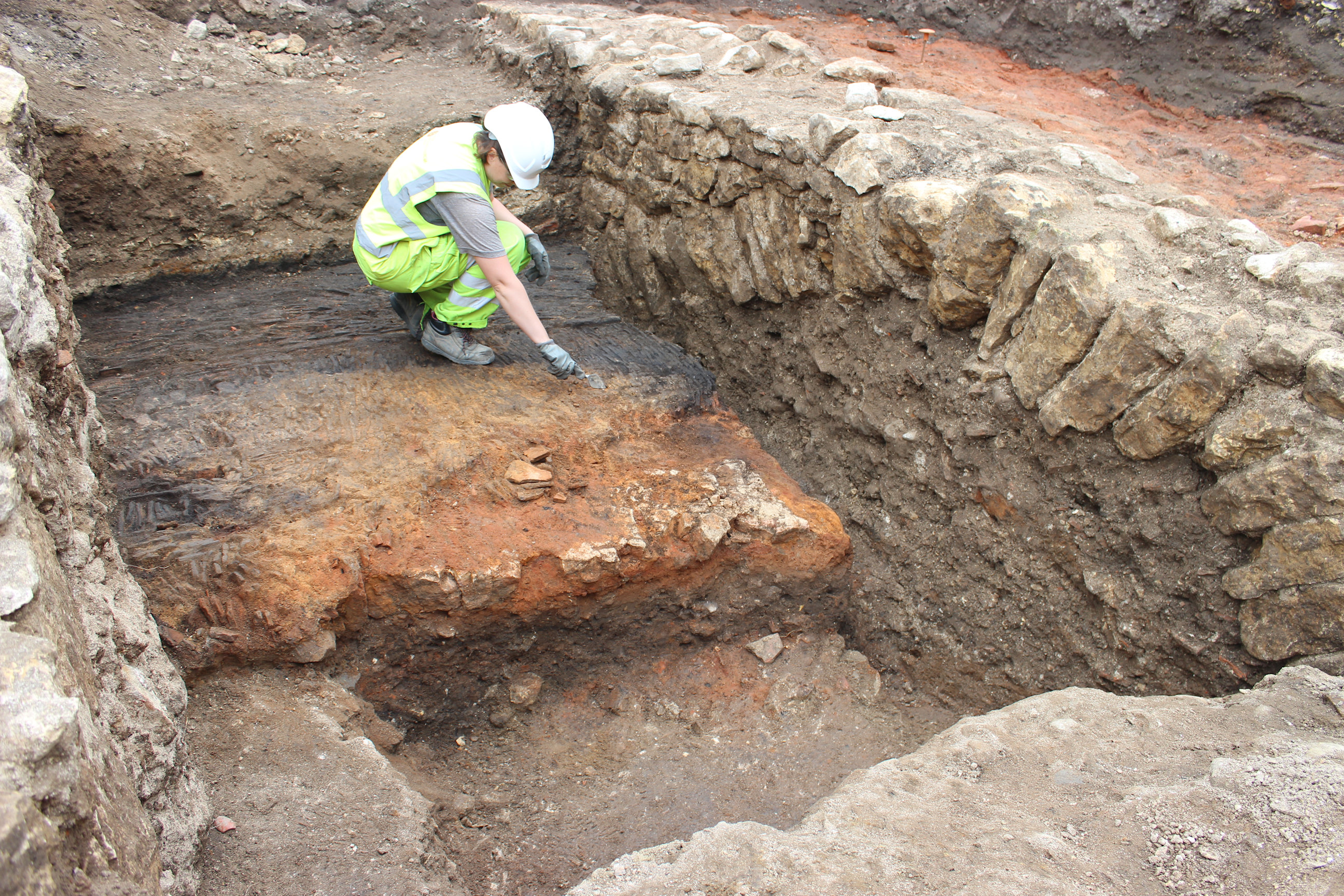
Figure 52: Relieving arch in wall Foundation C3090, Phase 32, Trench 4. Facing west
Figure 52

On the north-western side of the wall, in NA WB 1 and NA WB 2, foundation structures were present, which may have supported a floor inside the building. The earliest deposits were observed at the base of the north-facing section of NA WB 1. Here, a flat levelling deposit covered by a thin layer of trampled material dating to late 14th to early 15th century (C8024) extended to 8.98m AOD. Above this, and extending north-east in a 1.59m long, 0.36m wide strip were edge-set tiles (C8005; S1165) bedded into soft sand. The tiles may have formed the footing for wall C8052, part of which was observed in the northern section of NA WB 1. More edge-set tiles (S1166) were found adjacent to the G164 limestone wall foundation and also formed the footing of a foundation. This foundation, S1167, was aligned north-west/south-east foundation, which was formed of reused limestone blocks and measured 2.62m long and up to 0.51m wide. At its north-western end it continued into the trench section on a line where it almost certainly would have met the S1165 wall footing. Above the point in the section beyond which S1165 and S1167 extended was a brick wall six courses in height, made up of orangey red bricks bonded with a soft orange-brown sandy mortar (S1168).

Abutting the north-eastern face of foundation S1167 were two low brick walls (S1169–70) supported on a flat, hard, mid-orange brown surface, possibly made from CBM (S1162). This was seen at around 8.8m AOD in a 0.45 x 0.3m sondage positioned 0.72m north-west of the G164 wall foundation. The low brick walls were aligned north-east/south-west and were spaced 0.53m apart with S1169 abutting the north-western side of wall foundation G164. Both walls were constructed from 14th–16th century bricks identical to those in S1168 and were neatly faced on their external edges. Both also had a brick rubble core. Wall S1170 was six courses high, and the top courses of both walls were at approximately 9.15m AOD.

A brick wall (S1171) identical in construction to S1169, was similarly found to abut the north-western side of wall foundation G164, 3.77m to the north-east in NA WB 2. At the north-eastern end of S1171 and running perpendicular to it was a limestone-built wall or footing (C8028; S1172). Like the limestone wall S1167 it was aligned north-west/south-east and abutted wall foundation G164 (Figure 53).
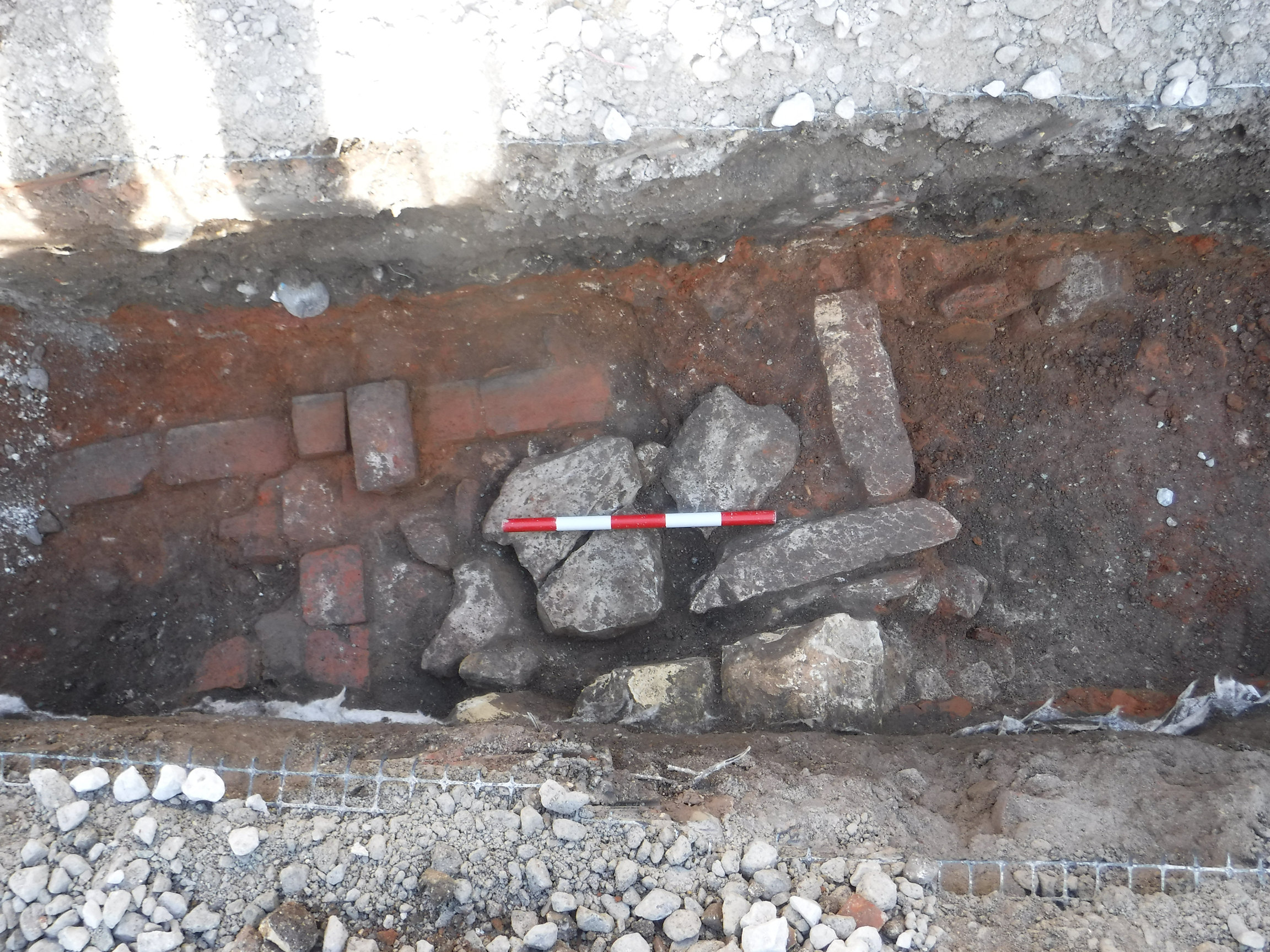
Figure 53: Sub floor structures S1171–72, Phase 32, butting up against wall foundation C3090 in NA WB 3. Facing north-west, 0.1m scale units
Figure 53

The relationship between the wall foundations in G158 (P30) and G164 was not entirely clear. It is possible that wall foundation G158 supported a freestanding wall sited along a boundary, on one side of which was the graveyard and on the other a building, of which G164 formed the south-eastern side. Extending to the north-west the interior of that building had a suspended floor supported on low brick walls (S1169–70) dating to the 14th to 15th century. The wall foundations share some characteristics, for example the construction techniques and materials employed appear very similar, and both were probably constructed in the 14th century. Conceivably they were part of the same structure, the 2.5m spacing between these parallel walls hinting at this being an aisle on the south-eastern side of a larger building that extended north-east/south-west through the friary precinct.

Phase 33 (P33): Alterations and additions to south-east wall foundation (G166)

Alterations to wall foundation G158 (Phase 30) included the addition of buttresses (S1175, S1176, S1177) and an extension, reinforcement or rebuilding to the south-west (S1173). The mortar used to bond the stonework in these additions was identical but not the same as that used in the original construction. It is unclear when the remedial work took place, but it does appear that the north-eastern buttress disrupted two of the medieval burials in Trench 2, one of which contained 15th to 16th century pottery.
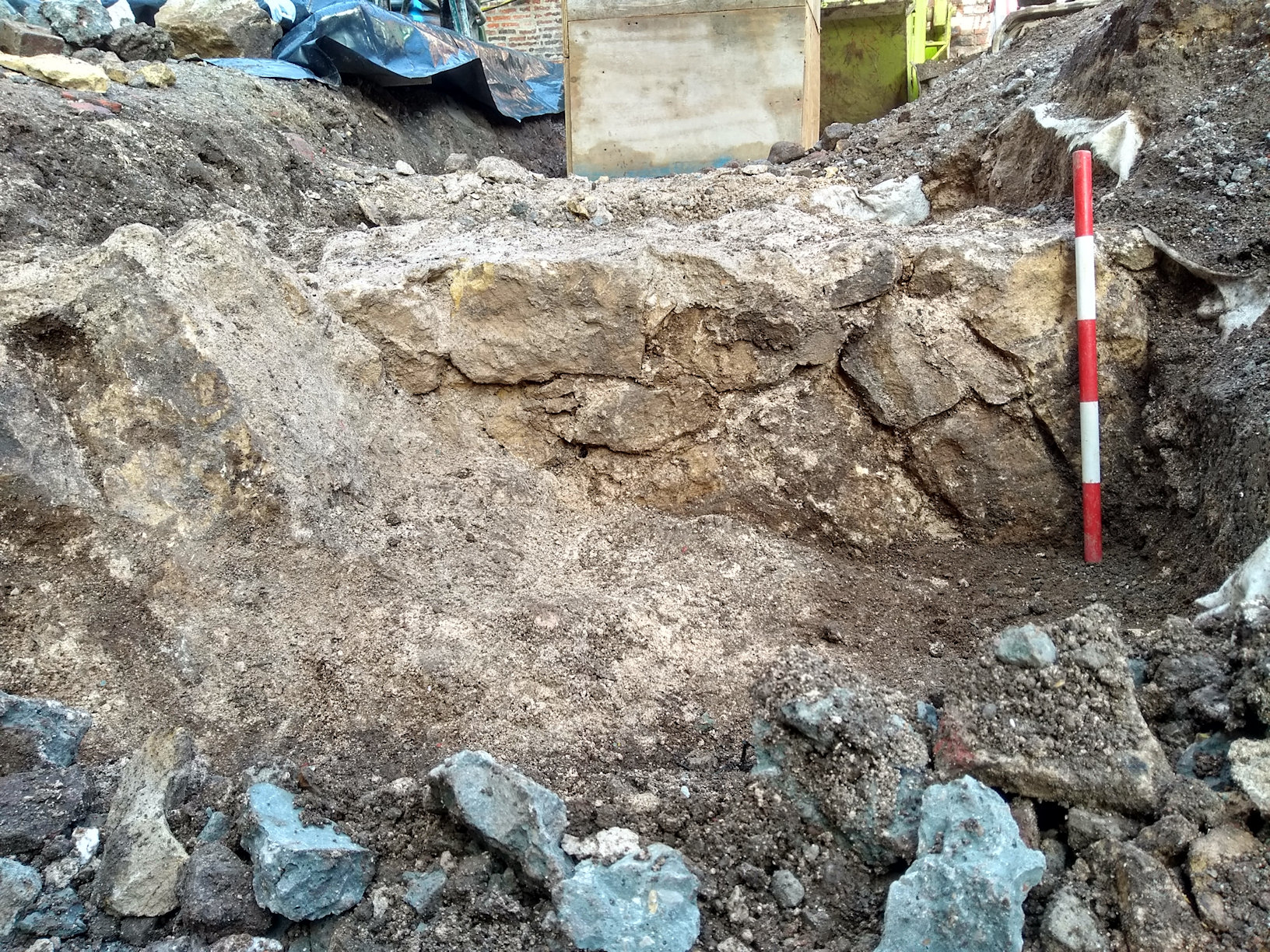
Figure 54: Profile of wall foundation C8092, Phase 33, NA WB 5. Facing north-west, 0.5m scale units
Figure 54

From a break visible across the upper surface and down the north-western face of wall foundation G158 (P30) the line of the wall continued to the south-west as S1173 (Figure 47). Measuring 1.01–1.2m wide, this section of wall extended south-west over a distance of 5.29m, taking it to the end of Excavation Area 1 and continuing into NA WB 4 and NA WB 5. This section of foundation was constructed using roughly dressed Magnesian limestone blocks bonded with very hard, coarse, light grey white lime mortar. Two Magnesian limestone blocks (AFs 10–11), dating to 1066–1540, were recovered from the top course, C8092. Part of a relieving arch was visible arcing down to the south-west in NA WB 5 (Figure 54). The course of stonework above the top of the arch was secured with a copious amount of mortar, which was also visible up the north-western face of the foundation where it was exposed in Trench 4 (Figure 55).
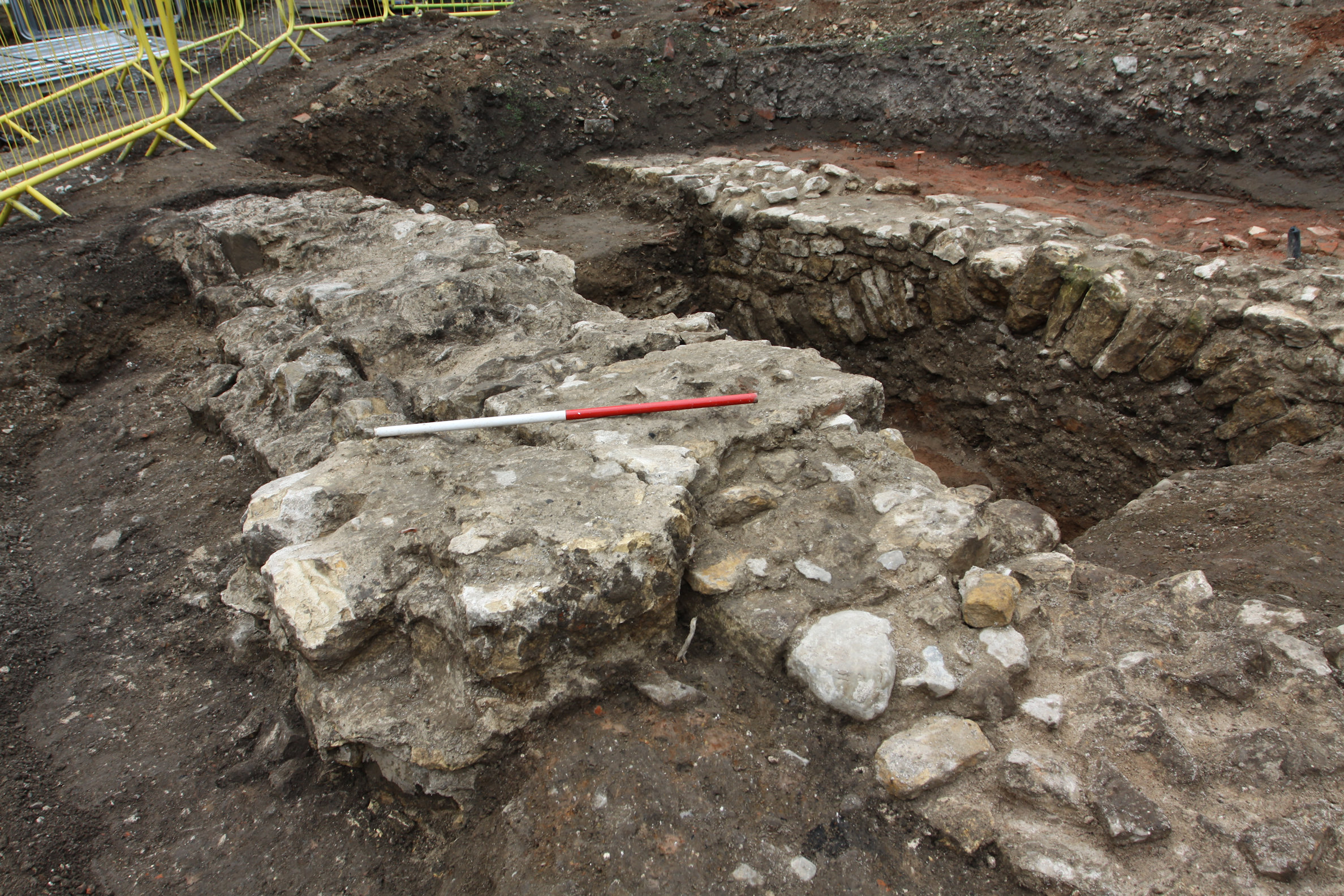
Figure 55: Wall foundation S1173 and buttress S1175, Phase 33. Facing west, 0.5m scale units
Figure 55

Randomly coursed limestone rubble S1174 had been fixed up against the south-eastern face of S1173 with large quantities of hard, coarse, light grey white mortar. S1174 extended the full length of S1173 and up to 0.52m to the south-east of it. At the north-eastern end of S1174 and abutting wall foundation G158 was one of three buttresses that had been added to the south-eastern side of that wall. Buttress S1175 extended 1.19m along the wall and projected 0.8m from it. The next buttress (S1177) was 3.79m to the north-east of S1175 and measured 1.22m north-east/south-west and 1.3m north-west/south-east. The third buttress (S1176) was situated a further 4.05m along the wall foundation. Its position inside Trench 2 allowed for closer inspection. The construction cut measured 1.32 x 1.36m and extended from 9.04–9.7m AOD. All of the buttresses had been coated in large quantities of the same hard, coarse, light grey-white mortar used in the other G166 structural elements, to the point at which, even where the three faces of S1176 were exposed, any coursing or structure to the stonework used was not visible (Figure 48).

The slight gap between the G158 (P30) part of the foundation and the foundation in this phase may simply be evidence of extension of the structure to the south-west. Alternatively, and perhaps more likely given the additional thickening of the wall to the south-east and the placement of buttresses (particularly one directly at the point of weakness in the earlier wall), this part of the structure had perhaps begun to fail, therefore requiring significant repairs and reinforcement. It has not been possible to precisely determine when this work took place as the next clear phase of activity was the demolition of the buildings and the clearance of the site following surrender of the friary in 1538 during the Dissolution (Raine 1955, 133).

4.7 Period 8: Probable medieval activity (Phases 34–35)

Determining dates of deposits and features observed in the various watching brief trenches was hampered by infrequent recovery of artefacts during those works. Drawing parallels with securely dated deposits and features of a similar character, and similar physical and stratigraphic position is possible however, and this allows for a broad comparison.

Phase 34 (P34): Undated dumping and levelling deposits, likely medieval (G153, G155, G159)

In NA WB 7 and 9 (Figure 47), deposits typically consisting of soft, mid-pink brown silty sand, C8079 and C8087, were observed extending to around 10.08m AOD. The north-west facing section of NA WB 7 shows the deposits there were earlier than the possible graves in G161 (Figure 15), although those deposits lacked the consolidated character of the 12th–13th century deposits in P21, cut by graves in Excavation Area 2.

Across NA WB 3, 9, and 10 was evidence of soil accumulation, usually mid-green or mid-grey brown coarse sandy silts (C8063–64, C8065–66 and C8047; G155). The composition and character of these deposits was comparable to mid-13th to mid-14th century deposits seen further to the south-west in Excavation Area 1 (G151 and G194; P28). In addition, C8047 predated a probable wall and cobble surface (see G157 and G163; P35 below) which may relate to the building in P32.

Cutting into the G155 deposits in NA WB 10 was charnel pit C8056. This was the only burial feature found to the north-west of the G158 (P30) wall foundation.

Phase 35 (35): Undated structures and related deposits, probable medieval (G157, G163, G195)

Cobbles bedded into dark orange brown clay (C8044–45; S1132) were exposed at the base and in the north-west facing section of NA WB 3 at around 9.45m AOD (Figure 47). This probable surface was situated north and east of a possible wall foundation comprising lime mortar bonded limestone (S1136), aligned north-east/south-west and measuring 1.6m long and 1m wide. S1136 followed the same line as wall foundation G164 (P32), the established extent of which was 6.08m to the south-west. If S1136 was part of the G164 wall foundation it would have measured at least 17.41m long.

Extending into NA WB 11 on a north-east/south-west alignment and measuring 1.29 x 0.99m was the south-western end of a mortar-bonded limestone footing (C19036; G195). This stone footing was located 1.56m north-east of wall foundation G158 (P30) and was offset slightly to the east of it, 2.52m directly north-east of buttress S1176 (P32). The form of construction, in particular the mortar used, was more like that used in the P30 foundation build than in later alterations (P33). In addition, wall foundation G158 clearly did not extend into NA WB 11, as a cobble surface was present abutting the north-eastern side of the footing (Figure 56). The surface was composed of small cobbles, pebbles and gravel bedded into a gritty clay present at 9.5m AOD (C19037–38; G195).
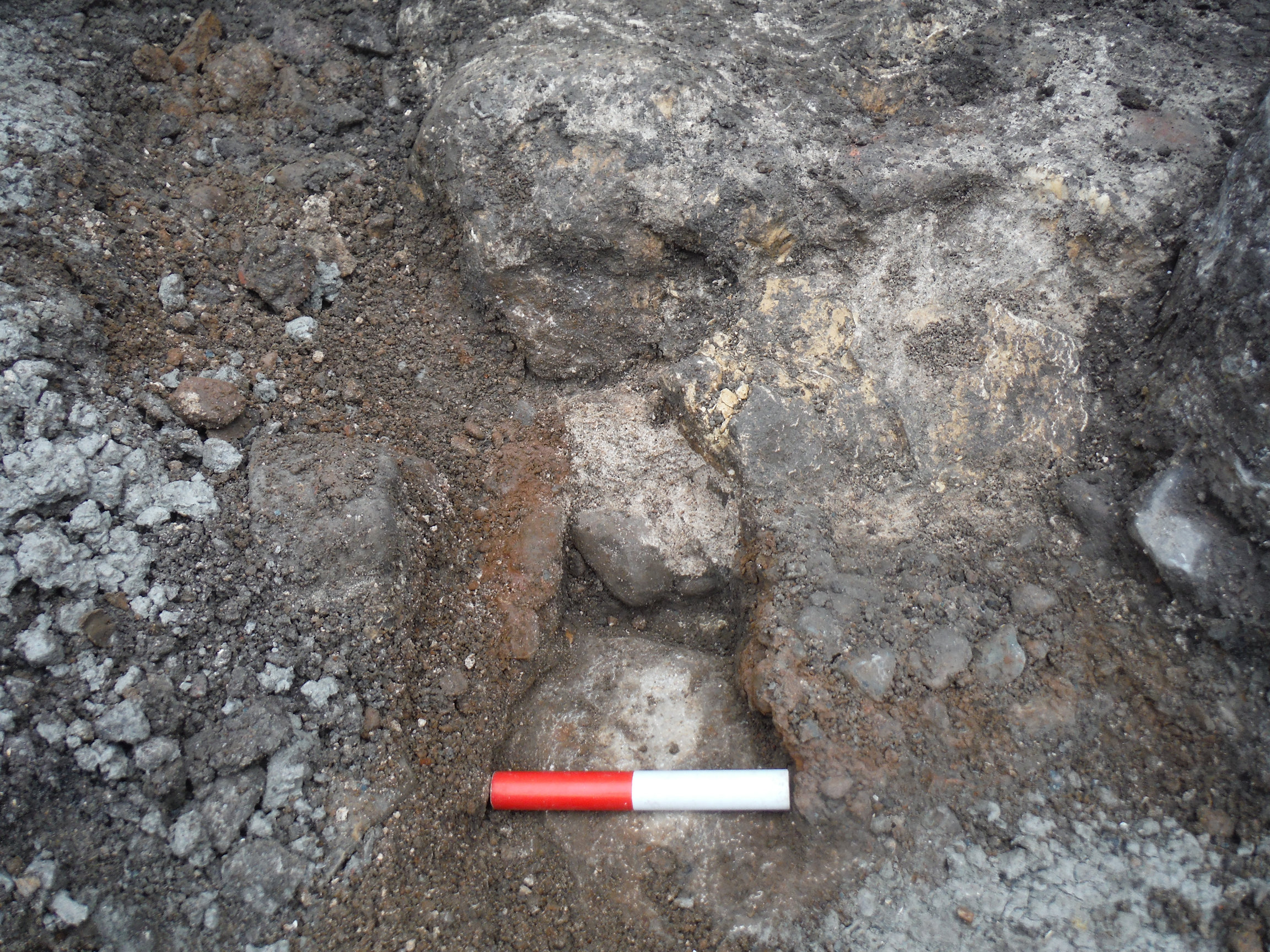
Figure 56: Edge of gravel surface butting up against wall in G195, Phase 34, NA WB 11. Facing north-east, 0.1m scale units
Figure 56

The cobble surfaces in NA WB 3 and 11 were both at approximately 9.5m AOD and, while separated by 4.2m east-west their form, character and that of adjacent structural elements suggests a link between them and the P32 friary structures in use from around the 14th century onwards.

← Previous chapter | Next chapter →

A

Acsádi, G. and Nemeskéri, J. 1970 History of Human Life Span and Mortality, Budapest: Akadémiai Kiadó.

Adam, J.P. 2005 Roman Building Materials and Technology, London and New York, Routledge.

Adams, S. 2021 'The Bulk Environmental Samples' in B. Savine 'Archaeological Investigations at The North Annexe, York Guildhall', Report number 2022/49, York Archaeology unpublished report, 91-5; 102-7.

Adams, S. 2022a 'The Environmental Samples' in A. Rickinson and S. Smith, 'Archaeological Investigations at 22-24 Aldwark', Report number 2022/47, York Archaeology unpublished report, 8-11. https://doi.org/10.5284/1125956

Adams, S. 2022b 'Bioarchaeology' in J.M. McComish, B. Savine and B. Reeves 'Archaeological Investigations at Mill House, North Street, York', Report number 2022/9, York Archaeology unpublished report, 40-51.

Addyman, P. (ed) 2015 British Historic Towns Atlas. Vol 5: York, Oxford: The Historic Towns Trust and York Archaeological Trust.

Albarella, U. 2005 'Alternate fortunes? The role of domestic ducks and geese from Roman to Medieval times in Britain' in G. Grupe and J. Peters (eds) Feathers, Grit and Symbolism: Birds and Humans in the Ancient Old and New Worlds, Verlag Marie Leidorf: Rahden. 249-58.

Alberti, M. 2017 'Spindle Whorls', Roman Finds Group Datasheet 7. https://romanfindsgroup.org.uk/sdm_downloads/datasheet-7/ [Last accessed: 12 June 2023]

Allen, J.R.L. 2014 Whetstones from Roman Silchester (Calleva Atrebatum), North Hampshire. Character, manufacture, provenance and use: 'Putting an edge on it', BAR British Series 597, Oxford: British Archaeological Reports. https://doi.org/10.30861/9781407312804

Allen, M. 2011 Animalscapes and Empire: New Perspectives on the Iron Age/Romano-British Transition, University of Nottingham, PhD Thesis. https://eprints.nottingham.ac.uk/13204/

Allen, M. 2014 'Chasing Sylvia's Stag: Placing Deer in the Countryside of Roman Britain' in K. Baker, R. Carden and R. Madgwick (eds) Deer and People, Oxford: Windgather Press. 174-86. https://doi.org/10.2307/j.ctv13gvgms.18

AOC Archaeology 2015 'Hutments Site, The Guildhall, York: Interim Archaeological Evaluation Report', AOC Archaeology Group unpublished report.

AOC Archaeology 2016a 'The Guildhall, York: Ground Investigation: Archaeological Watching Brief Report', AOC Archaeology Group unpublished report.

AOC Archaeology 2016b 'The Guildhall, York: Heritage Statement', AOC Archaeology Group unpublished report. https://her.york.gov.uk/Source/SYO1857

Armstrong, P., Tomlinson, D. and Evans, D.H. 1991 Excavations at Lurk Lane, Beverley 1979-82, Sheffield Excavation Reports 1, Sheffield: J R Collis.

Asouti, E. and Austin, P. 2005 'Reconstructing Woodland Vegetation and its Exploitation by Past Societies, based on the Analysis and Interpretation of Archaeological Wood Charcoal Remains', Environmental Archaeology 10(1), 1-18. https://doi.org/10.1179/env.2005.10.1.1

Austin, P. 2003 'The Wood Charcoal Macro-Remains' in T. Stevens 'Drayton Sand and Gravel Pit, Oving, Chichester, West Sussex, Excavation Area 1: Archive Report', AOC Archaeology Group: Twickenham. 96-102.

B

Baker, P. and Worley, F. 2019 Animal Bones and Archaeology. Recovery to Archive, Swindon: Historic England.

Banfield, L. 2024 'Roman Period Material Culture and Identity at York Guildhall' in B. Savine 'Archaeological Investigations at The north Annexe, York Guildhall', Report number 2023/277, York Archaeology unpublished report.

Banfield, L. forthcoming 'Sharpening Knowledge: An Investigation into the social and economic significance of hones from Roman London', LAMAS Trans 73.

Banham, D. and Faith, R. 2014 Anglo-Saxon Farms and Farming, Oxford: Oxford University Press. https://doi.org/10.1093/acprof:oso/9780199207947.001.0001

Barclay, A., Knight, D., Booth, P., Evans, J., Brown, D.H. and Wood, I. 2016 A Standard for Pottery Studies in Archaeology, Prehistoric Ceramics Research Group, Study Group for Roman Pottery and Medieval Pottery Research Group.

Barnes, I., Young, J.P.W. and Dobney, K.M. 2000 'DNA-based Identification of Goose Species from Two Archaeological Sites in Lincolnshire', Journal of Archaeological Science 27, 91-100. https://doi.org/10.1006/jasc.1999.0440

Barrett, J.H. 2001 'FISH: The York Fish Bone Recording Protocol, Version 1.1', Fish Lab: University of York unpublished report.

Barrett, J.H. Locker A.M. and Roberts, C.M. 2004 ''Dark Age Economics' Revisited: The English Fishbone Evidence AD 600-1600', Antiquity 78, 618-36. https://doi.org/10.1017/S0003598X00113262

Barrett J.H., Johnstone, C., Harland, J., Van Neer, W., Ervynck, A., Makowiecki, D., Heinrich, D., Hufthammer, A.K., Enghoff, I.B., Amundsen, C., Christiansen, J.S., Jones, A.K.G., Locker, A., Hamilton-Dyer, S., Jonsson, L., Lõugas, L., Roberts, C. and Richards, M. 2008 'Detecting the medieval cod trade: A new method and first results', Journal of Archaeological Science 35 (4), 850-61. https://doi.org/10.1016/j.jas.2007.06.004

Barrett J.H., Orton, D.C., Johnstone, C., Harland, J., Van Neer, W., Ervynck, A., Roberts, C., Locker, A., Amundsen, C., Enghoff, I.B., Hamilton-Dyer, S., Heinrich, D., Hufthammer, A.K., Jones, A.K.G., Jonsson, L., Makowiecki, D., Pope, P., O'Connell, T.C., de Roo, T., and Richards, M. 2011 'Interpreting the expansion of sea fishing in medieval Europe using stable isotope analysis of archaeological cod bones', Journal of Archaeological Science 38, 1516-24. https://doi.org/10.1016/j.jas.2011.02.017

Barrett, J.H. and Orton, D.C. 2016 Cod and Herring. The archaeology and history of medieval sea fishing, Oxford: Oxbow. https://doi.org/10.2307/j.ctvh1dw0d

Bateson, J.D. 1981 Enamel-Working in Iron Age, Roman and Sub-Roman Britain, BAR, British Series 93, Oxford: British Archaeological Reports. https://doi.org/10.30861/9780860541448

Behrensmeyer, A.K. 1978 'Taphonomic and ecologic information from bone weathering', Paleobiology 4, 150-62. https://doi.org/10.1017/S0094837300005820

Betts, I.M. 1985 A Scientific Investigation of the Brick and Tile Industry of York to the Mid-Eighteenth Century, University of Bradford, PhD thesis.

Biddle, M. 1990 Object and Economy in Medieval Winchester, Winchester Studies 7, Artefacts from Medieval Winchester Part II, Oxford: The Clarendon Press. https://archive.org/details/objecteconomyinm0000bidd/

Boessneck, J. 1969 'Osteological differences between sheep (Ovis aries Linné) and goat (Capra hircus Linné)' in D. Brothwell and S. Higgs (eds) Science in Archaeology, London: Thames and Hudson. 338-55.

Bond J.M. and T.P. O'Connor 1999 Bones from Medieval Deposits at 16-22 Coppergate and Other Sites in York, The Archaeology of York 15/5, York: Council for British Archaeology.

Bonifay, M. 2014 (Principal contributor), University of Southampton Amphorae: a digital resource [data-set], York: Archaeology Data Service [distributor] https://doi.org/10.5284/1028192

Bonifay, M. and Keay S. 2014 (Principal contributors), University of Southampton Amphorae: a digital resource [data-set], York: Archaeology Data Service [distributor] https://doi.org/10.5284/1028192

Brodribb, G. 1987 Roman Brick and Tile, Gloucester: Alan Sutton Publishing.

Brooks, S. and Suchey, J.M. 1990 'Skeletal age determination based on the os pubis: A comparison of the Acsádi-Nemeskéri and Suchey-Brooks methods', Human Evolution 5, 227-38. https://doi.org/10.1007/BF02437238

Brookes, S. 2007 'Boat-Rivets in graves in pre-Viking Kent: Reassessing Anglo-Saxon Boat-Burial Traditions', Medieval Archaeology 51, 1-18. https://doi.org/10.1179/174581707x224633

Brothwell, D. 1963 Digging Up Bones: The excavation, treatment and study of human skeletal remains, Oxford: Oxford University Press/British Museum.

Brothwell, D. 1981 Digging Up Bones, London: Trustees of the British Museum.

Browning, J., Cooper, N.J., Johnson, E., Monckton, A. and Sawday, D. with Buckley, R., Cool, H., Nicholson, N. and Radini, A. 2021 'Food and Drink' in Buckley, R., Cooper, N.J., and Morris, M. Life in Roman and Medieval Leicester. Excavations in the town's north-east quarter, 1958-2006, Leicester Archaeology Monograph 26, Leicester: University of Leicester. 282-363.

Brunskill, R.W. 1997 Brick Building in Britain, London: Victor Gollancz.

Buckland, P.C. 1976 'Geological and Archaeological Notes on the Rocks Used in the Construction of the Sewer' in J.B. Whitwell The Church Street Sewer and an Adjacent Building, The Archaeology of York 3/1, York: Council for British Archaeology. 32-27. PDF [Last accessed: 6 May 2026]

Buikstra, J.E. and Ubelaker, D.H. 1994 Standards for Data Collection from Human Skeletal Remains, Arkansas Archaeological Survey Research Series 44, Fayetteville: Arkansas Archaeological Survey. https://archive.org/details/isbn_1563490757_t0j9

Bulleid, A. and Gray, H.St.G. 1917 The Glastonbury Lake Village, Vol 2, Glastonbury: Glastonbury Antiquarian Society.

Butler, L. and Given-Wilson, C.G. 1979 Medieval Monasteries of Great Britain, London: Michael Joseph.

C

Cameron, R. 2003 Land Snails in the British Isles, Shropshire: Field Studies Council.

Campbell, G., Moffett, L. and Straker, V. (eds) 2011 Environmental Archaeology. A Guide to the Theory and Practice of Methods, from Sampling and Recovery to Post-Excavation, 2nd edition, Portsmouth: English Heritage.

Campbell, G. 2015 '"What do I do with all these shells?" Basic guidance for the recovery, processing and retention of archaeological marine shells', Quaternary International 2015 https://doi.org/10.1016/j.quaint.2015.09.013

Camphuysen, C.J. and Henderson, P.A. 2017 North Sea Fish and their Remains, Royal Netherlands Institute for Sea Research and Pisces Conservation Ltd.

Cappers, R., Bekker, R.M. and Janes, J.E.A. 2006 Digital Seed Atlas of the Netherlands, Groningen Archaeological Studies 4, Eelde: Barkhuis Publishing.

Carrott, J., Hall, A., Issitt, M., Kenward, H. and Large, F. 1996 'Plant and Invertebrate Remains from Post-Conquest Deposits at 16-22 Coppergate, York', Environmental Archaeology Unit (York) unpublished report 96/9.

Carrott, J., Hall, A., Hughes, P., Jacques, D., Johnstone, C., Kenward, H. and Worthy, D. 1998 'An Assessment of Biological Remains from Excavations at St. Saviourgate, York', Environmental Archaeology Unit (York) unpublished report 98/14. https://www.york.ac.uk/inst/chumpal/EAU-reps/eau98-14.pdf [Last accessed: 12 June 2023]

Carruthers, W.J. 1995 Charred Plant Remains from the Medieval Farmstead at Eckweek, Avon, Ancient Monuments Laboratory Report 27/95, London Historic Buildings and Monuments Commission for England. https://historicengland.org.uk/research/results/reports/27-1995 [Last accessed: 12 June 2023]

Carruthers, W.J. 2002 'The Charred and Mineralised Plant Remains' in J. Valentin and S. Robinson 'Excavations in 1999 on Land Adjacent to Wayside Farm, Nursteed Road, Devizes', The Wiltshire Archaeological and Natural History Magazine 95, 202-3.

Carruthers, W.J. 2004 'The Plant Remains' in J. Leary (ed) Tathbert's Lundenwic: Archaeological Excavations in Middle Saxon London, Pre-Construct Archaeology Limited Monograph 2, London: Pre-Construct Archaeology Limited. 112-4.

Carruthers, W.J. and Smith, D.N. 2020 Mineralised Plant and Invertebrate Remains: A Guide to the Identification of Calcium Phosphate Replaced Remains, Swindon: Historic England.

Cerón-Carrasco, R. 2004 'The fish remains from Glassknapper's Cave, Antler Cave and Wetweather Cave' in T. Pollard 'The excavation of four caves in the Geodha Smoo near Durness, Sutherland', Scottish Archaeological Internet Report 18, 27-8. https://doi.org/10.5284/1017938

Cessford, C. and Neil, B. 2022 'The people of the Cambridge Austin friars', Archaeological Journal 179(2), 383-444. https://doi.org/10.1080/00665983.2022.2090675

Cessford, C. and Samuel, M. 2023 'The architecture of the Augustinian Friary, Cambridge', The Antiquaries Journal 103, 162-94. https://doi.org/10.1017/S000358152300001X

Chartered Institute for Archaeologists (CIfA) 2014 Standard and Guidance for the Collection, Documentation, Conservation and Research of Archaeological Materials, Reading: Chartered Institute for Archaeologists.

Claassen, C. 1998 Shells, Cambridge Manuals in Archaeology, Cambridge: Cambridge University Press.

Coates, T. 2020 'Archaeological Investigations at the City of York Guildhall', Report number 2019/164, York Archaeology unpublished report.

Coates, T., Kendall, K., Shaw, A. and Smith, K. 2020 'Archaeological Investigations at the City of York Guildhall', Report number 2020/85, York Archaeology unpublished report. https://her.york.gov.uk/Source/SYO2502

Cohen, A. and Serjeantson, D. 1996 A Manual for the Identification of Bird Bones from Archaeological Sites, London: Archetype Publications.

Cool, H.E.M. 1998 'Early occupation at St. Mary's Abbey, York: the evidence of the glass' in J. Bird (ed) Form and Fabric: Studies in Rome's material past in honour of B.R. Hartley, Oxbow Monograph 80, 301-5. https://doi.org/10.2307/j.ctvh1dtvk.40

Cool, H.E.M. 2006 Eating and Drinking in Roman Britain, Cambridge: Cambridge University Press. https://doi.org/10.1017/CBO9780511489570

Cool, H.E.M., Lloyd-Morgan, G. and Hooley, A.D. 1995 Finds from the Fortress, The Archaeology of York 17/10, York: Council for British Archaeology.

Collingwood, R.G. and Wright, R.P. 1993 The Roman Inscriptions of Britain. Volume II, Instrumentum Domesticum, Fascicule 5, Stroud: Alan Sutton Publishing.

D

Dar, G., Masharawi, Y., Peleg, S., Steinberg, N., May, H., Medlej, B., Peled, N. and Hershkovitz, I. 2010 'Schmorl's nodes distribution in the human spine and its possible etiology', European Spine Journal 19, 670-5. https://doi.org/10.1007/s00586-009-1238-8

Davey, N. and Ling, R. 1982 Wall Painting in Roman Britain, Gloucester: Alan Sutton Publishing.

Dickson, C. 1987 'The Macroscopic Plant Remains' in J.W. Hedges (ed) Bu, Gurness and the Brochs of Orkney, Part I: Bu , BAR, British Series 163. Oxford: British Archaeological Reports, 137-42.

Didsbury, P. 2021 'Assessment of the Pottery' in Humber Field Archaeology 'Archaeological Evaluation by Trial trenching at Capital Park, Beverley, East Riding of Yorkshire', Report number 2192, Humber Field Archaeology unpublished report. 16-19.

Dobiat, C. 1979 'Überlegungen zur Verwendung der Hallstattzeitlichen Zweignebeln', Archäologisches Korrespondenzblatt 9, 191-8.

Dobney, K., Jacques, S.D. and Irving, B.G. 1996 Of Butchers and Breeds. Report on Vertebrate Remains from Various Sites in the city of Lincoln, Lincoln Archaeological Studies 5, Lincoln: City of Lincoln Archaeology Unit.

Driver, J.C. 1982 'Medullary bone as an indicator of sex in bird remains from archaeological sites' in B. Wilson, C. Grigsonand and S. Payne (eds) Ageing and Sexing Animal Bones from Archaeological Sites BAR, British Series 109, Oxford: British Archaeological Reports. 251-68.

Dunning, G.C. 1977 'Mortars' in H. Clarke and A. Carter Excavations in Kings Lynn 1963-1970, Society for Medieval Archaeology, Monograph Series 7, London, 320-47.

E

Eames, E. 1980 Catalogue of Medieval Lead-Glazed Earthenware Tile in the Department of Medieval and later Antiquities British Museum, Volumes 1 and 2, London: British Museum Press.

Edlin, H.L. 1949 Woodland Crafts in Britain: An Account of the Traditional Uses of Trees and Timbers in the British Countryside, London: Batsford.

Egan, G. 1998 The Medieval Household. Daily Living c.1150-c.1450, London: HMSO.

Egan, G. 2005 Material Culture in an Age of Transition, MoLAS Monograph 19, London: English Heritage.

Egan, G. and Pritchard, F. 1991 Dress Accessories, Medieval Finds from Excavations in London 3, London: HMSO.

Enghoff, I. 2000 'Fishing in the Southern North Sea region from the 1st to the 16th century AD: evidence from fish bones', Archaeofauna 9, 59-132. https://doi.org/10.15366/archaeofauna2000.9.006

Evans, J.G. 1972 Land Snails in Archaeology, London: Seminar Press.

Evans, D.H. 2000 'Buried with the Friars', British Archaeology 19, 19-23. https://www.researchgate.net/publication/335868327_Buried_with_the_Friars [Last accessed: 12 June 2023]

F

Fagan, B. 2006 Fish on Friday. Feasting, Fasting, and the Discovery of the New World, New York: Basic Books.

Fiorentino, G. and D'oronzo, C. 2010 'Archaeobotanical and Experimental Approach to Identify 245 Fire Succession in Hearth Structures of Apollo Sanctuary at Hierapolis (Turkey)' in I. Théry-Parisot, L. Chabal and S. Costamagno (eds) 'Taphononomie des Résidus Organiques Brûlés et des Structures de Combustion en Milieu Archéologique', P@lethnologie 2, 59-68. https://doi.org/10.4000/palethnologie.7993

Finlayson, R. 1997 The York Archaeological Trust Gazetteer Project, York: York Archaeological Trust / English Heritage.

G

Gale, R. and Cutler, D. 2000 Plants in Archaeology, Otley: Westbury Academic and Scientific Publishing.

Garside Neville, S. 1996 'Ceramic Building Materials' in R.L. Kemp and C.P. Graves The Church and Gilbertine Priory of St Andrew, Fishergate, The Archaeology of York 11/2, York: Council of British Archaeology. 294-7.

Gaunt, G.D. and Buckland, P.C. 2002 'Sources of Building Materials in Roman York' in P. Wilson and J. Price (eds) Aspects of Industry in Roman Yorkshire and the North, Oxford: Oxbow Books, 133-44.

Gillam, J.P. 1976 'Coarse fumed ware in northern Britain and beyond', Glasgow Archaeological Journal 4, 57-89. https://doi.org/10.3366/gas.1976.4.4.57

Giorgi, J. 2006 'Plant Remains' in D. Seeley,C. Phillpotts and M. Samuel Winchester Palace: Excavations at the Southwark Residence of the Bishops of Winchester, MoLAS Monograph 31, London: Museum of London Archaeology Service. 118-30.

Goodall, I.H. 2011 Ironwork in Medieval Britain: an Archaeological Study, Society for Medieval Archaeology Monograph 31, Leeds: Maney.

Grant, A. 1982 'The use of tooth wear as a guide to the age of domestic ungulates' in B. Wilson, C. Grigson and S. Payne (eds) Ageing and Sexing Animals from Archaeological sites, BAR British Series 109, Oxford: British Archaeological Reports. 91-108.

Greenfield, H.J. 2006 'Sexing Fragmentary Ungulate Acetabulae' in Ruscillo, D. (ed) Recent Advances in Ageing and Sexing Animal Bones, Oxford: Oxbow. 68-86.

Greenlee, J.W. 2020 'English Eel-Rents: 10th-17th Centuries', Historia Cartarum [website], https://historiacartarum.org/eel-rents-project/english-eel-rents-10th-17th-centuries [Last accessed: 17 January 2022]

Greep, S.J. 1983 Objects of Animal Bone, Antler, Ivory and Teeth from Roman Britain, University of Cardiff, PhD thesis.

Greep, S.J. 1998 'The Bone, Antler and Ivory Artefacts' in H.E.M. Cool and C. Philo (eds) Roman Castleford. Excavations 1974-85. Vol I. The Small Finds, Wakefield: WYAS. 267-84.

Greig, J, 1996 'Archaeobotanical and Historical Records Compared - A New Look at the Taphonomy of Edible and other Useful Plants from the 11th to 18th Centuries A.D.', Circaea 12(2), 211-47.

Griffiths, D.G. and Hartley, K. 2020 'Mortaria' in D.W. Fell Contact, Concord and Conquest: Britons and Romans at Scotch Corner. A1 Leeming to Barton, NAA Monograph Series 5, Barnard Castle: Northern Archaeological Associates. 255-95.

H

Hall, R.A. 1986 The Excavations at York. The Viking Dig, London: The Bodley Head.

Hall, R.A. 1997 Excavations at the Praetentura: 9 Blake Street, The Archaeology of York 3/4, York: Council of British Archaeology.

Halstead, P., Collins, P. and Isaakidou, V. 2002 'Sorting the Sheep from the Goats: Morphological Distinctions between the Mandibles and Mandibular Teeth of Adult Ovis and Capra', Journal of Archaeological Science 29(5), 545-53. https://doi.org/10.1006/jasc.2001.0777

Hammond, P. 2005 Food and Feast in Medieval England, Stroud: Sutton Publishing.

Harden, D.B. 1962 'Glass in Roman York' in RCHME An Inventory of the Historical Monuments of the City of York, Vol I: Eboracum Roman York, Cambridge: HMSO. 136-41.

Harland, J.F., Barrett, J.H., Carrott, J., Dobney, K. and Jaques, D. 2003 'The York System: An integrated zooarchaeological database for research and teaching', Internet Archaeology 13. https://doi.org/10.11141/ia.13.5

Harland, J.F. 2018 'Fish bone from Roman phases' in T. Wilmott and D. Garner (eds) The Roman Amphitheater of Chester Vol 1: The Prehistoric and Roman Archaeology, Oxford: Oxbow. 414-30. https://doi.org/10.2307/j.ctvh1dnx9.22

Hartley, K.F. 1993 'The Mortaria' in J. Monaghan Roman Pottery from the Fortress: 9 Blake Street, The Archaeology of York 16/7, York: Council for British Archaeology.

Harvey, J. 1981 Medieval Gardens, London: Batsford.

Hather, J.G. 2000 The Identification of Northern European Woods: A Guide for Archaeologists and Conservators, London: Archetype Publications Ltd.

Hatting, T. 1995 'Sex-related characters in the pelvic bone of domestic sheep (Ovis aries L.)', Archaeofauna 4, 71-6. https://revistas.uam.es/archaeofauna/issue/view/731 [Last accessed: 30 April 2026]

Hayes, J.W. 1972 Late Roman Pottery, London: British School at Rome.

Hayward, P.J. and Ryland, J.S. (eds) 1995 Handbook of the Marine Fauna of North-West Europe, Oxford: Oxford University Press. https://doi.org/10.1093/oso/9780198540540.001.0001

Heawood, R., Howard-Davis, C., Boylston, A. and Weston, D. 2002 'Excavations at Warrington Friary 2000', Journal of the Chester Archaeological Society 77, 131-85.

Hillson, S. 1986 Teeth, Cambridge and New York: Cambridge University Press.

Hillson, S. 1996 Dental Anthropology, Cambridge, England: Cambridge University Press. https://doi.org/10.1017/CBO9781139170697

Holder, N., Samuel, M. and Betts, I. 2013 'The church and Cloisters of Austin Friars', London and Middlesex Archaeology Society Transactions 64, 143-62.

Hoss, S. 2014 Cingulum Militare: Studien zum römischen Soldatengürtel des 1. bis 3. Jh. n. Chr., University of Leiden, PhD thesis.

Hostetter, E. and Noble-Howe, T. (eds) 1997 The Romano-British Villa at Castle Copse, Great Bedwyn, Castle Copse, Indianapolis: Indiana University Press. https://doi.org/10.2979/2850.0

Howlett, P.W. 2024 'Land off Boroughbridge Road, York Post-Excavation Assessment Report', Report number 2023/63, York Archaeology unpublished report.

Humpheys, O. 2021 London's Roman Tools: Craft, Agriculture and Experience in an ancient City, BAR British Series 663, Oxford: British Archaeological Reports.

Hunter, F. and Gibson, A-M. 2013 'Worked Bone and Antler' in I. Armit and J. McKenzie An Inherited Place. Broxmouth Hillfort and the south-east Scottish Iron Age, Edinburgh: Society of Antiquaries of Scotland. 251-309.

J

Jackson-Slater C. and Krawiec, K. 2020 'Archaeological Watching Brief on Piling Works and Archaeological Boreholes at Guildhall, York', Report number 2020/120, York Archaeology unpublished report.

Jacomet, S. 2006 Identification of Cereal Remains from Archaeological Sites, Basel Archaeobotany Lab, IPAS.

Jaques, D., Hall, A., Kenward, H. and Carrot, J. 2004 'Technical report: plant, invertebrate and fish remains from excavations at 25 Bridge Street, Chester (site code: CHE/25BS'01)', Report number 2004/46, Palaeoecology Research Services unpublished report. https://www.york.ac.uk/inst/chumpal/EAU-reps/PRS04-46.pdf [Last accessed: 30 April 2026]

Jantz, R.L., Hunt, D.R. and Meadows, L. 1994 'Maximum Length of Tibia: How did Trotter Measure It?', American Journal of Physical Anthropology 93, 525-8. https://doi.org/10.1002/ajpa.1330930410

Jenner, A. 2022 'The Pottery' in M. Reeves 'Archaeological Evaluation at 65-69 Keldgate, Beverley', Report number 2022/72, York Archaeology unpublished report.

Jenner, A 2023 'The Pottery', in McComish, J M and Badger, J 'Grovehill Depot, Grovehill Road, Beverley, Archaeological Investigation', Report number 2023/96, York Archaeology unpublished report.

Jones A.K.G. 1988 'Fish Bones from Excavations in the Cemetery of St Mary Bishophill Junior' in T.P. O'Connor Bones from the General Accident Site, Tanner Row, The Archaeology of York 15/2, York: Council for British Archaeology.

K

Kemp, R.L. 1996 Anglian Settlement at 46-54 Fishergate, The Archaeology of York 7/1, York: Council for British Archaeology.

Kendall, T. and Savine, B. 2016 'Archaeological Investigations at the Mansion House, York', Report number 2016/27, York Archaeology unpublished report.

Kerney, M.P. and Cameron, R.A.D. 1979 A Field Guide to the Land Snails of Britain and North-west Europe, London: Collins.

Kippax, C.A. 1981 'Avian egg-shell from archaeological sites', Journal of Archaeological Science 8(4), 315-335. https://doi.org/10.1016/0305-4403(81)90032-7

Kurlansky, M. 1999 Cod: A Biography of the Fish That Changed the World, London: Vintage.

L

Leary, R. 2018 'Romano-British Pottery' in C. Ambrey, D. Fell, R. Fraser, S. Ross, G. Speed and P.N.A. Wood Roman Roadside Settlement at Healam Bridge: The Iron Age to Early Medieval Evidence, Volume 2, Artefacts, Northern Archaeological Associates Monograph Series 3. 16-72. https://doi.org/10.5284/1041575

Leary, R. 2020 'Pottery' in D.W. Fell Contact, Concord and Conquest: Britons and Romans at Scotch Corner. A1 Leeming to Barton, Northern Archaeological Associates Monograph Series 5. 255-95. https://doi.org/10.5284/1078330

Leary, R. 2021 'Romano-British Pottery. Appendix I: the wares and types series' in S. Ross and C. Ross Cataractonium: Establishment, Consolidation and Retreat, Volume 2. A1 Leeming to Barton, Northern Archaeological Associates Monograph Series 6. https://doi.org/10.5284/1078331

Ling, R. 1985 Romano-British Wall Painting, Princes Risborough: Shire Publications.

Livarda, A. and van der Veen, M. 2008 'Social Access and Dispersal of Condiments in North-West Europe from the Roman to Medieval Period', Vegetation History and Archaeobotany 17, 201-9. https://doi.org/10.1007/s00334-008-0168-4

Locker, A. 1990 'The fish bones' in D.S. Neal, A. Wardle and J. Hunn (eds) Excavation of the Iron Age, Roman and Medieval Settlement at Gorhambury, St. Albans, English Heritage Archaeology Report 2, 212.

Locker, A.M. 2000 The Role of Stored Fish in England 900-1750AD: The evidence from historical and archaeological data, University of Southampton, PhD Thesis. https://eprints.soton.ac.uk/43755/

Locker, A. 2007 'In piscibus diversis: The Bone Evidence for Fish Consumption in Roman Britain', Britannia 38, 141-80. https://doi.org/10.3815/000000007784016520

Locker, A. 2018 Freshwater Fish in England. The social and cultural history of coarse fish from prehistory to present day, Oxford: Oxbow. https://doi.org/10.2307/j.ctv13nb80x

Lovejoy, C.O., Meindl, R.S., Pryzbeck, T.R. and Mensforth, R.P. 1985 'Chronological metamorphosis of the auricular surface of the ilium: a new method for the determination of adult skeletal age at death', American Journal of Physical Anthropology 68(1), 15-28. https://doi.org/10.1002/ajpa.1330680103

M

Mabey, R. 1972 Food for Free: A guide to the edible wild plants of Britain, London: Fontana/ Collins.

Mainman, A.J. 1990 Anglo-Scandinavian Pottery from 16-22 Coppergate, The Archaeology of York 16/5, York: Council for British Archaeology.

Mainman, A.J. and Jenner, A. 2013 Medieval Pottery from York, The Archaeology of York 16/9, York: Council for British Archaeology.

Malacrino, C.G. 2010 Constructing the Ancient World: Architectural Techniques of the Greeks and Romans, Los Angeles: Getty Publications.

Maltby, M. 1979a Faunal Studies on Urban Sites: The Animal Bones from Exeter, Sheffield: University of Sheffield.

Maltby, M. 1979b The Animal Bones from Exeter 1971-1975, Exeter: Exeter Archaeological Reports Volume 2. https://archive.org/details/faunalstudiesonu0000malt/page/n1/mode/1up

Maltby, M. 2014 'The exploitation of animals in Roman Britain' in M. Millett, L. Revell and A. Moore (eds) The Oxford Handbook of Roman Britain, Oxford: Oxford University Press. 791-806. https://doi.org/10.1093/oxfordhb/9780199697731.013.045

Maltby, M. 2018 'Counting Roman chickens: Mulitdisciplinary approaches to human-chicken interactions in Roman Britain', Journal of Archaeological Science: Reports 19, 1003-15. https://doi.org/10.1016/j.jasrep.2017.09.013

Margeson, S. 1993 Norwich Households: Medieval and Post-Medieval Finds from Norwich Survey Excavations 1971-78, East Anglian Archaeology 58. https://eaareports.org.uk/publication/report58/ [Last accessed: 30 April 2026]

MAP 2005 '7-15 Spurriergate York SE 6032 5184 Archaeological Assessment Report, Volume 1', MAP Archaeological Consultancy Ltd unpublished report.

Mays, S. 2018 The Role of the Human Osteologist in an Archaeological Fieldwork Project, Swindon: Historic England.

McComish, J.M. 2012 'An analysis of Roman Ceramic Building Material from York and its Immediate Hinterland', University of York, MA dissertation. https://etheses.whiterose.ac.uk/id/eprint/4761/

McComish, J.M. 2015 'Excavations by York Archaeological Trust within the Walled Area to the South-west of the River Ouse', Report number 2015/48, YAT web based report.

McComish, J.M. 2020 'York Archaeological Trust AF Recording Guidelines', York Archaeology unpublished report.

McParland, L.C., Collinson, M.E., Scott, A.C., Campbell, G. and Veal, R. 2010 'Is Vitrification in Charcoal a Result of High Temperature Burning of Wood?', Journal of Archaeological Science 37, 2679-87. https://doi.org/10.1016/j.jas.2010.06.006

Mellor, J.E. and Pearce, T. 1981 The Austin Friars, Leicester, Council for British Archaeology Research Report 35, Leicestershire Archaeological Field Unit Report, London: Council for British Archaeology. https://doi.org/10.5284/1081751

Milner, G.R. 1992 Determination of Skeletal Age and Sex: A Manual Prepared for the Dickson Mounds Reburial Team, Illinois: Dickson Mounds Museum.

Milsted, I. 2020 'Written Scheme of Investigation for: York Guildhall 2020 Watching Brief and Excavation', York Archaeology unpublished report.

Mitchell, P. and Brickley, M. 2017 'Updated Guidelines to the Standards for Recording Human Remains', CIfA and BABAO Paper No. 14.

Moffett, L. 1991 Botanical Remains from Worcester Deansway, Ancient Monuments Laboratory Reports 123/91, London: English Heritage. https://historicengland.org.uk/research/results/reports/4549/BOTANICALREMAINSFROMWORCESTERDEANSWAY [Last accessed: 30 April 2026]

Monaghan, J. 1993 Roman Pottery from The Fortress: 9 Blake Street, The Archaeology of York 16/7, York: Council for British Archaeology.

Monaghan, J. 1997 Roman Pottery from York, The Archaeology of York 16/8, York: Council for British Archaeology.

Monckton, A. 2000 'Charred Plant Remains from an Iron Age Settlement Site at Dirft East, Covert Farm, Crick, Northamptonshire', Report number 2000/107, ULAS unpublished report.

Murphy, P., Albarella, U., Germany, M. and Locker, A. 2000 'Production, imports and status: biological remains from a Late Roman farm, Great Holts Farm, Boreham, Essex', Environmental Archaeology 5, 35-48. https://doi.org/10.1179/env.2000.5.1.35

N

NABO n.d. 'FISHBONE 1.1 Identification Manual for Gadid Fish in the N Atlantic', North Atlantic Biocultural Organisation [website], https://www.nabohome.org/download/fishbone-1-1-identification-manual-for-gadid-fish-in-the-n-atlantic/ [Last accessed: 12 June 2023]

Naggs, F., Preece, R.C., Anderson, R., Peiris, A., Taylor, H. and White, T.S. 2014 An Illustrated Guide to the Land Snails of the British Isles, London: Natural History Museum.

Nicholson, R.A. 2009 'The fish remains' in J. Browning, R. Buckley, J. Carrott, H. Cool, N. Cooper, J. Crowther, J. Davies, A. Forward, J. Grieg, D. Higgins, A. Hill, R. Hopkins, E. Johnson, R. Macphail, P. Mills, A. Monckton, G. Morgan, R. Nicholson, C. Possnert, A. Radini, S. Ripper, D.Sawday, D. Smith, M. Söderman and R. Tomlin Life and Death in Leicester's North-East Quarter: Excavation of a Roman Town House and Medieval Parish Churchyard at Vine Street, Leicester (Highcross Leicester) 2004-2006. Vol. 2: The Specialist Reports, Leicester: University of Leicester Archaeological Services. 476-80.

O

O'Connor, T.P. 1988 Bones from the General Accident Site, Tanner Row, York: Council for British Archaeology.

O'Connor, T.P. 1993 'Birds and the scavenger niche', Archaeofauna 2, 155-62. https://doi.org/10.15366/archaeofauna1993.2.014

O'Connor, T.P. 2003 The analysis of urban bone assemblages, The Archaeology of York 2/19, York: Council for British Archaeology.

O'Connor, T.P. 2013 Animals as Neighbours, The Past and Present of Commensal Species, East Lansing: Michigan State University Press.

O'Sullivan, D. 2013 In the Company of the Preachers. The Archaeology of Medieval Friaries in England and Wales, Leicester Archaeology Monograph 23, Leicester: University of Leicester.

Ortner, D. and Putschar, W. 1981 Identification of Pathological Conditions in Human Skeletal Remains, Washington: Smithsonian Contributions to Anthropology.

Orton, D.C., Makowiecki, D., de Roo, T., Johnstone, C., Harland, J., Jonsson, L., Heinrich, D., Enghoff, I.B., Lougas, L., Van Neer, W., Ervynck, A., Hufthammer, A.K., Amundsen, C., Jones, A.K.G., Locker, A., Hamilton-Dyer, S., Pope, P., MacKenzie, B.R., Richards, M., O'Connell T.C. and Barrett, J.H. 'Stable isotope evidence for late medieval (14th-15th C) origins of the eastern Baltic cod (Gadus morhua) fishery', PLoS ONE http://dx.doi.org/10.1371/journal.pone.0027568

Ottaway, P. 1992 Anglo-Scandinavian Ironwork from Coppergate, The Archaeology of York 17/6, York: Council for British Archaeology.

Ottaway, P. 2011a Archaeology in the Environs of Roman York: Excavations 1976-2005, The Archaeology of York 6/2, York: Council for British Archaeology.

Ottaway, P. 2011b Roman York, 2nd edition, Stroud: The History Press.

Ottaway, P. 2021 'Roman York south-west of the Ouse: archaeological and historical background' in J.M. McComish, P. Ottaway, N. Pearson and P. Wenham, P. Roman York: Excavations South-west of the Ouse (1961-1993) at 5 Rougier Street, 24-30 Tanner Row and Sites in Bishophill, The Archaeology of York 4/2, York: Council for British Archaeology. 61-73.

Ottaway, P. and Rogers, N.S.H. 2002 Craft, Industry and Everyday Life: Finds from Medieval York, The Archaeology of York 17/15, York: Council for British Archaeology.

P

Palliser, D.M. 2014 Medieval York 600-1540, Oxford: Oxford University Press. https://doi.org/10.1093/acprof:oso/9780199255849.001.0001

Parkinson, J. 1656 Paradisi in Sole Paradisus Terrestris, London. https://www.biodiversitylibrary.org/item/30647#page/1/mode/1up [Last accessed: 30 April 2026]

Payne, S. 1985 'Morphological Distinctions between the Mandibular Teeth of Young Sheep, Ovis, and Goats, Capra', Journal of Archaeological Science 12(2), 139-47. https://doi.org/10.1016/0305-4403(85)90058-5

Peacock, D.P.S. and Williams D.F. 1986 Amphorae and the Roman Economy, London: Longman Group.

Pearson, A. 2006 The Work of Giants: Stone and quarrying in Roman Britain, London: Tempus.

Pelling, R. 2000 'Charred and Mineralised Plant Remains' in B.M. Charles, A. Parkinson and S. Foreman 'A Bronze Age Enclosure and Iron Age Settlement at Elms Farm, Humberstone, Leicestershire', Transactions of the Leicestershire Archaeological and Historical Society 74, 207-13.

Pelling, R. 2011 'Charred Plant Remains' in K.Egging Dinwiddy and P. Bradley Prehistoric Activity and a Romano-British Settlement at Poundbury Farm, Dorchester, Dorset, Wessex Archaeology: Salisbury. 142-57.

Pelling, R. 2012 'Dowd's Farm, Hedge End, Hampshire: Supplement to Publication Charcoal', Wessex Archaeology unpublished report.

Pfleger, V. 2000 A Field Guide in Colour to Molluscs, Leicester: Bookmart Limited.

Phenice, T. 1969 'A Newly Developed Visual Method of Sexing in the Os Pubis', American Journal of Physical Anthropology 30, 297-301. https://doi.org/10.1002/ajpa.1330300214

Polunin, O. and Walters, M. 1985 A Guide to the Vegetation of Britain and Europe, Oxford: Oxford University Press.

Poole, K. 2010 'Bird introductions' in T.P.O'Connor and N. Sykes (eds) Extinctions and Invasions: A Social History of British Fauna, Macclesfield: Windgather Press. 156-65. https://doi.org/10.2307/j.ctv13gvg6k.24

Poole, K. 2018 'Zooarchaeological Evidence for Falconry in England, up to AD 1500' in K-H. Gersmann and O. Grimm (eds) Raptor and Human - Falconry and Bird Symbolism throughout the Millenia on a Global Scale, Vol 3, Hamburg: Wachholz Museum. 1027-54.

Poole, K. 2022 'The Animal Bone' in B. Savine 'Archaeological Investigations at The North Annexe, York Guildhall', Report number 2022/49, York Archaeology unpublished report, 66-9.

Poole, K. 2023 'Assessment of Animal Bones from Queen Street, York', York Archaeology unpublished report.

Presslee, S., Wilson, J., Woolley, J., Best, J., Russell, D., Radini, A., Fischer, R., Kessler, B., Boano, R., Collins, M. and Demarchi, B. 2017 'The identification of archaeological eggshell using peptide markers', STAR: Science & Technology of Archaeological Research 3(1), 89-99. https://doi.org/10.1080/20548923.2018.1424300

Price, J. 1991 'Decorated mould-blown glass tablewares in the first century AD' in M. Newby and K. Painter (eds) Roman Glass. Two Centuries of Art and Invention, Society of Antiquaries London Occasional Papers 13, London: Society of Antiquaries of London. 56-75.

Price, J. 1995 'Roman glass' in D. Phillips and B. Heywood Excavations at York Minster 1: From Roman Fortress to Norman Cathedral, London: HMSO. 346-71.

Price, J. and Cool, H.E.M. 1985 'Glass (including glass from 72 Dean's Way)' in H.R. Hurst Kingsholm, Gloucester Archaeological Report 1, Gloucester: Gloucester Archaeological Publications. 41-54.

Price, J. and Cottam, S. 1998 Romano-British Glass Vessels: a Handbook, CBA Practical Handbook in Archaeology 14, York: Council for British Archaeology.

Prior, J. and Alvin, K.L. 1983 'Structural Changes on Charring Wood of Dichrostachys and Salix from Southern Africa', International Association of Wood Anatomists 4, 197-206. https://doi.org/10.1163/22941932-90000782

Prummel, W. 1988 Distinguishing features on postcranial skeletal elements of cattle, Bos primigenus f. Taurus, and red deer, Cervus elaphus, Kiel: Schriften aus der Archäologisch-Zoologischen Arbeitsgruppe Schleswig-Kiel.

Prummel, W. and Frisch, H-J. 1986 'A Guide for the Distinction of Species, Sex and Body Side in Bones of Sheep and Goat', Journal of Archaeological Science 13(6), 567-77. https://doi.org/10.1016/0305-4403(86)90041-5

R

Raine, A. 1955 Medieval York, A topographical survey based on original sources, London: John Murray.

Rainsford, C. n.d. 'Hungate, York, Block H Roman Faunal Report (Stage 1)', York Archaeological Trust unpublished report.

Ratcliffe, D.A. 1984 'Post‐Medieval and Recent Changes in British Vegetation: the Culmination of Human Influence', New Phytologist 98(1), 73-100. https://doi.org/10.1111/j.1469-8137.1984.tb06099.x

RCHME 1962 An Inventory of the Historical Monuments of the City of York, Vol I: Eboracum Roman York, Cambridge: HMSO.

RCHME 1981 An Inventory of the Historical Monuments of the City of York, Vol 5: Central, London: HMSO.

Rees Jones, S. 2013 York The Making of a City 1068-1350, Oxford: Oxford University Press. https://doi.org/10.1093/acprof:oso/9780198201946.001.0001

Reeves, B. and Milsted, I. 2017 'City of York Guildhall: YAT Project Proposal Submission', Report number 2017/15a, York Archaeology unpublished report.

Reniere, S., Thiébaux, A., Dreesen, R., Goemaere, E. and De Clerq, W. 2018 'Cross-Channel Connectivity: Wealden Whetstone Imports from Roman Britain to the Continent', Oxford Journal of Archaeology 37(3), 313-37. https://doi.org/10.1111/ojoa.12148

Riddler, I. 1998 'Styli' in G. Egan The Medieval Household. Daily Living c.1150 - c.1450, Medieval Finds from Excavations in London, London: HMSO.

Riddler, I.D. 2001 'The Small Finds' in M. Hicks and A. Hicks St. Gregory's Priory, Canterbury. Excavations 1988-1991, The Archaeology of Canterbury, New Series 2, Canterbury: Canterbury Archaeological Trust. 267-87.

Riddler, I.D. 2006 'The Coins, Small Finds and Building Materials' in K. Parfitt, B. Corke and J. Cotter Townwall Street, Dover. Excavations 1996, The Archaeology of Canterbury, New Series 3, Canterbury: Canterbury Archaeological Trust. 255-318.

Riddler, I.D. and Trzaska-Nartowski, N.I.A. 2003 'Late Saxon Worked Antler Waste from Holy Rood, Southampton (SOU106)' in I.D. Riddler Materials of Manufacture. The Choice of Materials in the Working of Bone and Antler in Northern and Central Europe during the First Millenium AD, British Archaeological Reports, International Series 1193, Oxford: Archaeopress. 65-75. https://doi.org/10.30861/9781841715599

Riddler, I.D. Trzaska-Nartowski, N.I.A. and Hatton, S. 2023 An Early Medieval Craft. Antler and Bone Working from Ipswich Excavations 1974-1994, East Anglian Archaeology 181, Bury St Edmunds: Suffolk County Council Archaeology Section.

Roberts, C. and Cox, M. 2003 Health and disease in Britain: from prehistory to the present day, Sutton Publishing.

Roberts, C. and Manchester, K. 2005 The Archaeology of Disease, 3rd edition, Stroud: Sutton Publishing Ltd.

Roberts, I. and Cumberpatch, C. 2009 'A Stamford ware kiln in Pontefract', Medieval Archaeology 53, 45-50.

Robinson, M. and Griffiths, S. 2008 'Plant and Invertebrate Remains' in D. Stansbie, A. Smith, G. Law and T. Haines 'Excavation of Iron-Age and Roman Occupation at Coln Gravel, Thornhill Farm, Fairford, Gloucestershire, 2003 and 2004', Transactions of the Bristol and Gloucestershire Archaeological Society 126, 63-9.

Rodwell, J.S. (ed) 1991 British Plant Communities: Woodland and Scrub, Cambridge: Cambridge University Press. https://doi.org/10.1017/9780521235587

Rogers, N.S.H. 1993 Anglian and other Small Finds from Fishergate, The Archaeology of York 17/9, York: Council for British Archaeology.

Rogers, N.S.H. 2004 'Finds' in R. Finlayson Hungate, evidence from an excavation at the site of the former Henly's Garage, Stonebow, York, Archaeology of York Web Publication 5, York: York Archaeological Trust. 40-4. https://research.yorkarchaeology.co.uk/archaeology-of-york-web-publications/ [Last accessed: 30 April 2026]

Rook, T. 1979 'Tiled Roofs' in A. McWhirr Roman Brick and Tile: Studies in Manufacture, Distribution and Use in the Western Empire, British Archaeological Reports International Series 68, Oxford: Archaeopress. 295-301.

Roskams S. 1999 'The hinterlands of Roman York : present patterns and future strategies' in H. Hurst (ed) The Coloniae of Roman Britian : new studies and a review, Journal of Roman Archaeology Report Supplementary Series 36, Rhode Island: JRA. 60.

Roskams, S. and Whyman, M. 2005 Yorkshire Archaeological Research Framework: resource assessment https://historicengland.org.uk/images-books/publications/yorks-arch-res-framework-resource-assessment/yorkshire-resource-assessment/ [Last accessed: 30 April 2026]

Roskams, S. and Whyman, M. 2007 Yorkshire Archaeological Research: research agenda https://historicengland.org.uk/images-books/publications/yorks-arch-res-framework-agenda/yorkshire-research-agenda/ [Last accessed: 30 April 2026]

Rudling, D.R., Cartwright, C., Swift, G., Foster, S., Shepherd, J., Hinton, P. and Tebbutt, F. 1986 'The Excavation of a Roman Tilery on Great Cansiron Farm, Hartfield, East Sussex', Britannia 17, 191-230. https://doi.org/10.2307/526545

Russ, H. and Chorro-Giner, M. 2022 'Fish remains from Waterside, Leicester', University of Leicester Archaeological Services unpublished report.

S

Salisbury, E. 1961 Weeds and Aliens, London: Collins. https://doi.org/10.1097/00010694-196201000-00026

Salzman, L.F. 1997 Building in England Down to 1540. A Documentary History, Oxford: Oxford University Press.

Savine, B. 2022 'Archaeological Investigations at The North Annexe, York Guildhall', Report number 2022/49, York Archaeology unpublished report.

Savine, B. 2024 'Archaeological Investigations at The north Annexe, York Guildhall', Report number 2023/277, York Archaeology unpublished report.

Savine, B. and Coates, T. 2023 'A1237/B1224 Wetherby Road Roundabout, York. Analysis Report on an Archaeological Watching Brief and Excavation', Report number 2023/49, York Archaeology unpublished report.

Savine, B. and Coates, T. et al. 2026 'Late Iron Age/Romano-British Transition Pastoral Activity in the Western Environs of York: Archaeological investigations at the A1237/B1224, Wetherby Road Roundabout, York', Internet Archaeology 71. https://doi.org/10.11141/ia.71.9

Schaefer, M., Black, S. and Scheuer, L. 2009 Juvenile Osteology: a Laboratory and Field Manual, Amsterdam: Academic Press.

Schenk, A. 2008 'Regard sur la Tabletterie antique: Les objets en os, bois de cerf et ivoire du Musée Romain d'Avenches, Documents du Musée Romain d'Avenches 15, in AvencheSoulat, J 2018 Le Mobilier Funéraire de Type Franc et Mérovingien dans le Kent et sa Périphérie', Europe Médiévale 13, Drémil-Lafage: Éditions Mergoil.

Schoch, W., Heller, I., Schweingruber, F.H. and Kienast, F. 2004 Wood Anatomy of Central European Species [website] https://www.woodanatomy.ch [Last accessed: 30 April 2026]

Schwartz, J.H. 1995 Skeleton Keys, Oxford: Oxford University Press.

Schweingruber, F.H. 1990 Macroscopic Wood Anatomy, 3rd edition, Birmensdorf: Swiss Federal Institute for Forest, Snow and Landscape Research.

Serjeantson, D. 1996 'The animal bones' in S.R. Needham and A. Spence (eds) Refuse and Disposal at Area 16 East Runneymede. Runneymede Bridge Research Excavations, Vol 2, London: British Museum Press. 194-223.

Serjeantson, D. 2023 The Archaeology of Wild Birds in Britain and Ireland, Oxford: Oxbow Books. https://doi.org/10.2307/jj.3205970

Serjeantson, D. and Woolgar, C.M. 2006 'Fish consumption in medieval England' in C.M. Woolgar, D. Serjeantson and T. Waldron Food in Medieval England. Diet and Nutrition, Oxford: Oxford University Press. 102-30. https://doi.org/10.1093/oso/9780199273492.003.0008

Sidell, E.J. 1993 'A methodology for the identification of avian eggshell from archaeological sites', Archaeofauna 2, 45-51. https://doi.org/10.15366/archaeofauna1993.2.005

Snape, M., Bidwell, P., and Croom, A. 2002 'Aldborough Roman Town: Excavation by Miss D. Charlesworth, 1961-73, and by RHCME, 1959-60', Yorkshire Archaeological Journal 74, 29-112.

Snoddy, A.M.E., Buckley, H.R., Elliott, G., Standen, V.G., Arriaza, B.T. and Halcrow, S.E. 2018 'Macroscopic features of scurvy in human skeletal remains: A literature synthesis and diagnostic guide', American Journal of Physical Anthropology 167 (4), 1-20. https://doi.org/10.1002/ajpa.23699

Stace, C. 1997 New Flora of the British Isles, 2nd edition, Cambridge: Cambridge University Press.

Stevens, C.J. 2015 'Charred and Mineralised Plant Remains' in J.I. McKinley, M. Leivers, J. Schuster, P. Marshall, A.J. Barclay and N. Stoodley Cliffs End Farm, Isle of Thanet, Kent: A Mortuary and Ritual Site of the Bronze Age, Iron Age and Saxon Period, Salisbury: Wessex Archaeology. 193-9.

Stewart, T.D. 1979 Essentials of Forensic Anthropology, Springfield Illinois: Charles C. Thomas.

Stewart, J.R.M., Allen, R.B., Jones, A.K.G., Penkman, K.E.H. and Collins, M.J. 2013 'ZooMS: making eggshell visible in the archaeological record', Journal of Archaeological Science 40, 1797-804. https://doi.org/10.1016/j.jas.2012.11.007

Stewart, J.R.M., Allen, R.B., Jones, A.K.G., Kendall, T., Penkman, K.E.H, Demarchi, B., O'Connor, T.P. and Collins, M.J. 2014 'Walking on Eggshells: A Study of Egg Use in Anglo-Scandinavian York Based on Eggshell Identification Using ZooMS', International Journal of Osteoarchaeology 24, 247-55. https://doi.org/10.1002/oa.2362

Stewart-Macadam, P. 1989 'Porotic hyperostosis: relationship between orbital and vault lesions', American Journal of Physical Anthropology 80, 187-93. https://doi.org/10.1002/ajpa.1330800206

Stocker, D.A. 1999 The College of the Vicars Choral of York Minster at Bedern: Architectural Fragments, The Archaeology of York 10/4, York: Council for British Archaeology.

Stokes, P. and Rowley-Conwy, P. 2002 'Iron Age Cultigen? Experimental Return Rates for Fat Hen (Chenopodium album L.)', Environmental Archaeology 7 (1), 95-9. https://doi.org/10.1179/146141002790556757

Stopford, J. 2005 Medieval Floor Tiles of Northern England pattern and Purpose: production between the 13th and 16th centuries, Oxford: Oxbow Books. https://doi.org/10.2307/j.ctv2p7j631

Streeter, D., Hart-Davies C., Hardcastle, A., Cole, F. and Harper, L. 2009 Collins British Common Wild Flower Guide, London: William Collins.

Sumpter, A.B. and Coll, S. 1977 Interval Tower SW5 and the South-west Defences: Excavations 1972-75, The Archaeology of York 3/1, York: Council for British Archaeology.

Svanberg, I. 2012 'The Use of Wild Plants as Food in Pre-Industrial Sweden', Acta Societatis Botanicorum Poloniae 81(4), 317-27. https://doi.org/10.5586/asbp.2012.039

Swan, V.G. 2002 'The Roman pottery of Yorkshire in its wider historical context' in P. Wilson and J. Price (eds) Aspects of Industry in Roman Yorkshire and the North, Oxford: Oxbow, 35-79.

T

Taylor, M. 1981 Wood in Archaeology, Aylesbury: Shire Publications.

Thiébaux, A., Feller, M., Duchêne, B. and Goemaere, E. 2016 'Roman whetstone production in northern Gaul (Belgium and Northern France)', Journal of Lithic Studies 3(3), 565-87. https://doi.org/10.2218/jls.v3i3.1672

Thomas, R., Law, M., Browning, E., Hill, A. and Small, R. 2020 'The Changing Exploitation of Oysters (Ostrea edulis L. 1758) in Late Medieval and Early Modern England: A Case Study from Dudley Castle, West Midlands', Environmental Archaeology 25(1), 82-95. https://doi.org/10.1080/14614103.2018.1563373

Todd, T.W. 1921a 'Age Changes in the Pubic Bone. I: The Male White Pubis', American Journal of Physical Anthropology 3, 285-334. https://doi.org/10.1002/ajpa.1330030301

Todd, T.W. 1921b 'Age Changes in the Pubic Bone. III: The Pubis of the White Female. IV: The Pubis of the female white-negro hybrid', American Journal of Physical Anthropology 4, 10-70.

Tomber, R. and Dore, J. 1998 The National Roman Fabric Reference Collection, MoLAS Monograph 2, London: Museum of London Archaeology Service.

Tomlinson, D. n.d. 'Excavations in Grimsby , North East Lincolnshire Historic Environment Record'. https://www.nelincs.gov.uk/assets/uploads/2016/02/Excavations-in-Grimsby-1986-7.pdf [Last accessed: 30 April 2026]

Toynbee, J.M.C. 1962 Art in Roman Britain, London: Phaidon.

Trotter, M. 1970 'Estimation of stature from intact limb bones' in Stewart, T.D. (ed) Personal Identification in Mass Disasters, Washington DC: Washington Smithsonian Institute. 71-83. https://doi.org/10.1002/ajpa.1330100407

Trotter, M. and Gleser, G.C. 1952 'Estimation of stature from long bones of American whites and Negroes', American Journal of Physical Anthropology 10, 463-514. https://doi.org/10.1002/ajpa.1330100407

Tsalkin, V.I. 1970 Drevneishie domashnie zhivotnye Vostochnoi Evropy, Moscow: Izdatelstvo Nauka.

U

Ubelaker, D.H. 1978 Human Skeletal Remains: Excavation, Analysis, Interpretation, Chicago: Aldine Publishing.

Ubelaker, D.H. 1989 'Estimation of age at death from immature human bone' in Işcan, M.Y. (ed) Age Markers in the Human Skeleton, Illinois: Charles C Thomas, 55-70.

University of Southampton 2014 Roman Amphorae: a digital resource [data-set], Archaeology Data Service [distributor]. https://doi.org/10.5284/1028192

Uzquiano, P., Allué, E., Antolín, F., Burjachs, F., Picornel, L., Piqué, R. and Zapata, L. 2015 'All About Yew: On the Trail of Taxus baccata in Southwest Europe by means of Integrated Palaeobotanical and Archaeobotanical Studies', Vegetation History and Archaeobotany 24, 229-47. https://doi.org/10.1007/s00334-014-0475-x

V

Van Lemmen, H. 2013 Ceramic Roofware, Risborough: Princes Shire Publications.

van Neer, W., Ervynck, A. and Monsieur, P. 2010 'Fish bones and amphorae: evidence for the production and consumption of salted fish products outside the Mediterranean region', Journal of Roman Archaeology 23, 161-95. https://doi.org/10.1017/S104775940000235X

Van der Veen, M., Livarda, A. and Hill, A. 2007 'The Archaeobotany of Roman Britain: Current State and Identification of Research Priorities', Britannia 38, 181-210. https://doi.org/10.3815/000000007784016557

VCH 1961 A History of Yorkshire, The City of York, The Victoria History of the Counties of England, London: Oxford University Press.

von den Driesch, A. 1976 A Guide to the Measurement of Animal Bones from Archaeological Sites, Peabody Museum Bulletin 1, Cambridge: Harvard University.

von den Dreisch, A. and Boessneck, J. 1974 'Kritische Anmerkungen zur Widerristhohen-Berechnung aus langmassen vor-und fruhgeschichtlicher Tierknochen', Saugetierkundliche Mitteilungen 22(4), 325-48.

Vitruvius (Translated by M H Morgan) 1914 The Ten Books on Architecture, New York: Dover Publications.

W

Waldron, T. 2009 Palaeopathology, Cambridge: Cambridge University Press.

Walton Rogers, P. 1997 Textile Production at 16-22 Coppergate, The Archaeology of York 17/11, York: Council for British Archaeology.

Ward Perkins, J.B. 1954 Medieval Catalogue, London Museum Catalogue 7, 2nd edition, London: Museum of London.

Warry, P. 2006 Tegulae: Manufacture, typology and use in Roman Britain, BAR British Series 417, Oxford: British Archaeological Reports. https://doi.org/10.30861/9781841719566

Watkins, G. 1991 'The Pottery' in P. Armstrong, D. Tomlinson and D.H. Evans Excavations at Lurk Lane, Beverley 1979-82, Sheffield Excavation Reports 1, Sheffield: J R Collis.

Webster, P. 2005 Roman Samian Pottery in Britain, Practical Handbooks in Archaeology 13, York: Council for British Archaeology.

Wheeler, A 1981 'Fish bones' in C. Partridge (ed) Skeleton Green. A Late Iron Age and Romano-British site, Britannia Monograph 2, Society for the Promotion of Roman Studies. 242-3.

Wheeler, A. and Jones, A.K.G. 1989 Fishes, Cambridge Manuals in Archaeology, Cambridge: Cambridge University Press.

White, T.M. and Folkens, P.A. 2005 The Human Bone Manual, Amsterdam: Elsevier Academic Press.

Whyman, M. 2012 'York 800: Excavations in Guildhall Yard', Northern Archaeology Today. York Archaeological Trust Magazine 2, 20-4. https://www.collections.yorkarchaeologicaltrust.co.uk/s/collections/item/129888 [Last accessed: 30 April 2026]

Williams, D.F. 1995 'Amphorae' in D. Phillips, and B. Heywood Excavations at York Minster. Volume I: From Roman fortress to Norman cathedral. Part 2: The finds, Royal Commission on the Historical Monuments of England, London: HMSO.

Williams, D.F. 1997 'Amphorae' in J. Monaghan, Roman Pottery from York, The Archaeology of York 16/8, York: Council for British Archaeology. 967-75. PDF [Last accessed: 6 May 2026]

Williams, D.F.W, Panella, C. and Keay, S. 2014 Roman Amphorae: a digital resource [data-set], University of Southampton, York: Archaeology Data Service [distributor]. https://doi.org/10.5284/1028192

Winder, J M, 'Oyster Shells from Archaeological Sites: a brief illustrated guide to basic processing', 29 March 2011, Oysters etc. [website]. https://oystersetcetera.wordpress.com/2011/03/29/oyster-shells-from-archaeological-sites-a-brief-illustrated-guide-to-basic-processing [Last accessed: 12 June 2023].

Winder, J.M. 2015 'Oysters and Other Marine Shells' in M. Atkinson and S.J. Preston 'Heybridge: A Late Iron Age and Roman Settlement, Excavations at Elms Farm 1993-5', Internet Archaeology 40. https://doi.org/10.11141/ia.40.1.winder

Woolgar, C. 2000 'Take this penance now, and afterwards the fare will improve: seafood and late medieval diet' in D.J. Starkey, C. Reid and N. Ashcroft (eds) England's Sea Fisheries: the commercial sea fisheries of England and Wales since 1300, London: Chatham. 36-44.

Y

Yalden, D. and Albarella, U. 2009 The History of British Birds, Oxford: Oxford University Press. https://doi.org/10.1093/acprof:oso/9780199217519.001.0001

Yule, B. 1989 'Excavation at Winchester Palace, Southwark', The London Archaeologist 6(2), 31-9.

Yule, B. 2005 A Prestigious Roman Building Complex on the Southwark Waterfront: Excavations at Winchester Palace, London, 1983-90, MoLAS Monograph 23, London: MoLAS.

Z

Zohary, D. and Hopf, M. 1994 Domestication of Plants in the Old World, 2nd edition, Oxford: Oxford University Press.

Historic Maps

OS 1930 25 inch: 1 mile map sheets Yorkshire CLXXIV.14.

OS 1963 1:2500 SE 5849 and SE 5949.

Internet Archaeology is an open access journal based in the Department of Archaeology, University of York. Except where otherwise noted, content from this work may be used under the terms of the Creative Commons Attribution 3.0 (CC BY) Unported licence, which permits unrestricted use, distribution, and reproduction in any medium, provided that attribution to the author(s), the title of the work, the Internet Archaeology journal and the relevant URL/DOI are given.

Terms and Conditions | Legal Statements | Privacy Policy | Cookies Policy | Citing Internet Archaeology

Internet Archaeology content is preserved for the long term with the Archaeology Data Service (ROR). Help sustain and support open access publication by donating to our Open Access Archaeology Fund.